




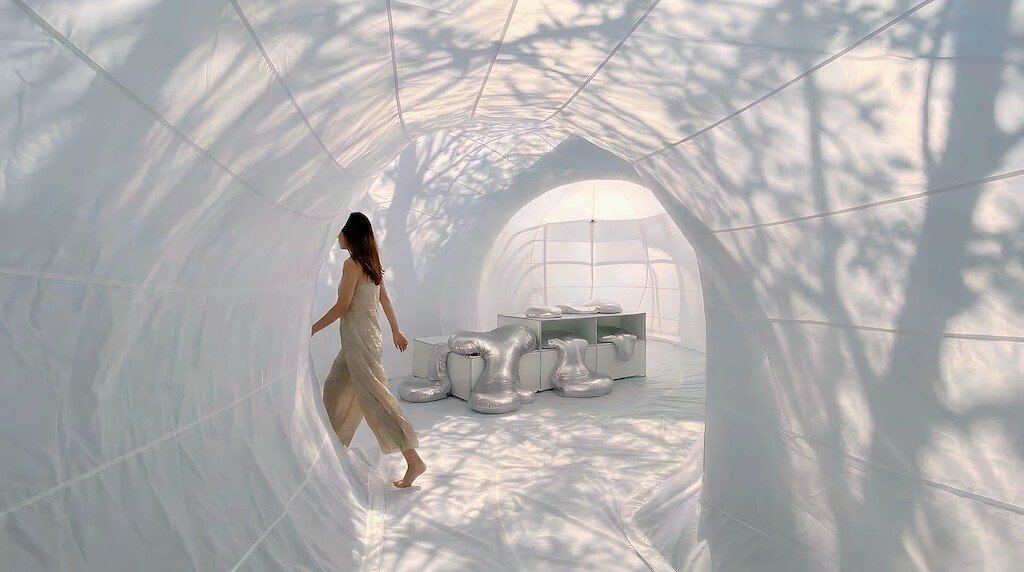
Snøhetta, Renaissance of the Real
The Body as Space. What Milan Design Week 2026 Tells Us About the Future of Wellbeing
A metaphor for all of Milan in April 2026: design moved beyond objects – into sensations. Everything was created around one question: how does it feel to be inside?
Milan Design Week reinvents its own language every year. In 2026, however, something structural took place. Where well-being had once been the territory of individual stands – a beautiful bathtub here, an aromatic diffuser there – this time it became a through-narrative. Almost every significant project touched the body in some way: its rhythms and restoration. The city turned into a distributed map of sensory experience.
Fuorisalone 2026 ran under the theme “Be the Project” – to be the project, not merely its consumer. In that sense, the immersive installations devoted to wellbeing were the most precise embodiment of the idea: you do not look at an object here – you become part of the environment itself.
Below, in the opinion of Lightberg Magazine team, are five projects that articulated this shift most precisely.
Aqua Sanctuary: Water as Architecture
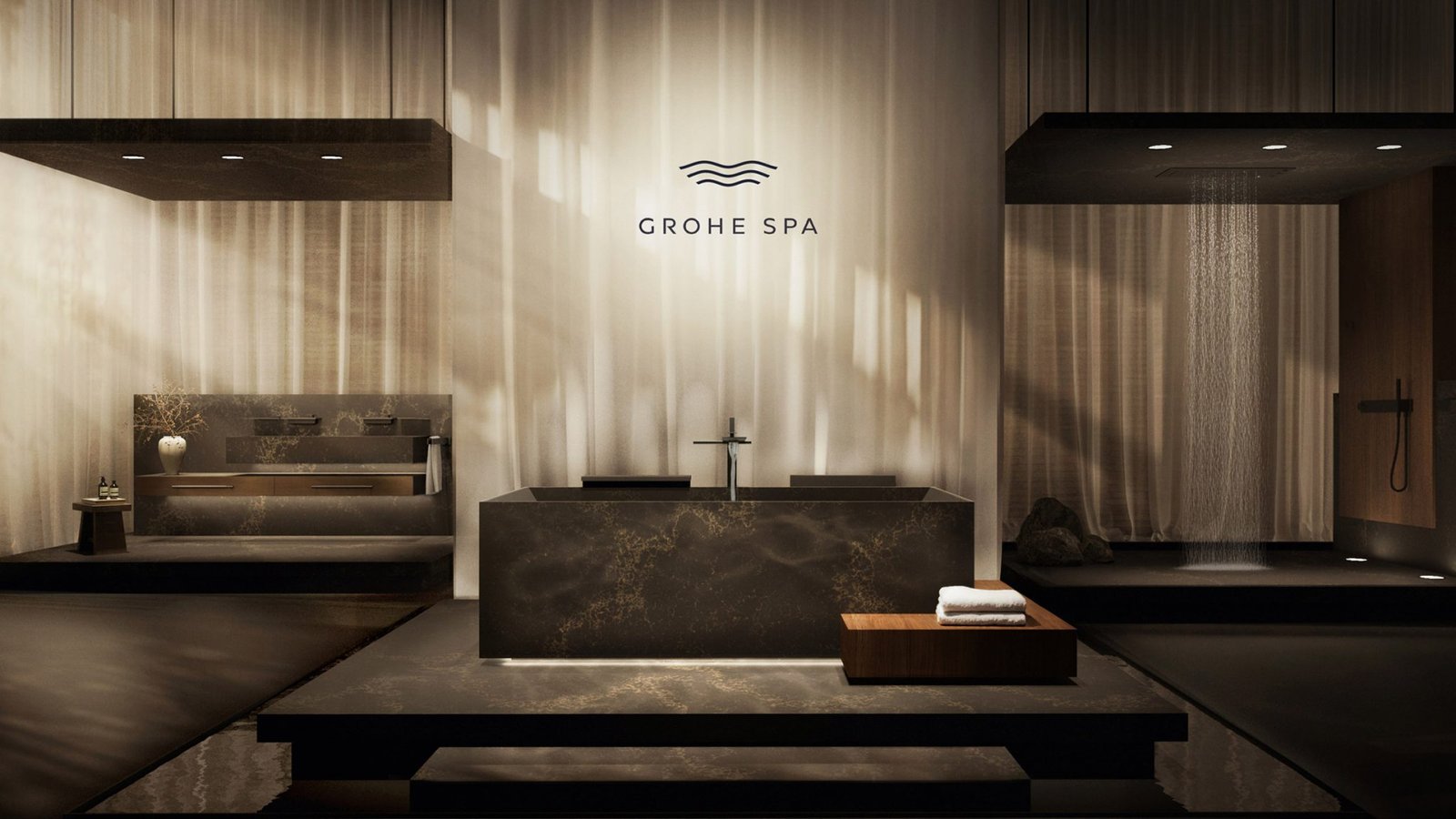
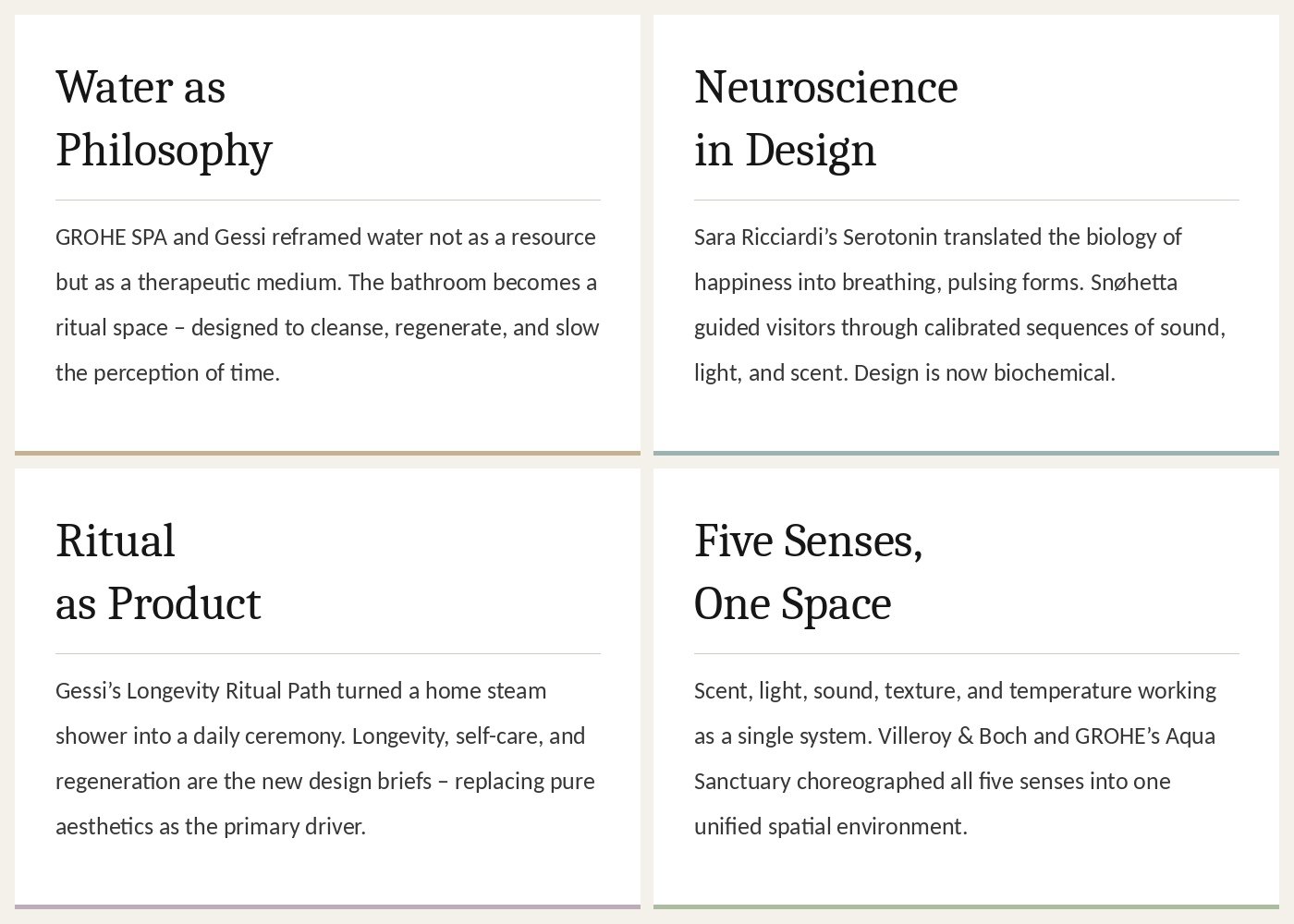
The centrepiece of the Brera district was GROHE SPA’s decision to occupy Piccolo Teatro Studio Melato – a legendary Milanese theatre that opened its doors to a design installation for the first time in its history. Seventy-two hours of transformation, three interconnected “sanctuaries,” and at the heart of it all the philosophy of Salus Per Aquam: wellbeing through water.
The first room reimagined the shower as a sculptural experience: light and water worked in unison around a faucet suspended from the ceiling. The second space was dominated by precious stones and metals – the Atrio Private Collection, created in collaboration with Buster + Punch, where quartz-set taps read as pieces of jewellery. The third held a monumental bath in Phantom Black with Caesarstone Vanilla Noir details – an object that absorbs the gaze and slows time.
What is fundamentally important is that the installation did not “display products” – it constructed a sequence of states: inspiration, contemplation, dissolution. Light, shadow, material, and sound interacted with flowing water to create an environment that literally decelerates the perception of time. The theatre, as a space of illusion and architecture simultaneously, proved to be the ideal host for such a narrative.
Serotonin: The Chemistry of Happiness as Space
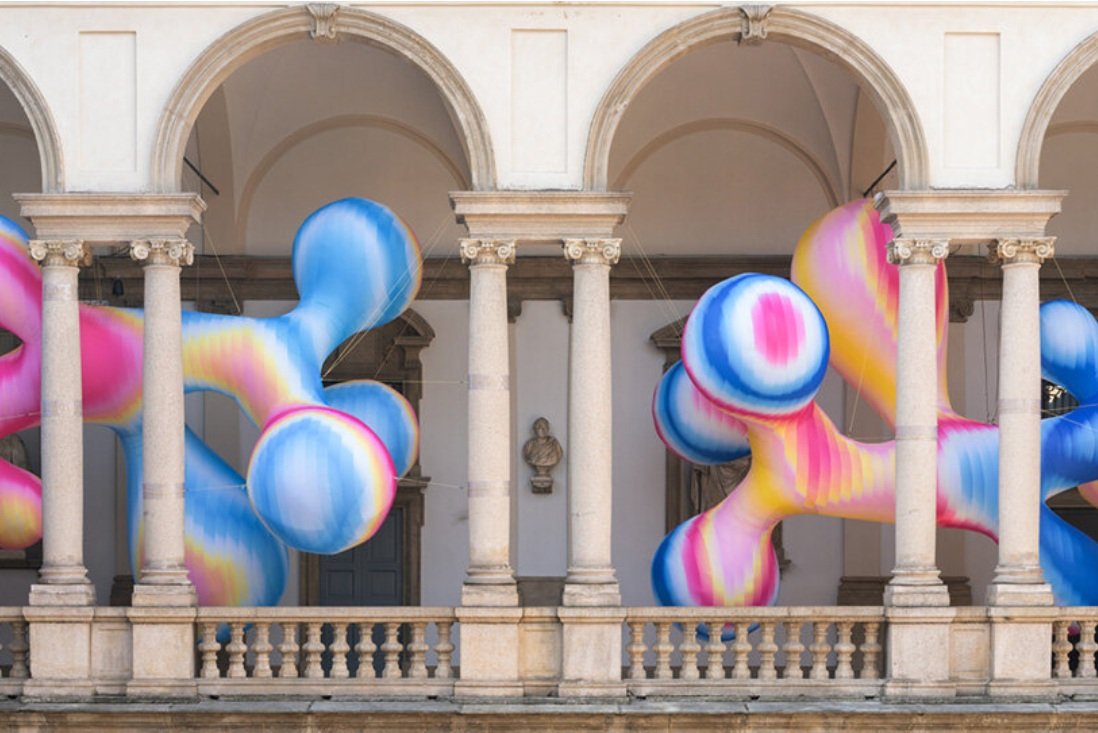
In the loggia of the Pinacoteca di Brera – one of Milan’s most beautiful courtyards – Sara Ricciardi created something difficult to describe as anything other than a living organism. Enormous inflatable spheres slowly expanded and contracted in the rhythm of breathing and a heartbeat. Light, colour, and sound pulsed in sync, producing a continuous sensory impulse.
The concept of Serotonin grew out of neuroscience: serotonin – the “happiness hormone” – was translated into a spatial language. Ricciardi posed a fundamental question: what is the shape of joy? Her answer – fluid, mutable, oscillating. Happiness in this installation exists not as a static condition but as a temporary wave, born from movement, colour, and sensory contact.
The contrast with the stone sculptures of the historic Brera was deliberate and precise: the softness of the inflatable forms against the eternal stillness of marble. It is precisely in this tension – between the organic and the monumental – that a sense of living presence in the present moment was born. One of the most honest conversations about well-being at the entire Design Week.
Rituale del Vapore: The Bathroom as a Temple of Longevity
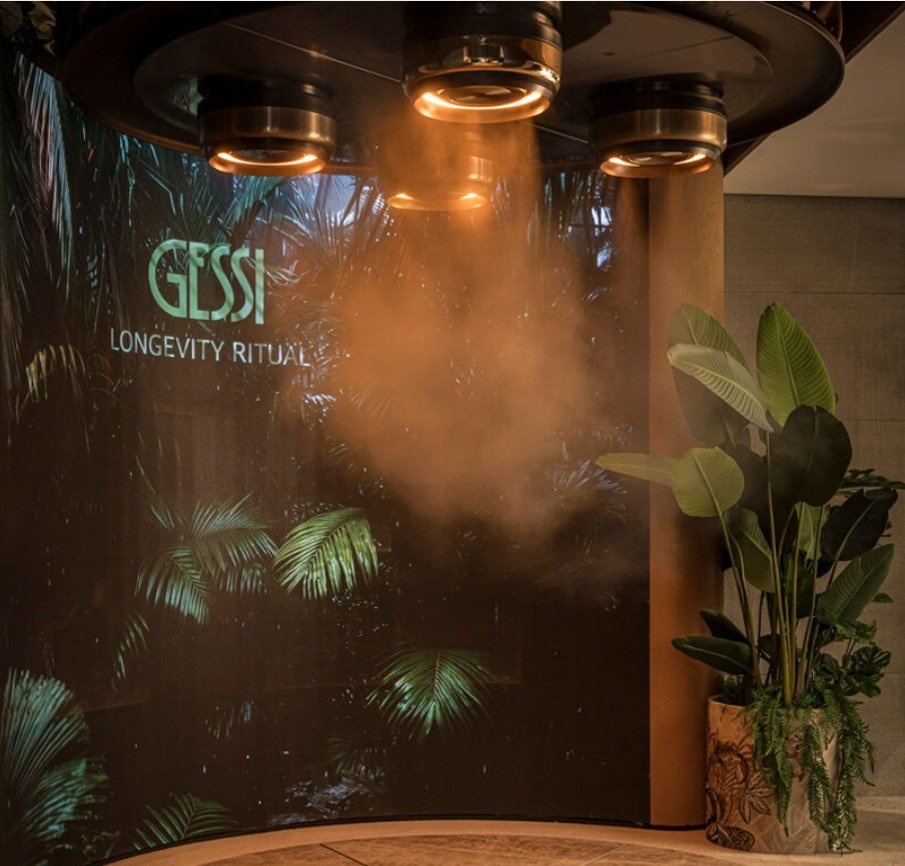
Italian manufacturer Gessi placed its bet on an idea that unites spa culture with everyday ritual: what if a domestic bathroom could literally reproduce the experience of thermal treatments? Their world premiere – Rituale del Vapore – is a revolutionary steam system that envelops the body in steam from above and requires neither structural alterations nor dedicated plumbing.
At Casa Gessi Milano on Via Manzoni, this innovation was presented through the Longevity Ritual Path – an immersive sensory journey in which every element engaged a specific dimension of well-being: chromotherapy, aromatherapy, thermal ritual. The Steam + Intenso Flow version added a laminar water flow, creating a complete restoration ecosystem within the most intimate space of the home.
In parallel, Casa Gessi Haute Culture on Via Manzoni 17 presented the PerSempre collection – a reinterpretation of steel through the lens of high watchmaking. Here, finishes were stored in vitrines like jewels, and the choice of material became an act of self-expression. Gessi consistently transforms the bathroom from a utilitarian room into a philosophical statement about time and self-care.
Design Continuum: Five Senses as One Narrative
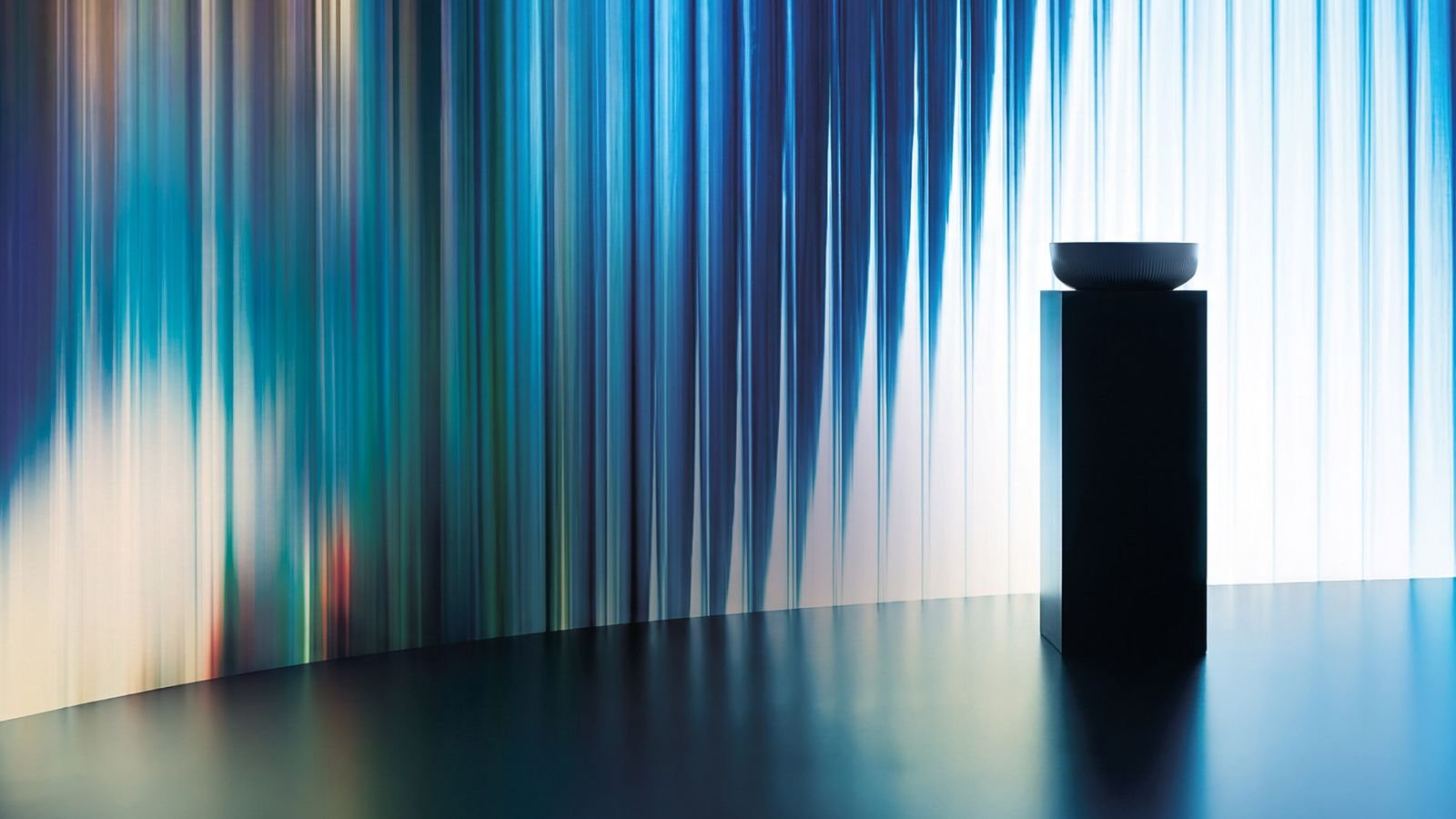
Uniting their design philosophies for the first time, Villeroy & Boch and Ideal Standard created, together with Studio Elastique, a project they called Design Continuum. Five interconnected installations at the Milan showroom used light, projection, texture, and scent to transport the visitor beyond traditional form – into a space of multisensory narrative.
The key idea of the project: a bathroom is not a set of sanitary objects but a continuous experience. The word “continuum” in the title refers both to design as a process and to bodily experience as a flow rather than a series of isolated moments. Innovative materials and new technologies here were subordinated to a single question: how does space affect a person’s state? This is one of the few projects of the Week where the technological demonstration dissolved organically into sensory feeling.
Renaissance of the Real: Against Digital Noise
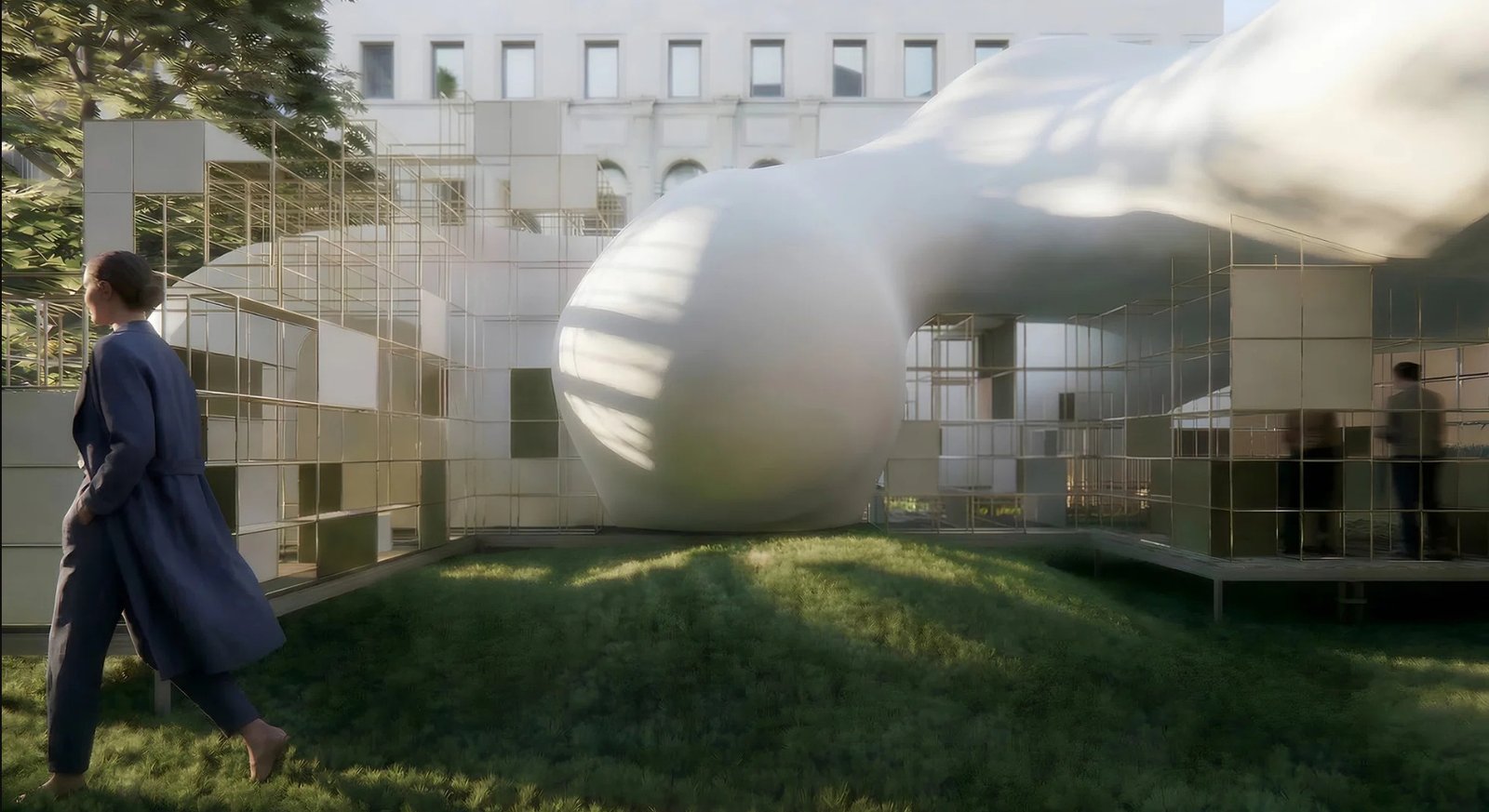
At Fondazione Luigi Rovati, Norwegian architecture firm Snøhetta, together with Swiss brand USM and artist Annabelle Schneider, created perhaps the most philosophically charged project of the Week. Renaissance of the Real reinterpreted the USM Haller modular system as an architectural framework for something larger: an elastic textile membrane that formed a soft, enclosed sensory environment.
Within this space, sound, light, scent, and tactile elements unfolded in sequence – a choreographed succession of transitions leading from external stimuli to inner silence. In the museum’s garden, this resonated with particular precision: the project named its context directly – an era of digital hyperconnectivity in which physical presence has become a scarce resource. The return to the body, to the tangible, to the real – this is the “renaissance” in the title.
Four Major Trends from the Fair
What This Means for the Wellness Industry
Salone del Mobile 2026 registered a shift that the spa sector will feel for the next five years: the boundaries between residential interior, wellness space, and immersive art object have finally blurred. The visitor who passed through Aqua Sanctuary or Serotonin returns home with a different expectation – of the bathroom, of the hotel, of the spa ritual. Design operates here as an anticipatory signal: what exists today inside a theatre or a historic palazzo will tomorrow find its way into a residential project and a wellness centre concept. And the central question is no longer “How does this look?” – but “What does this do to the body and the mind?”
Share


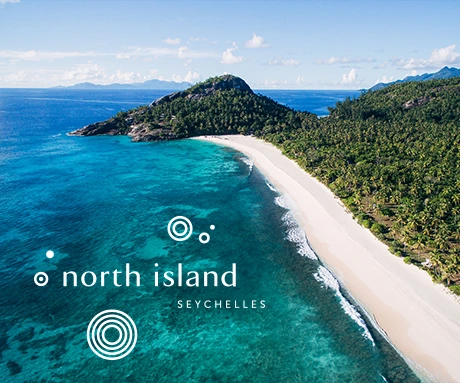
WE RECOMMEND
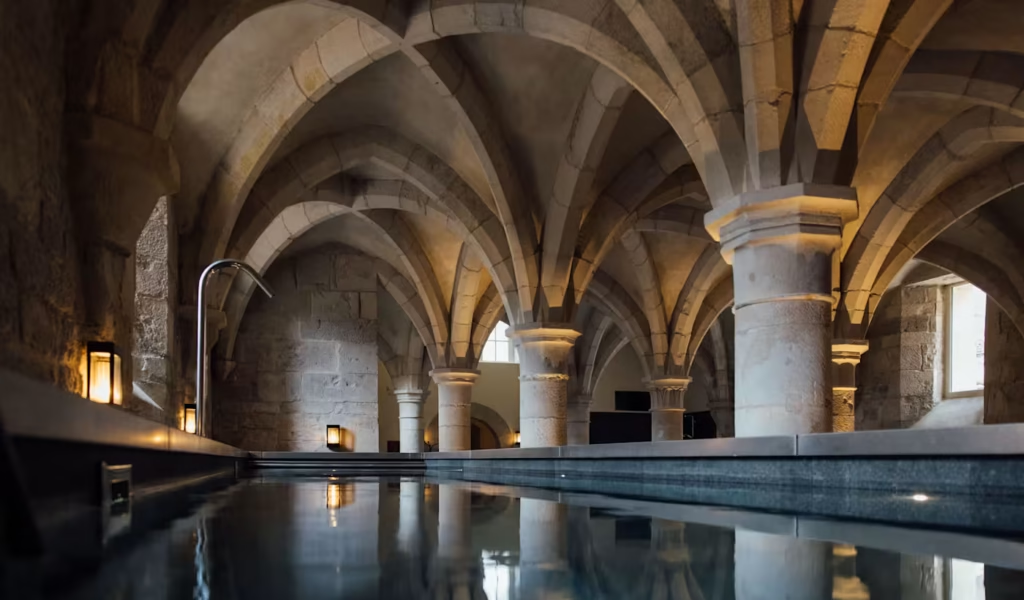
6 European Destinations with a Wellbeing Focus This Summer
From the Cyclades to the French Alps and Burgundy, a new generation of stays is shaping travel around wellbeing and meaningful nature…
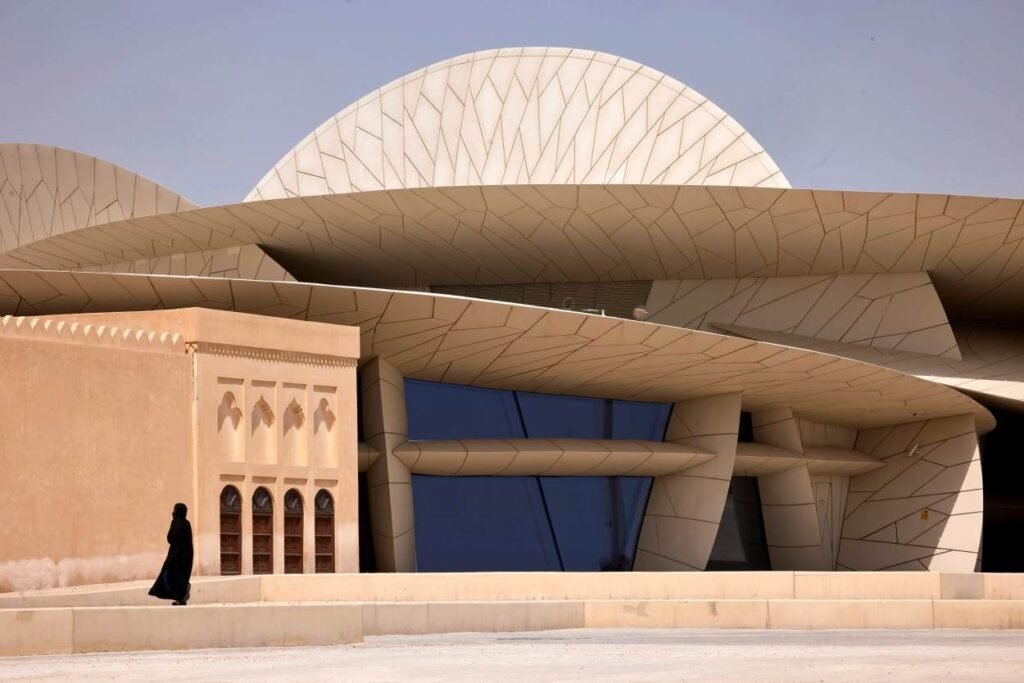
Art Basel Qatar: why Doha’s art moment matters beyond the fair
From February 5 to 7, 2026, Doha steps into the global art spotlight with the launch of Art Basel Qatar, marking a…
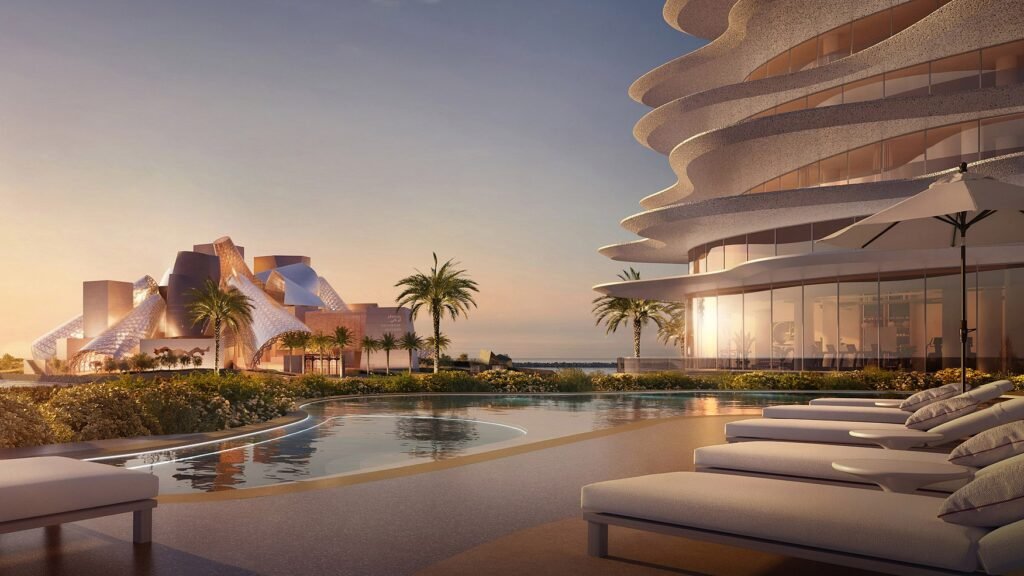
Architectural poetry on the shoreline: Sou Fujimoto’s Baccarat Residences in Abu Dhabi
Japanese architect Sou Fujimoto makes his first statement in UAE residential real estate with Baccarat Residences on Saadiyat Island, next to Frank…
