




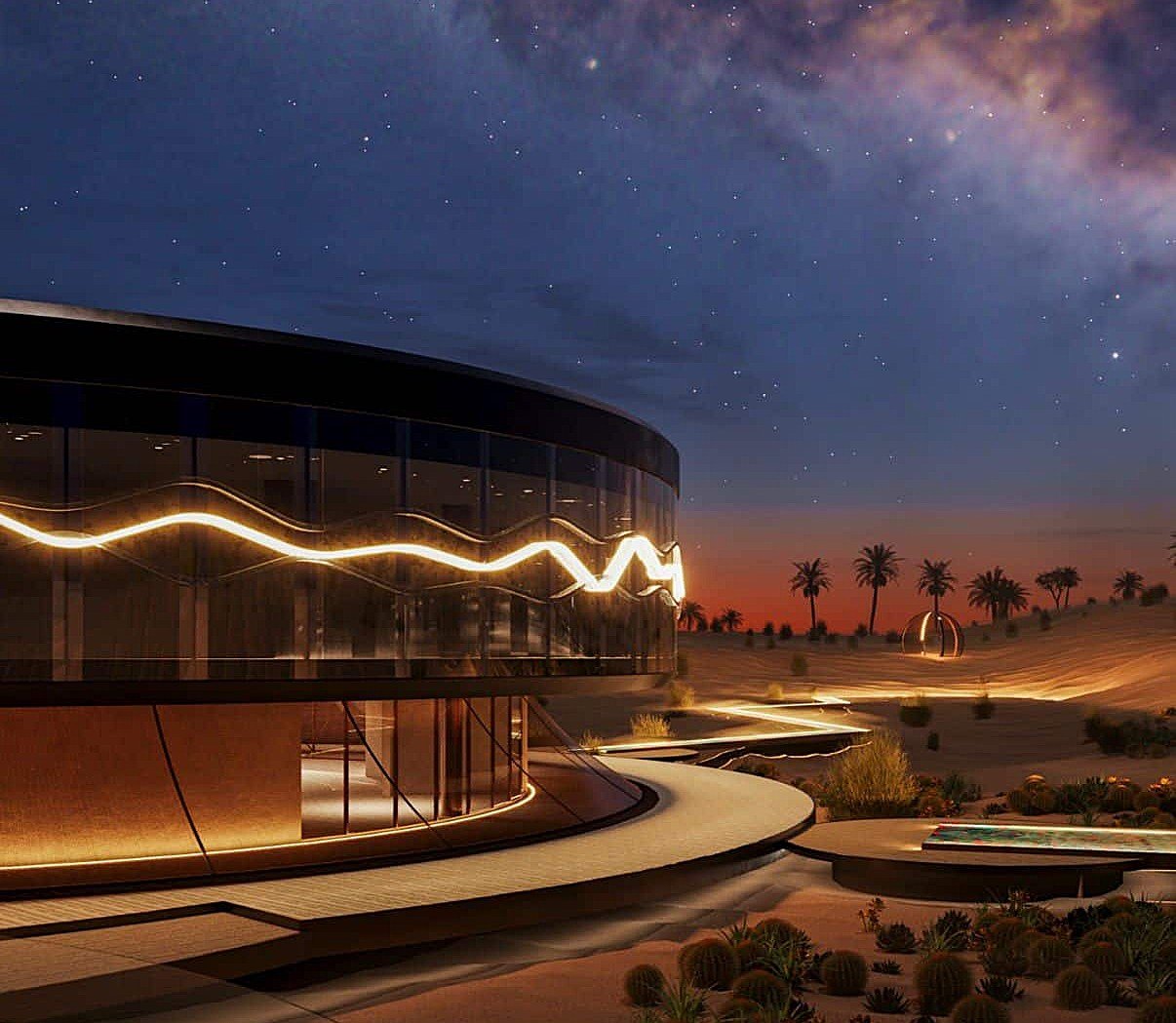
Dubai to turn the desert into a 10-kilometer art gallery
Dubai’s desert is set to become the site of a walkable artwork called CLIO Desert Park – a land art route built from thousands of modular panels and designed to lead visitors towards Clio House.
A new large-format artwork is planned for Dubai’s Margham desert, close to the Skydive Dubai area. Called CLIO Desert Park, the project proposes a 10-kilometre “river” of art set across the sand, converging on a circular cultural hub named Clio House. The timeline currently points to construction beginning in March 2026, a public opening in March 2027.
Dubai’s wellness culture keeps expanding in studios, clinics, and destination spas. CLIO shifts the idea of recovery into the landscape itself: a long, deliberate walk with a clear visual direction, a strong sense of scale, and a central place for pause and reflection. It frames time outdoors as a cultural practice, with movement as the entry point.
CLIO is designed as a walkable work. Reporting around the project describes a 10-kilometre installation with a planned width of 10 metres, set up like rivers flowing through the desert towards a single destination.
The structure of the canvas is unusually specific. The installation is expected to unfold across 25,000 authenticated modules, each measuring 2 m x 2 m. That modular approach is more than a production detail: it supports a sense of progression as you move, with shifting color fields and textures that read differently at each distance and speed.
Clio House: a desert cultural hub with 360-degree views
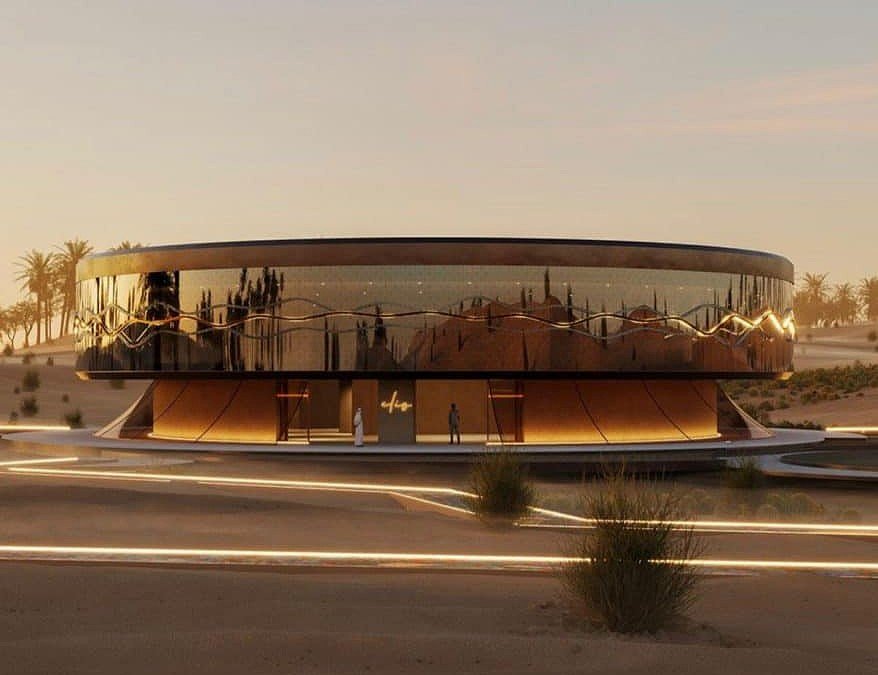
At the center sits Clio House, a circular, “spaceship-like” building designed by architect Matteo Antonelli, planned as a year-round cultural maison for exhibitions, talks, residencies, and collaborations. Several early write-ups highlight the 360-degree views as part of the concept, along with its role as a gathering point rather than a single photo stop.
CLIO Desert Park is attributed to international contemporary artist Agron Hoti. The development is planned on land owned by Shamal Holding.
The project has also been linked publicly with Dubai’s action-sports and outdoor culture ecosystem around Skydive Dubai, a detail that hints at how the artwork may be viewed and experienced from above as well as on foot.
A durability problem, solved as part of the art
Desert land art faces a basic constraint: sun, heat, humidity swings, and UV exposure. Coverage of the launch has already addressed conservation and materials, referencing careful selection of material and pigments suited to the environment.
For readers who track design and longevity, that approach is notable. Longevity thinking rewards long-term systems: what lasts, what keeps its quality, what stays functional over time. CLIO places that same logic into the artwork itself.
CLIO’s format aligns with several behaviors that longevity research and high-performance routines tend to prioritize, even when the project never uses the word “wellness”. Movement with a purpose, Time in natural light, Attention training through environment and Social connection without noise. Clio House is framed as a place for talks, exhibitions, and gatherings. This supports a form of social life that keeps the nervous system calm: shared experience, low friction, less intensity.
CLIO as a new Dubai ritual
CLIO encourages a weekly or monthly ritual built around a walk, a horizon, and a destination that carries culture and conversation. If the project lands as planned, it will likely become a place people return to for the same reason they return to a favorite coastal promenade: the body settles into the pattern, and the mind follows.
Share


WE RECOMMEND
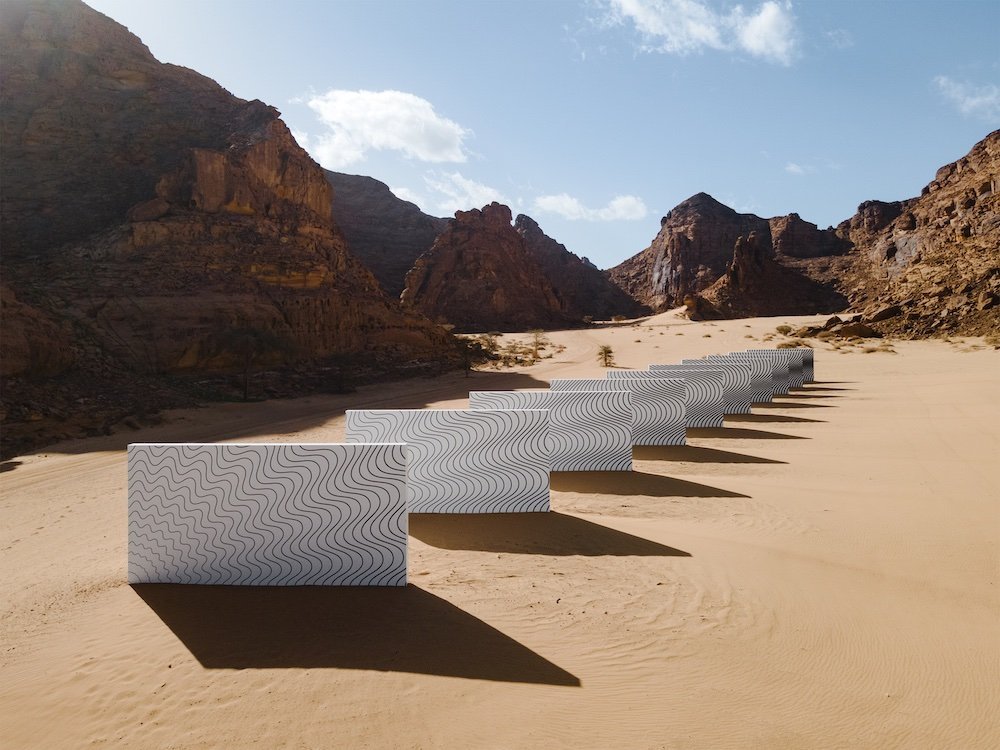
Desert X AlUla returns with a theme inspired by Kahlil Gibran
Desert X AlUla 2026 turned AlUla’s canyons into an open-air route of 11 new site-specific installations, with Kahlil Gibran’s Space Without Measure
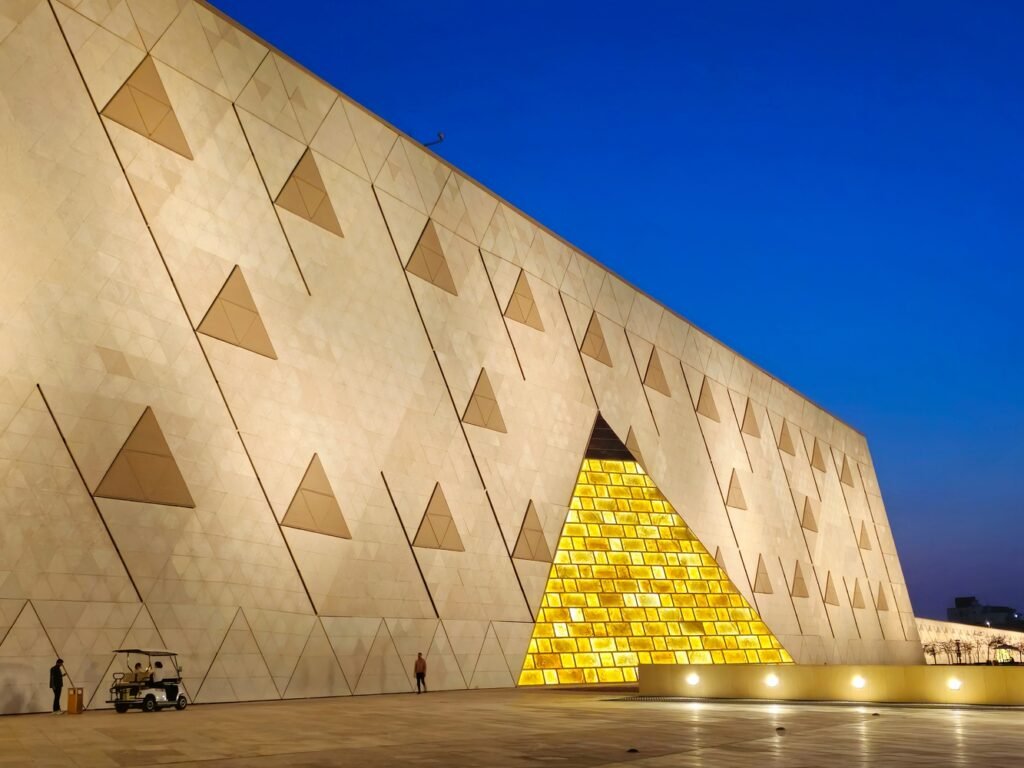
Why Cairo’s Grand Egyptian Museum Is Worth the Trip
A pyramid-view museum built for scale and clarity – with Tutankhamun’s full 5,398-piece collection, the Ramesses II colossus, and galleries that finally…
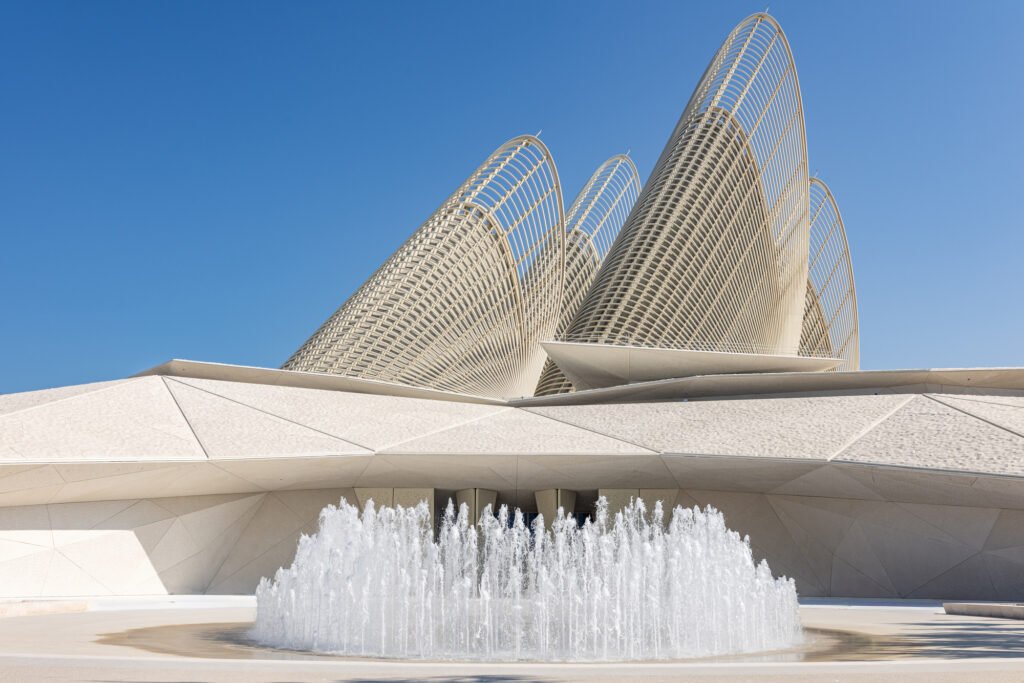
Zayed National Museum, Abu Dhabi: what stayed with us after the visit
Why Zayed National Museum was one of the most anticipated in the UAE?
