



Bhutan’s Gelephu Mindfulness City: Can a New Kind of Capitalism Be Built From Scratch?
Bhutan is building more than a new city in Gelephu. It is testing whether economic growth, cultural identity, and wellbeing can be planned together from the start.
Bhutan’s Gelephu Mindfulness City: Can a New Kind of Capitalism Be Built From Scratch?
Bhutan is building more than a new city in Gelephu. It is testing whether economic growth, cultural identity, and wellbeing can be planned together from the start.
Bhutan has never sold itself to the world in the usual way. For years, the country stood apart from the familiar script of growth at all costs, protecting its identity through cautious tourism policies, environmental limits, and the idea that national success should be measured not only in output, but in human wellbeing. Now it is attempting something far more ambitious: the construction of Gelephu Mindfulness City, a vast new urban project in southern Bhutan that aims to become an economic engine, a business hub, and a test case for a different development model.
At first glance, the name sounds almost too soft for the scale of the ambition. This is not a retreat, a wellness resort, or a symbolic exercise in green branding. Gelephu Mindfulness City, often referred to as GMC, is being developed as a Special Administrative Region on Bhutan’s border with India, with its own regulatory logic designed to attract capital, talent, and international business. The project is intended to create jobs, strengthen connectivity, and give Bhutan a new economic center at a moment when the country is grappling with youth outmigration, limited domestic opportunities, and the need to diversify beyond its traditional economic base.
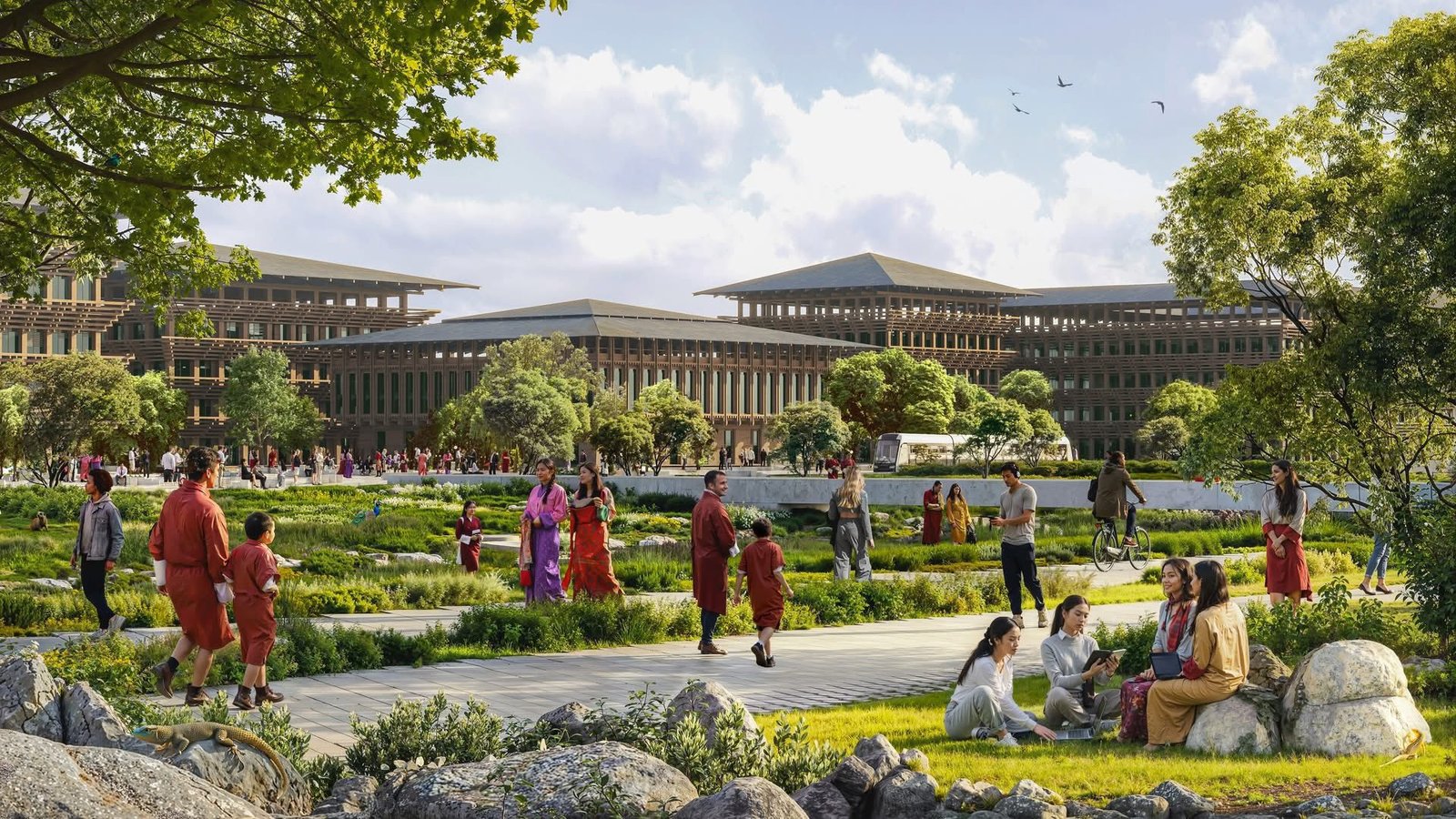 That tension is what makes the project interesting. Gelephu is not being presented as a rejection of capitalism, but as an attempt to rewrite its operating conditions. Official materials describe it as a place where Bhutanese spiritual values, ecological awareness, and innovation can coexist with economic vibrancy. The city is planned over a 21-year horizon and is expected to begin with a population of around 150,000, with a much larger long-term ambition. Time has described the project as Bhutan’s effort to build a form of “mindful capitalism” that can compete globally without copying the social and environmental costs of the standard high-growth city.
Gelephu is described as a place where Bhutanese spiritual values, ecological awareness, and innovation can coexist with economic vibrancy.
The masterplan, developed by BIG with Arup and Cistri, is one reason the project has attracted so much international attention. Instead of imposing a dense glass-and-steel skyline onto the landscape, the proposal works with the territory’s natural conditions: rivers, forests, agricultural land, and monsoon patterns. BIG’s materials note that 35 rivers cross the site, and the design responds by embedding flood resilience directly into the city through paddy fields and landscape systems. Development is imagined as low-rise and spread through the terrain, with changing density across the site rather than a conventional central business district rising abruptly from the ground.
This is also where the project separates itself visually from the generic future-city render. One of the most discussed elements is its system of inhabitable bridges, designed not simply as infrastructure but as civic and mixed-use spaces. The city is planned to integrate public life, transport, ecological management, and architecture in a single framework. Walking and cycling are built into the urban logic, while green corridors, public spaces, and wellness-oriented environments are meant to shape daily life rather than sit at the edge of it as decorative extras.
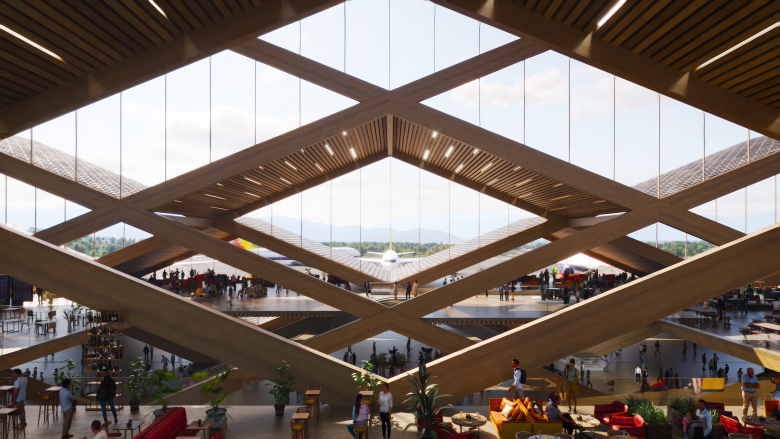
Still, the real story is economic. Gelephu Mindfulness City is being framed as a platform for future-facing sectors, including finance and digital assets, green energy and technology, education and knowledge industries, aviation and logistics, tourism, healthcare, and agriculture. The official GMC site presents the city as a long-term investment in a new national ecosystem, one that can keep Bhutanese talent at home while drawing in outside expertise and business.
Infrastructure will be central to whether this idea remains a vision or becomes a functioning city. A new international airport is one of the anchor projects. Gelephu sits near the Indian border, and the city is designed to connect with Indian road and rail systems, giving Bhutan a more practical and scalable gateway than its existing mountain-bound aviation model can provide on its own. In strategic terms, Gelephu is meant to position Bhutan as a connector between South and Southeast Asia.
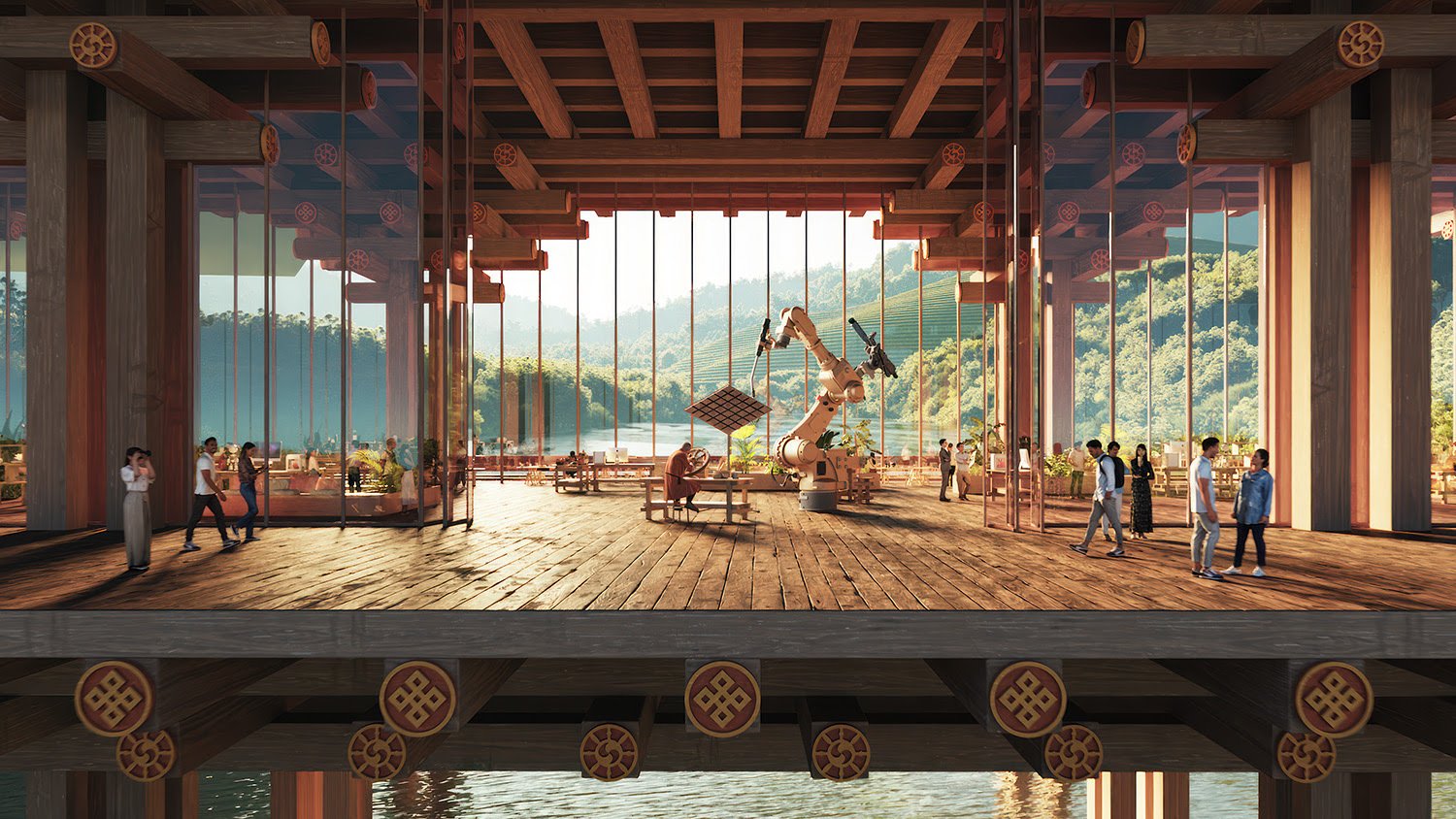
Most new-city projects promise efficiency, scale, or returns. Bhutan is trying to make a different promise: that a city can be economically serious without becoming psychologically hostile, and globally relevant without flattening the cultural logic of the place that built it. Whether Gelephu succeeds or not, it has already entered the conversation for a reason. It asks a question that many countries have avoided for too long: what should a city be built for in the first place?
Share


WE RECOMMEND
Mark Sands: “The Most Valuable Outcome Is a Shift in Mindset”
In our interview with Mark Sands, Vice President of Wellness at Six Senses Hotels, we discuss what defines a meaningful wellness experience…
New Hotels in Saudi Arabia that will Reshape Mindful Travel Expectations
With projects by Jayasom, Six Senses, Aman, and Miraval, Saudi Arabia is beginning to define its own language of regenerative living
Mohamed Badie: “A deeply human space respects the body and the senses. It allows silence”
We sit down with the founder of award-winning Badie Architects, Mohamed Badie, to talk about what it actually takes to work at…
