




Submersive and the Future of Immersive Wellness
Wellness is entering a new spatial language. Set to open in Austin in 2027, Submersive brings together immersive art, neuroscience and bathing culture.
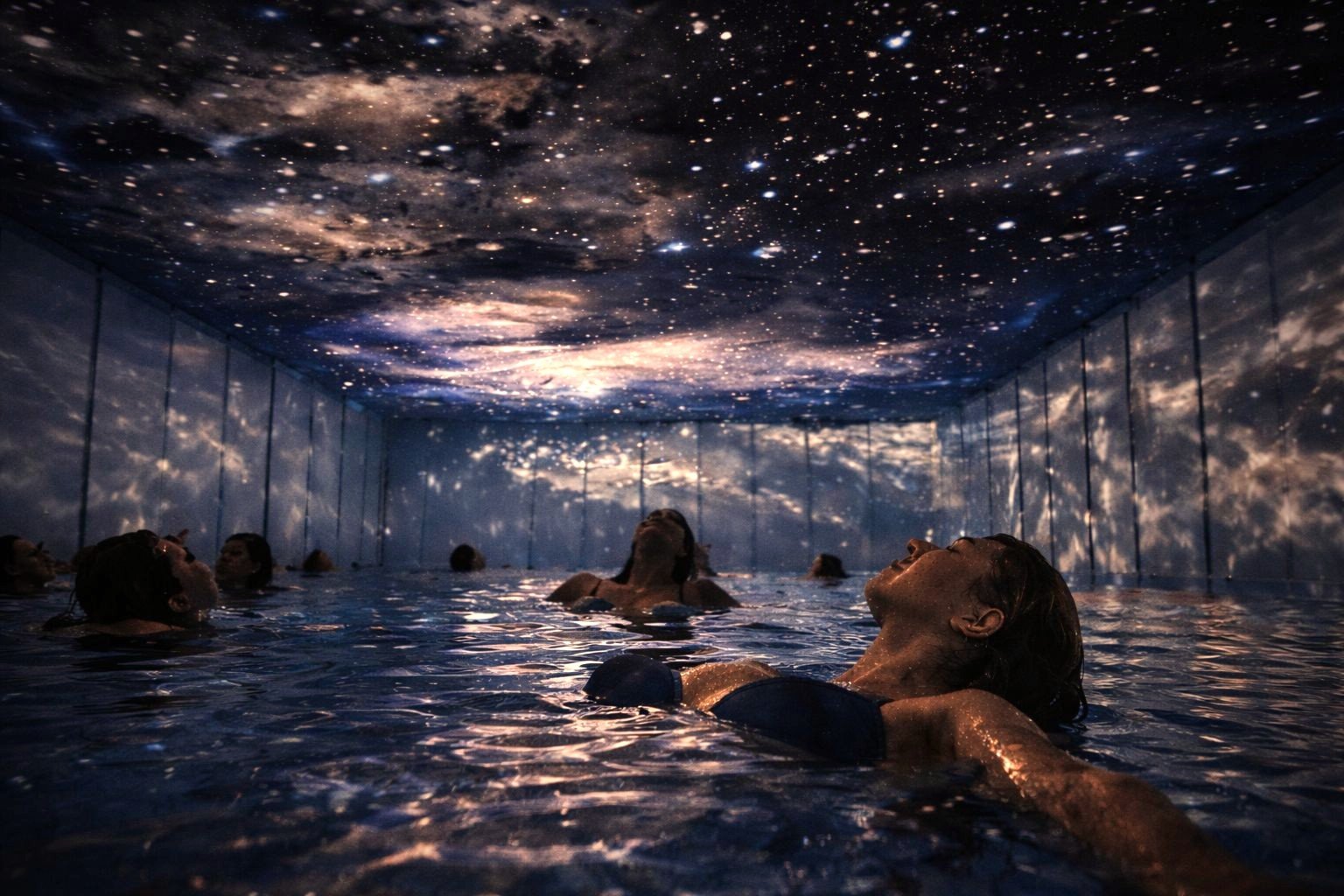
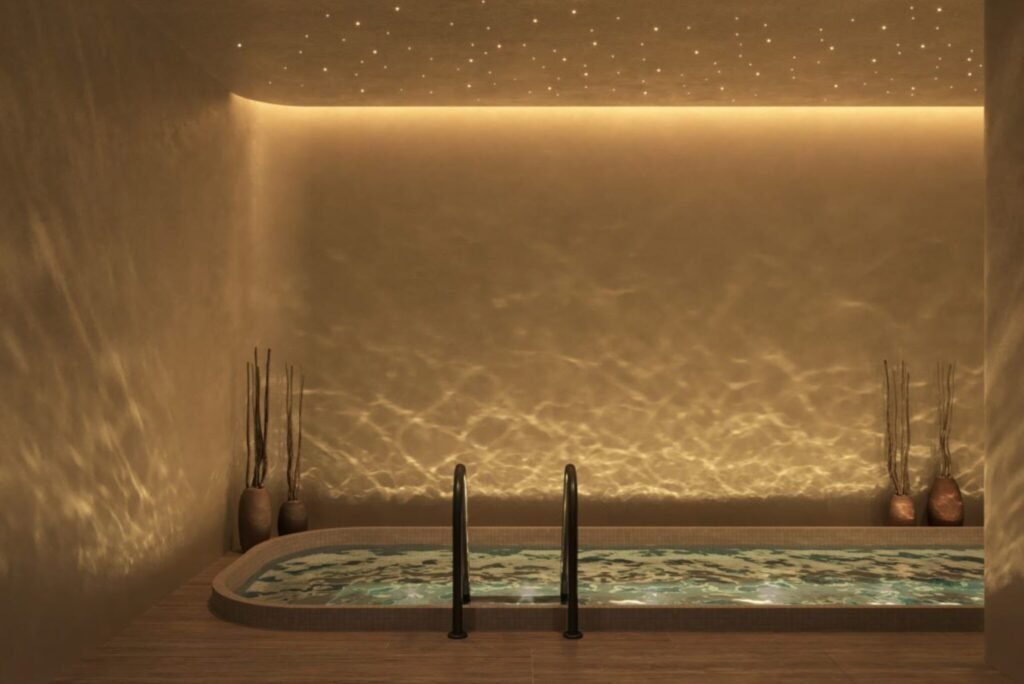
As wellness continues to move beyond treatment rooms and fitness studios, a new category is starting to take shape – one built around immersion, altered states and the design of experience itself. Submersive, set to open its first location in Austin in 2027, sits at the center of that shift. Spanning 25,000 square feet and including indoor and outdoor areas, immersive baths, waterfalls, grottos, saunas and large-scale installations, it is described as the world’s first immersive art bathhouse. It brings together traditional bathing culture, multisensory design and science-led thinking in a format that feels closer to a cultural space than a conventional spa.
The project was founded by Corvas Brinkerhoff, one of the co-founders of Meow Wolf, whose background in immersive art gives the concept its visual and emotional language. After fifteen years building one of the most influential names in experiential art, Brinkerhoff moved in a different direction. What emerged was a wellness concept shaped by personal upheaval, long-form research and a growing conviction that immersive environments could do more than entertain. They could support restoration, emotional shift and a deeper kind of transformation.
Before building Submersive, Brinkerhoff travelled through 16 countries and visited more than 75 spas, bathhouses and hot springs, studying communal bathing as a long-standing human practice. That research became the basis for a broader vision. Around it, he assembled a network of neuroscientists, spa experts, artists, designers and authors to help define what this next format could become. The result is a space intended to work on several levels at once – physical, emotional, sensory and social.
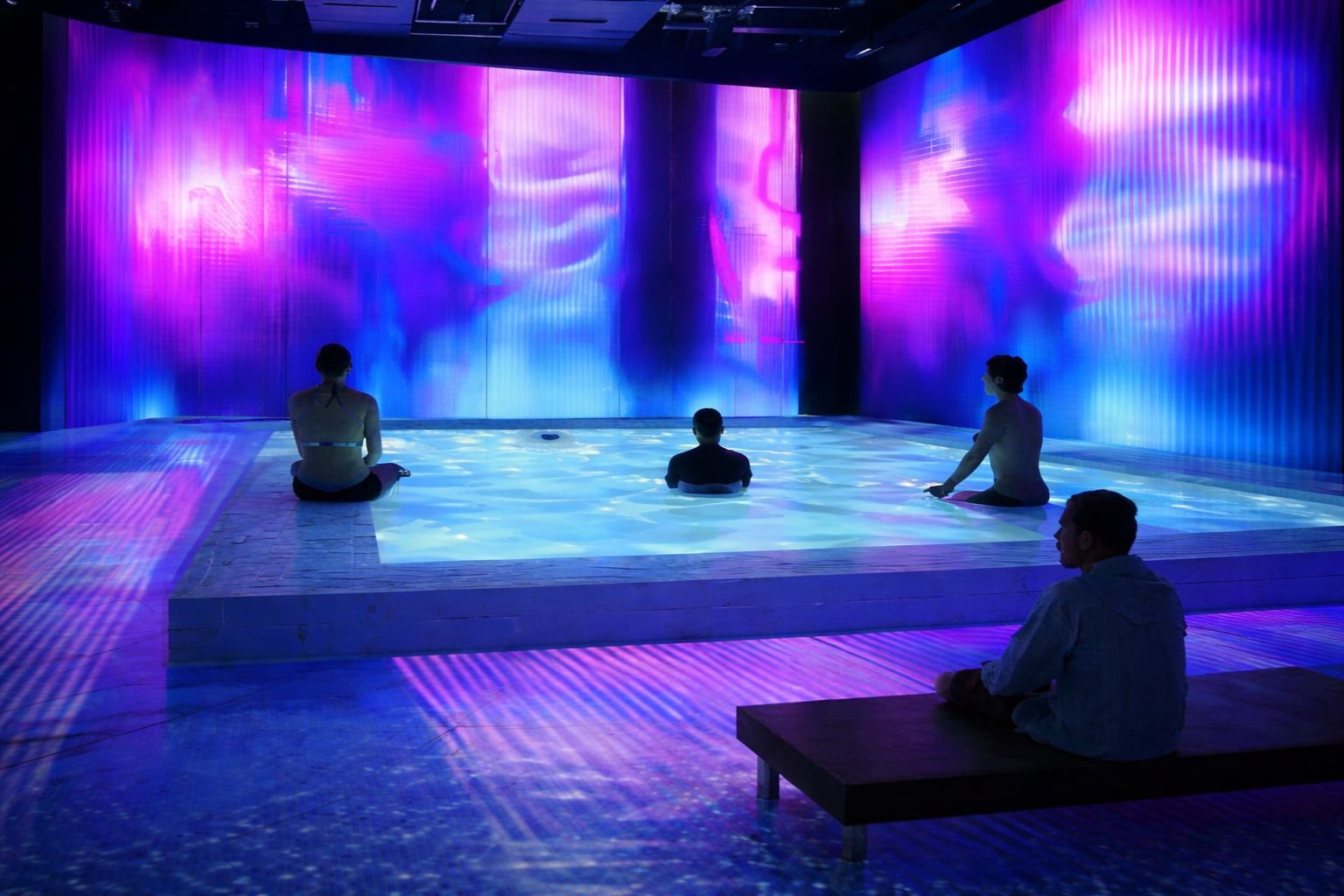
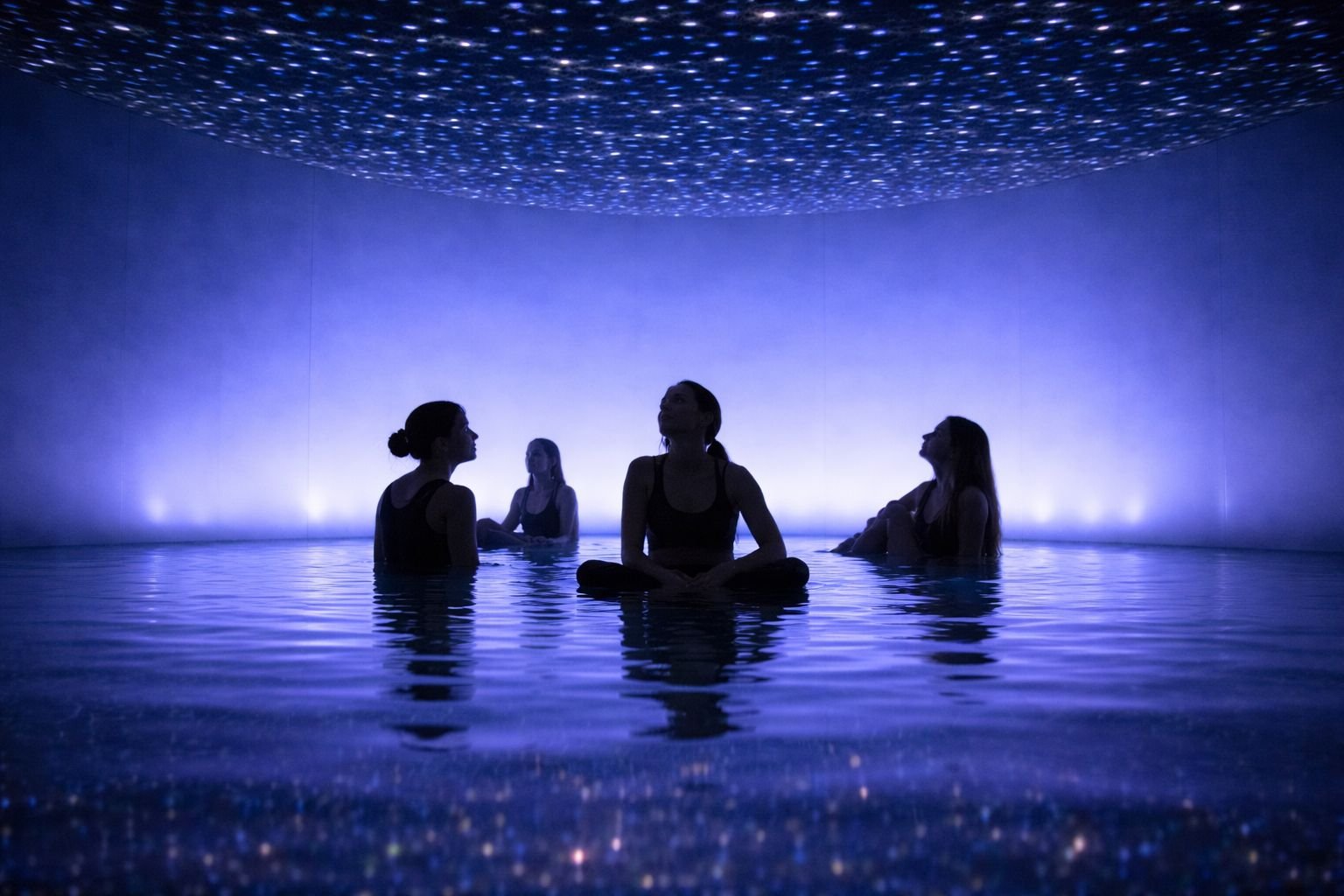
Submersive does not present wellness as something sterile, quiet or purely clinical. It treats it as experience design. Light, sound, video, architecture, water, heat and cold are all used as active components within the environment, alongside bathing rituals, steam, sauna and plunge experiences. The aim is to create spaces that can shift a person’s internal state with intention and with measurable effect.
Brinkerhoff calls this category immersive wellness. On one side sit immersive experiences built around novelty and spectacle. On the other sits much of the current wellness world, which often leans minimal, controlled and emotionally flat. Submersive is trying to occupy the space between those two models. It takes the aesthetic force and emotional pull of immersive environments and applies them to healing, regulation and wellbeing.
Submersive draws on neuroaesthetics, an emerging field exploring how multisensory environments influence us physiologically, neurologically and behaviourally. Its advisory circle includes Ivy Ross and Susan Magsamen, the authors of Your Brain on Art, whose work has helped push forward the argument that art and sensory experience can play a direct role in human wellbeing. In practice, that means Submersive is being designed around how people actually respond to awe, temperature, sound frequency, light exposure and collective environments.
Submersive pulls awe, sound, light and heat together and turns them into a designed environment – what Brinkerhoff has described as a kind of state-change device.
According to the concept, those responses can extend far beyond mood. Awe has been linked to reduced blood pressure and increased openness. Heat and cold exposure support circulation, nervous system function and mood regulation. Light can affect energy production at the cellular level. Sound can influence focus, memory and reaction time. Submersive pulls these threads together and turns them into a designed environment – what Brinkerhoff has described as a kind of state-change device.
That phrase may sound dramatic, but it captures where wellness is heading. The next generation of wellness spaces is increasingly concerned with how a person feels inside an environment, how quickly a space can help them downshift, reconnect or move into a different mental state. In that sense, Submersive reflects a wider move away from wellness as passive consumption and towards wellness as active spatial experience.
The project also points to another important shift – the movement from the experience economy into what some have called the transformation economy. For years, hospitality and culture have competed on memorable moments. Now the question is becoming sharper: can an experience leave someone genuinely different afterwards? Can it regulate, restore, awaken or rebalance? Can it create a measurable change in the body and a lasting one in perception? Submersive is being built around that premise.
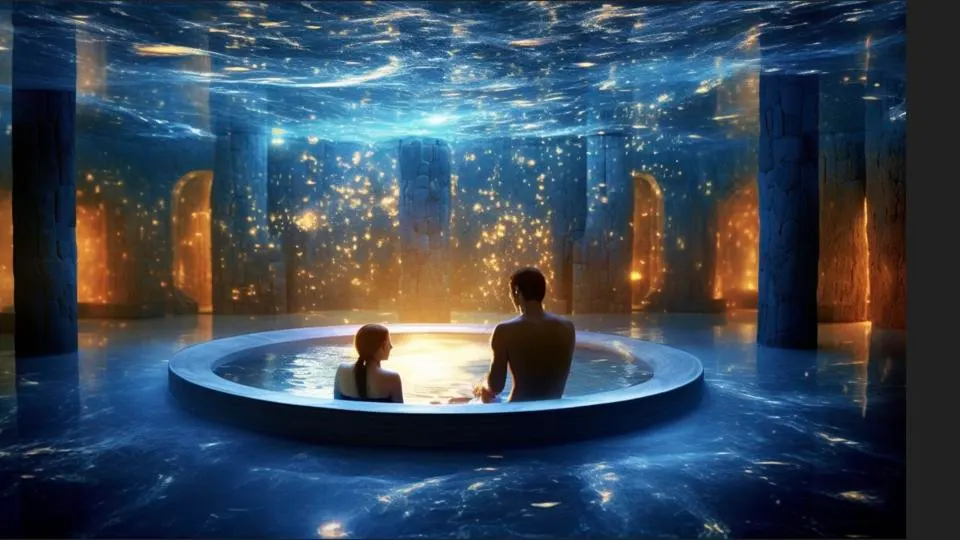
There is also a social dimension here. Historically, bathhouses were never just about cleansing or treatment. They were places of gathering, pause and human contact. Submersive taps back into that lineage, while updating it for a contemporary audience shaped by design culture, wellness literacy and immersive technology. In that sense, it may prove relevant not only as a wellness destination, but as a new type of cultural-social environment where restoration and connection happen in the same setting.
Whether Submersive fully delivers on its promise will become clear once the first location opens. For now, the concept already says something meaningful about where the market is going. Wellness is becoming more experiential, more spatial and more emotionally intelligent. It is moving closer to art, architecture and neuroscience. And it is beginning to understand transformation as something that can be designed.
Share



WE RECOMMEND
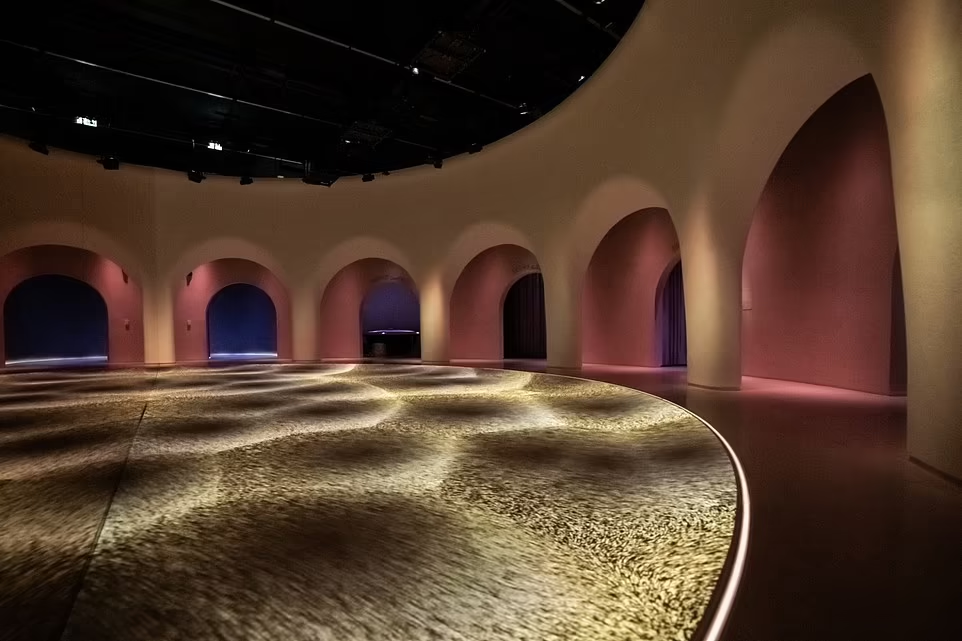
Dubai Built a Space to Calm the Nervous System
Rooted in Arab mind–body traditions and supported by advanced technology, ALWAHA treats the senses as a direct pathway to recovery and presence.
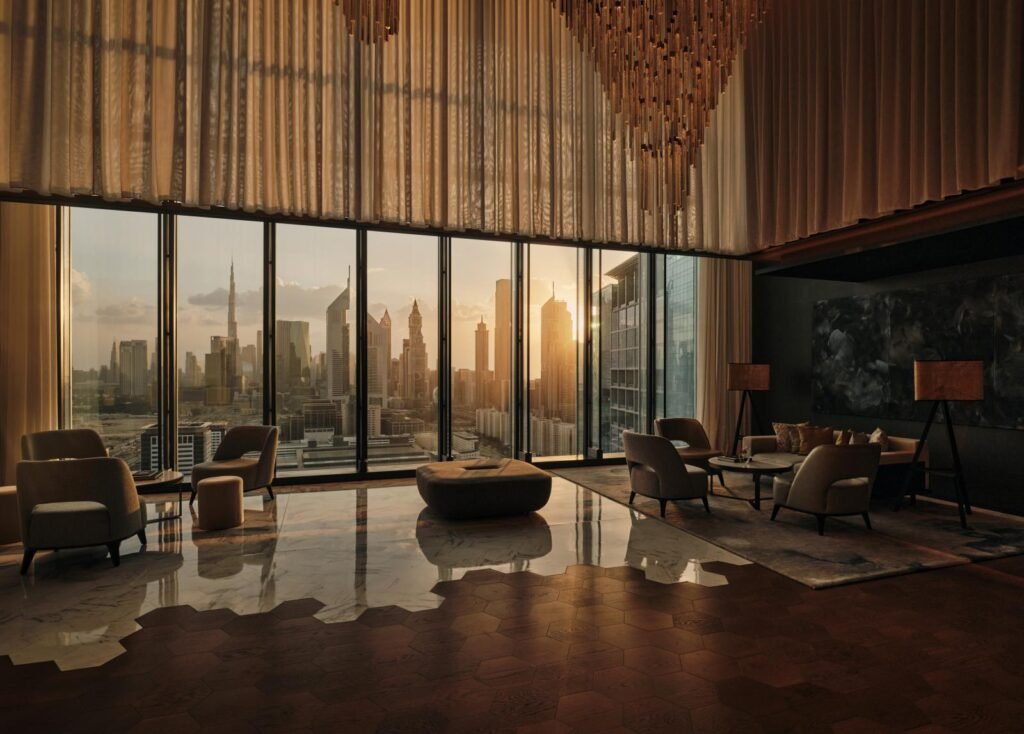
Inside Dubai’s Longevity Scene
Dubai is building a new market around healthspan designed for life inside the city. To understand how this shift is playing out,…
Sacra is bringing a first-of-its-kind bathhouse concept to Dubai
Built around hot-and-cold bathing and long-stay rituals, it frames premium bathhouse culture through a longevity-first lens.
