





The Peptide Moment: Why Beauty Brands Now Bet on Signal Ingredients
Skincare keeps returning to one idea: skin responds best to messages it can recognize. That is why peptides have moved from a “nice-to-have” claim on labels to a core logic behind new formulas.
Peptides are having a quiet takeover in premium skincare, and the reason is simple: they speak the skin’s language. As signal ingredients, they act like tiny prompts that can guide how the skin behaves over time, supporting firmness, smoothing texture, and reinforcing the barrier when stressors keep piling up. In a category obsessed with results, peptides offer a different promise: gradual, engineered improvement that feels credible in a premium routine.
Why peptides feel “right” right now
Premium skincare has shifted toward routines that stay comfortable under pressure: flights, air conditioning, heat, sun, long work weeks, and the cumulative fatigue of too many actives layered too aggressively. Peptides fit this era because they suit a steady cadence. They deliver a sense of structure without demanding a high irritation budget, and brands can build entire product architectures around that logic.
Peptides are small chains of amino acids. A helpful metaphor is language: amino acids are letters, peptides form short words, and proteins read like full instructions that fold into working tools. In skincare, “words” work better. A short peptide in a formula is often designed as a brief message: it cues a specific response, and then the cells and their enzyme systems do the actual work. A signal does not need the length of a novel – it needs a precise sequence that can be recognized
La Prairie sells peptides as part of a system. In its Platinum Rare universe, peptides sit inside a broader “architecture” of high-cost formulation, sensorial finish, and ritual. The product experience supports the long-game promise.
Valmont sells delivery as the idea. The V-Lift line frames peptides through proprietary language, including Drone Peptide Technology, turning formulation mechanics into a signature. The message is precision and placement, delivered through brand vocabulary.
SkinCeuticals sells discipline. P-TIOX places peptides into a measured, clinical narrative focused on wrinkle modulation and routine structure. This resonates with readers who shop with a dermatologist mindset while still wanting a premium finish.
With La Mer, peptides are part of the formula’s spine: you can spot them in the INCI of lifting and firming treatments. In The Lifting Firming Serum, for example, peptides such as Hexapeptide-14 and Palmitoyl Hexapeptide-12 appear directly in the ingredient list, and the same logic carries into The Lifting Firming Mask, where Hexapeptide-14, Palmitoyl Hexapeptide-12, and Acetyl Hexapeptide-8 are also listed.
Peptides, decoded: what “signal ingredients” means in real life
Peptides in skincare usually sit in three practical buckets (the names vary by brand, the logic stays stable).
Signal peptides are the classic “firmness and elasticity” peptides – they communicate, and over time the skin can look smoother and more supported. This is the lane most luxury formulas lean on because it fits the long-game promise.
Carrier peptides are (best-known example is copper peptides (often written as copper tripeptide-1) are used in formulas aimed at resilience, recovery, and a more even texture. They show up across price tiers.
Expression-line peptides (sometimes framed as “wrinkle-modulating”)are often presented as targeting visible expression lines. The effect is subtle and cumulative, and it tends to land best when the routine is consistent.
Premium brands rarely list “this is a signal peptide, this is a carrier peptide” on the front. They wrap it in proprietary complexes. As a customer, your job is to translate the marketing into a simple question: what is this formula trying to make your skin do – and how much irritation risk is it adding?
So how to choose a peptide product for you?
If you want firmness and “bounce” look for signal-peptide naming in INCI, especially palmitoyl tripeptide- and palmitoyl tetrapeptide- variations. Best format here is a serum if you love your moisturizer, and a cream if you prefer peptides plus comfort in one step.
If you want softer expression lines (forehead, around the eyes, “11s”) look for hexapeptide naming and wrinkle-modulating language. Best format will be a serum for layering; an eye product if you keep the routine minimal and targeted.
If you want recovery and barrier support (travel, AC, actives fatigue) look for carrier-peptide cues, especially copper tripeptide-1, plus a supportive base. Best format will be a cream for comfort and compliance, and a serum if your moisturizer already covers barrier support.
Always Look for named peptides. In INCI, peptide names often follow recognizable patterns: palmitoyl tripeptide-1, palmitoyl tetrapeptide-7, acetyl hexapeptide-8, copper tripeptide-1, and similar constructions.
Then scan the base. Results show up through consistency, and consistency depends on comfort, layering, and how the product behaves under SPF. A formula that pills or feels heavy tends to leave rotation.
How to place peptides in a modern routine
Peptides usually layer easily, and placement is mostly about comfort. In the morning you can use Vitamin C, peptide serum, and a sunscreen. In the evening peptides can sit alongside a retinoid routine, often with peptides earlier in the day and retinoids at night. Alternating nights can keep the overall routine comfortable when sensitivity shows up.
Exfoliating acids tend to work best on separate nights or separate times of day if skin leans reactive, while the peptide step stays calm and barrier-supportive.
At the top end, the price rarely reflects peptides alone. It reflects formula engineering, sensorial finish, tolerability, packaging, and the coherence of a system that keeps you consistent. Premium often wins through texture and daily ease, which is where long-term actives quietly earn their value.
Share




WE RECOMMEND

Beauty Shifts Defining 2026
It seems like this year wellness is taking a more balanced and grown-up shape. The high-effort era is giving way to quieter…
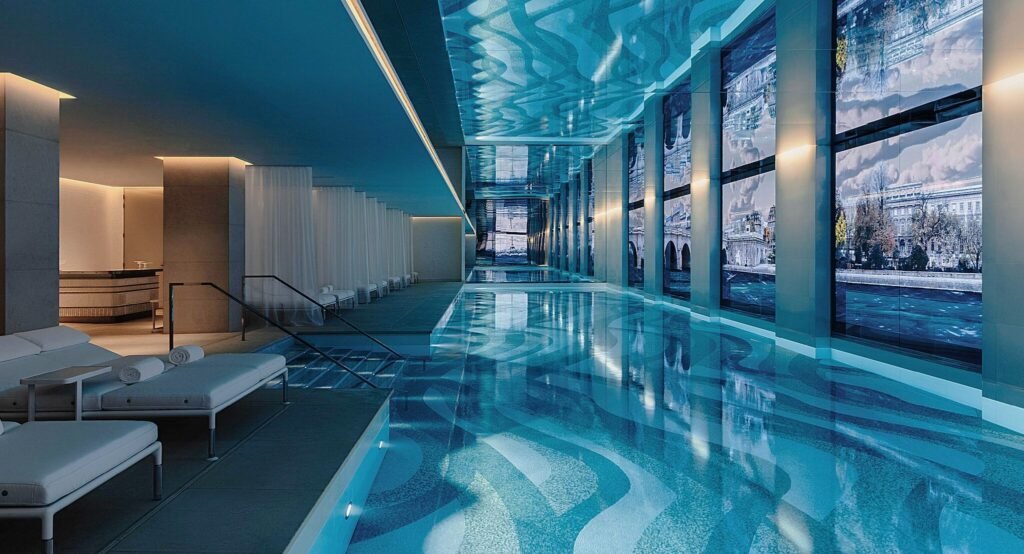
Dior Spas. Exceptional spaces for beauty and recovery
From Parisian hôtels particuliers to Riviera gardens, desert capitals, airport sanctuaries, and even a moving train, Dior Spas have evolved into a…

Does drinking collagen actually work?
We reviewed the latest 2025 clinical evidence on drinkable collagen, including a meta-analysis of 23 randomized trials, and the picture is pragmatic.
