



What to expect from Aman Group’s first Janu Residences in Dubai
A new residential tower in DIFC aims to turn an address into a community, centered on active, holistic living.
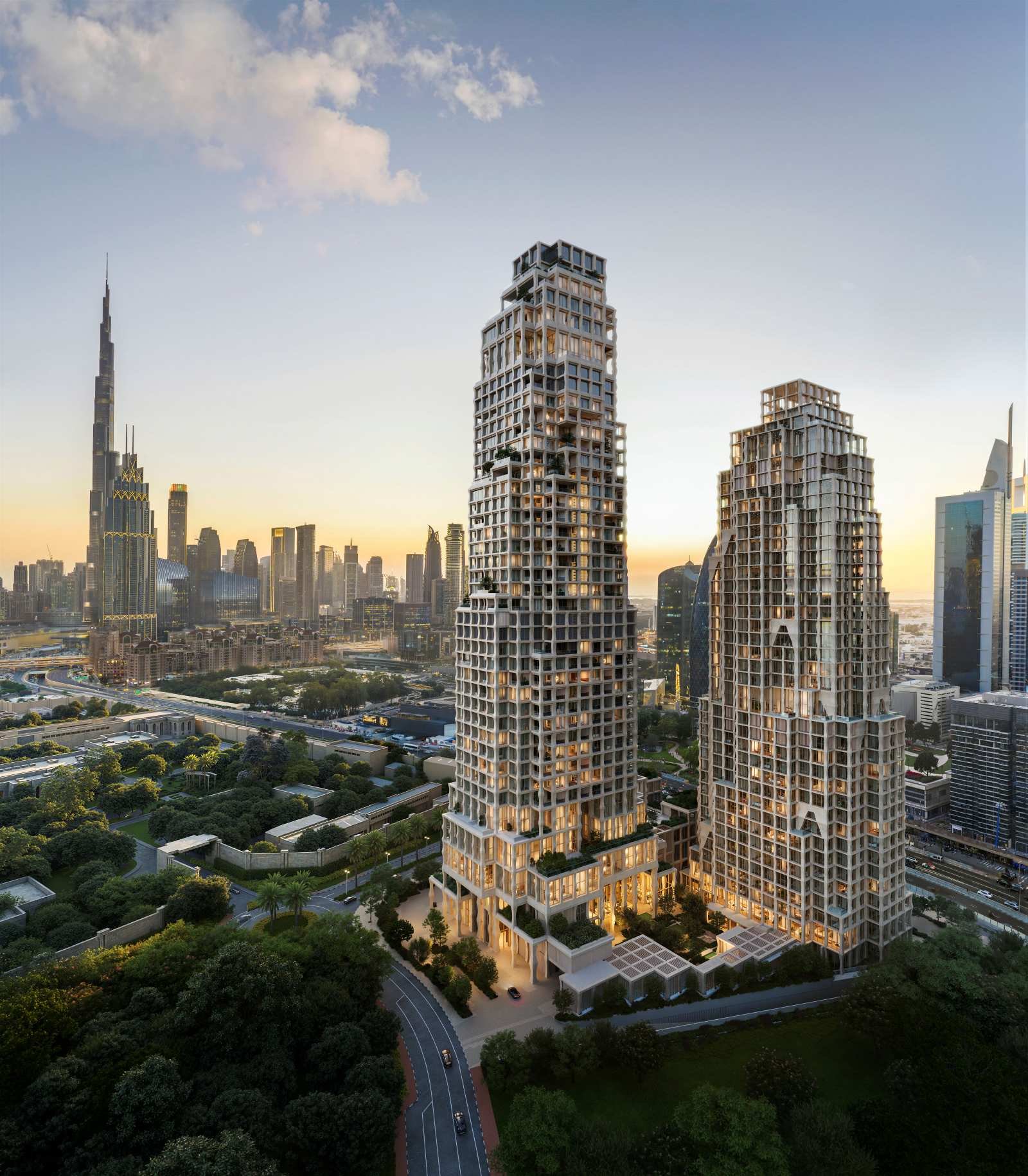
Dubai has become the world’s most fluent market for branded living, yet the strongest projects still need a clear reason to exist beyond a name on the door. Janu Dubai looks like an attempt to answer that test with a tighter, more urban proposition: a hotel, a limited set of branded residences, and an invitation-only club designed to operate as a social engine inside DIFC, with architecture by Herzog & de Meuron.
Janu is the younger sibling brand within the Aman universe, positioned around a more outward-facing, city-tempo idea of hospitality. The brand itself frames the name as derived from a Sanskrit word for “soul”, and it defines its role through connection, energy, and a sense of destination rhythm.
Why DIFC makes sense for Janu
The choice of Dubai International Financial Centre is not a random trophy address. DIFC has spent years building a mix of galleries, design, dining, and business infrastructure that supports daily life, after-hours life, and a dense calendar of openings and events. Janu’s pitch is built for that: a place that is meant to be used constantly, not visited occasionally.
This also becomes Janu’s Middle East debut and the brand’s first residential offering in the region, following the opening of Janu Tokyo in 2024.
The development is planned as a combined hotel-and-residences tower within DIFC. The hotel is described as 150 keys, paired with a limited collection of 57 branded residences, ranging from two- to five-bedroom homes, plus a penthouse at the top.
A second anchor is the first global Janu Club, positioned as an invitation-only members’ club centred on social connection, with its own lounge and bar concepts.
What makes Janu Dubai interesting is the architectural intent: Herzog & de Meuron describes the scheme as a climate-responsive urban concept, with a low-rise base organised around a courtyard reminiscent of a traditional souk, and sculptural tower forms rising above it.
The ground level is planned as a reimagined souk courtyard with retail and food-and-beverage spaces arranged around shaded courts. In Dubai, this is a meaningful signal, because it suggests a project that tries to hold pedestrian life at the base, rather than turning the tower into a sealed object.
Views, gardens, and the DIFC skyline effect
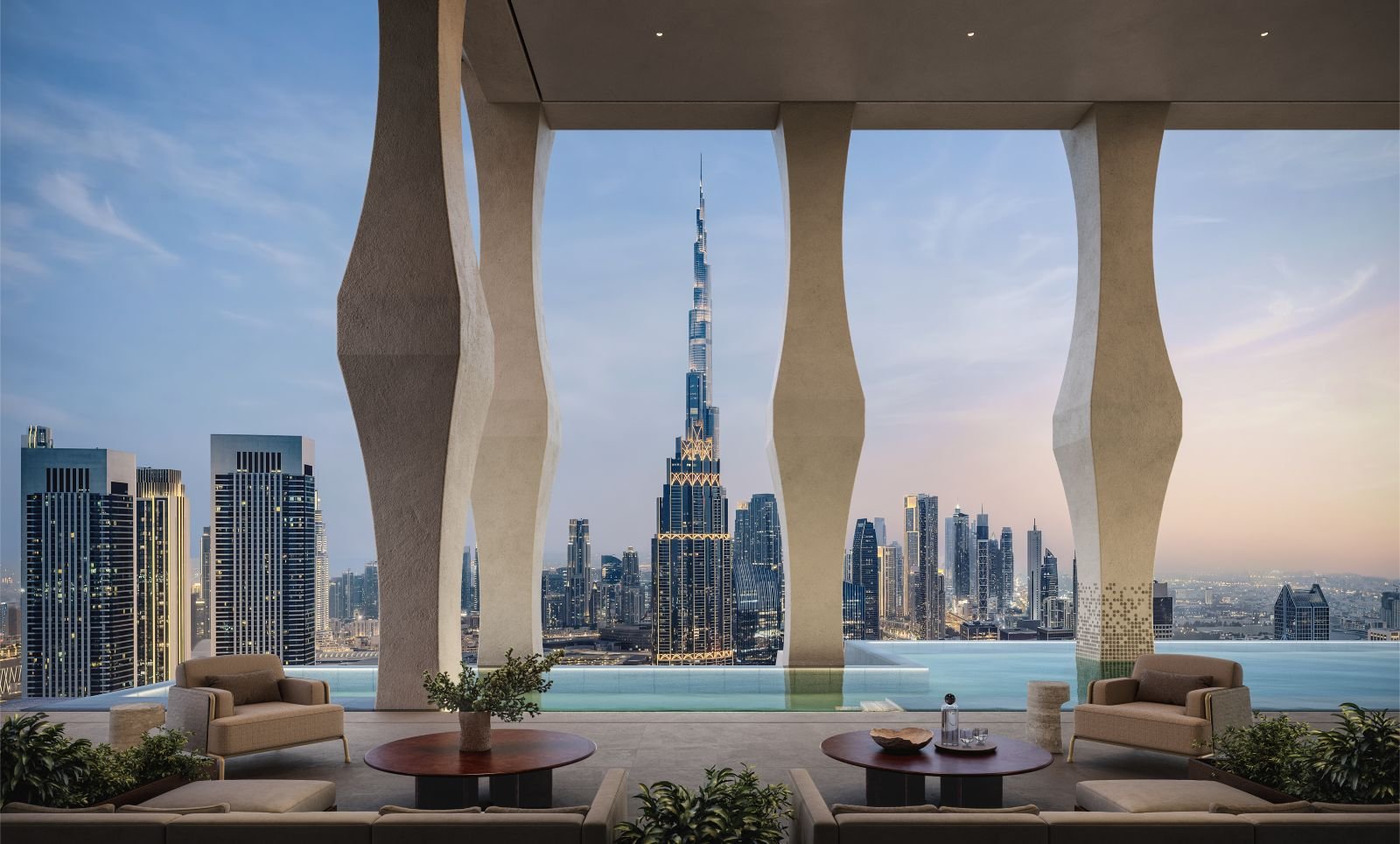
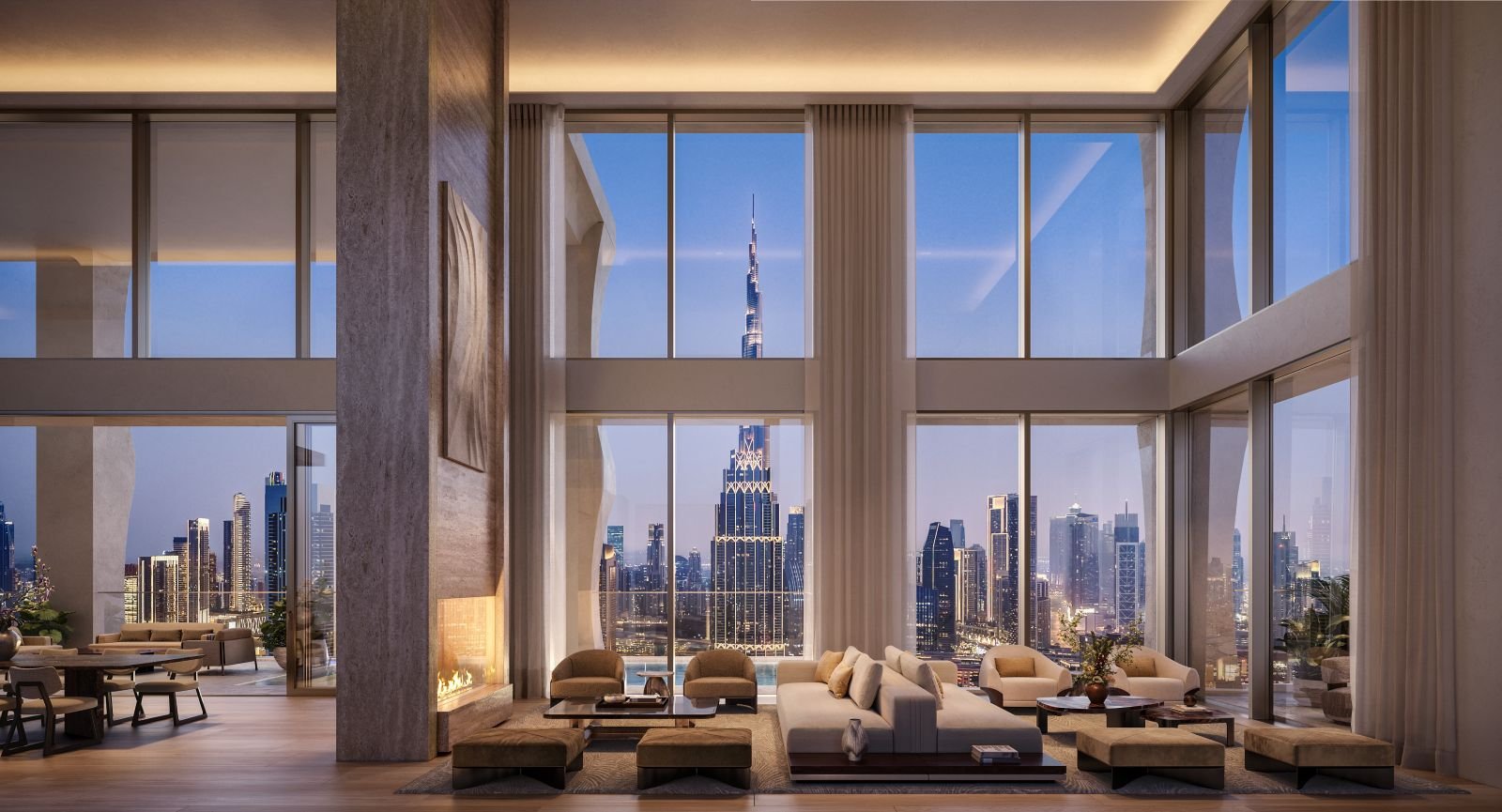
Janu Dubai is positioned with views across Zabeel Palace Gardens and towards Burj Khalifa, with DIFC’s skyline as the near-field context. The greenery is not a decorative footnote in the positioning; it is presented as a defining part of the setting, and the project narrative repeatedly returns to outdoor terraces and planting as a core ingredient.
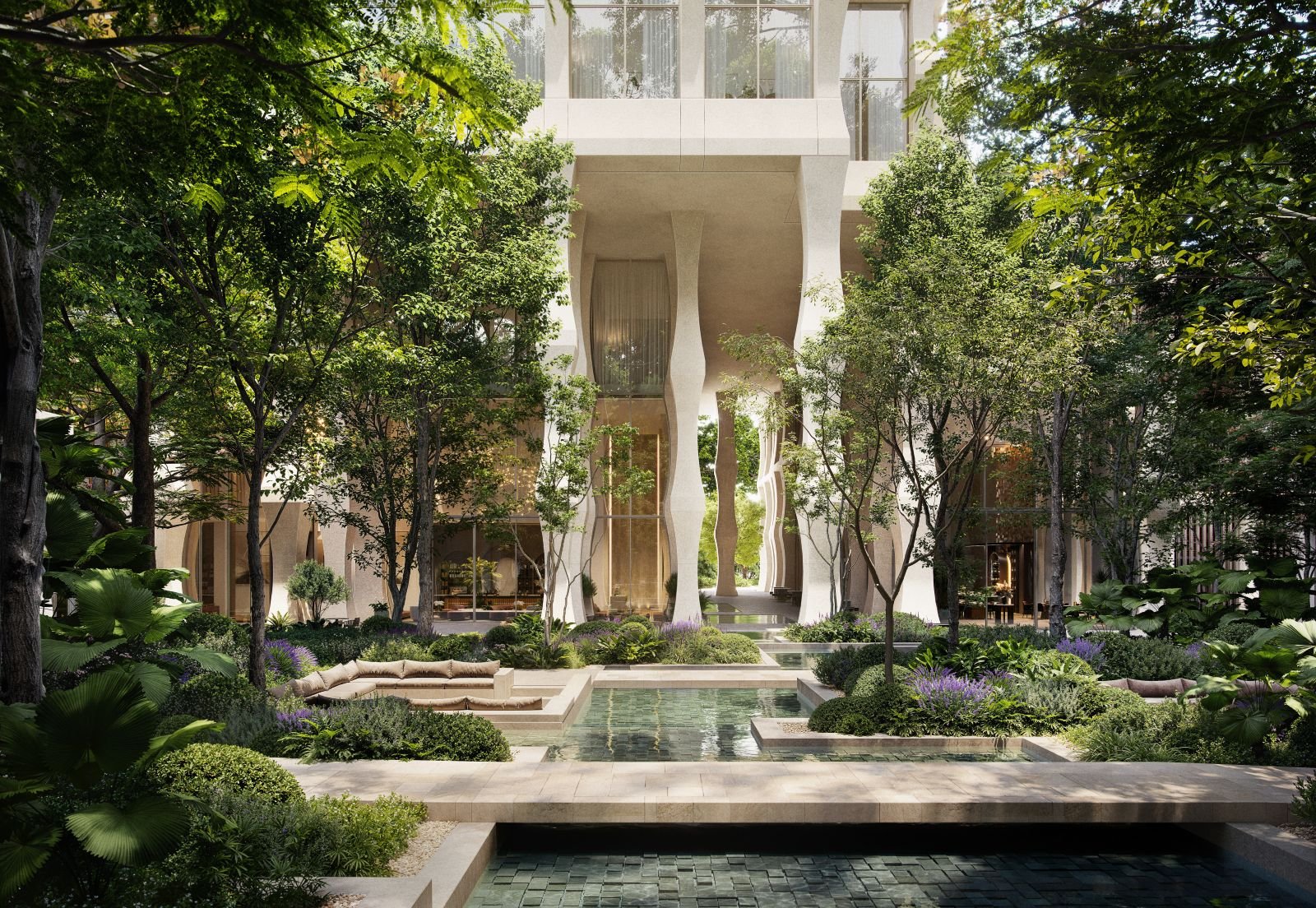
For branded residences, this matters because the most successful “live above the city” propositions still need a counterweight: a sense of calm in the day-to-day loop, and a reason to stay home rather than constantly leaving for the next venue. Here, the gardens become the project’s emotional geometry: DIFC intensity on one side, green space and longer views on the other.
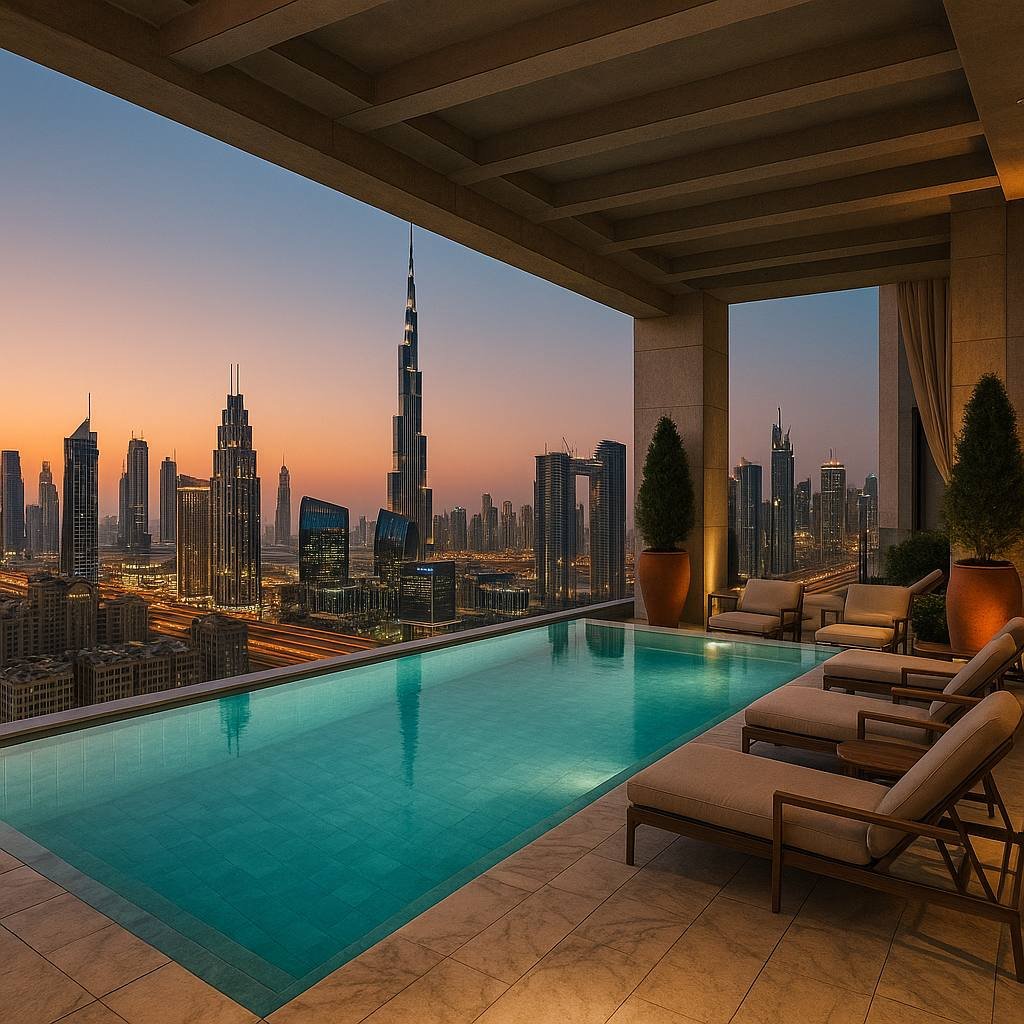
A full floor is reserved for the owner of Aman Group – Vlad Doronin, framed by panoramic views, an infinity-edge pool, and an owners-only Lounge & Bar. This is presented as a private “above the city” layer that sits alongside, rather than inside, the hotel’s public energy.
Wellness and social life as daily infrastructure
Janu’s concept leans into movement and shared experience: fitness and wellness offerings designed for active, holistic living, plus social spaces that carry from early morning into late-night gatherings.
The language here is clearly calibrated for DIFC’s patterns: early routines, business lunches, gallery evenings, and a nightlife rhythm that tends to be intentional rather than chaotic. A project like this succeeds when it can serve all those moments without feeling like a different building every six hours.
Janu Dubai reads as a statement of regional intent, and it arrives alongside other confirmed projects that reinforce the point. Janu has also announced Janu Al Marjan Island in Ras Al Khaimah, adding a waterfront resort-and-residences direction to the brand’s UAE map, as well as in the Kingdom of Saudi Arabia and Turks and Caicos.
Taken together, the pattern looks deliberate: a DIFC urban flagship designed for constant use, paired with a future coastal destination built around a different pace. It is an expansion strategy that fits the UAE’s current hospitality landscape, where city living and escape living are often two sides of the same lifestyle portfolio.
Share


WE RECOMMEND
Dubai’s New Focus: Wellbeing for Residents
After years of speed and scale, Dubai's newest evolution places wellbeing at the center of everyday life, shaping how residents live, work,…
Therme Dubai – What to Expect
Dubai is preparing to open one of the most ambitious wellbeing projects in the world, set to become a vertical sanctuary of…
New Hotels in Saudi Arabia that will Reshape Mindful Travel Expectations
With projects by Jayasom, Six Senses, Aman, and Miraval, Saudi Arabia is beginning to define its own language of regenerative living
