



Build Well to Live: What the Global Wellness Institute Discovered in the Gulf
A new report from the Global Wellness Institute reveals that while the rest of the world is still debating what a "healthy home" means, Saudi Arabia and the UAE have already rewritten the rules – at the scale of entire cities.
In January 2026, a team of researchers from the Global Wellness Institute spent several weeks in Riyadh, Abu Dhabi, Dubai, and along the Red Sea coast. They visited eight projects and published Build Well to Live Well: Case Studies, Vol. 2. The conclusion is short: what remains a niche topic in Europe and the United States has already become a construction standard in the Gulf.
When Wellness Is 12% of Everything You Build
Here’s a number worth pausing on: in Saudi Arabia and the UAE, wellness real estate accounts for roughly 12% of all national construction. That puts them first and second in the world. KSA’s market exploded from $0.2 billion in 2017 to $27.7 billion in 2025 – the fastest growth rate anywhere. The UAE’s market grew from $3.3 billion to $14.6 billion over the same period. Together the two countries hold 85% of the entire MENA market. This has become a way of building.
Wellness as a Master Plan
The central message of the GWI report is this: wellness is built in from day one – infrastructure, climate strategy, cultural code, and operational model, all at once.
The authors identify six dimensions: physical, mental and spiritual, social, environmental, civic and community, and economic and financial. A healthy home is also a walkable neighborhood, clean indoor air, a mosque within reach, accessibility for people with disabilities, and decent living conditions for the workers building it. The six dimensions function as one system.
Eight Projects That Show How
In Saudi Arabia, GWI selected four case studies. AMAALA Triple Bay is the world’s largest integrated wellness tourism destination on the Red Sea coast – a million-acre site, nine resorts in Phase 1, over $13.6 billion in initial investment. Misk City is a new master-planned district on the western edge of Riyadh with 7,500 residential units, anchored by the rehabilitation of the historic Wadi Hanifa as a green spine. Sports Boulevard is a linear park stretching more than 135 km across Riyadh, with 50+ sports facilities. And the Red Sea Global Headquarters at the King Abdullah Financial District is a WELL Platinum and LEED ID+C Platinum office for 1,600 employees.
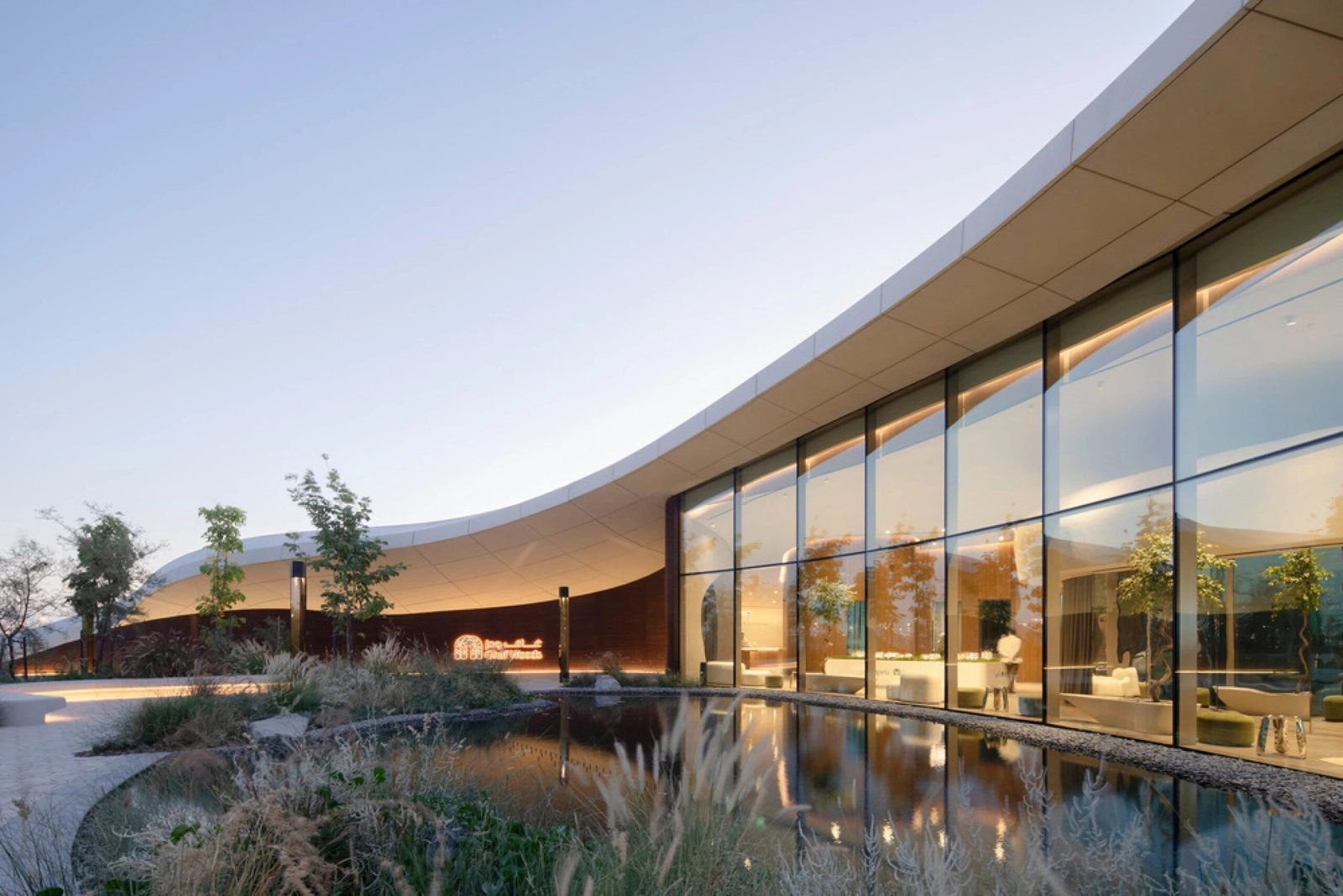
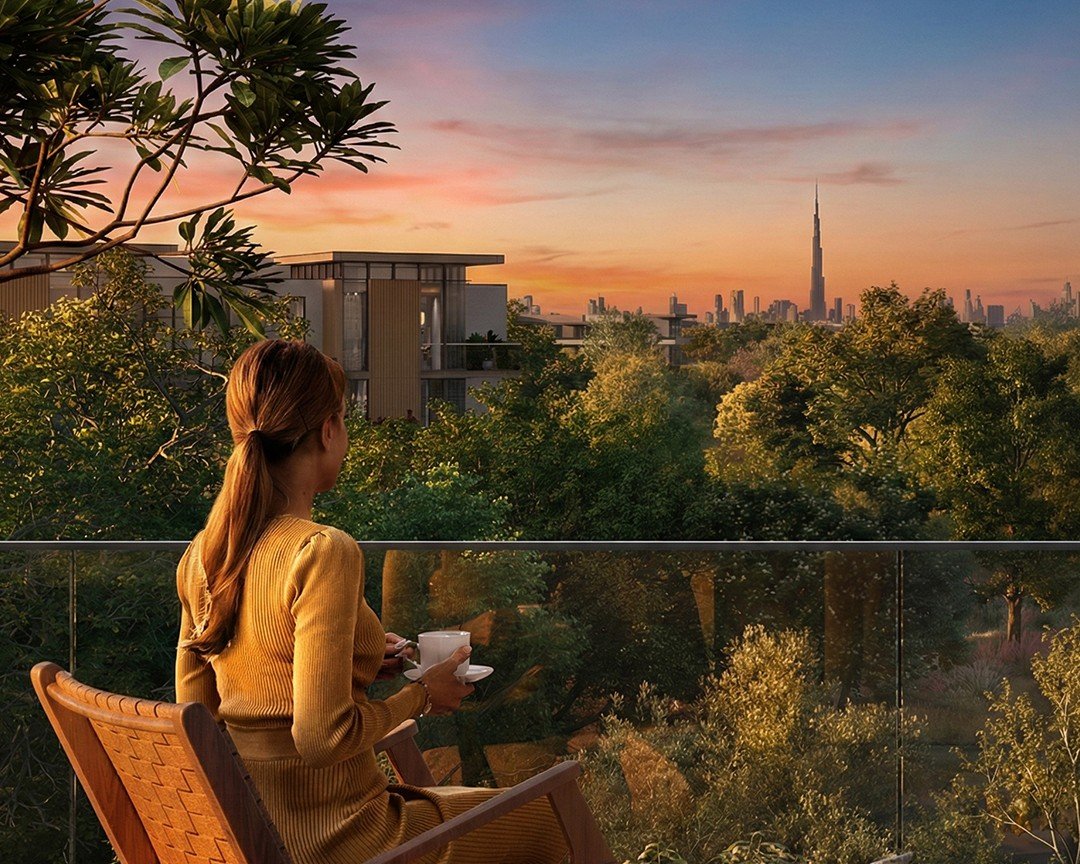
In the UAE, four more. Expo City Dubai is an adaptive-reuse master plan on the legacy site of Expo 2020, designed for 35,000 residents and 40,000 workers. Ghaf Woods is a “forest-living” residential community in Dubai with 35,000 native and adaptive trees. The Sustainable City Yas Island is the first Estidama 5-Pearl community in Abu Dhabi, designed around food autonomy and a low carbon footprint. And Aldar Square, the developer’s headquarters on Yas Island, is a LEED Platinum BD+C and LEED Gold O+M office converted from former retail space.
These eight form a balanced showcase by design: in each country, one corporate headquarters, one master-planned city, one “nature plus housing” project, and one public-realm project. The pairing makes it easy to compare how two countries approach the same problems.
A Correction of the City
Another core argument in the report: wellness real estate in the Gulf emerged as a correction. For decades, urban planning in both countries leaned car-centric and sprawling – expanses of concrete, gridlocked roads, cheap fuel feeding car ownership, and a thin public realm for everyday life.
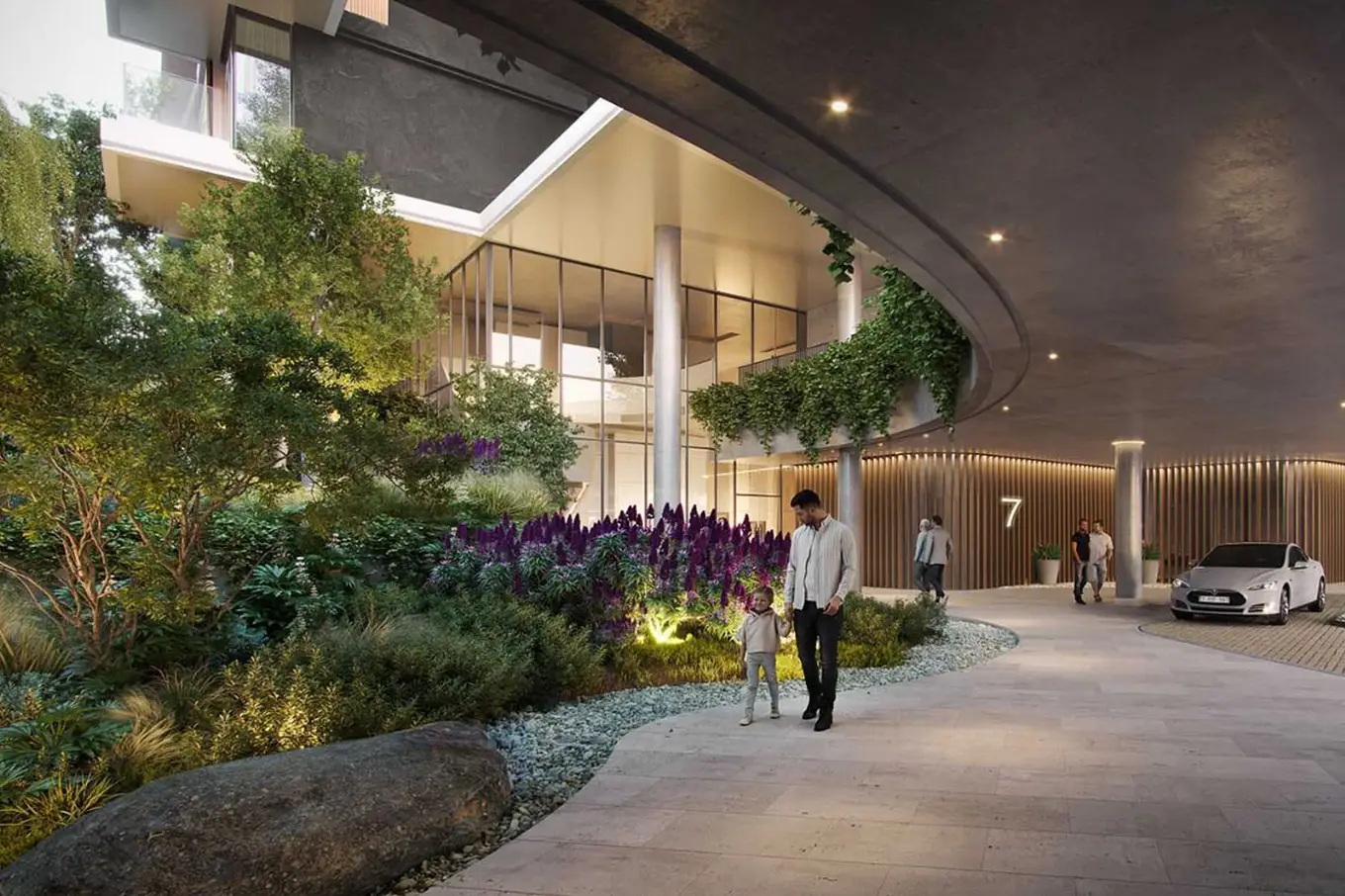
Now the script is flipping. All eight projects are designed as 15- or 20-minute communities, and several – Ghaf Woods, Expo City Dubai, The Sustainable City Yas Island – are entirely car-free inside their boundaries. The new architectural language is vernacular: mashrabiya screens, sikkas (narrow shaded alleys between buildings), wind catchers, native landscaping, high-reflectance materials. The logic is purely functional. In the Gulf climate, passive shading simultaneously cuts energy use and extends the hours people can spend outdoors.
Two-Layer Certification
GWI notes a clever strategy: the best projects pursue local and international certifications in parallel. Local systems – Mostadam in KSA, Estidama in Abu Dhabi, Al Sa’fat in Dubai – are tuned to extreme heat, water scarcity, dust, and regional building codes. International systems – WELL, LEED, BREEAM, Fitwel – usually at Gold or Platinum level.
The first set works for the climate and the regulators. The second set works for global investors and tenants who need a recognizable seal of quality.
Care That Extends Downward
One of the report’s strongest threads: wellness in the Gulf includes construction workers. Aldar Properties houses more than 60,000 workers in purpose-built villages with healthcare, nutrition, and recreation facilities. Red Sea Global maintains its own Construction Village for 15,000 workers at the AMAALA site. GWI treats this as inseparable from sustainability: a project earns the “healthy” label only when the people building it also live in healthy conditions.
For a region where migrant worker conditions have historically been a serious issue, this is a meaningful shift.
The Business Case
The price premium for wellness-positioned residential properties runs 10–25% in mid- and upper-market segments. Commercial rents pull a 4.4–7.7% premium per square foot. On top of that: fast pre-sales before construction begins, strong resale appreciation, higher productivity in WELL-certified offices, lower turnover, better tenant retention.
Demographics reinforce the trend. The median age in Saudi Arabia is 22, and 63% of Saudi nationals are under 30. Female labor force participation has grown from 21.6% to 33.6% in ten years. As of January 2026, foreigners can buy and own property in KSA. The UAE has had a renewable five-year retirement visa since 2020. All of this opens new wellness real estate segments: co-living, senior living, multi-home ownership, digital nomads.
What GWI Is Really Saying
Reduced to a single thought: the Gulf has become the world’s wellness real estate laboratory, and the rest of the world should be paying attention.
Worth studying, even where the specific conditions – climate, political will, and the investment scale in Riyadh and Dubai – remain unique to the Gulf. The lesson lies in the underlying logic: wellness has graduated from a “nice bonus” into a design approach where master planning, climate strategy, cultural rootedness, inclusivity, and care for people all work as parts of one system.
And that system is already operating at full scale – in real projects, with real numbers, real certifications, and real residents.
Share


WE RECOMMEND
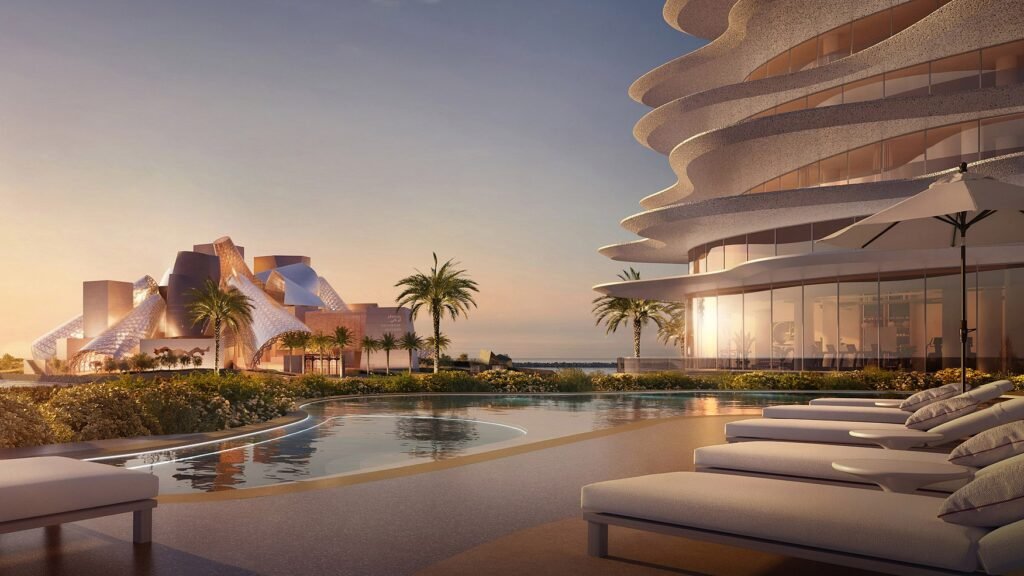
Architectural poetry on the shoreline: Sou Fujimoto’s Baccarat Residences in Abu Dhabi
Japanese architect Sou Fujimoto makes his first statement in UAE residential real estate with Baccarat Residences on Saadiyat Island, next to Frank…
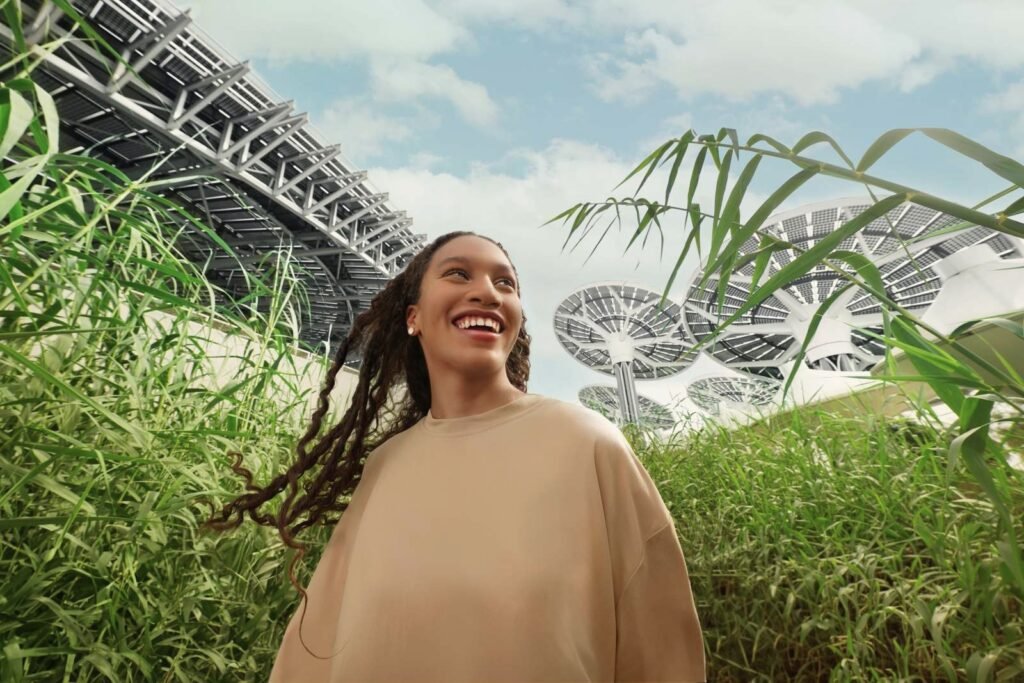
A Place to Return To: Terra Introduces a Membership Built Around Nature
At Terra Pavilion in Expo City Dubai, a new membership programme offers a more continuous way to engage with nature. It brings…
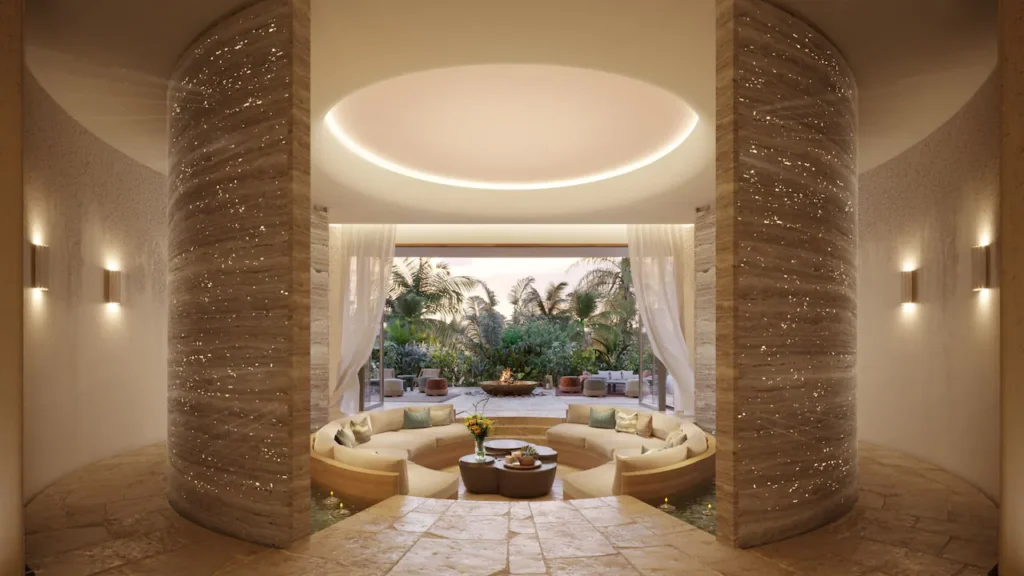
New Hotels in Saudi Arabia that will Reshape Mindful Travel Expectations
With projects by Jayasom, Six Senses, Aman, and Miraval, Saudi Arabia is beginning to define its own language of regenerative living
