




The Sicilian Odyssey – Into Homer’s Wine-Dark Sea
As Christopher Nolan returns Homer’s wandering king to the screen this July, Rocco Forte Hotels invites travellers to trace Odysseus through the real Sicily.
The Sicilian Odyssey – Into Homer’s Wine-Dark Sea
As Christopher Nolan returns Homer’s wandering king to the screen this July, Rocco Forte Hotels invites travellers to trace Odysseus through the real Sicily.
Nearly three thousand years after it was first sung aloud, the oldest travel story in the Western canon is about to fill the largest screens ever made for it. On 17 July, Universal Pictures releases The Odyssey, Christopher Nolan’s adaptation of Homer’s epic, shot entirely on IMAX 70mm film and led by Matt Damon as Odysseus, alongside Anne Hathaway as Penelope, Tom Holland as Telemachus and Zendaya as Athena.
The world premiere lands in London on 6 July; by the middle of the month, audiences from Mumbai to the Gulf will watch a Bronze Age king fight his way home across the sea that Homer, with his painter’s ear, called wine-dark.
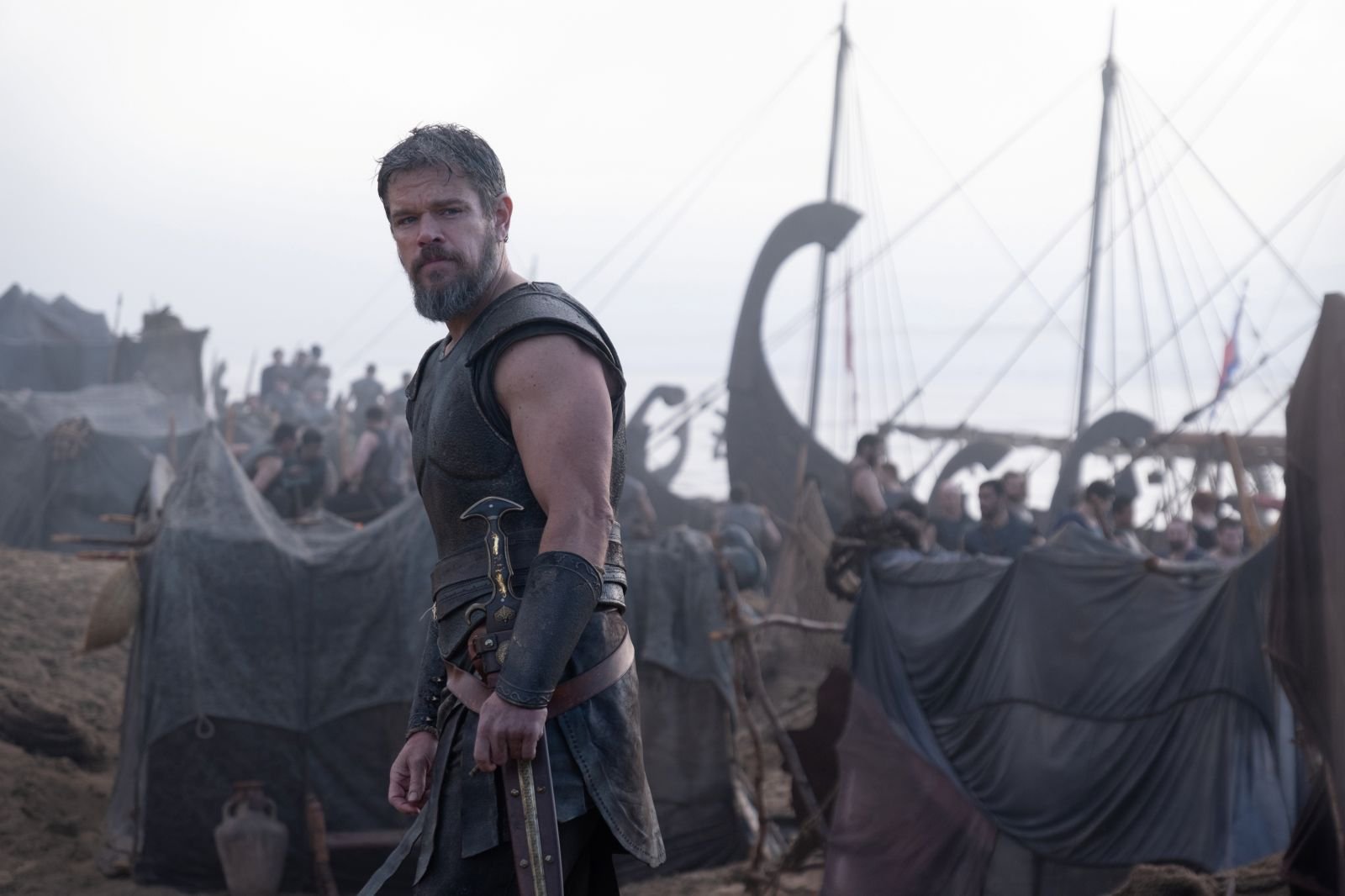
Nolan has assembled the kind of ensemble that has become his signature – Robert Pattinson, Lupita Nyong’o, Charlize Theron and Jon Bernthal among them – and has spoken of giving Homer’s gods and monsters the full weight that a large-scale production allows. Filmed on the most advanced cameras yet made, the result promises spectacle on the scale of the myth itself: the Cyclops, the Sirens, and the long grief of a man held ten years from his own door.
A great deal of that sea is Sicilian. Through 2025, Nolan and his crew filmed across Italy, Greece, Iceland, Morocco and Scotland, and among their locations stood Favignana, the largest of the Egadi Islands off Sicily’s western tip. In antiquity the island answered to the name Aegusa – the goat island – and an old tradition counts its limestone shores among the places where Odysseus and his crew are imagined to have come ashore. To walk that coast today is to stand inside the poem and the film at once.
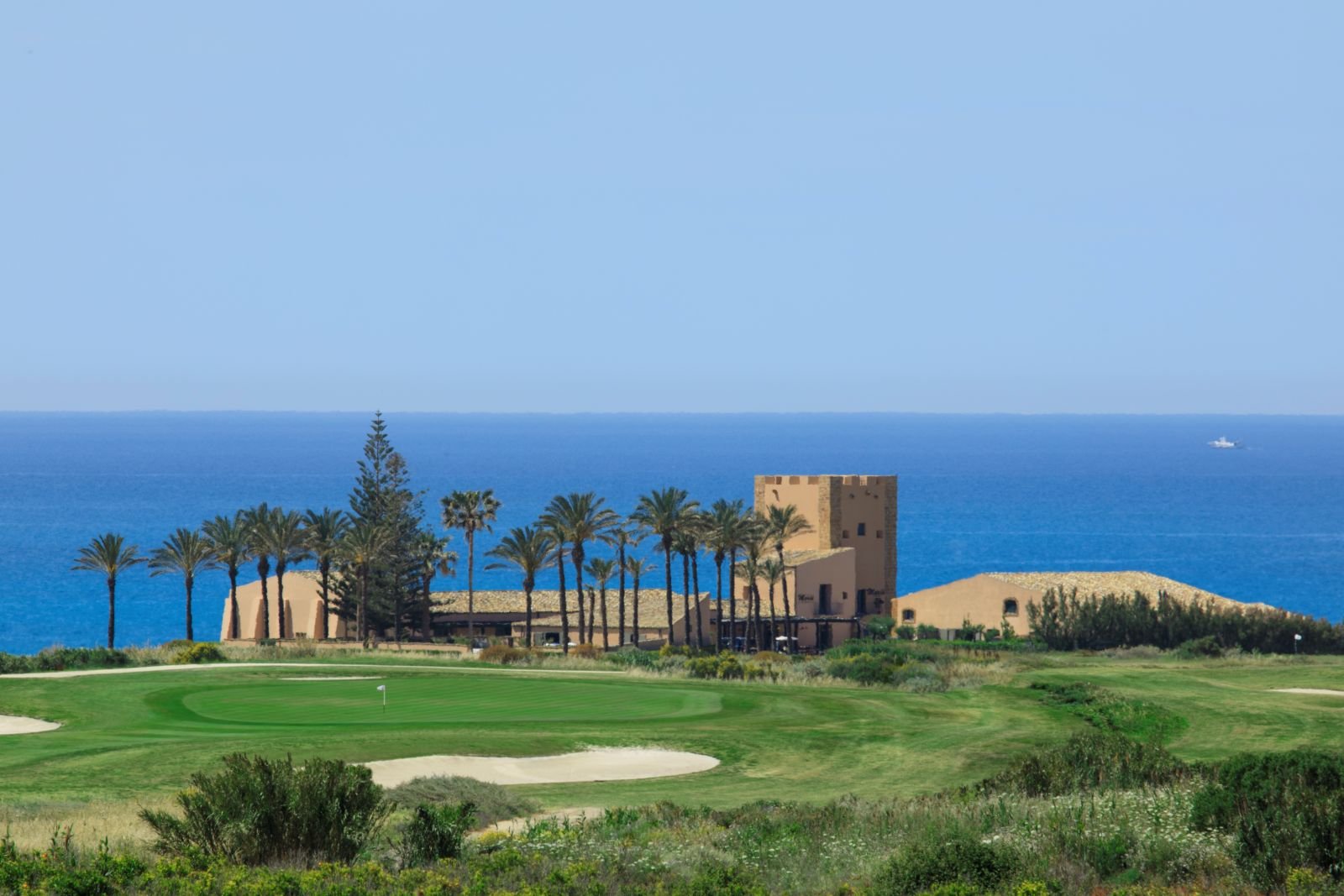
This is the thread Rocco Forte Hotels has chosen to pick up. Created for guests of Villa Igiea in Palermo and Verdura Resort on the island’s south-western coast, The Sicilian Odyssey is a new itinerary that follows Homer’s geography and Nolan’s locations through three chapters of landscape, archaeology and open water. Guests may take one, two or all three, threading them into a single passage.
First chapter: Mothia and the Stagnone
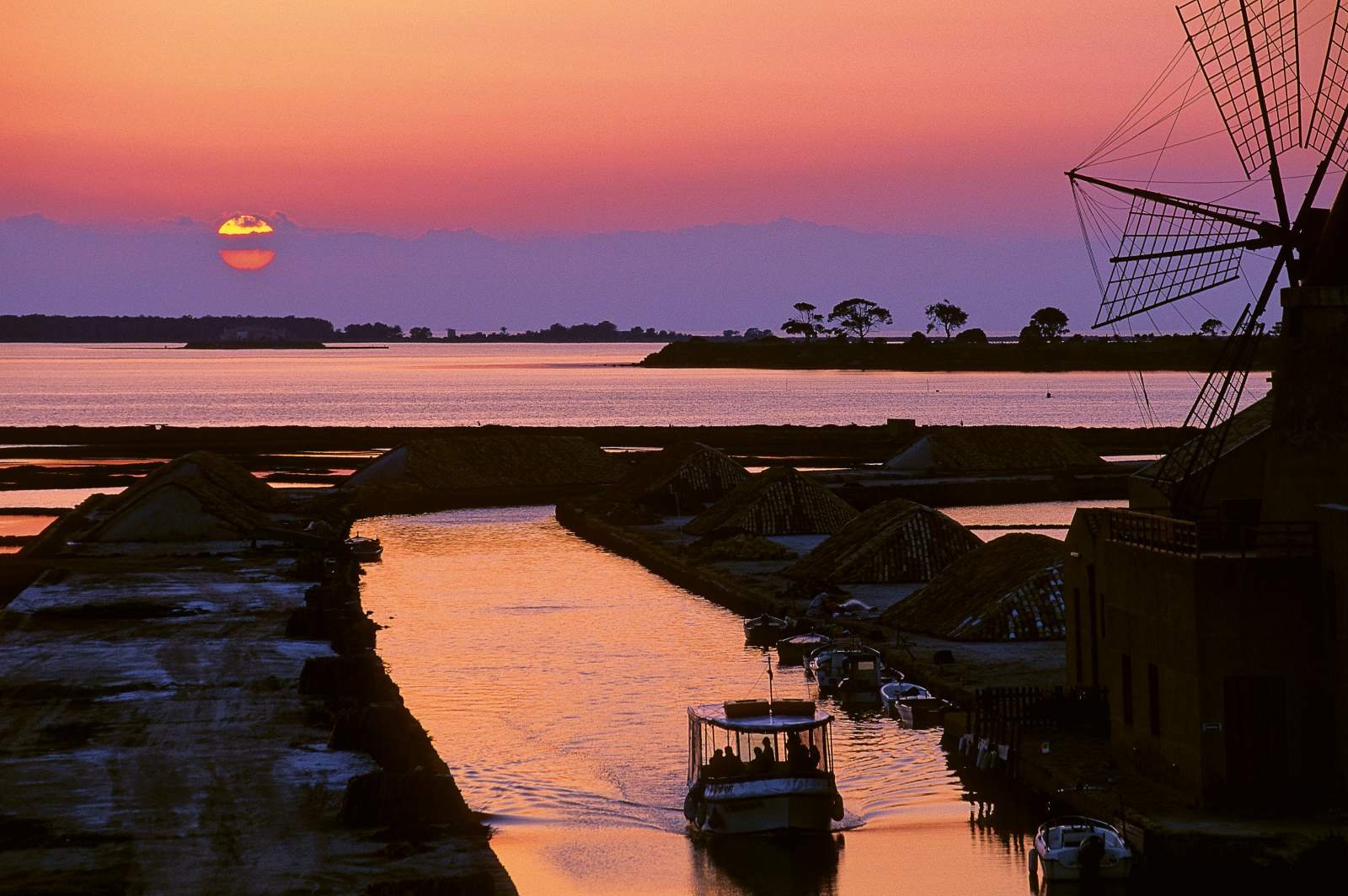
The journey opens on Mothia, a low green island held within the mirror-still waters of the Stagnone lagoon, a place layered with Phoenician and ancient Mediterranean history. A gentle walk through the surrounding Grillo vineyards leads to the Whitaker Museum, home to the Ephebe of Mothia – a marble youth carved in the fifth century BC, his wet drapery still clinging to the stone after two and a half thousand years. Lunch follows in the seclusion of a walled garden: couscous and caponata, the Arab and Sicilian kitchens meeting on a single plate, as they have for centuries on this coast.
Second chapter: the Zingaro coast
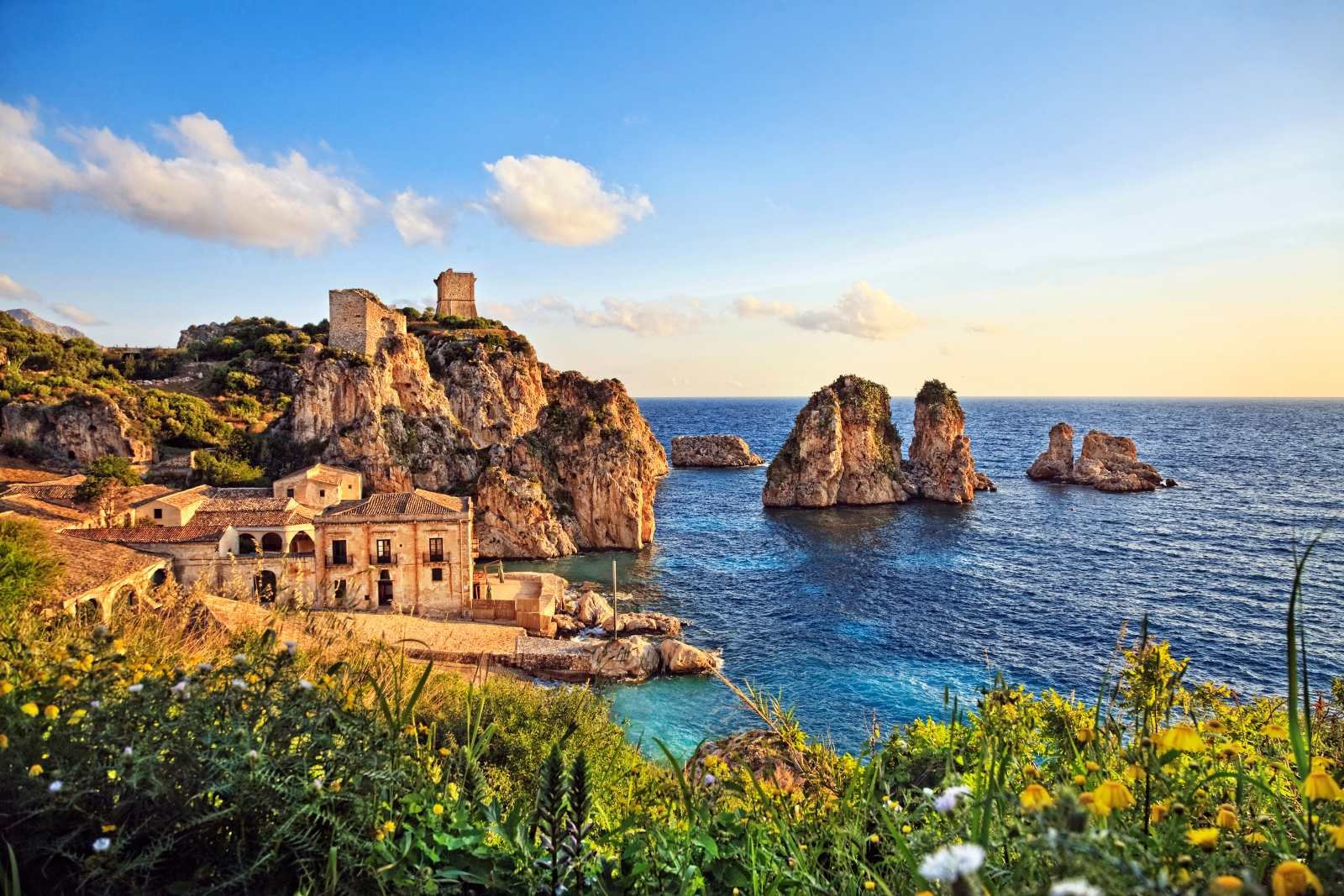
The second chapter belongs to the water. A two-hour cruise from either hotel traces the coastline towards the Zingaro Nature Reserve, gliding beneath towering sea stacks and weathered cliffs, past the dark mouths of the caves that the ancients once peopled with their own monsters. In a sheltered bay the yacht drops anchor, and guests slip into water clear enough to read the seabed – the kind of swim that resets a body and a mind, and the closest a modern traveller comes to Odysseus’s own element.
Final chapter: Favignana
The voyage closes where the film itself came ashore. Favignana offers a string of luminous coves – Cala Rossa, Cala Rotonda, Cala Azzurra and Cala del Bue Marino – their turquoise water set against the pale tufa quarried here for generations. In the harbour town stands the Tonnara Florio, the grand tuna works that Vincenzo Florio built into one of the Mediterranean’s most productive in the nineteenth century, its arches a monument to the industry that shaped the island’s fortunes. History, myth and cinema converge here on a few square miles of rock and sea.
Where myth comes ashore
Back at Villa Igiea and Verdura Resort, the experience finds its coda in a photographic exhibition of stills from Nolan’s set, shared courtesy of Universal Pictures. The imagined Odyssey and the lived one meet on the same walls, the production’s vision of the ancient Mediterranean hanging a short drive from the coves and ruins that shaped it.
The two hotels make fitting harbours. Villa Igiea rises between Monte Pellegrino and the Gulf of Palermo, a belle époque villa restored into seventy-two rooms and twenty-eight suites, its terraces given over to Sicilian cooking under Fulvio Pierangelini. Verdura Resort stretches across 230 hectares of olive and citrus groves, with 1.8 kilometres of private shore and two Kyle Phillips golf courses; at its heart, the Irene Forte Spa offers a four-thousand-square-metre sanctuary built for the slow work of restoration – the return, in its way, that every Odyssey is really about.
For the Gulf traveller drawn to journeys with meaning held inside them, the timing is rare. A film three millennia in the making arrives in July; the islands that shaped it wait a short flight away, ready to be read as both location and legend. Odysseus took ten years to come home. The modern voyager needs only a long Sicilian summer.
Share


WE RECOMMEND
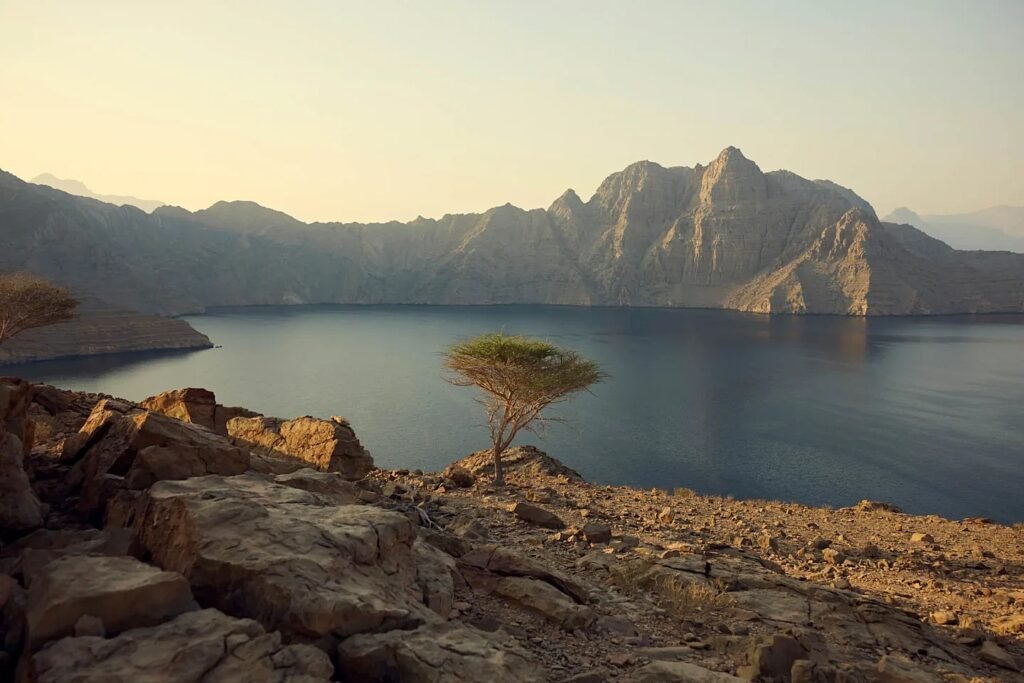
A Retreat in the Arabian Fjords: Oman’s New Members-Only Escape to Open in 2026
Discover Collection Ras Amud will bring a new kind of private hospitality to Oman’s Musandam Peninsula, shaped by membership, slow travel and…
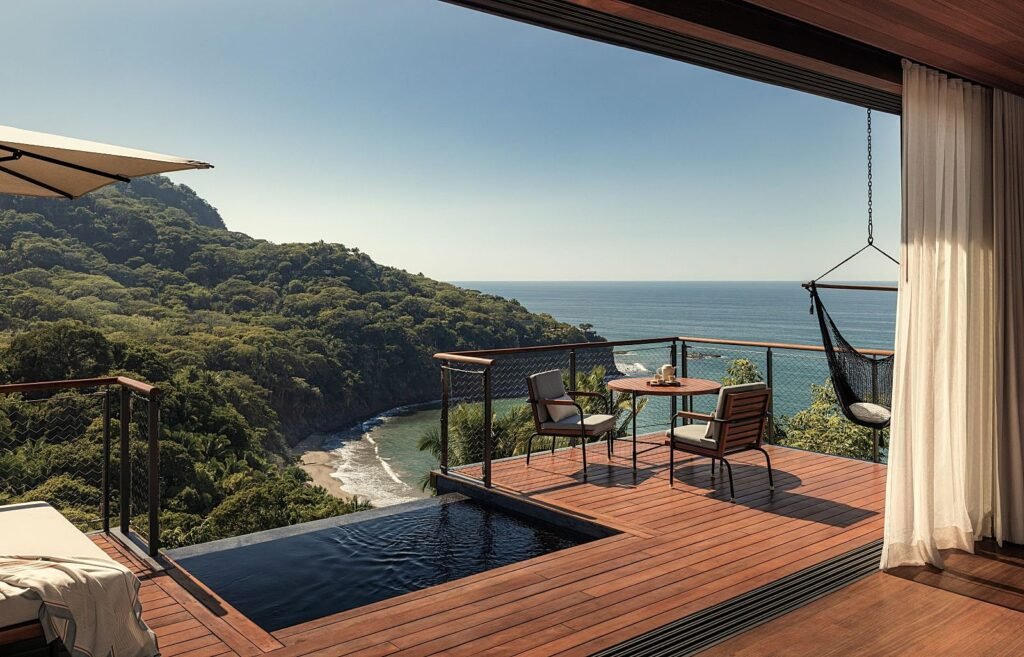
Ancient Healing at One&Only Mandarina
How the oldest spiritual traditions in Mexico found their home inside the most immersive luxury wellness experience in the country.
Quiet shift: trading city life for space
Power is changing its address. Leaders are trading density for clarity, building lives where calm luxury, health, and clean attention shape every…
