



Anantara Golden Triangle: A House at the Height of the Fog
At the meeting point of Thailand, Laos and Myanmar, Anantara Golden Triangle Elephant Camp & Resort turns the landscape into the central experience.
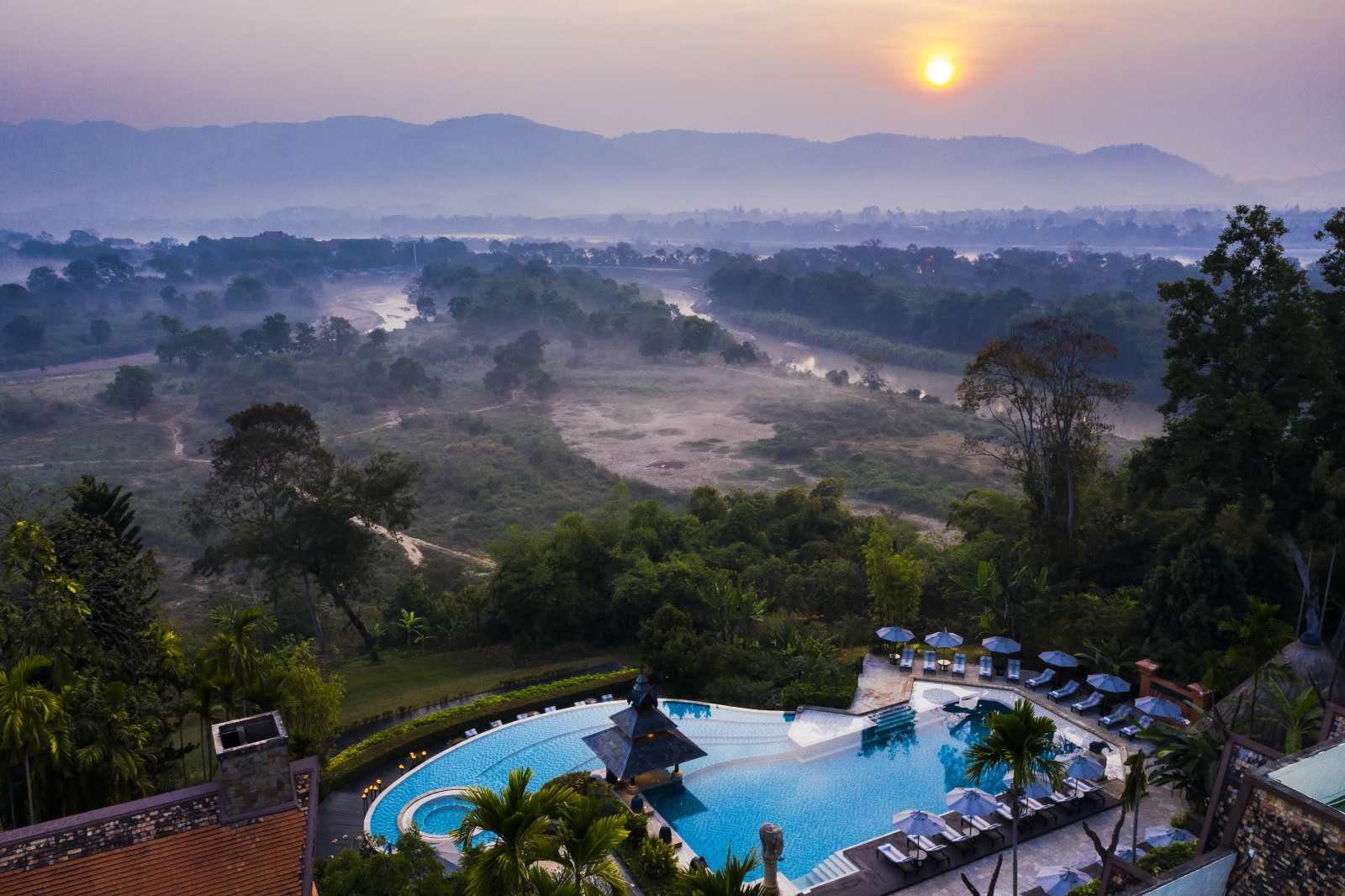
There is a particular kind of geography that refuses to sit still on a map – a place where three countries dissolve into one another and the border becomes more idea than line. This is the Golden Triangle, the meeting point of Thailand, Laos and Myanmar, where the Mekong and Ruak rivers converge below a ridge of dense jungle. Once the epicentre of the region’s opium trade, the area now carries a very different kind of currency: 160 acres of protected forest, a resident population of rescued elephants and a resort that has spent decades learning how to disappear into its own landscape.
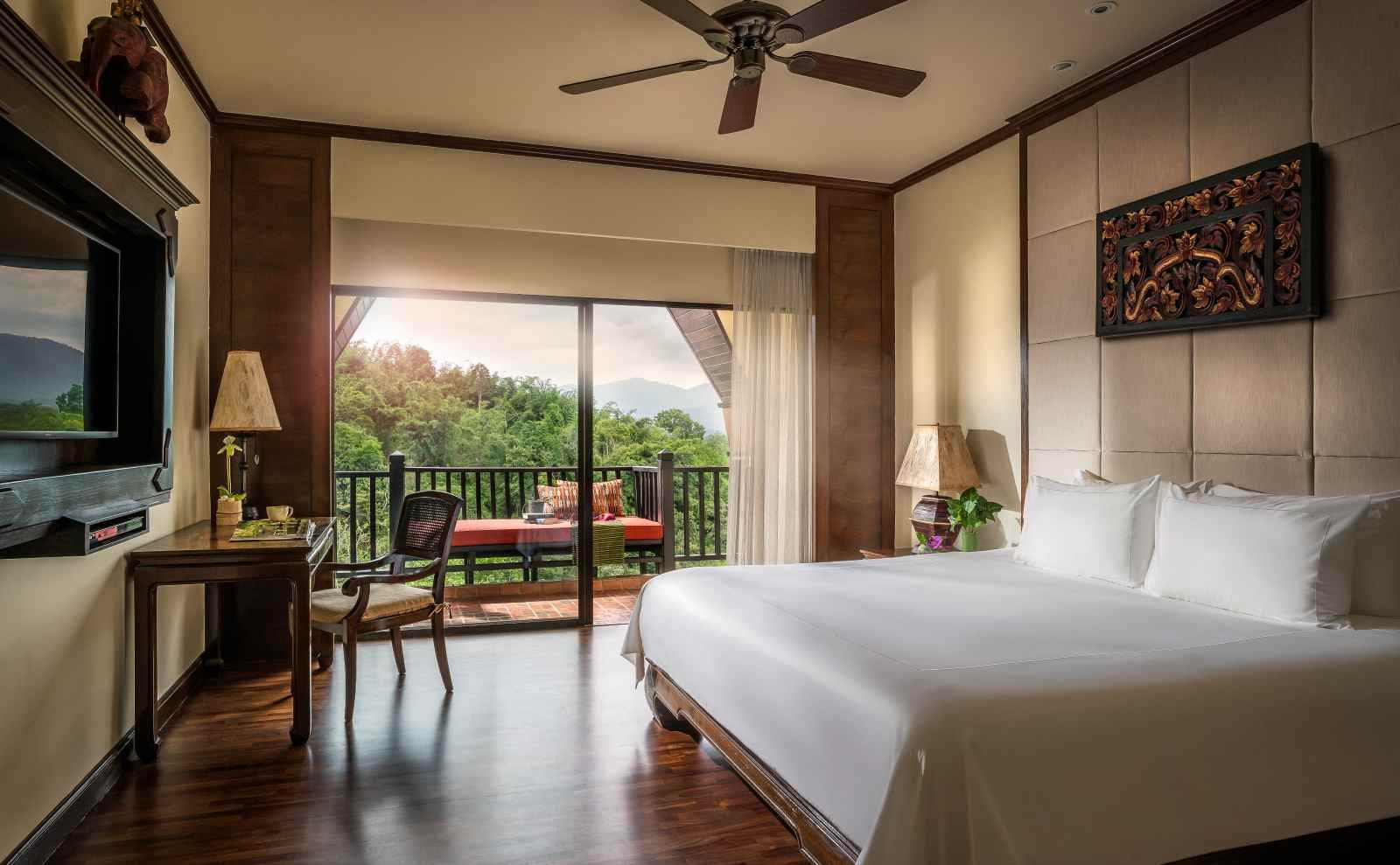
Anantara Golden Triangle Elephant Camp & Resort, an hour’s drive from Chiang Rai, sits on a hillside landscaped by Bill Bensley, its architecture deferring at every turn to the jungle around it. The property has earned Two MICHELIN Keys, a recognition reserved for stays of genuine distinction, and its reputation rests less on scale than on specificity – on the fact that everything here, from the elephant welfare programme to the newest dining concept, has been built around one particular piece of ground and what it demands.
That specificity is the whole premise of the Jungle Luxe Elephant Experience, a programme designed not as a checklist of activities but as a single, unbroken narrative that moves guests from the forest floor to the canopy and back again.
A cake, and an audience of giants
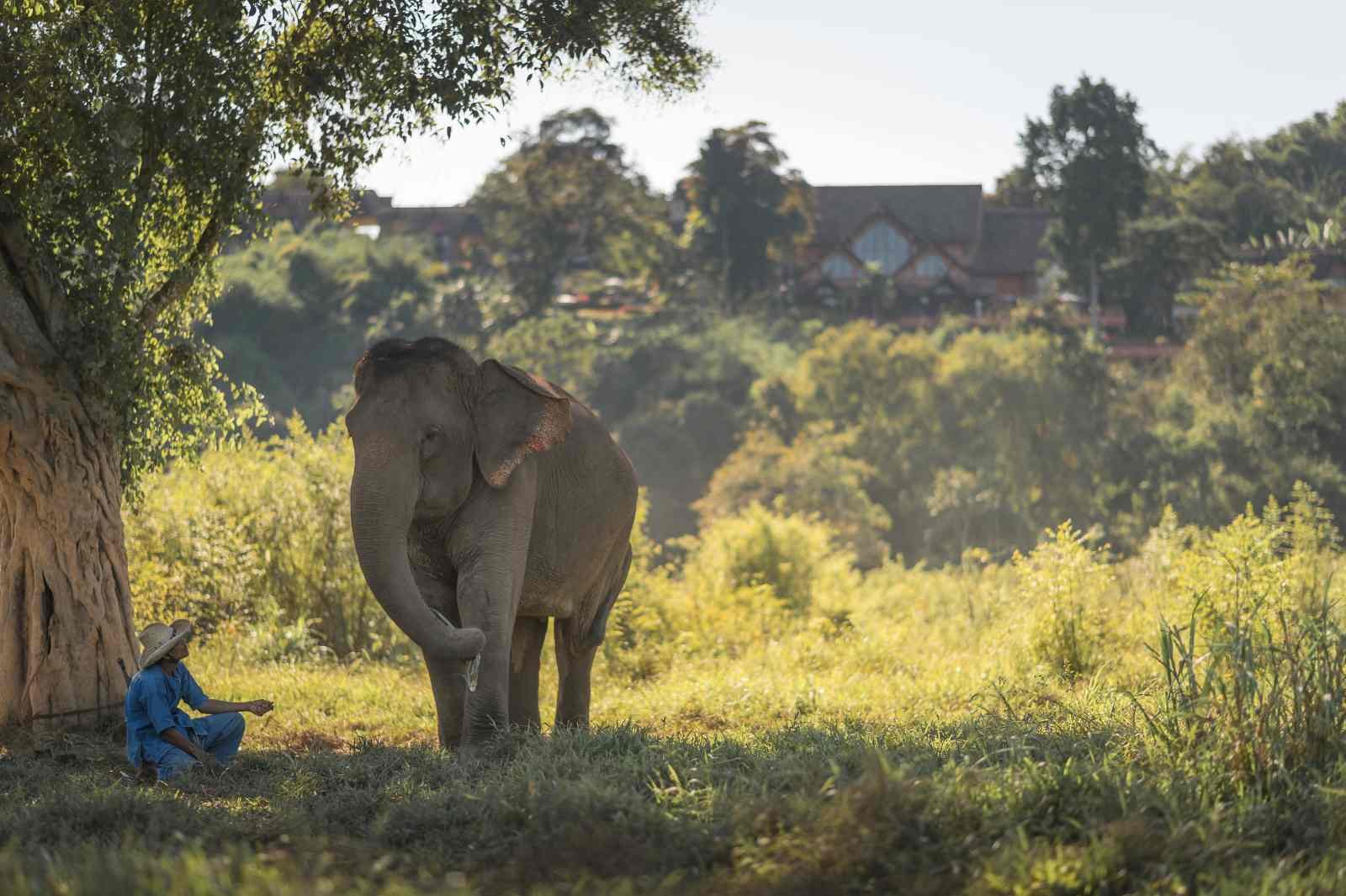
The experience opens with an act of quiet craftsmanship. Guests are invited to prepare a celebratory cake for the resort’s elephants, selecting natural flavours and decorations by hand before the treat is presented to its intended recipients. What follows carries real emotional weight: watching an elephant receive something made specifically for it, with the kind of unhurried attention these animals rarely receive elsewhere. The camp is home to 20 rescued elephants, cared for in partnership with the Golden Triangle Asian Elephant Foundation (GTAEF), an organisation built to give sanctuary to animals rescued from logging camps, city streets and tourist shows. The cake-making ritual functions as an introduction to that history – a gentle, hands-on way of understanding who these elephants are before spending any further time in their company.
Dinner, 52 metres above the grasslands
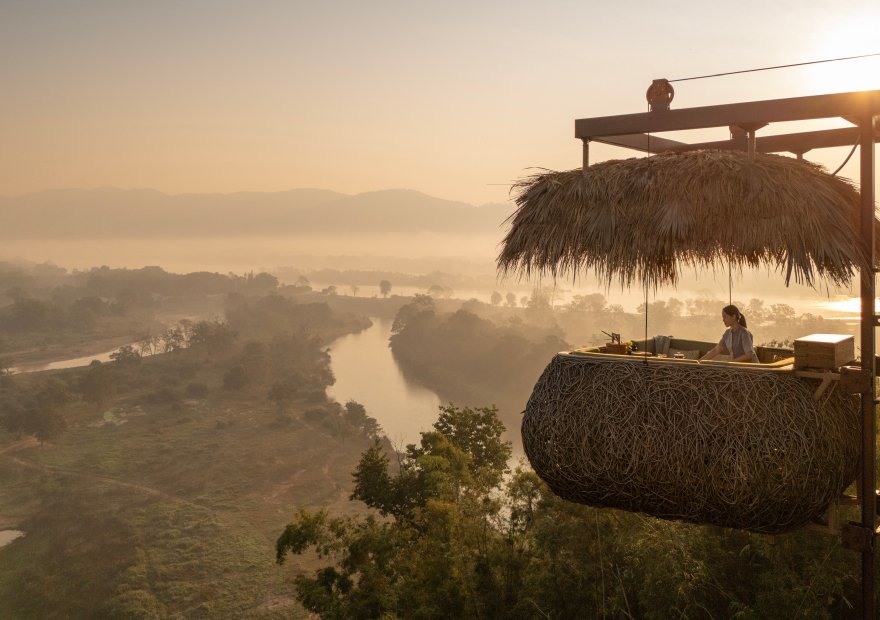
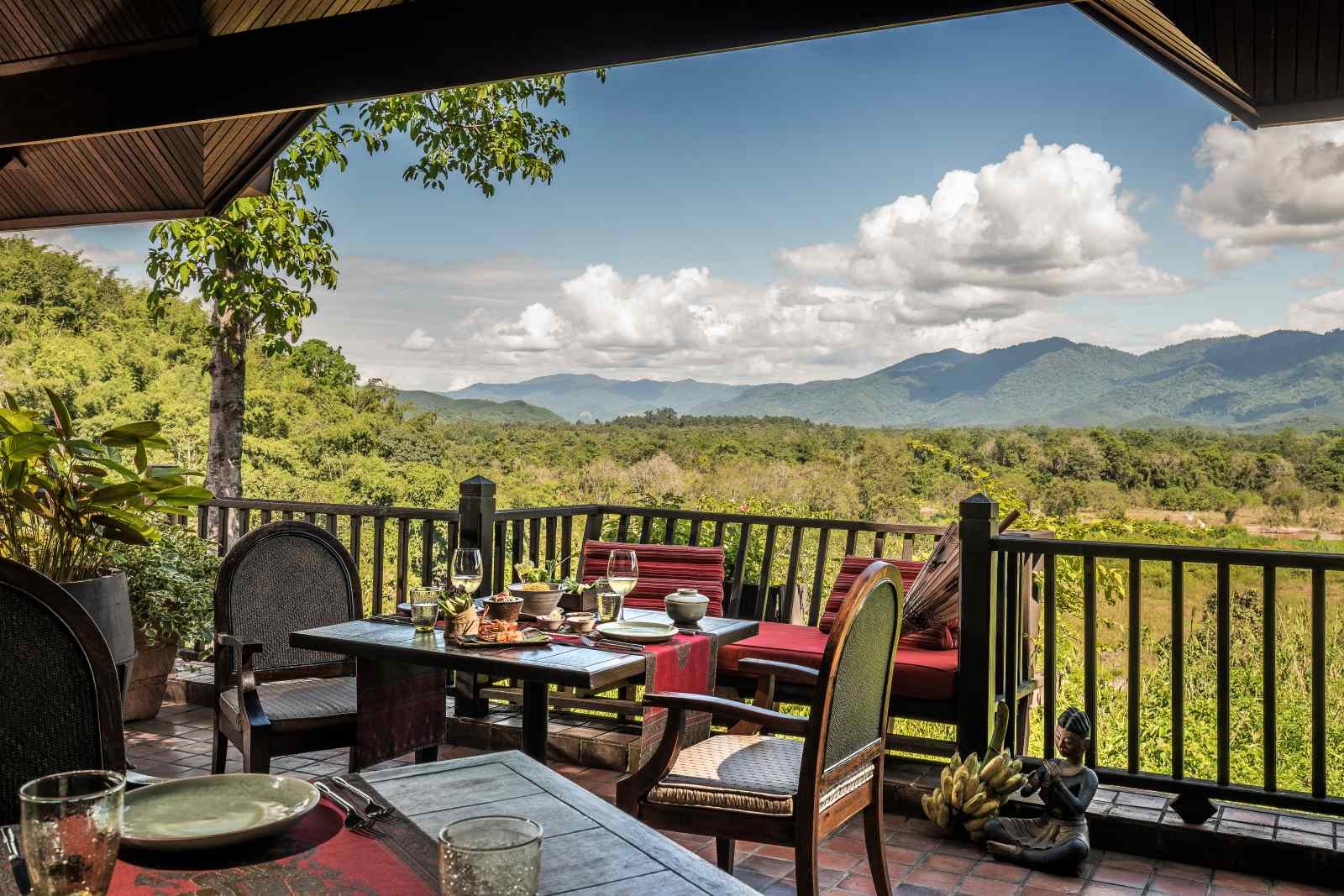
From there, the experience lifts – literally. Diners climb into a treetop cocoon suspended 52 metres above the grasslands, where a table is laid with views running the full width of the Golden Triangle. Below, the elephants move through the jungle at their own pace, unaware of, and entirely unbothered by, the audience above them. It is a rare structural trick: a dining room with no walls and no fixed horizon, where the meal is secondary to the vantage point, and the vantage point is secondary to what is moving beneath it. Anantara’s kitchens have built a small reputation around this kind of elevated dining, and the treetop format – previously used for breakfasts among the branches – finds its most theatrical expression here.
Deeper into the herd
For guests wanting more time among the elephants, the resort offers two further routes into the programme. Walking with Giants is a guided walk alongside the herd through the forest, following the animals as they splash in the river, browse the undergrowth and interact with one another – the closest the resort comes to observing elephants exactly as they would behave without an audience at all. The Elephant Guardian experience takes a different angle, focusing on the mahouts themselves: the historical and cultural traditions binding these caretakers to their elephants, often across generations of the same families. Where Walking with Giants is observational, Elephant Guardian is relational – an introduction to the human half of a partnership that predates the resort by centuries.
A hillside of one’s own
Guests seeking a still more private register can extend their stay into the Mekong Explorer Tent, positioned high on a secluded hillside within the jungle. It is the resort’s answer to solitude – removed from the main lodge, oriented toward the river below, and designed for travellers who want the Golden Triangle’s landscape without any accompanying itinerary.
A wellness in the forest
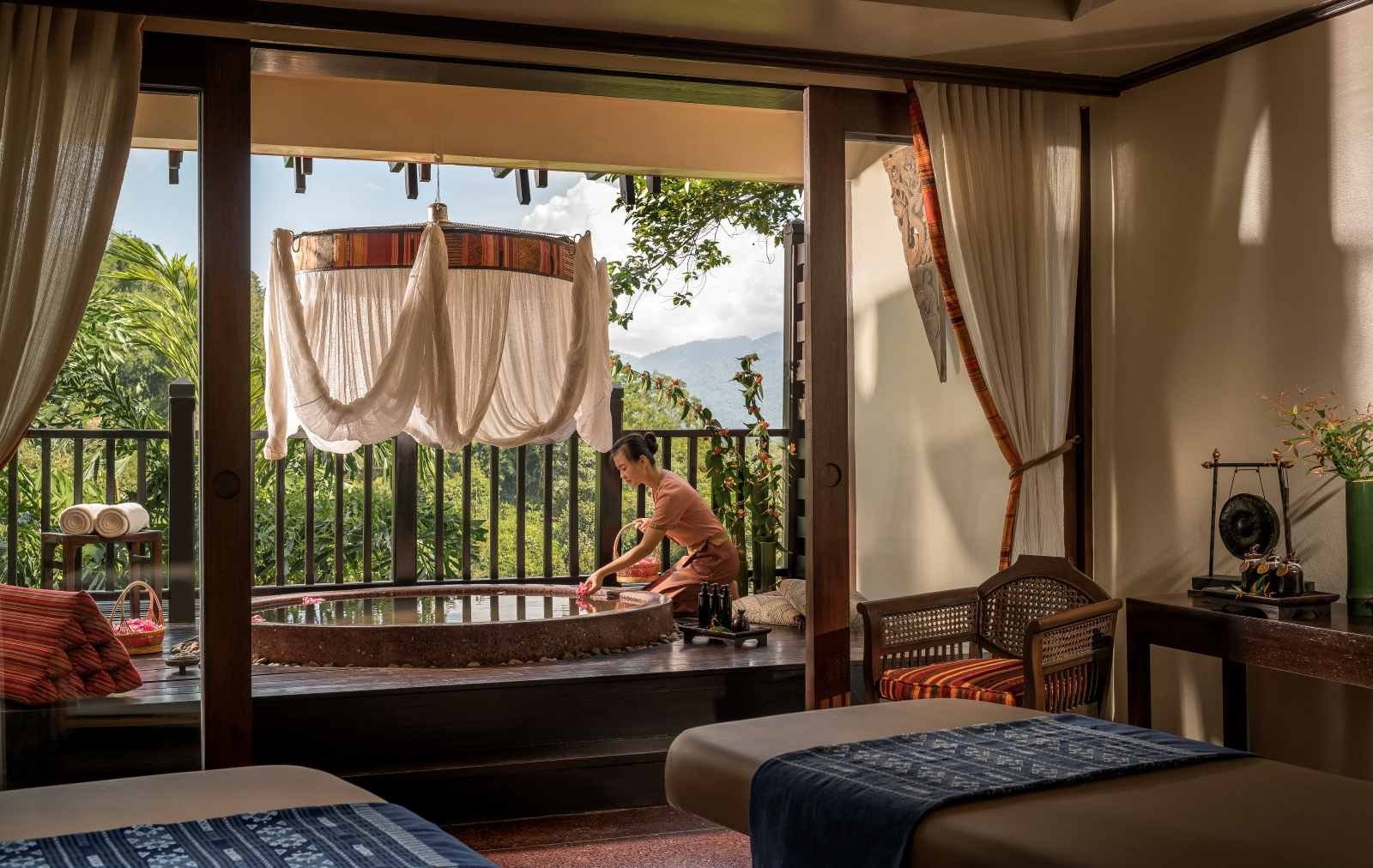
The resort’s wellness programme rarely appears in the marketing language around Jungle Luxe, and yet it runs beneath the whole experience like a second current. Anantara Spa occupies a set of teak-wood suites raised above the treeline, each with a private open-air terrazzo tub looking out over the same jungle the elephants move through below. A short walk from the main lodge, a second pavilion, Spa by Nature, sits directly among the rice paddies – no walls between guest and field, the treatment table set into the landscape rather than positioned to overlook it.
The treatments themselves draw on northern Thai tradition rather than an imported wellness vocabulary. A herbal compress, heated and rolled over the body, carries moringa oil known locally for easing tension and tiredness. Plai – a ginger relative the north calls poo loey – has long been used to cool inflammation and calm ache in the joints and muscles, and appears in a massage built specifically around that effect. A separate treatment, using what the spa calls golden silk, works toward skin renewal rather than any more dramatic promise. None of this reaches for novelty. It draws instead on remedies that predate the resort, applied with the same unhurried attention given to the elephants a short distance away.
A guest who has spent the morning matching pace with a slow-moving herd, and the afternoon in a treatment room with no wall between the massage table and the rice fields, is being asked the same question twice: what does it feel like to stop moving at the speed the rest of the world moves at. Sauna, steam room and a standing yoga schedule round out the offering, but the spa’s real position within Jungle Luxe is quieter than any of that – it is where the physical slowing the elephants prompt in a guest gets given somewhere to land.
The weight of the number
It costs, by the resort’s own reckoning, in the region of USD 18,000 a year to look after a single elephant – feed, upkeep, veterinary care. That figure sits quietly behind every part of Jungle Luxe, unspoken but never entirely absent. The 20 elephants at the camp were not born into this landscape; most arrived from logging operations, city streets or the tourist-show circuit, and GTAEF’s work has been to give them, decades on, something closer to a forest life. Guests rarely see this side of the operation directly. It surfaces instead in small gestures – a mahout’s unhurried patience, a veterinarian on hand to explain elephant behaviour and anatomy, a camp built around welfare rather than performance. The cake at the start of the experience and the walk further into it are both, in their way, extensions of that same commitment.
It is, in the end, an argument about proximity – and about how a resort with 160 acres of jungle at its disposal chooses to use the distance between guest and animal, table and treeline, comfort and wilderness. At the confluence of three countries, Anantara Golden Triangle has built an experience that never asks its guests to choose between luxury and the landscape. It simply lets the jungle set the table.
Share


WE RECOMMEND
Ancient Healing at One&Only Mandarina
How the oldest spiritual traditions in Mexico found their home inside the most immersive luxury wellness experience in the country.
What It Feels Like to Stay at Shamwari Private Game Reserve
Shamwari feels less like a safari lodge and more like a cinematic hideout: hectares of wilderness, Big Five on the horizon, and…
Silence as a Destination: The Rise of Desert Retreats
Interest in desert resorts and hotels is growing neither as a fashion nor as an exotic curiosity. It emerges from fatigue with…
