




Why Cairo’s Grand Egyptian Museum Is Worth the Trip
A pyramid-view museum built for scale and clarity – with Tutankhamun’s full 5,398-piece collection, the Ramesses II colossus, and galleries that finally make ancient Egypt feel legible in one visit.
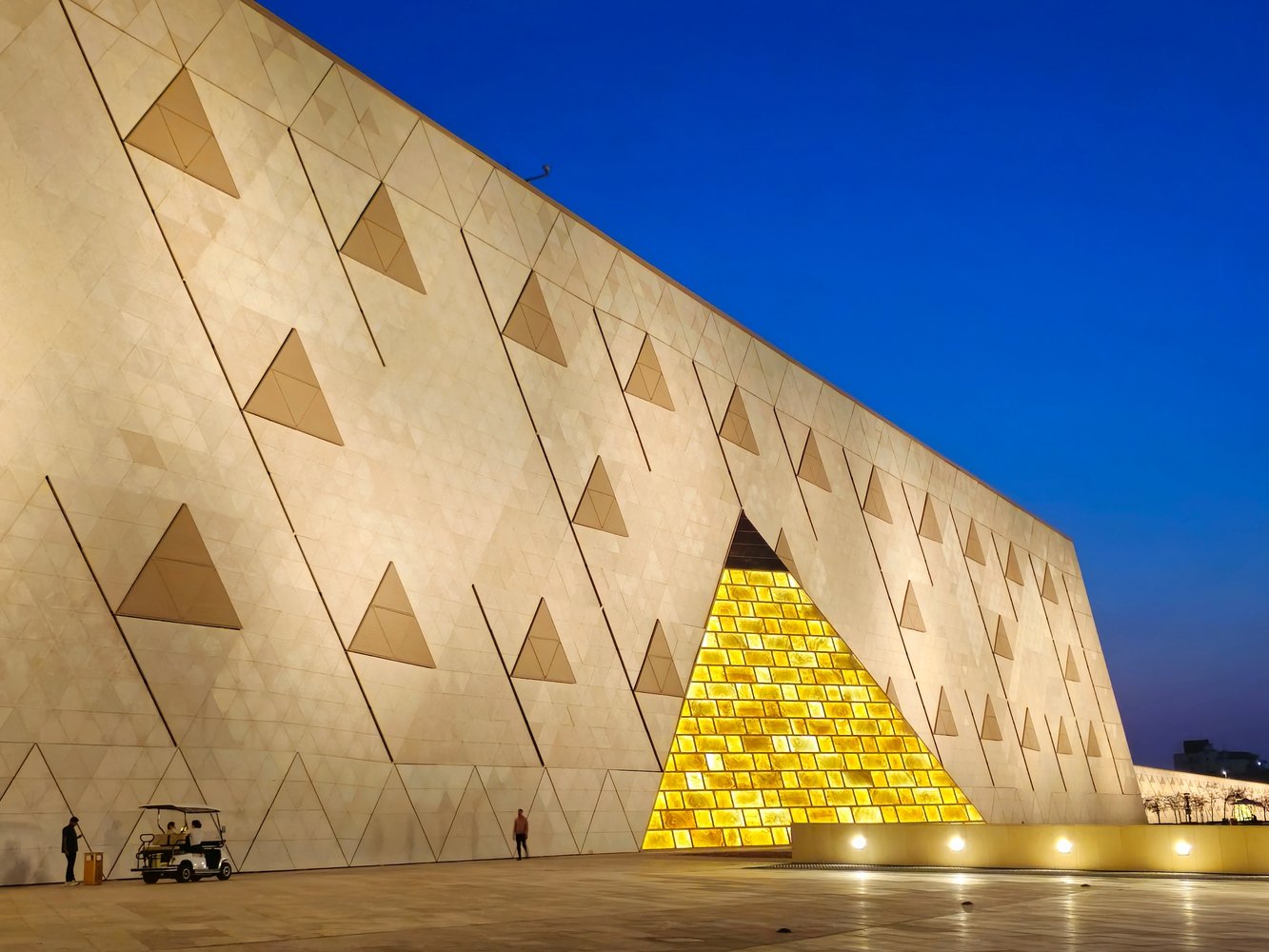
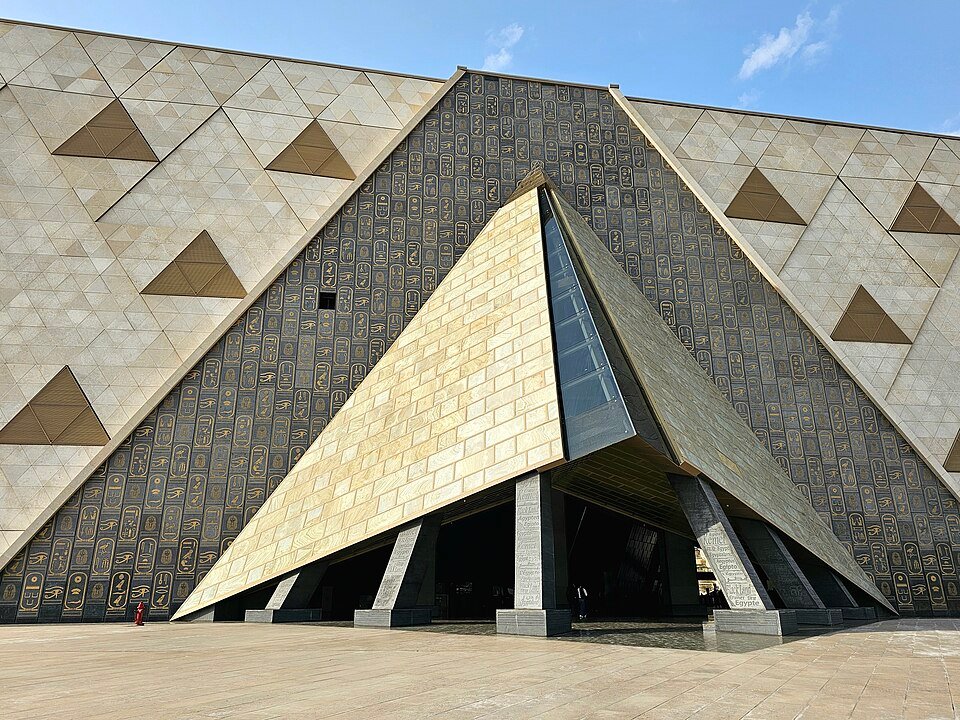
Cairo’s new landmark museum is the Grand Egyptian Museum – GEM – rising on the Giza Plateau within clear sight of the pyramids. The idea dates to the 1990s, the project took formal shape in the early 2000s, and construction began in 2005. A full public opening followed in early November 2025 after a phased access period, bringing a two-decade build arc into view as a cultural statement, a tourism engine, and a major re-housing of Egypt’s antiquities.
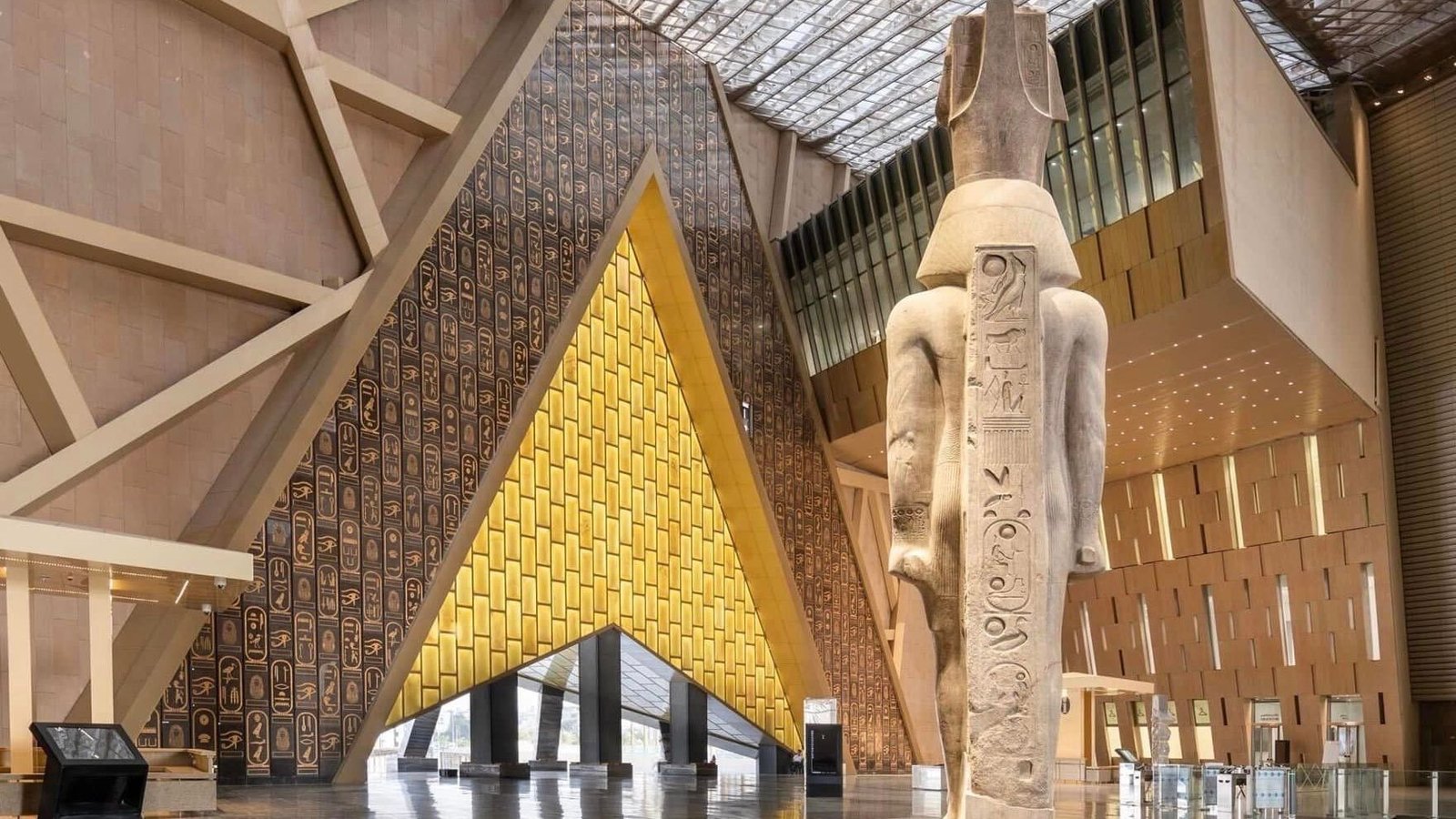
The museum’s first impact is architectural and spatial: a vast, light-filled entry sequence built to handle scale and crowds while still delivering drama. The centerpiece of that arrival is the colossal statue of Ramesses II, an 11-metre figure installed as the museum’s defining welcome. From there, the Grand Staircase functions as a curated ascent lined with monumental sculpture and architectural fragments – kings, queens, divine figures, doors, pillars, and sarcophagi – and then the building opens outward with views that pull the pyramids into the museum’s own visual logic.
GEM’s main galleries are organized for comprehension as much as spectacle: the institution covers millennia of history and presents its narrative through thematic wings – Society, Royalty, Beliefs – structured across major periods, giving visitors a clear way to read objects as lived culture rather than isolated masterpieces. The numbers match the ambition: public reporting consistently places the collection at over 100,000 objects, with large-scale permanent displays supported by extensive storage and conservation capacity built into the site.
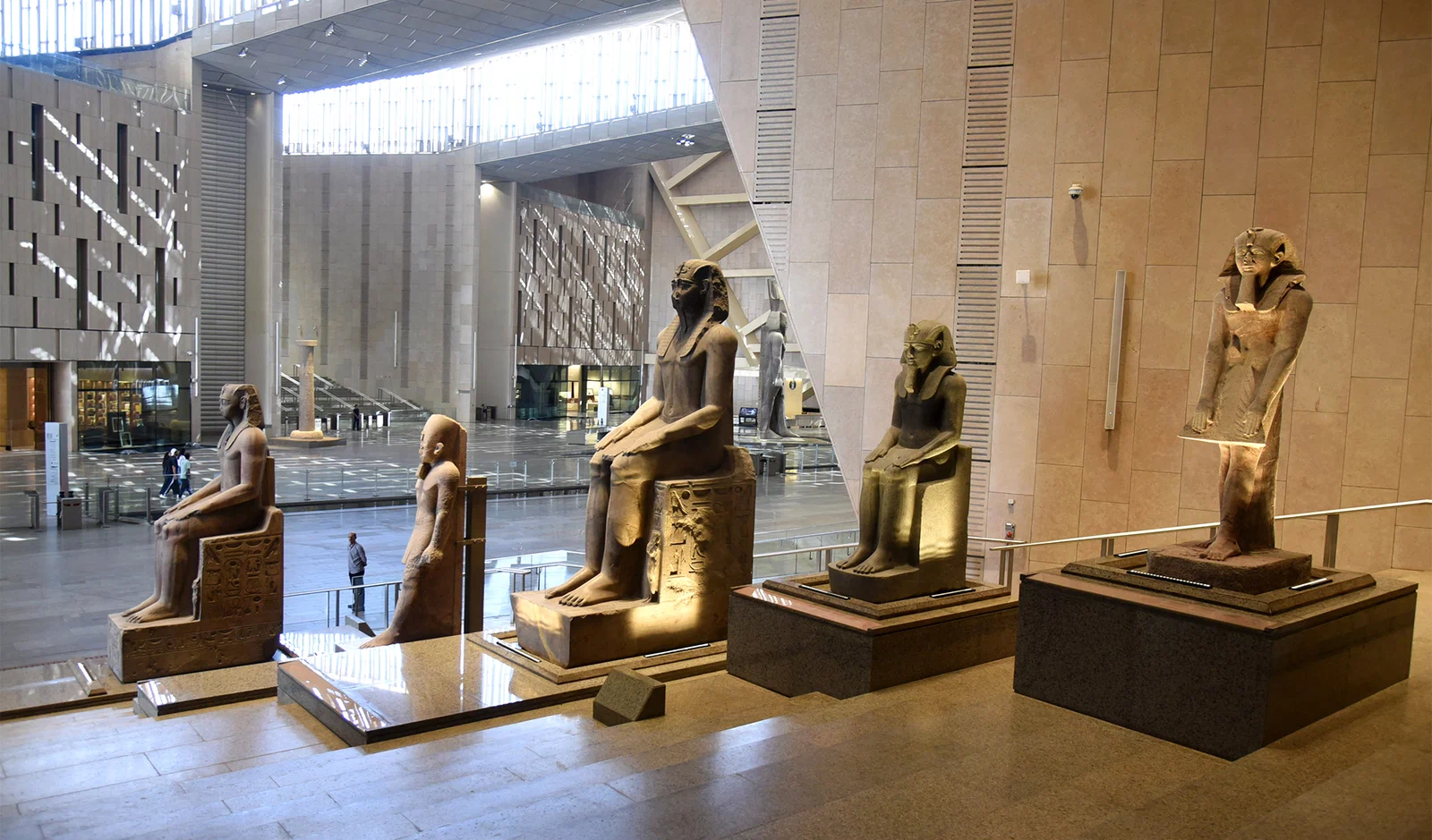
The headline experience, and the reason many travelers will plan their trip around GEM, is the Tutankhamun presentation: 5,398 objects from the tomb assembled as a complete collection, with signature pieces such as the gold burial mask, the throne, and gilded elements that have defined modern Egyptomania since 1922, now placed into a coherent funerary and cultural context. The museum ticketing platform lists the Tutankhamun Galleries among the core visit areas, alongside the Main Galleries, Grand Hall, Grand Stairs, and the Khufu’s Boats Museum, which anchors the site’s link to Old Kingdom innovation and royal ritual.
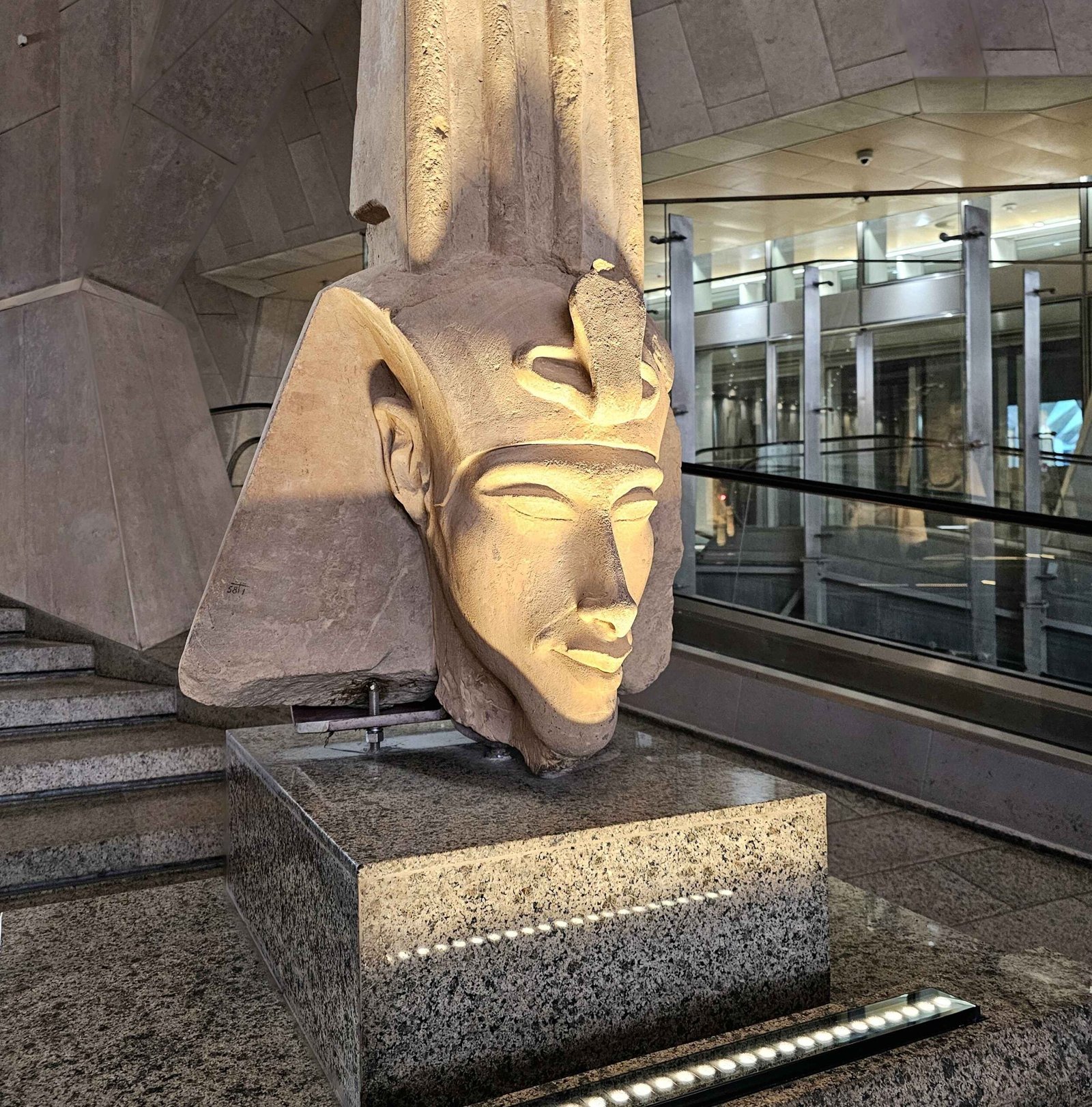
Cost and timeline have become part of the museum’s own story. Major outlets describe a price tag around $1 billion, while other reporting places total project costs above $3 billion across the long build and expanded scope, with Japanese financing frequently cited as a key component. What matters on the ground is what that investment buys: a purpose-built museum campus beside the pyramids, capable of presenting ancient Egypt with contemporary museology at a scale the older central Cairo museum could never physically hold.
Share