




Fitze smart ring
Meet the Gulf-Born Wellness Innovations Worth Knowing
From smart rings to three-minute mental resets and home hydroponic gardens, a new generation of Gulf-born products is turning everyday wellbeing into something more practical and distinctly local.
For years, the Gulf’s wellness market was largely built around importing international concepts: global fitness franchises, European supplements, American wearables and destination spas modelled on established Western brands. That is beginning to change. Across the UAE and Saudi Arabia, founders, health authorities and technology companies are developing products that respond directly to life in the region – from hydration in extreme heat to sedentary urban routines, limited access to green space and growing demand for more convenient mental-health support.
Fitze – movement that pays
Most fitness trackers tell users what they have already done. UAE-born Fitze adds another layer: a tangible incentive to keep moving. Its app turns daily activity into rewards, allowing users to join walking streaks, complete personalised step goals and access offers from more than 150 UAE brands. Eligible cash payouts can also be delivered directly to a user’s Careem Wallet.
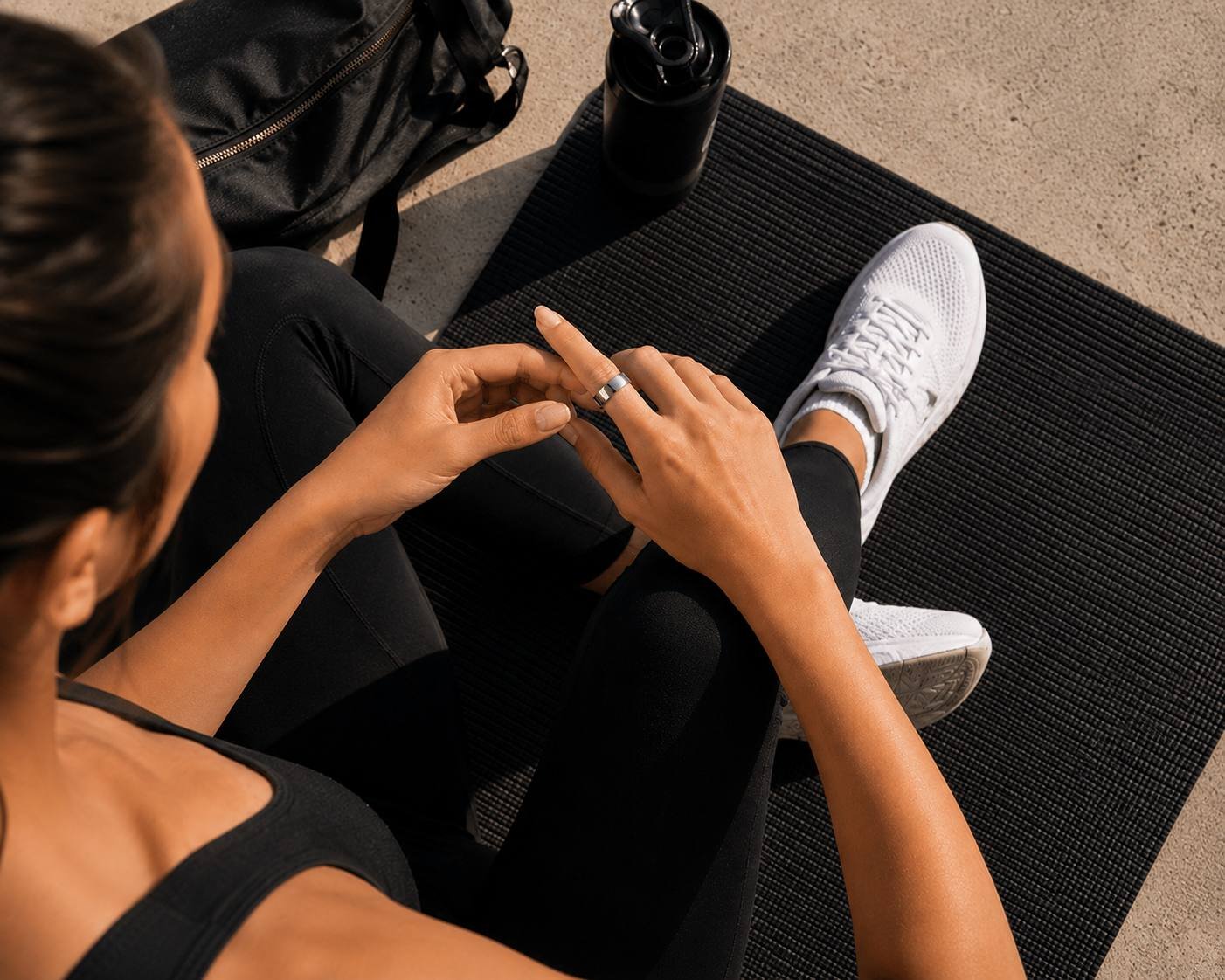
The idea is simple but commercially astute. People often know they should walk more; the problem is maintaining the habit after the initial enthusiasm disappears. Fitze treats consistency as something with immediate value, connecting movement to discounts, prizes and financial rewards rather than relying exclusively on long-term health promises.
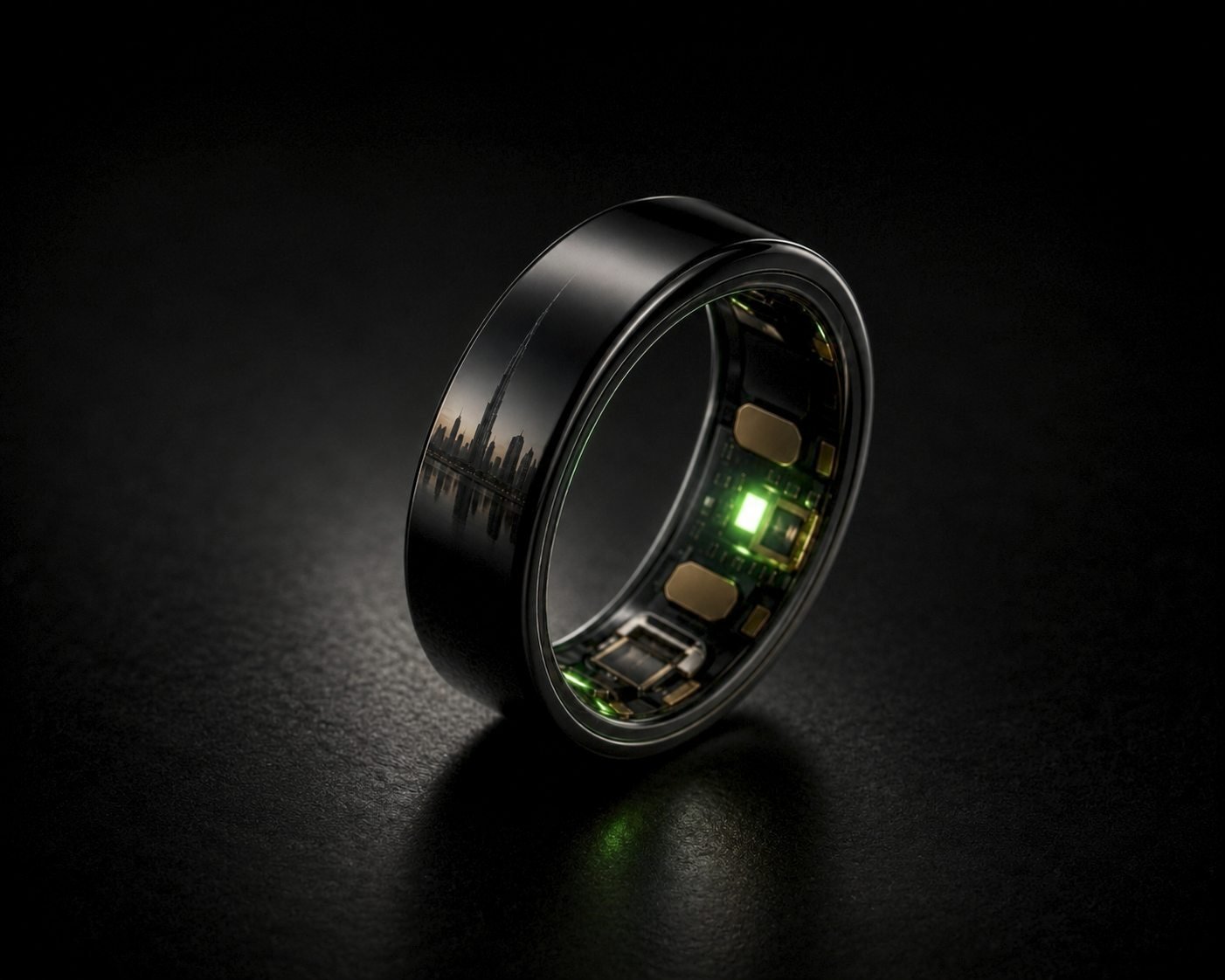
The company has extended that ecosystem with the Fitze Ring, a wearable that tracks activity, sleep, stress, heart rate, heart-rate variability, blood oxygen and skin-temperature trends. The ring connects with the app, placing biometric data and behavioural rewards within the same platform. In a crowded wearable market, that local rewards infrastructure is what differentiates Fitze: it is less about producing another dashboard of health metrics and more about giving users a reason to act on them.
LINC – supplements that respond to biometric data
LINC is a UAE health-technology startup developing a connected supplement system designed to work with data from WHOOP, Oura and Apple Health. Rather than asking users to follow the same supplement routine every day, the platform analyses changes in sleep quality, stress, heart-rate variability, recovery and activity, then adjusts daily nutrient doses within predefined safety parameters.
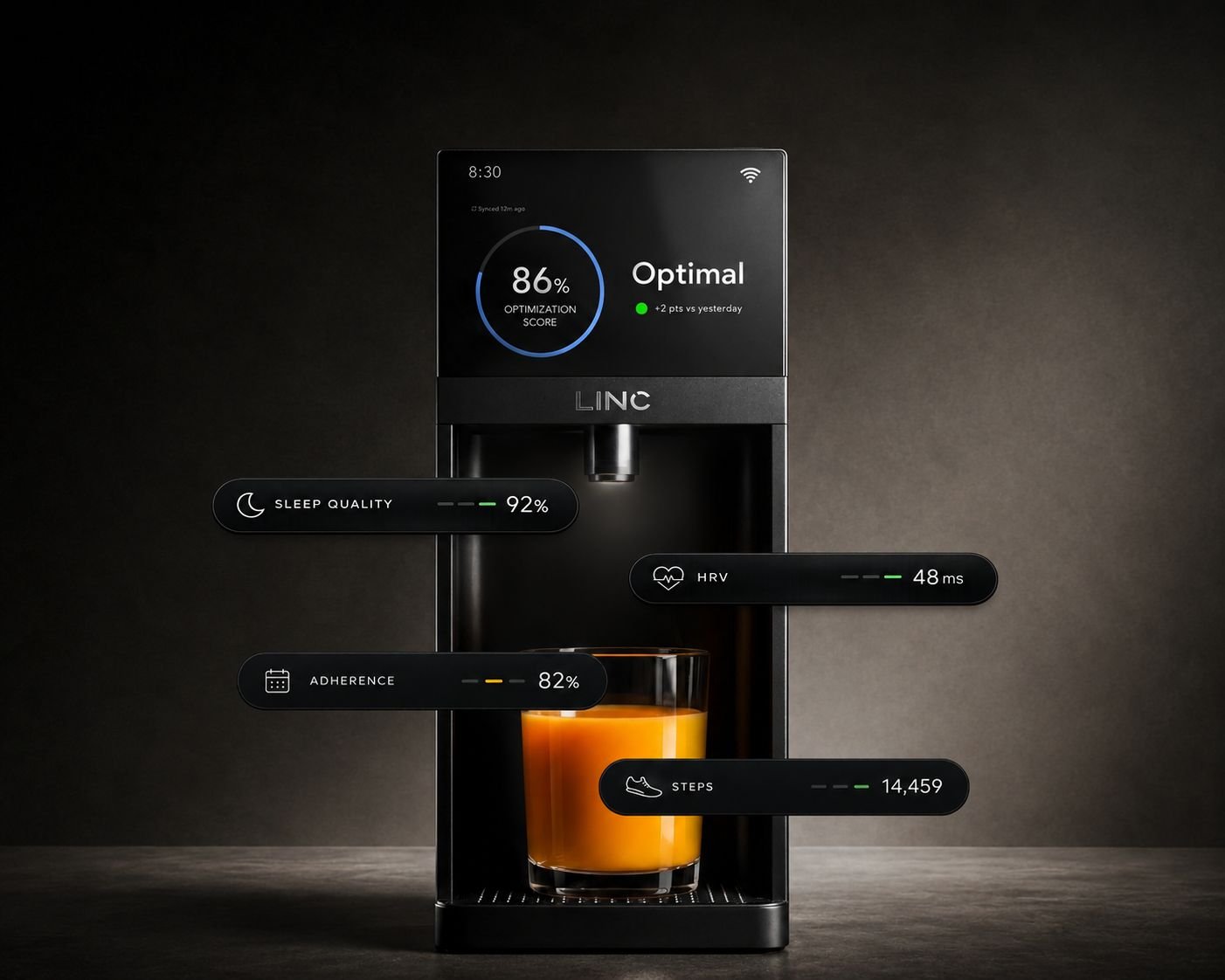
The system combines a countertop dispensing device, replaceable nutrient cartridges and a mobile app. After completing an onboarding process and connecting a wearable, users receive a nutrition plan informed by their goals and biometric data. At the press of a button, the device prepares a personalised drink, with the formula adapted over time by LINC’s AI-powered Autopilot engine.
The concept addresses a familiar limitation of wearable technology. Devices can produce increasingly detailed information, but they rarely translate those readings into a direct intervention. LINC is attempting to close that gap by connecting measurement and supplementation within one automated system. The company is currently accepting registrations for early access ahead of its planned commercial launch in 2027.
Humantra – hydration as a daily ritual
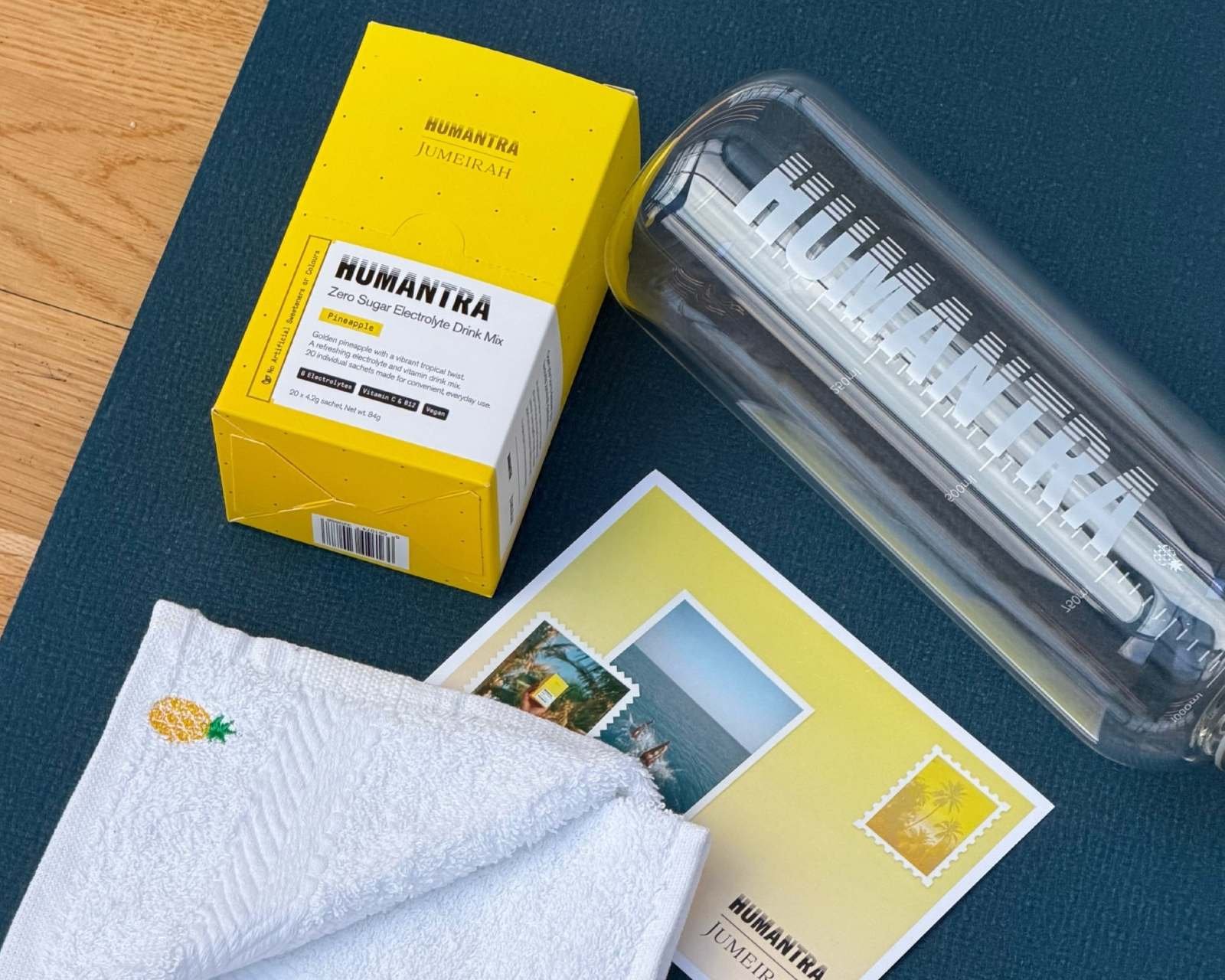
Humantra emerged in Dubai with a proposition well suited to the Gulf: hydration should be treated as an everyday health practice, not something reserved for athletes or the aftermath of a punishing workout. Its powdered drink mixes contain six essential electrolytes, alongside ingredients including vitamin C, vitamin B12 and zinc, depending on the formulation. The products are plant-based, sugar-free and designed to be mixed with water at home, at work or on the move.
That positioning reflects a wider evolution in the supplement category. Electrolytes have moved out of the sports-nutrition aisle and into daily wellness routines, supported by increased interest in energy, recovery, travel, sleep and cognitive performance. In Dubai, where heat, air conditioning, exercise and long working days can all influence how people feel, the concept has an obvious local relevance.
Humantra’s appeal also lies in making hydration feel more like a lifestyle product than a clinical intervention. Individual sachets, bright flavours and premium packaging turn a functional formula into an easy ritual. The brand may have been born in Dubai, but its expansion beyond the UAE suggests that its central message – that hydration affects how people function throughout the day – travels well.
Tawazun Pod – a three-minute mental reset
Developed by the Dubai Health Authority, the Tawazun Pod is an immersive wellbeing space designed to help users shift their emotional state within minutes. The experience combines guided breathing with light, sound and other sensory elements, offering different journeys intended to support calm, balance or refreshment.
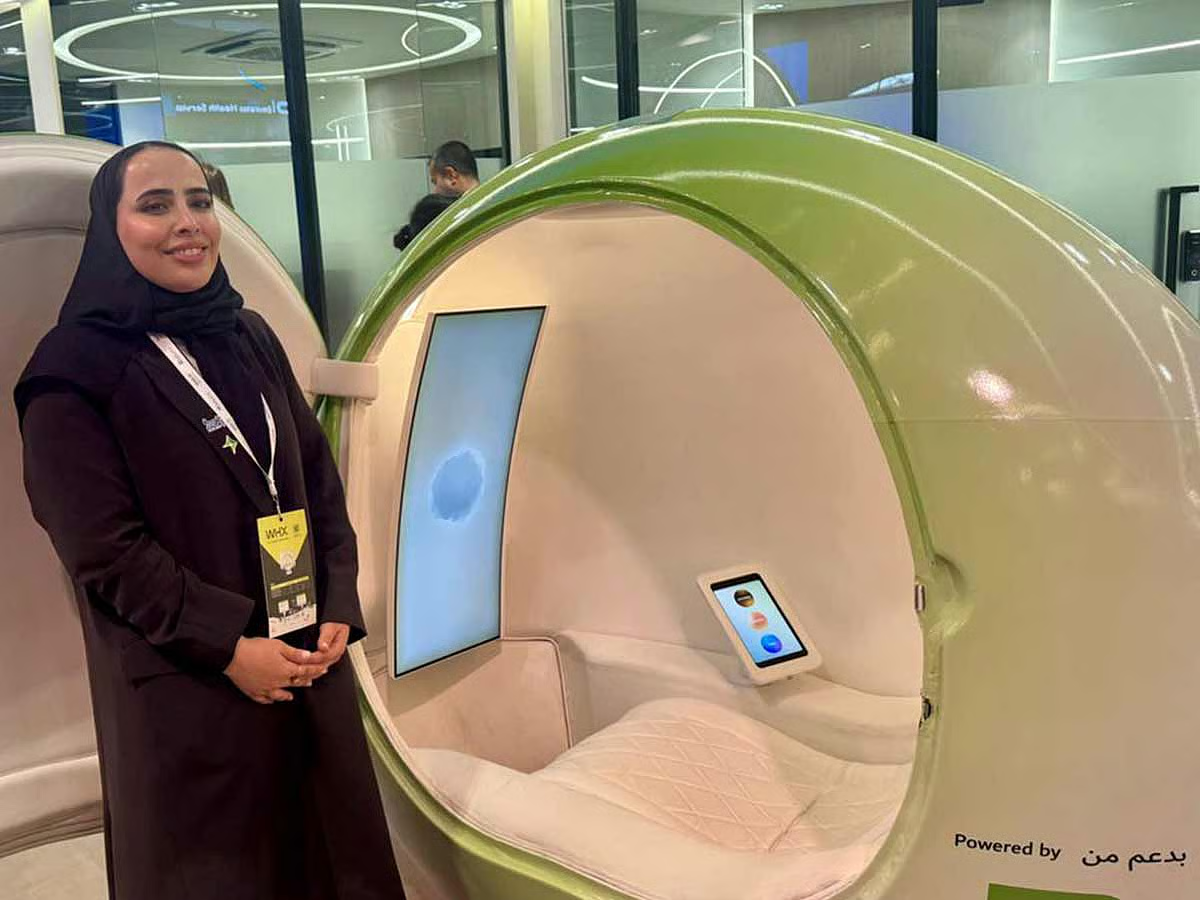
Its significance lies partly in its brevity. Many people understand the value of meditation or breathwork but struggle to create a regular practice. Tawazun reduces the commitment to three minutes and places the experience inside a contained, guided environment. Rather than asking users to know how to regulate their mood, it gives them a sequence to follow.
The pod also represents a different model of mental wellbeing: one designed for public and workplace settings rather than retreat centres or therapy rooms. DHA has presented the concept as a practical tool that could be placed in locations such as offices, malls and other shared spaces. It is not a substitute for mental-health treatment, nor should a short sensory session be confused with one. Its role is more modest — and potentially more scalable: providing a private pause during an overstimulating day.
HalaPop – gut health in a soda can
Dubai-born HalaPop enters one of the fastest-growing areas of functional food: prebiotic soft drinks. Each can contains 6 grams of plant-based fibre, 15 per cent real fruit juice, no added sugar and 29 calories, according to the company. Its fibre blend includes ingredients such as cassava fibre, Jerusalem artichoke powder, baobab fruit pulp and moringa extract.
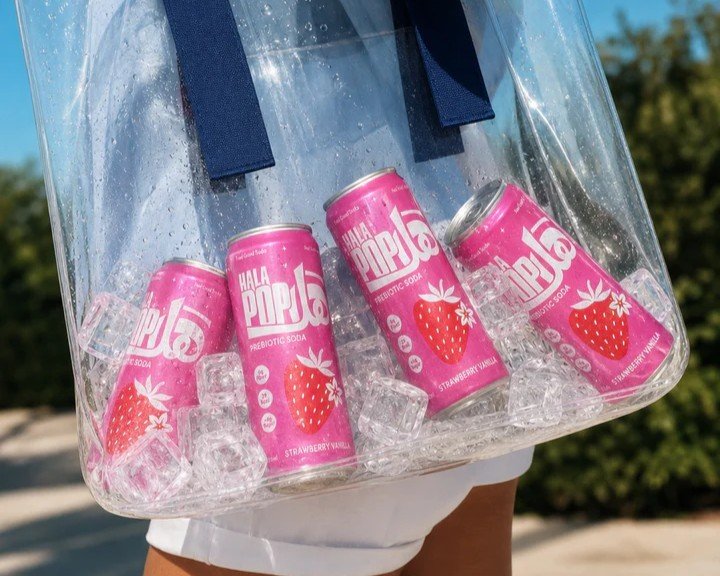
The proposition is not to make a supplement taste tolerable, but to redesign soda itself. HalaPop keeps the familiar elements – carbonation, fruit flavours and a brightly packaged can – while replacing the conventional sugar-heavy formula with fibre and lower-calorie ingredients. That makes it part of a larger movement in which everyday foods are expected to deliver some additional wellness function.
Still, “prebiotic” should not be treated as a universal synonym for digestive comfort. Different fibres affect people differently, particularly those who are sensitive to fermentable carbohydrates. The more credible way to view HalaPop is as a functional alternative to conventional soda, rather than a miracle solution for the gut. Its real innovation lies in translating a relatively technical nutritional category into a mainstream, locally produced drink.
HydroArtPod – bringing the garden indoors
Founded in Abu Dhabi by Aline Pate, HydroArtPod was designed to make growing food at home possible for people without outdoor space, horticultural knowledge or much spare time. The wall-mounted hydroponic system uses channels to circulate nutrient-rich water around plant roots, while built-in grow lights support cultivation indoors. An accompanying app can alert users when the water tank needs attention or nutrients should be added.
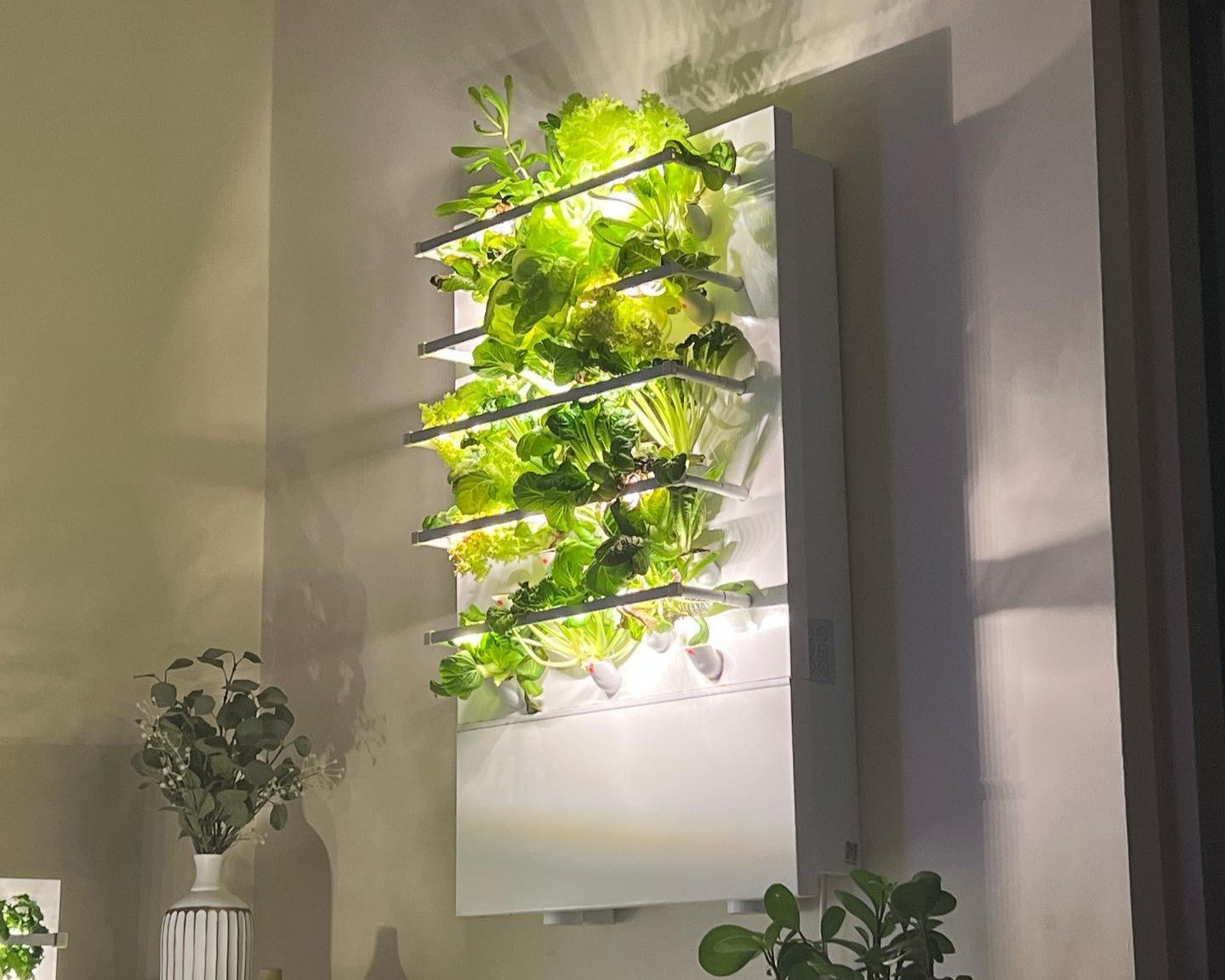
The result sits somewhere between an appliance, a vertical garden and a piece of living interior design. Depending on the configuration, users can grow herbs, leafy greens and smaller vegetables inside the home, reducing the distance between harvesting and eating. That has particular resonance in Gulf cities, where much of the population lives in apartments and conventional gardening is constrained by climate, space and water use.
HydroArtPod also expands the meaning of wellness beyond supplements, treatments and fitness. Access to plants, fresh ingredients and the act of growing food can all contribute to a healthier domestic environment. It also serves as the element of home décor.
Metafare – wellness inside virtual reality
Saudi healthtech company Metafare is using virtual reality and artificial intelligence to create short, personalised wellness sessions that can be accessed at home or incorporated into workplace programmes. Its experiences combine elements of movement, meditation, mental-health support and behavioural therapy, with individual sessions typically lasting less than 15 minutes.
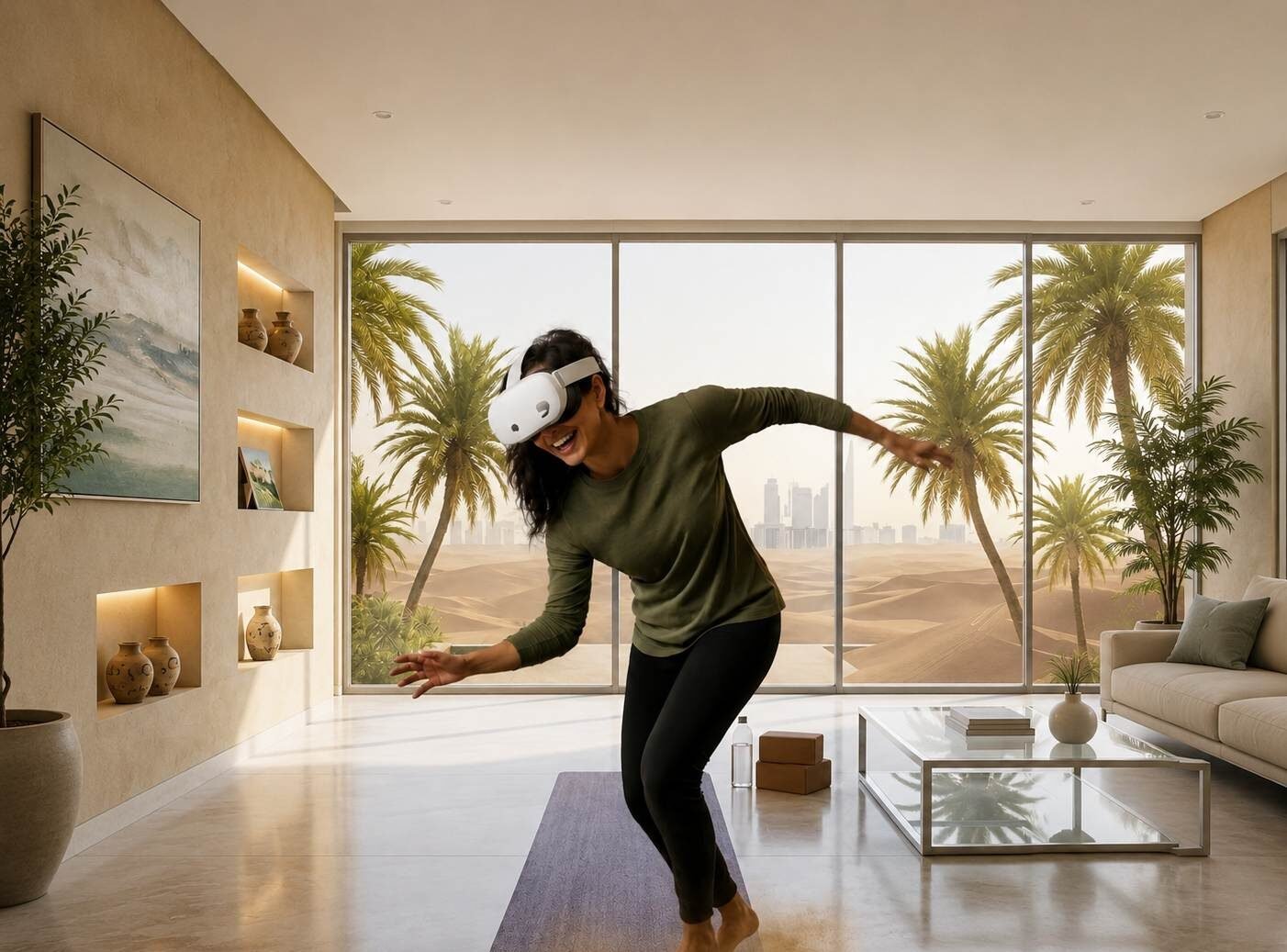
Founded in 2025 by Ibrahim Almaghlouth, the company reported delivering more than 3,000 virtual sessions following its launch. In May 2026, it announced a $1 million funding round to develop its AI personalisation capabilities, expand its content library and support growth across Saudi Arabia and the wider Gulf.
The most interesting part of the model is not the headset itself. VR fitness has existed for years. Metafare is attempting to build a more adaptive system in which content changes according to an individual’s preferences, engagement and goals. The opportunity is to make guided wellbeing more immersive and easier to access. The challenge will be demonstrating where entertainment ends and meaningful health support begins – particularly when terms such as therapy and healthcare are involved.
A regional wellness identity
Taken together, these products reveal a Gulf wellness sector that is becoming broader and more confident. The category now includes consumer technology, functional drinks, urban mental-health tools, home food systems and immersive digital platforms. Some ideas are highly commercial; others originate within public health. Some are already scaling, while others remain early-stage experiments.
Not every wellness innovation needs to change medicine or promise radical longevity. Often, the more useful products are those that remove a small piece of friction from daily life – making it easier to walk, drink water, pause, grow something, move the body or choose a better alternative. That is where these Gulf-born ideas are strongest: not as futuristic concepts imported from elsewhere, but as practical responses to how people in the region actually live.
Share



WE RECOMMEND
Dubai Built a Space to Calm the Nervous System
Rooted in Arab mind–body traditions and supported by advanced technology, ALWAHA treats the senses as a direct pathway to recovery and presence.
Longevity Pods: What They Are and How Do They Work
Longevity pods turn at-home care into a calming immersive treatment: salt, red light, oxygen, sound, and scent combined into one guided session.
Midjourney Enters Wellness With a Full-Body Scan in 60 Seconds
Midjourney is expanding beyond image generation into medical imaging, developing a spa-based full-body ultrasound 3D body scans in under a minute.
