





How to Sleep When the World Feels Unsettled
There are nights when the body is tired, but sleep still does not come easily. Or it comes lightly, in fragments. In periods of political instability and relentless headlines, it becomes a familiar experience for many.
How to Sleep When the World Feels Unsettled
There are nights when the body is tired, but sleep still does not come easily. Or it comes lightly, in fragments. In periods of political instability and relentless headlines, it becomes a familiar experience for many.
Sleep, in moments like these, is rarely lost because of one bad habit. It shifts because the body no longer feels fully safe. Even for people far from the physical center of a conflict, the emotional atmosphere of uncertainty can settle deep into the nervous system. News alerts, group chats, social media feeds, voice notes from family, the need to remain informed, the pressure to keep functioning as usual – together, they create a background hum of vigilance. That hum follows people into the night.
One of the most important things to understand about poor sleep during stressful periods is that exhaustion does not automatically lead to rest. A person can feel drained and still remain physiologically activated.
Dr Sophie Bostock, Founder of The Sleep Scientist and UK sleep expert, describes this state as hyperarousal – a condition in which the body remains in a version of fight or flight. “From an evolutionary perspective it would have been advantageous to stay in light sleep/awake when in danger. If your brain perceives a threat, it will try to keep you awake,” she says. “It is not just threats to safety that will do this. Any scenario which is new, unpredictable, out of your control, or threatens your safety or status (or your family), will promote a state of arousal.”
Lorna Devine, UK-trained Psychologist, CBT Therapist, and Founder of The Devine Method®, sees a similar pattern in many high performers, founders, and executives. By the end of the day, they are often physically exhausted and mentally wide awake. Their minds continue reviewing tomorrow’s decisions and responsibilities. In a culture that rewards constant availability and mental speed, many people have trained themselves to stay switched on for so long that the body no longer receives a clear signal that the day is over. As Devine puts it, “Exhaustion and sleep are not the same thing. You can be completely exhausted and still not be able to sleep.”
This is where sleep becomes more fragile than people expect. It is not always the first hour of the night that suffers most. A person may fall asleep from sheer sleep pressure, then wake at 2 or 3 in the morning with a racing mind and an immediate sense of tension. Emotional stress often works this way. It keeps sleep lighter, more interrupted, and less restorative, even when bedtime itself seems reasonably calm.
Another factor makes the cycle worse: the way people begin to think about sleep once it starts to slip. Devine points out that many people quickly build a negative internal narrative around it. I never sleep well. I always wake at 3 am. Tomorrow will be ruined. That mental commentary creates its own pressure. “Negative thoughts about sleep create a cycle,” says Devine. “You think negatively about sleep, that creates anxiety, the anxiety makes sleep worse, which feeds the negative thoughts, and round and round it goes.”
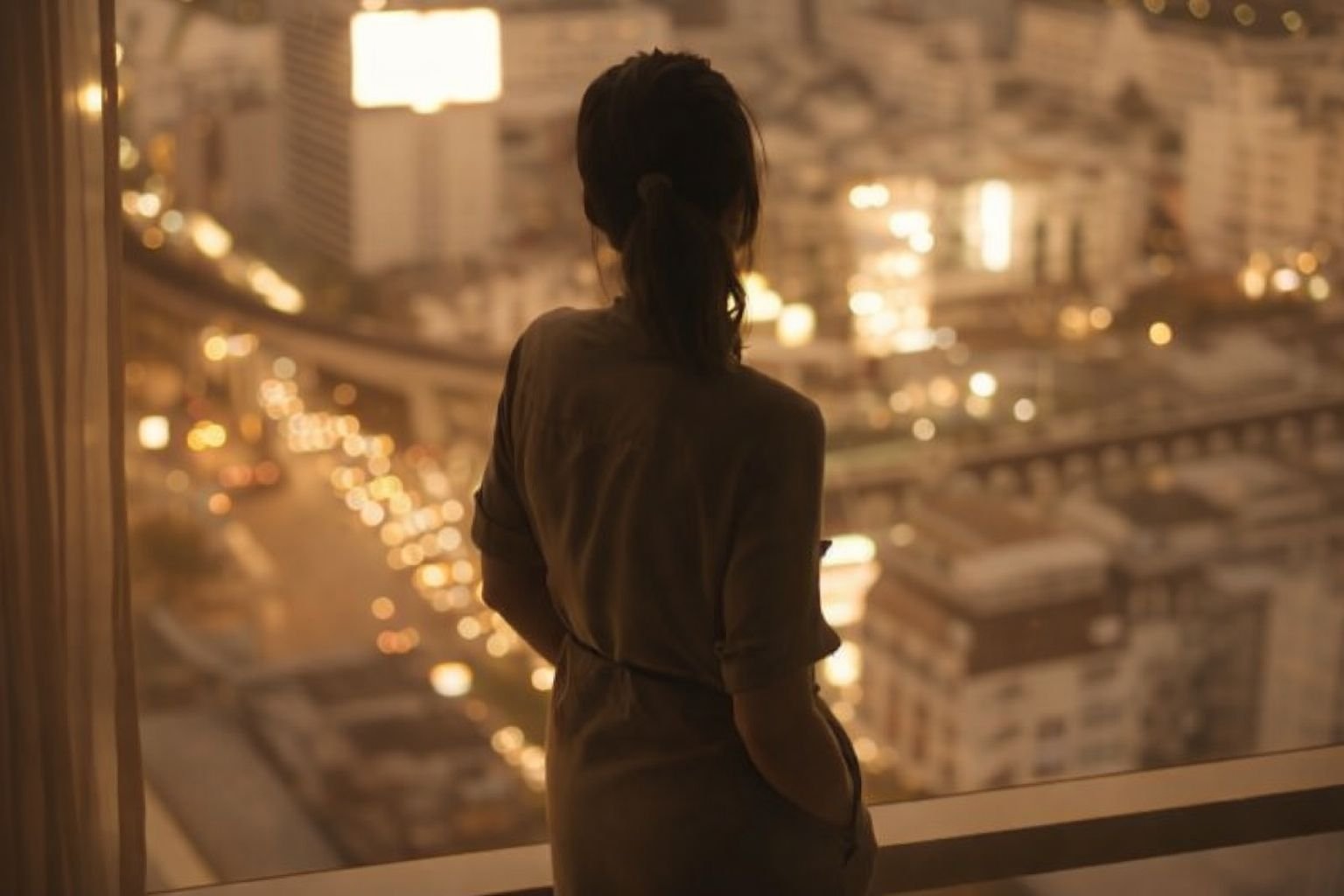
“Exhaustion and sleep are not the same thing. You can be completely exhausted and still not be able to sleep.” – Lorna Devine
That is why one of the most useful ideas in stressful times is also one of the least glamorous: start observing. Devine recommends beginning with a sleep audit. Not a quest for perfection, and not an invitation to become obsessive, but a simple process of paying attention. What time did you get into bed? What did you consume that day? What happened in the final hour before sleep? Did you scroll the news feed and carry the emotional residue into bed? Patterns often become visible only once they are written down. “Most people are working from assumptions like ‘I never sleep well’ or ‘I always wake at 3 am’ but they have never actually tracked it,” she says.
This matters because during periods of collective anxiety, many people underestimate how much stimulation they are absorbing. They may tell themselves that they are simply staying informed, yet the body often registers something else: repeated exposure to threat. A nervous system cannot remain in close contact with urgency all day and then instantly become serene at night.
For that reason, good sleep in difficult times begins long before bedtime. Bostock’s advice is especially useful here. She suggests practicing moments of relaxation throughout the day rather than expecting the mind to calm down on command at night. The state you rehearse in daylight is often the state you meet again after dark. “Try to practice relaxation at intervals throughout the day,” Bostock says. “Take time to pause. To breathe and ground yourself. To stop rushing, stop overthinking and just be. Focus on what you’re grateful for. The more you practice during the day, the easier and more natural it will be to relax before bed.”
Evening still matters. The final stretch before sleep needs a different quality from the rest of the day – quieter and less emotionally charged. Both experts point toward some version of this. A consistent wind-down routine can be modest: a shower, herbal tea, dimmer light, a few pages of a book, a brief meditation, a familiar sequence that tells the body it no longer needs to monitor the world so closely.
One particularly useful tool for anxious periods is what Devine calls a brain dump. Before bed, write down everything that is circling in your mind – tasks, worries, reminders, unfinished thoughts. The act itself can be surprisingly effective. The mind relaxes once it knows it does not need to keep holding every thread at once. She also recommends “worry time” earlier in the day: a designated window, around fifteen to thirty minutes, in which worries are acknowledged and sorted. This helps reduce the tendency for worry to arrive at full force in the middle of the night. “Something many clients find surprising,” says Devine, “is that when they come back to those worries during their scheduled time, a lot of them don’t feel nearly as urgent or overwhelming as they did at 2 am.”
For people who wake in the night with tension or anxious thoughts, Bostock recommends something that is quietly important: reassurance. Waking between sleep cycles is normal. Sometimes the fastest way back to sleep is to remove the drama from the waking itself. Slow belly breathing, progressive muscle relaxation, in which you gradually tense and then relax your muscles in turn for 5–10 minutes, or a calming visualization can help the body step away from alertness and move toward rest again.
“Reassure yourself that waking between sleep cycles is normal. Waking up is not a problem – the key is to be able to fall back to sleep again.” – Dr Sophie Bostock
There are practical foundations, too, and they remain useful even when life feels emotionally overwhelming. Regular wake times help regulate sleep over time. Caffeine late in the day and alcohol close to bedtime make sleep lighter. Intense evening exercise can leave some bodies too activated to settle. None of this is revolutionary, yet under stress, basics matter more. As Bostock puts it, “Control the controllables. Aim for a regular sleep–wake schedule, move your body for 30 minutes a day, get as much natural light during the day as you can, try to find 30–60 minutes for a calming and familiar bedtime routine.”
There is also a quieter truth beneath all of this. During difficult periods, many people become more isolated inside. They keep functioning. They keep working. They keep sounding fine. Devine notes that these are often the very people carrying the most behind the scenes. Sometimes one of the most useful things for sleep is also one of the simplest: speaking honestly to someone you trust. Stress held entirely alone tends to remain in the body. “Sometimes one of the most powerful things you can do for your sleep and your overall wellbeing is to pick up the phone and talk to someone you trust,” she says.
The modern fantasy is that sleep can be perfected through discipline alone. Real life says otherwise. In periods marked by war, instability, and emotional overload, sleep becomes part of a larger conversation about safety and recovery. The goal is to create conditions in which the body no longer has to defend itself quite so hard. As Bostock puts it, “We are all capable of extraordinary things, even whilst sleep deprived.” In difficult periods, some disruption is a normal response, but routine and small acts of regulation can help the system settle again over time.
Sleep returns more easily when the body is given permission to stand down. The body knows how to rest.
_______
Experts
Dr Sophie Bostock
Founder of The Sleep Scientist and sleep expert focused on evidence-based sleep improvement, stress, and recovery.
@drsophiebostock
Lorna Devine
UK-trained Psychologist, CBT therapist, and founder of The Devine Method®, working with high performers on stress, sleep, and emotional regulation.
@lorna_devine
Share




WE RECOMMEND

Dubai Built a Space to Calm the Nervous System
Rooted in Arab mind–body traditions and supported by advanced technology, ALWAHA treats the senses as a direct pathway to recovery and presence.

From Neurowellness to Longevity Residences: The 2026 Map of Wellbeing
The Global Wellness Summit has named 10 trends for 2026. Together they show where wellness is moving next.

The healing power of sound. New approaches to feeling well
Today, more and more people are turning to sound as a practical way to downshift stress, because it can change how you…
