




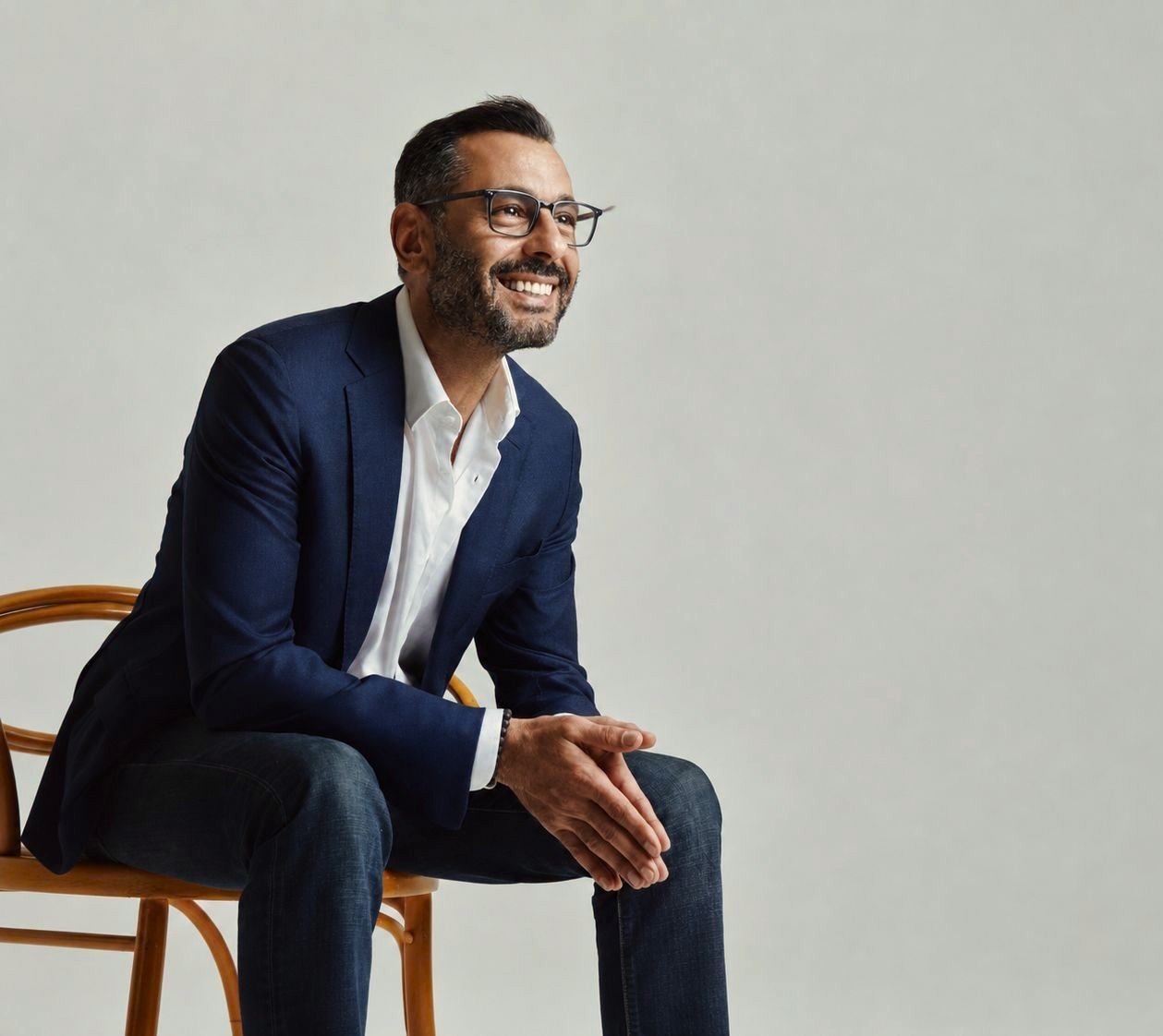
The Rise of Neurowellness in Dubai: A conversation with MindTune Founder Ramzi Shehadeh
Inside the startup bringing brain training technology out of elite labs and into your daily routine.
When was the last time you thought about training your brain? For Ramzi Shehadeh, that question has been a two-decade obsession. What began as a personal breakthrough has evolved into a pioneering Dubai-based platform, allowing individuals to map and train their brainwave patterns. Using the same medical-grade technology trusted by NASA, Harvard, and the US Air Force, MindTune is redefining modern self-care.
We sat down with Ramzi to find out what’s going on inside our heads, and how we can optimise it.
Tell us about MindTune. What is it, and what inspired you to create it?
At its core, MindTune is a mental fitness and brain performance platform. We designed it to help people sharpen their focus, reduce anxiety and burnout, and have better sleep & recovery. My goal was simple: to democratize a technology that used to be reserved for elite performance labs and make it accessible to everyone.
Ironically, my journey started from the other side of the desk, as a client. Back in 2005, I was a young entrepreneur quietly battling executive burnout, ADHD and severe anxiety. I didn’t even have the vocabulary to describe what I was feeling at the time. From the outside, my life looked picture-perfect, but internally, I was struggling just to keep my head above water. Then I discovered neurofeedback, and it changed my life completely. The impact was so profound that I immediately wrote a business plan for what I envisioned as a “brain spa.”
Over the 14 years I spent researching the UAE market, I noticed a disconnect. There was so much emphasis on physical fitness, longevity and aesthetics, yet the brain was being neglected. MindTune was created to bridge that gap between clinical neuroscience and lifestyle neurowellness.
Notably, mental health still carries a bit of stigma in this region. Because of that I wanted to build a space that didn’t feel like a doctor’s office. I wanted to create an inviting environment where people could walk in, relax, and enhance their brain performance without the feeling that something was wrong with them.

Where did you first receive neurofeedback yourself?
In the US where I lived for 23 years, at that time, neurofeedback was incredibly niche. There were maybe 15 centres in the entire country. Today, the landscape has completely shifted. There are probably 15 centres in every major city. It’s an explosion in awareness. People are realising that you can train your brain just like you train your body.
What a lot of people don’t realise, is that neurofeedback has been around since the 1940s. For decades, it was a closely guarded tool used exclusively by government agencies like NASA, and the military to optimise peak performance, as well as to manage, PTSD, anxiety, and depression.
Initially, it was only accessible to a select group. But then, executives discovered it, followed by athletes, and eventually parents seeking non-invasive ADHD support for their children.
Today, there are a handful of providers in the GCC, and almost all of them position themselves within the traditional mental healthcare space. MindTune is the first to pioneer this technology purely as premium lifestyle neurowellness.
Walk me through a session. If I came to MindTune, what happens?
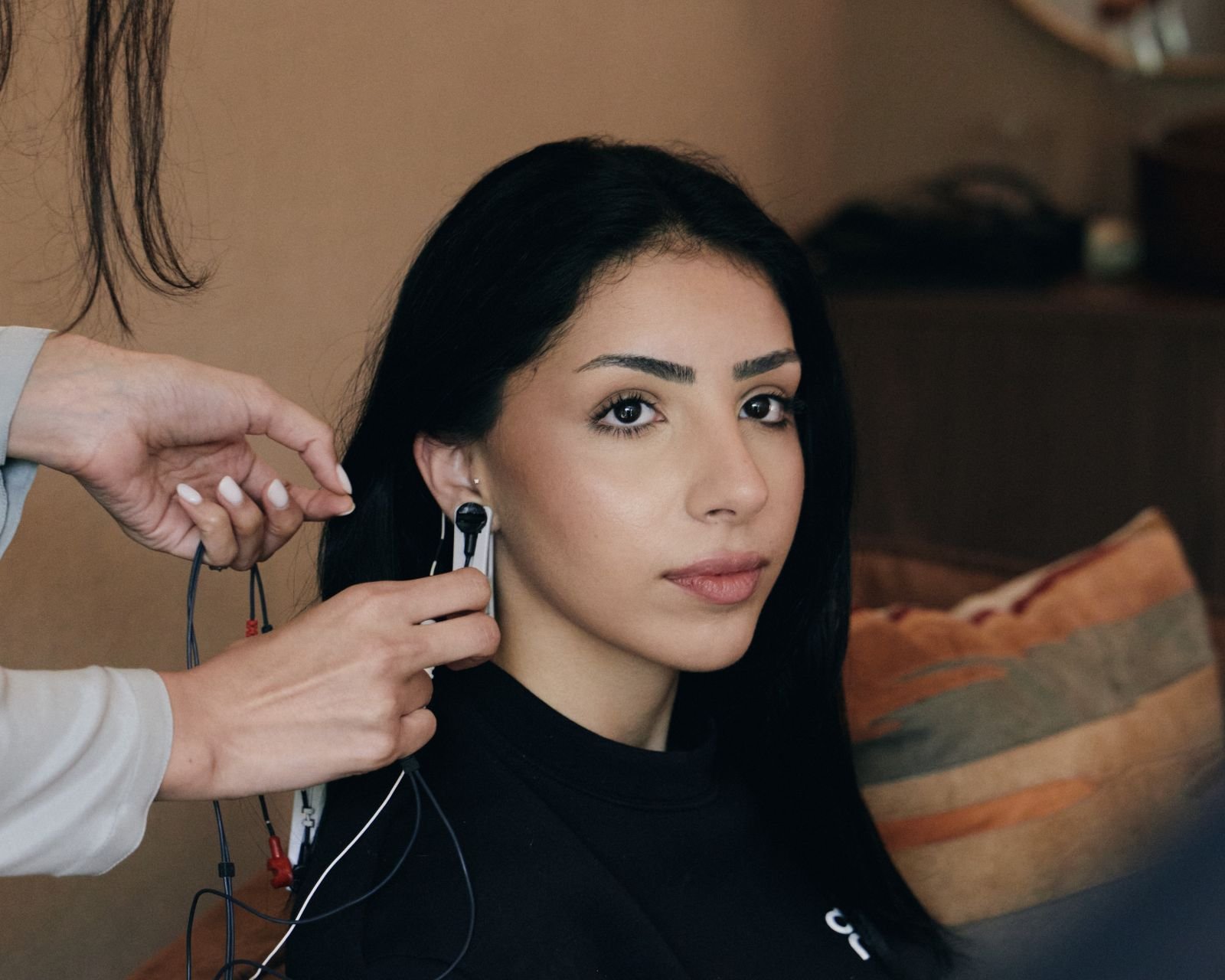
A first session begins with a full brain performance assessment. At any given moment, there are billions of neurons firing inside your brain, creating continuous electrical activity. These are your brainwaves. We use medical grade qEEG technology, placing gentle sensors on your scalp to read that activity. From that raw data, we build what we call your brain blueprint. This is a detailed personalised map of how your brain is functioning day to day, revealing where patterns may be working against focus, calm, sleep, or emotional balance.
Then, we sit down and translate that data for you. We show you how your current brain patterns are dictating your sleep quality, mood regulation, focus, and stress levels. We identify what’s underperforming, what’s overactive, and where the primary imbalances lie. Think of it like a comprehensive health check assessment, but for your mind.
And because we want to eliminate the clinical feel entirely, we operate differently. We offer in-home sessions, corporate wellness programs, and partnerships with longevity centres.
But our minds change constantly. Good day, bad day. Doesn’t that make it hard to measure?
That’s a fair question. Whilst your surface level mood fluctuates daily, your brain operates in deeply ingrained patterns, and those patterns repeat. I’m 49 years old, which means my brain has been practicing certain neuro-patterns since childhood. Over time, those repetitions create neural pathways, and that foundational wiring is what we are looking for.
Yes, the sensors will pick up the temporary effects of today’s traffic jam on Sheikh Zayed Road, or a stressful meeting, but beneath that daily noise we can identify your baseline architecture. And that’s what we train.
Can you give an example of what you actually see?
Let’s say we map someone’s brain on a Monday morning. They slept seven hours, but woke up heavy, hit a wall by 2pm, and by the time they got home, they were wired but exhausted — and when their head finally hit the pillow, their mind started replaying every unfinished conversation from the day. That’s not a willpower problem. That’s a brainwave pattern — and we can see it on the map.
What we’d likely find first is unusually high Delta waves. Delta is typically associated with deep sleep and cellular recovery. If these slow waves are elevated during your waking hours, you will feel it. You might wake up feeling heavy, battle afternoon brain fog, and struggle with low energy.
Next, we look at Theta. High Theta often manifests as looping thoughts. It’s that frustrating experience, especially at night when your mind should be winding down, but instead your brain keeps replaying unfinished conversations and daily stress.
Then there’s Beta, which is your alertness wave. If your Beta levels are generally high, your nervous system is essentially stuck in on mode. You feel anxious, wired, unable to focus or relax, and eventually, emotionally exhausted.
And somewhere in the middle, sits Alpha, the flow state brainwave responsible for shifting gears between effort and rest, unable to do its job because everything else is out of rhythm.
Thus far, we have seen many clients whose slow and fast waves are both dysregulated at the same time. When your brain is simultaneously exhausted and hyperactive, that’s when we see poor concentration, deep cognitive fatigue, and high distractibility.
Finally, we score key lifestyle areas ranging from stress regulation to sleep quality, and we use all that hard data to design a highly personalised training protocol.
So how do you actually train it?
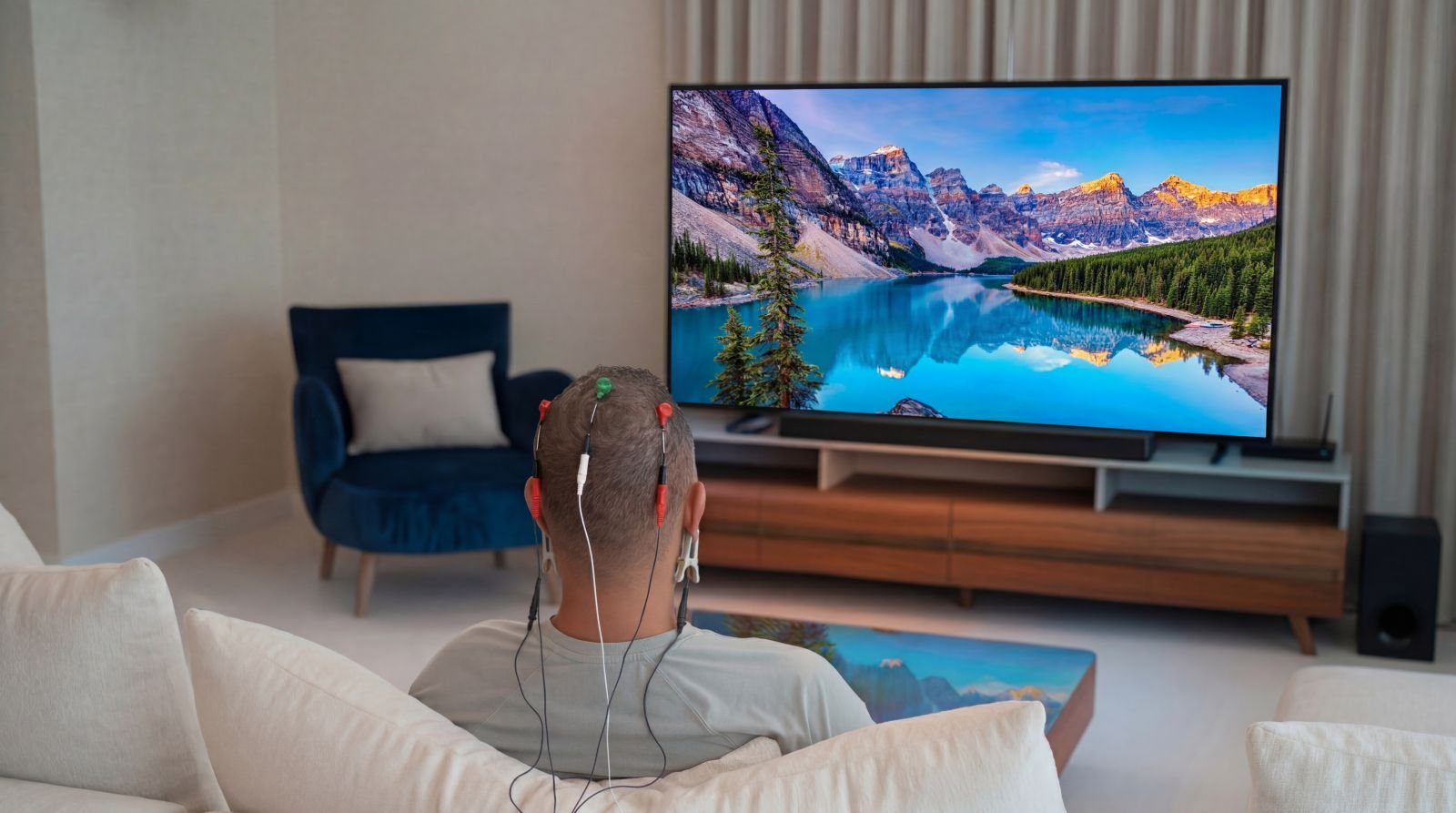
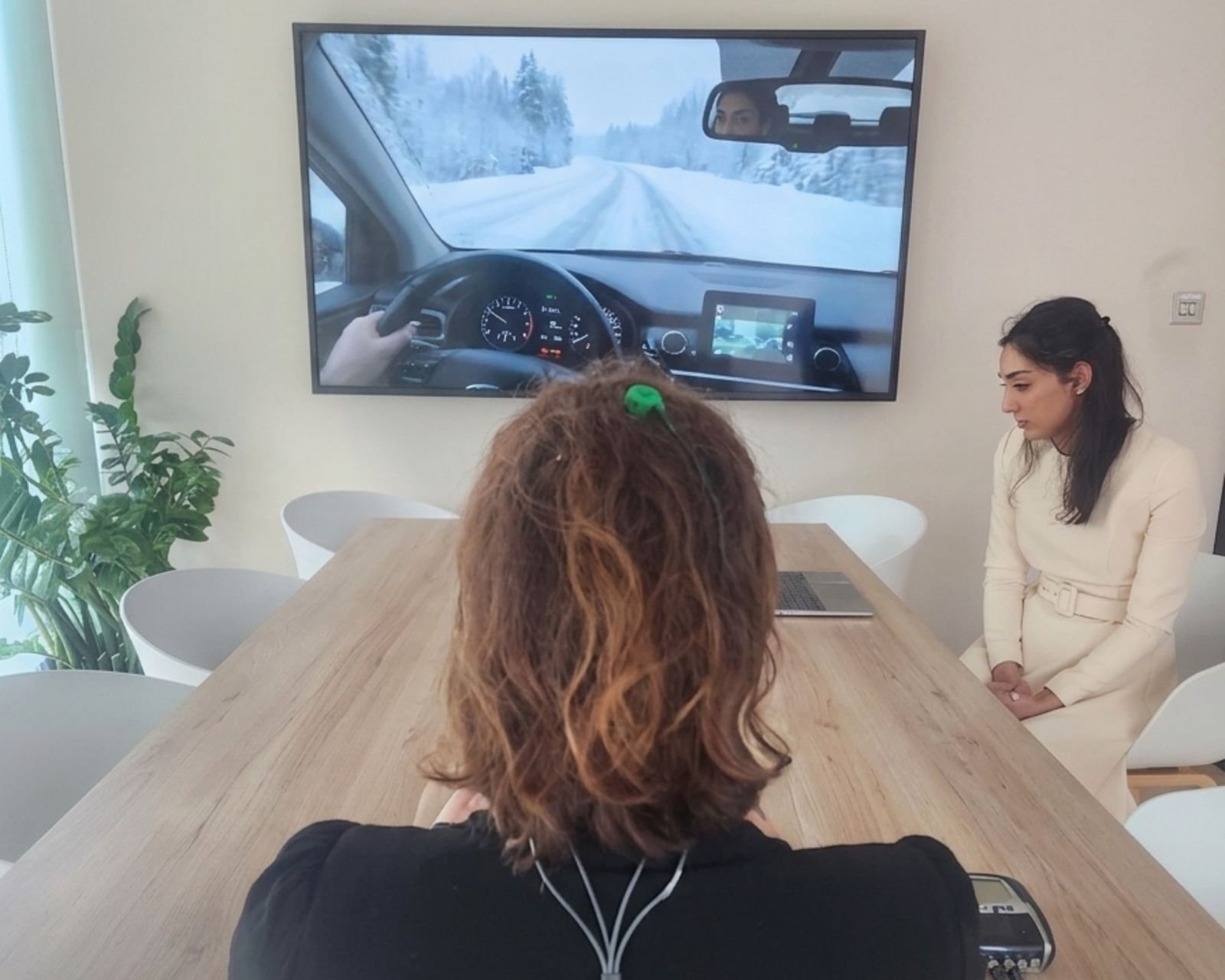
Once we understand your unique brainwave patterns and how far they stray from their optimal ranges, the training begins. It’s a simple and relaxing process. We attach the sensors, and you sit back and watch a screen, usually a show or a movie of your choice. But here is the catch: your brain is actively controlling what happens on that screen.
“Once we understand your unique brainwave patterns and how far they stray from their optimal ranges, the training begins”
If your brain enters the targeted balanced zone, the system rewards you with full HD colour and crisp sound. The moment your brain drifts away from that focused state, the image dims and the volume drops. Your subconscious notices these subtle changes immediately. Because human beings are biologically wired to seek positive feedback, your brain naturally starts chasing the reward to get the clear picture back. With repetition, it learns how to self-regulate. That is neuroplasticity in action.
Sessions run forty-five minutes, including up to thirty minutes of active brain training. Progress is tracked through before and after brain maps.
And just like riding a bike, once your brain learns this new and healthier pattern, it remembers.
The data collected thus far supports the science. Based on client outcome data, brain training sessions have led to measurable improvements in sleep and recovery for 98% of MindTune’s clients by the third session. 75% have also reported better mood and productivity by the fifth session. Moreover, the benefits of completing a full programme are long lasting, typically persisting for 18 to 24 months.
How many sessions does it take to normalize brain waves?
Generally, we advise a protocol of 12 neurofeedback sessions, typically scheduled three times a week for four weeks. The adage is that it takes around 21-40 days to form a new habit, but neurofeedback accelerates this process.
For those looking for immediate relief, we offer a starter package of five sessions called Quick Tune. However, to allow genuine neuroplasticity to take root, we highly recommend the full 12 sessions. After you complete the protocol, we do a second brain map. Sitting down to compare your before and after data is not only empowering but helps us determine together whether additional training would be beneficial.
What do people actually feel after the training?
The results are often striking. Almost 98% of clients report immediate changes in sleep and relaxation. By the time they reach their fourth or fifth session, many describe feeling calm under pressure, more motivated, and better focus. A lot of our clients even joke that Dubai traffic no longer bothers them! When we hear that, we know a shift has occurred.
Occasionally, some individuals may experience a mild agitation or sleep disturbance. However, this is positive and completely normal. It’s usually the nervous system adjusting to a new and optimised pattern.
Is this medically certified? Do you need a license to do it?
We are UAE licensed and registered under brain ability, cognitive performance and development. We are very clear about our boundaries, we don’t diagnose medical conditions, and we don’t promise overnight transformations. We train. And just like any training, it takes repetition and patience. That said, the equipment we use is medical grade.
My team includes a PhD in clinical and behavioural psychology who serves as our chief clinical officer, alongside a PhD neuroscientist. As for me? I’m not a doctor. I’m an entrepreneur who fell in love with the science of brainwaves and mental fitness 20 years ago — and became a certified neuroscience brain coach and neurofeedback expert.
Who are your clients right now?
Currently, our two biggest demographics are executives and parents with children. Most of our business so far has been direct-to-consumer because education is still a major component of what we do; for many people, the concept of brain training is still brand new.
However, corporate interest is booming right now. The UAE National Wellbeing Strategy 2031 lists mental fitness as a major national priority, and we have just become the exclusive brain performance provider for one of the largest semi-government healthcare organizations in the country. What we are hearing from leadership teams is simple: they want measurable tools to reduce burnout, improve resilience, and help their teams make better decisions under pressure.
For years, HR departments threw yoga classes, gym memberships, wellness apps and workshops at the problem. Now corporate boards want tangible data driven solutions with an ROI. They want performance, not feel good.
You positioned MindTune as premium but still accessible. Why?
Because accessibility matters to me. I genuinely believe that if you help people effectively, they will naturally tell others. And that’s how you build something meaningful.
But I also see the bigger opportunity in the wellness landscape. Luxury gyms are reaching out to us because they realise they are missing the mental piece of the puzzle. Longevity centres can do almost everything to improve the physical body, except show you exactly what your brain is doing and train it to perform better. I believe that data driven neuro-wellness is the missing pillar in the modern health ecosystem, and the most important one.
Where does neuro-wellness fit in the future of the broader wellness industry?
Today, wellness is changing. The traditional gym era isn’t disappearing, but it’s evolving. Physical fitness is a crucial part of the overall ecosystem, and we always remind our clients how much they need it. But today, people aren’t asking us about visible physical changes; they are asking us why they are not able to get to the gym, why they aren’t performing better at work, why they are forgetting things, and why they feel chronically stressed. People today need better tools to turn intention into action.
How do you know when your own brain needs attention?
For me, the red flags are clear. It is when I start looping, or when I can’t make quick decisions, or when I enthusiastically take on five exciting projects and finish none of them. That’s my ADHD saying hello!
For most people though it looks like heavy mornings, anxiety, burnout, brain fog, or reactivity. When executives and busy parents sit down with us, they admit that they just get angry too easily. They tell us that they don’t want to yell at their kids anymore, or snap at their employees. They say it’s just due to stress, but it’s usually overwhelm and mental fatigue.
Our brain is designed to filter out noise and regulate emotions. However, when it gets exhausted it starts running on fumes. And what do most of us do? We keep pushing the gas pedal harder. Eventually the engine crashes.
What has neurofeedback changed for you personally?
In the bigger picture, it helped me find my true north. It calmed my nervous system, sharpened my memory and decision-making, and gave me a clarity of focus I hadn’t felt in years.
What I love about neuroplasticity is that once your brain learns a healthier pattern, it holds onto it. I did 25 sessions 22 years ago, and the results lasted almost a decade. Recently, after the grind of building a company started burning me out again, I did another round. I’ll probably always need some maintenance, but having access to this technology makes it easy to stay optimised. And the awareness alone changes everything. When you understand what’s happening inside your own head, you can actually attend to it.
I tell our clients, do yoga, meditate, breathwork. I do it myself several times a week. All of it matters. But if you don’t retrain the underlying wiring of the brain, nothing fundamentally changes. You can manage the symptoms forever, or you can address the source. Sometimes you need to hit reset. And once you do, life becomes a whole lot better.
Share




WE RECOMMEND

Sleep in the Sky: How Private Aviation Is Redesigning Rest
For most travelers, flying is a compromise with the body: dry air, engine noise and a half‑sleep. VistaJet offers a different script:…
New Hotels in Saudi Arabia that will Reshape Mindful Travel Expectations
With projects by Jayasom, Six Senses, Aman, and Miraval, Saudi Arabia is beginning to define its own language of regenerative living

Private Banking: Wealthy Are Spending Less On Status And More On Longevity
As performance and clarity start to influence deals and decisions, private banking is beginning to place health inside wealth strategy, alongside assets…
