




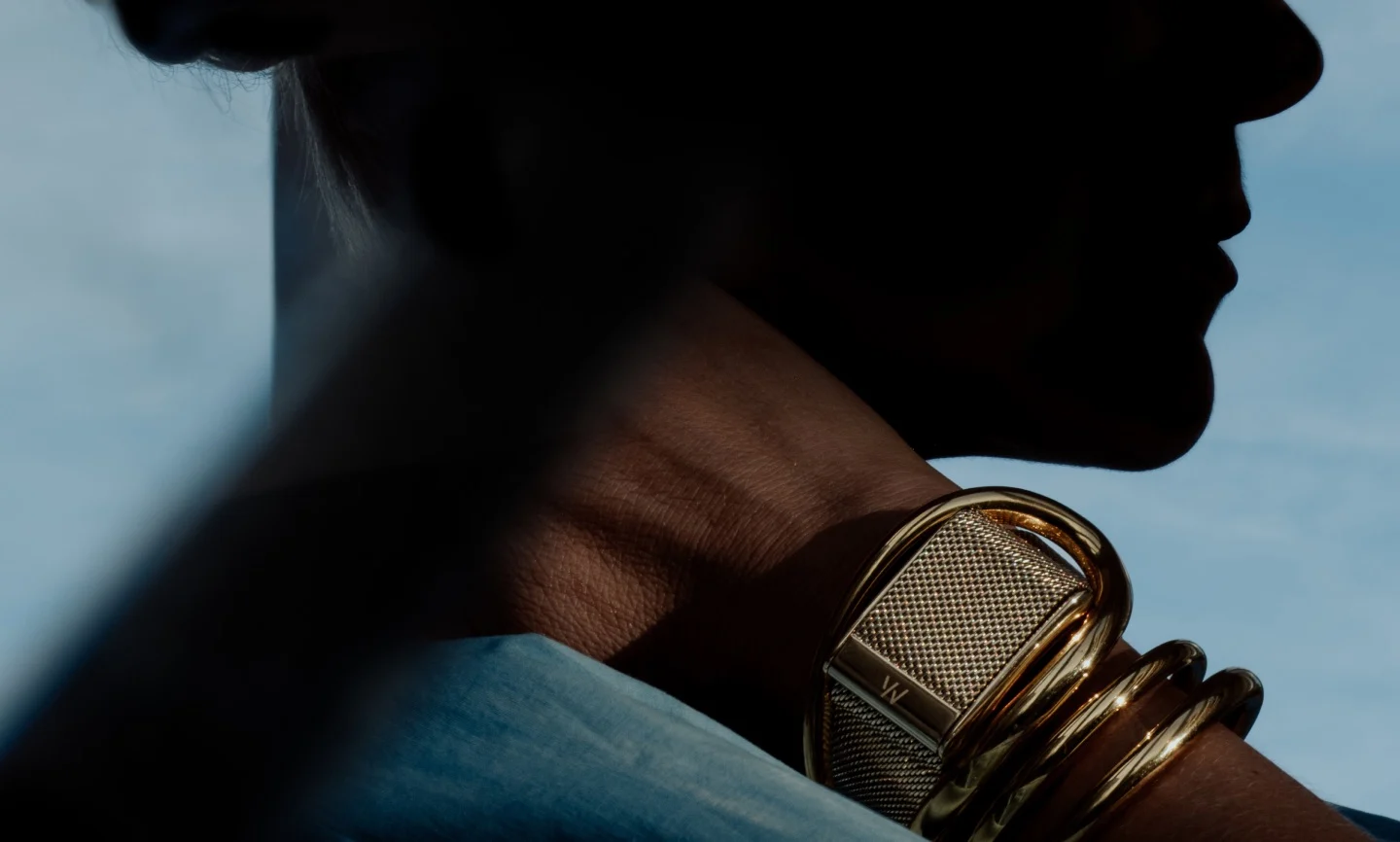
Wearables Are Going Jewellery
Health trackers are moving beyond sportswear and beginning to borrow the materials, language and collaborations of fashion and jewellery.
For years, wearable health technology looked unmistakably like technology. Rubber straps, black screens and utilitarian finishes made sense when fitness trackers were primarily used during workouts. But the role of wearables has changed. Today, devices are expected to monitor sleep, recovery, stress, cardiovascular health and other signals continuously – often 24 hours a day.
That creates a new design problem. If a device is meant to remain on the body at work, over dinner, while travelling and during an evening out, it has to live comfortably alongside watches, rings and jewellery.
The wearable industry appears to have understood this.
Whoop Meridian
WHOOP has just introduced Meridian, a Milanese-mesh metal bracelet for WHOOP 5.0 and MG that can be stacked with jewellery or worn alone. Available in Gold, Rose Gold, Alloy and Matte Black, it looks much closer to a conventional bracelet than the fabric performance bands historically associated with the brand. WHOOP itself describes Meridian as something designed to sit naturally alongside the pieces people already wear.
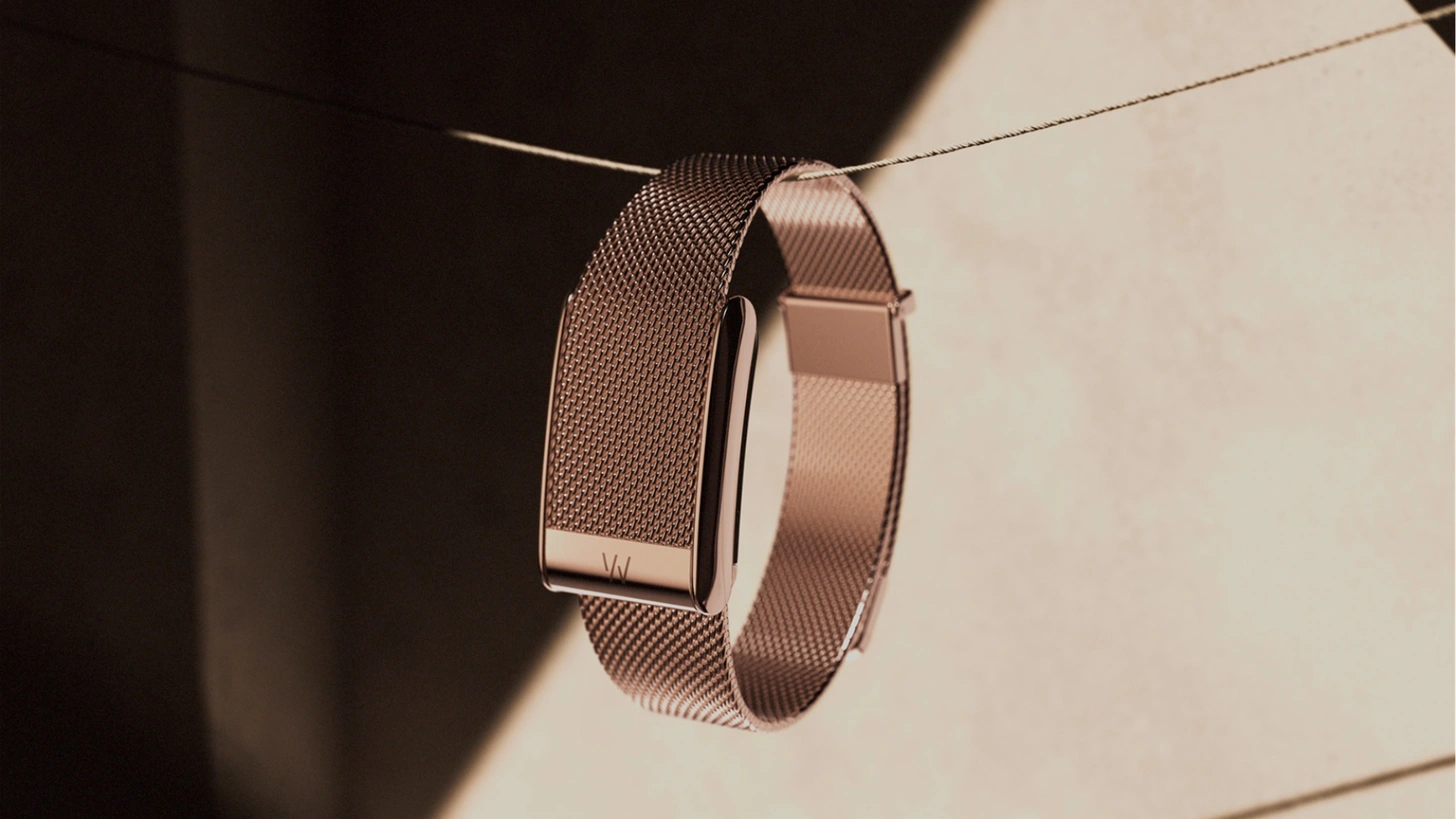
In the UAE, the Meridian band is already available for AED 599 through WHOOP and Virgin Megastore. The Gold version is a gold-coloured stainless-steel bracelet rather than solid gold.
Yet Meridian is only one expression of a much larger trend. WHOOP built its identity around elite sport and performance rather than fashion. Its screenless design, however, gives the company an advantage as wearables move towards jewellery: without a visible display, the sensor can effectively disappear into another object.
Meridian takes that logic directly to the wrist. But WHOOP has been moving towards fashion for some time. Its LeatherLuxe collection was explicitly created for users who wanted their WHOOP to work with jewellery, watches and formal clothing. The company has also expanded WHOOP Body, allowing the sensor to move away from the wrist entirely and into clothing.
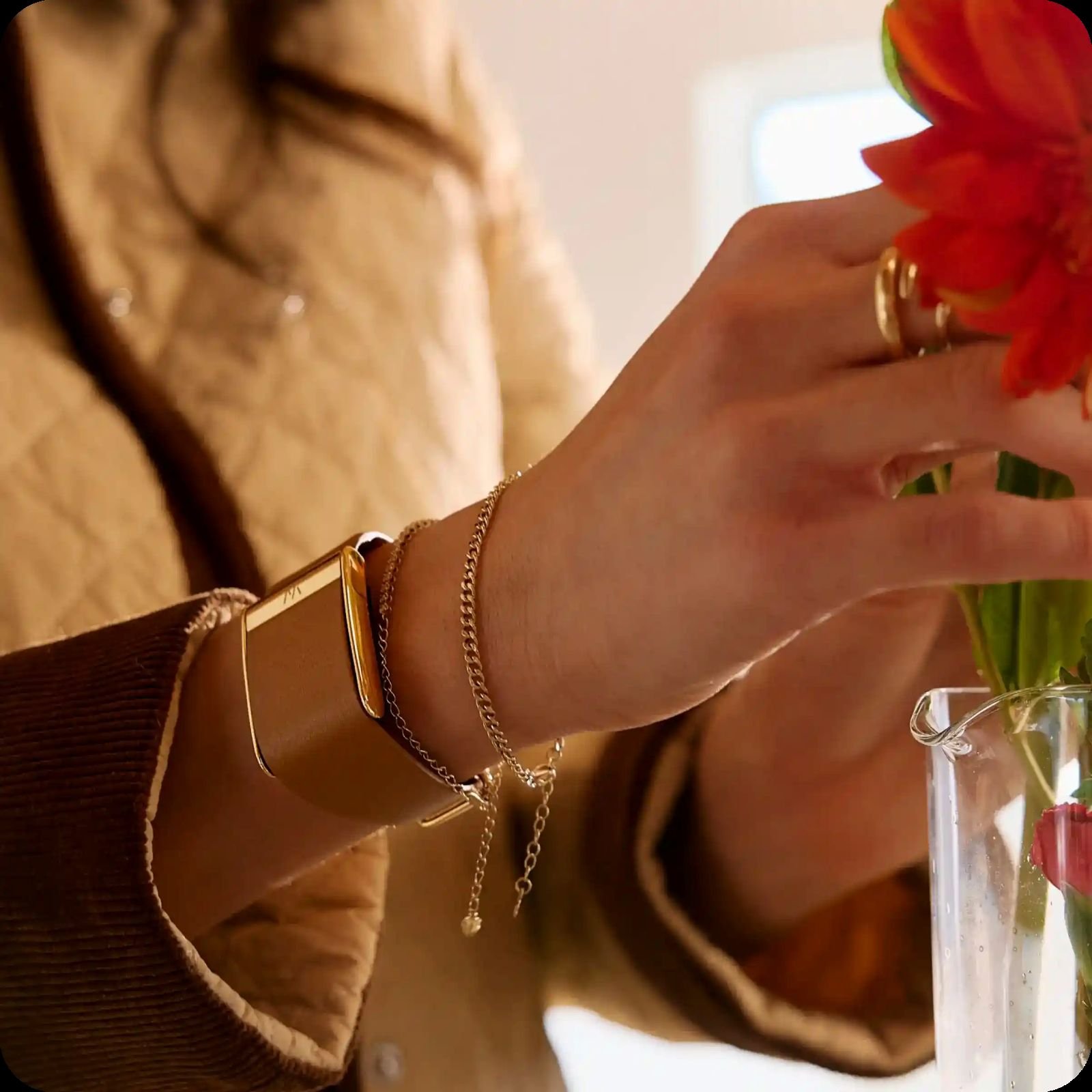
In January 2026, WHOOP announced an even more significant move into design through a multi-year partnership with British designer Samuel Ross and his studio SR_A. Ross became Global Creative Director for WHOOP × SR_A, with the collaboration covering bands, apparel and technical objects. The first PROJECT TERRAIN collection arrived in March.
Oura × Gucci: one of the earliest luxury signals
Oura arguably made this transition earlier. The smart ring already solved one of wearable technology’s aesthetic problems simply through its form: from a distance, it looks like jewellery. In 2022, Gucci and Oura made that relationship explicit with the Gucci × Oura Ring.
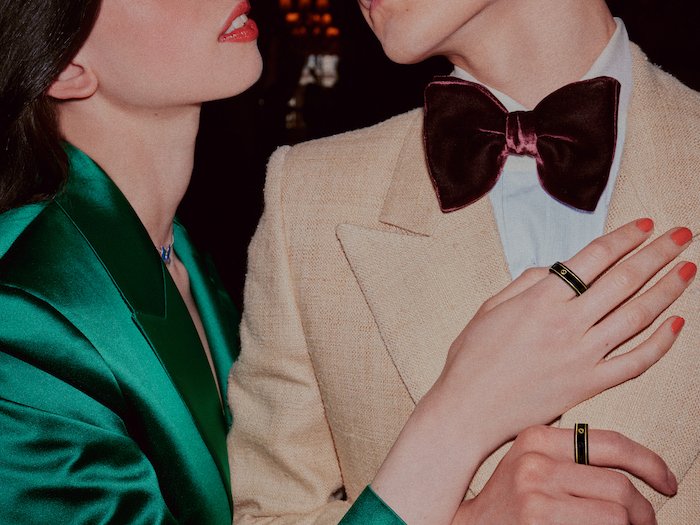
The collaboration combined Oura’s Gen3 sensors with Gucci’s Interlocking G motif and a braided 18-karat gold trim. The first release sold out within weeks and later returned as a limited edition.
It was an important moment because a health tracker was no longer merely being made more attractive. A major fashion house was putting its design codes directly onto biometric technology.
Oura has continued moving further into personal expression. Oura Ring 4 introduced a smoother, jewellery-like form, while its Ceramic collection brought zirconia ceramic and four colourways into the range. Oura described the 2025 launch as a shift from technology designed to blend in towards technology designed to stand out.
Its current Oura Ring 5 continues that direction with multiple metallic finishes including Gold, Deep Rose and Brushed Silver.
Ultrahuman: when the smart ring actually becomes fine jewellery
Ultrahuman has gone further still. Rather than creating the appearance of precious metal, its Ring RARE is actually made in 18K gold or platinum.
The company describes it as the world’s first luxury smart ring. The current European price is around €1,839, putting the device in an entirely different category from conventional fitness wearables.
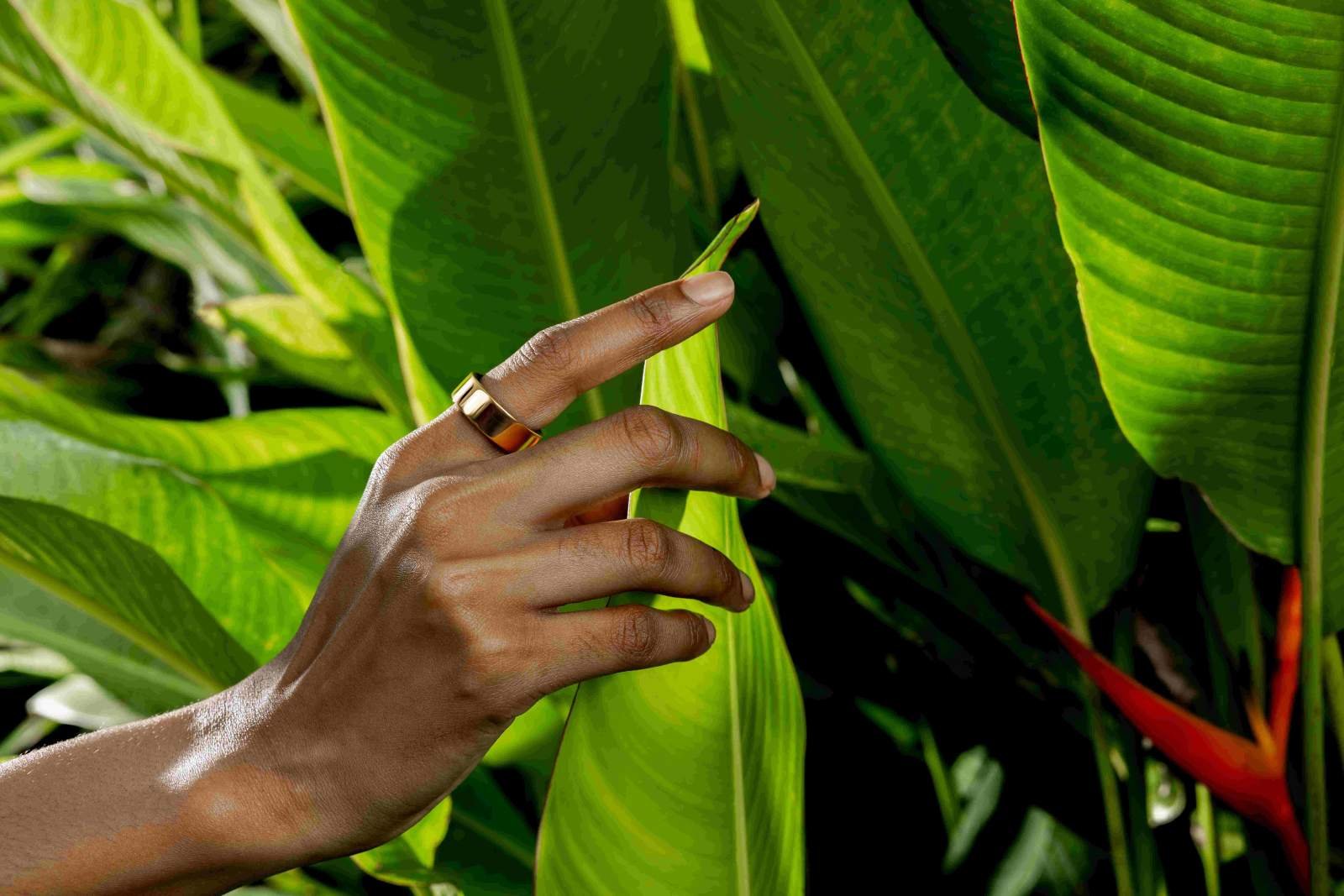
RARE is interesting because it eliminates the distinction between a health tracker and a precious object almost completely.
It contains technology for monitoring sleep, movement and recovery, yet the exterior belongs to the language of fine jewellery.
Ultrahuman has also entered fashion through Diesel × Ultrahuman, a limited-edition smart-ring collaboration built around Diesel’s industrial design codes and Double-D identity. The current ring comes in Cryo and Phantom finishes and is priced around €559 in Europe.
The two products reveal the two routes wearables are taking: one towards fashion collaborations, the other towards precious materials.
Fitbit × gorjana: an earlier experiment
The idea is not entirely new. In 2021, Fitbit partnered with California jewellery brand gorjana on a special edition of Fitbit Luxe.
Instead of the conventional silicone fitness band, the collaboration introduced a soft-gold stainless-steel Parker Link Bracelet, designed specifically to allow the tracker to sit among conventional jewellery.
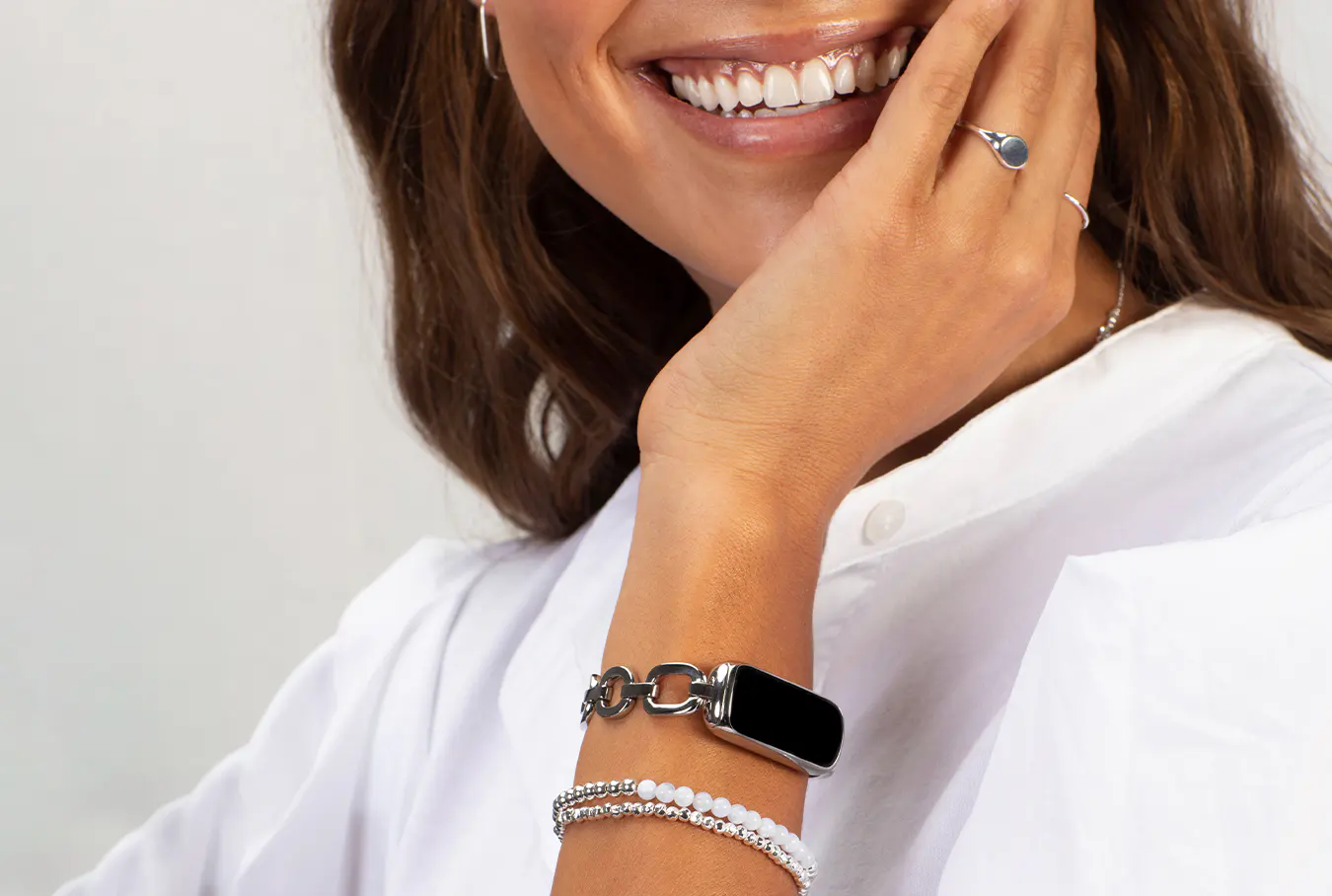
At the time, Fitbit called Luxe a “fashion-forward” wellness tracker. Looking back, the collaboration now appears surprisingly prescient. It anticipated the problem today’s wearable brands are addressing at much greater scale: once a health tracker becomes an all-day object, consumers begin judging it according to the same aesthetic standards as everything else they wear.
Bellabeat × Swarovski: smart jewellery before smart rings became mainstream
Bellabeat pushed the concept even earlier. Its Leaf tracker was designed from the beginning as a piece that could be worn as a bracelet, necklace or clip while tracking movement, sleep, stress and reproductive-health data.
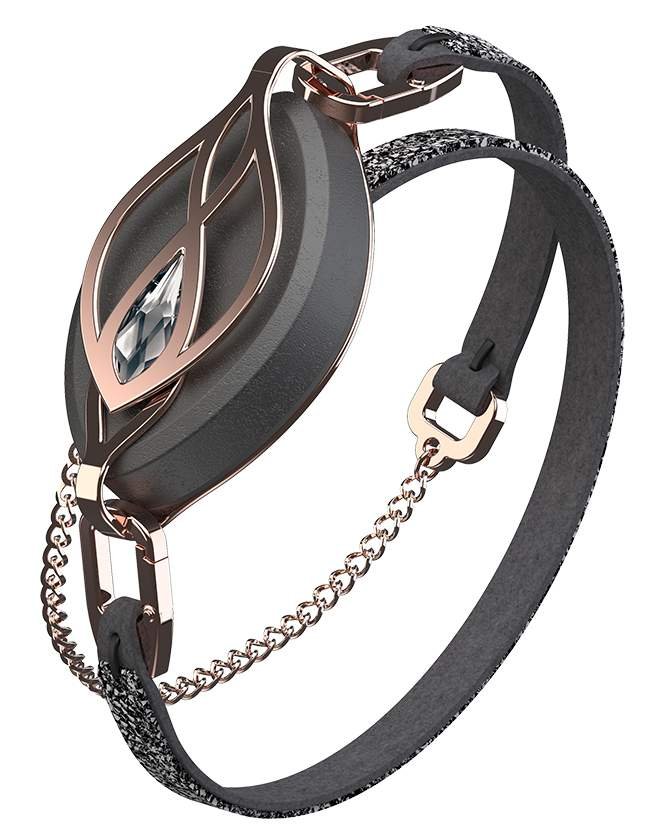
The company later collaborated with Swarovski on Leaf Crystal and developed versions incorporating materials such as rose quartz and black onyx.
Bellabeat never achieved the cultural scale that Oura or WHOOP have today, but its approach anticipated where the category was heading: technology becoming less visible while the object itself becomes more decorative.
And now jewellers are entering the category themselves
Perhaps the clearest evidence that this is becoming a genuine jewellery category comes from outside the wearable companies. Independent jewellers are now designing 14K-gold ring jackets, diamond sleeves and charms specifically for Oura rings, while WHOOP bands are receiving diamond-set covers and metal accessories.
Billie Simone Jewelry makes gold and diamond jackets designed around Oura. Logan Hollowell offers a pavé diamond sleeve. Lil Milan has produced personalised ring jackets, while Caleums Jewellery creates decorative pieces for WHOOP.
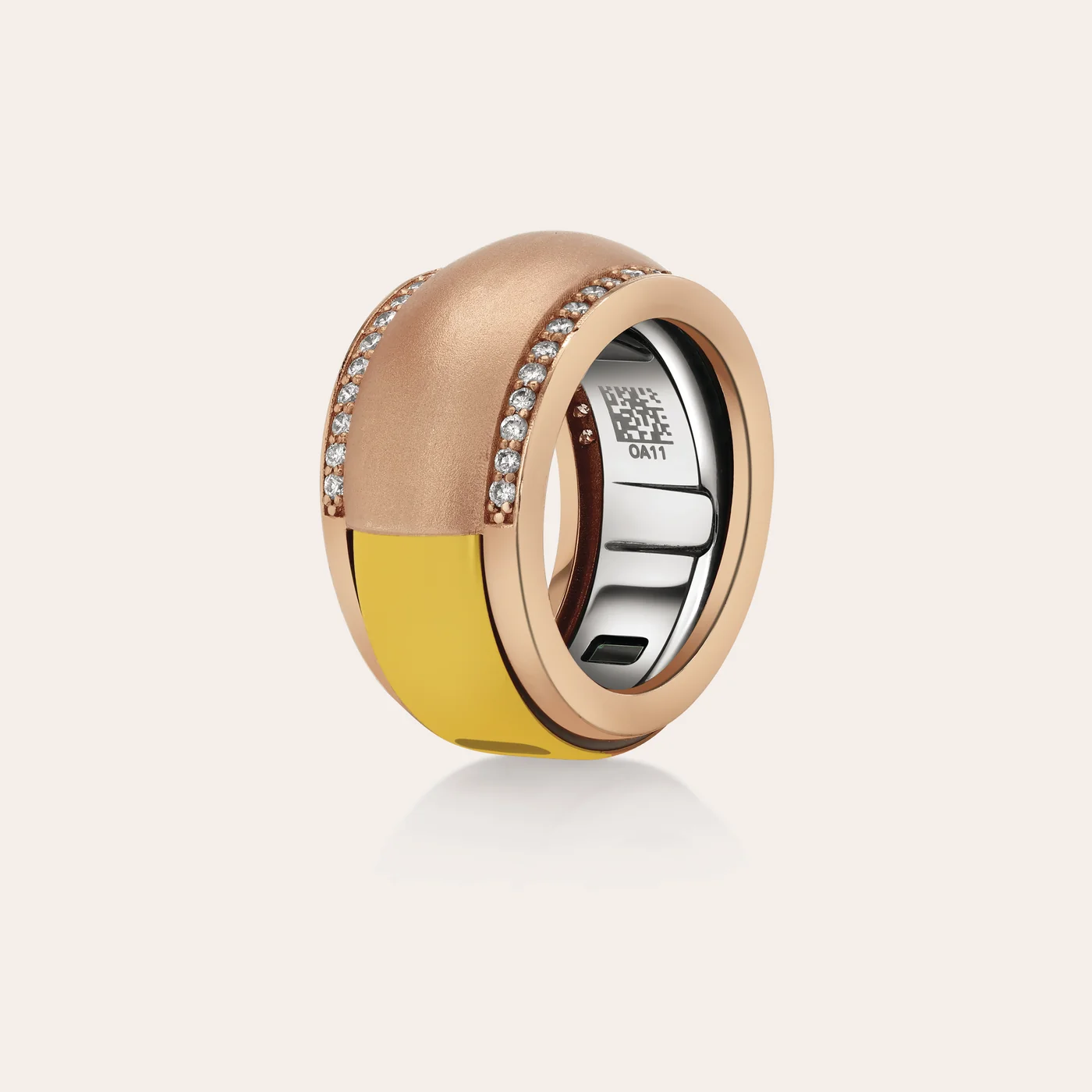
This reverses the traditional relationship. Instead of technology companies borrowing the appearance of jewellery, jewellery designers are now treating biometric devices as objects worth dressing.
Why wearables have to become more beautiful
There is a functional reason behind the aesthetic shift. The value of many health wearables depends on continuity. That means wearability is no longer merely an industrial-design issue. It becomes part of the effectiveness of the product itself.
And the more health monitoring expands into everyday life, the harder it becomes to justify an object that visually belongs only in a gym.
This may explain why rings have become such an important form factor. It may also explain WHOOP’s progression from fabric straps to leather, fashion collaborations and now Milanese metal.
The next step may be even less visible. Sensors are already migrating into clothing. Other technologies are being developed around earrings, necklaces and other body-worn formats. Over time, the distinction between a health device and an accessory may become increasingly difficult to see. The most successful wearable of the future may therefore be the one we stop thinking of as technology at all.
As health tracking becomes continuous, wearables are beginning to look less like devices – and more like the objects we would have chosen to wear anyway.
Share




WE RECOMMEND
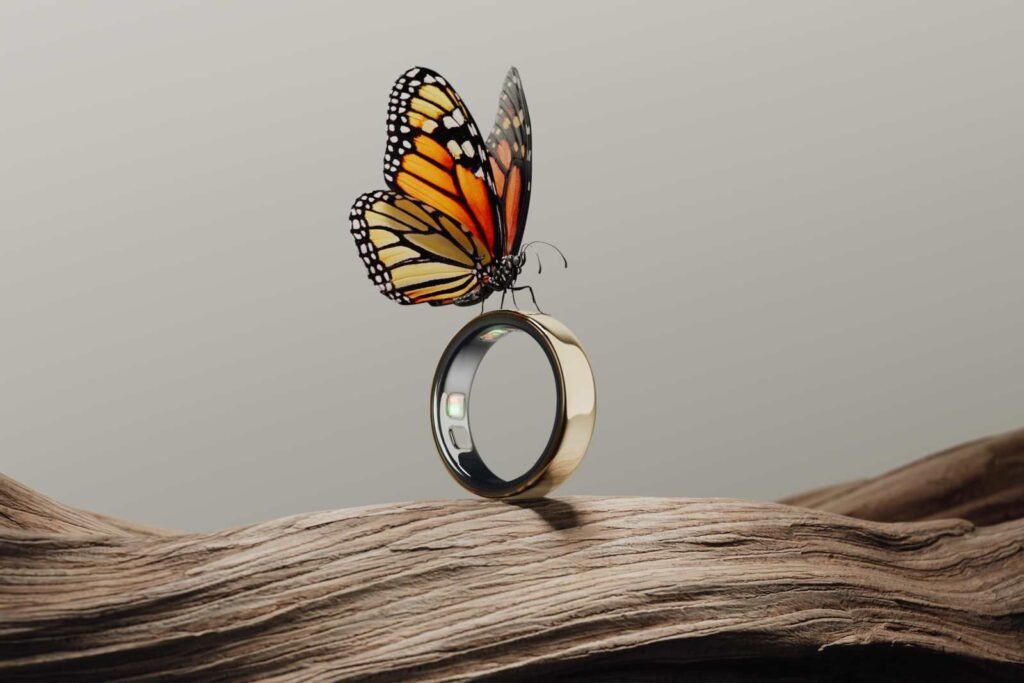
Oura Ring 5 Review: The Smallest Smart Ring Is Moving Beyond Tracking
Oura has introduced its newest smallest smart ring in the world, which is now tracking GLP-1 and women health.
Clothing for Emotional Alignment: What Cultural Intelligence Fashion Means
We live in a rhythm of relocations, constant travel, and shifting social codes. In a new place, anxiety tends to arrive before…

Dior’s New Language of Wellness
With the recent opening of Dior Spa Splendido at Portofino, Dior is expanding its wellness universe and bringing its codes into the…
