




The Return of Touch: Why the Rarest Luxury Now Fits in Your Palm
Wellness has learned to measure everything. Yet the sense of touch has quietly faded from daily life. Scientists call it “touch hunger”, and some of the oldest rituals of the Gulf may offer a way back.
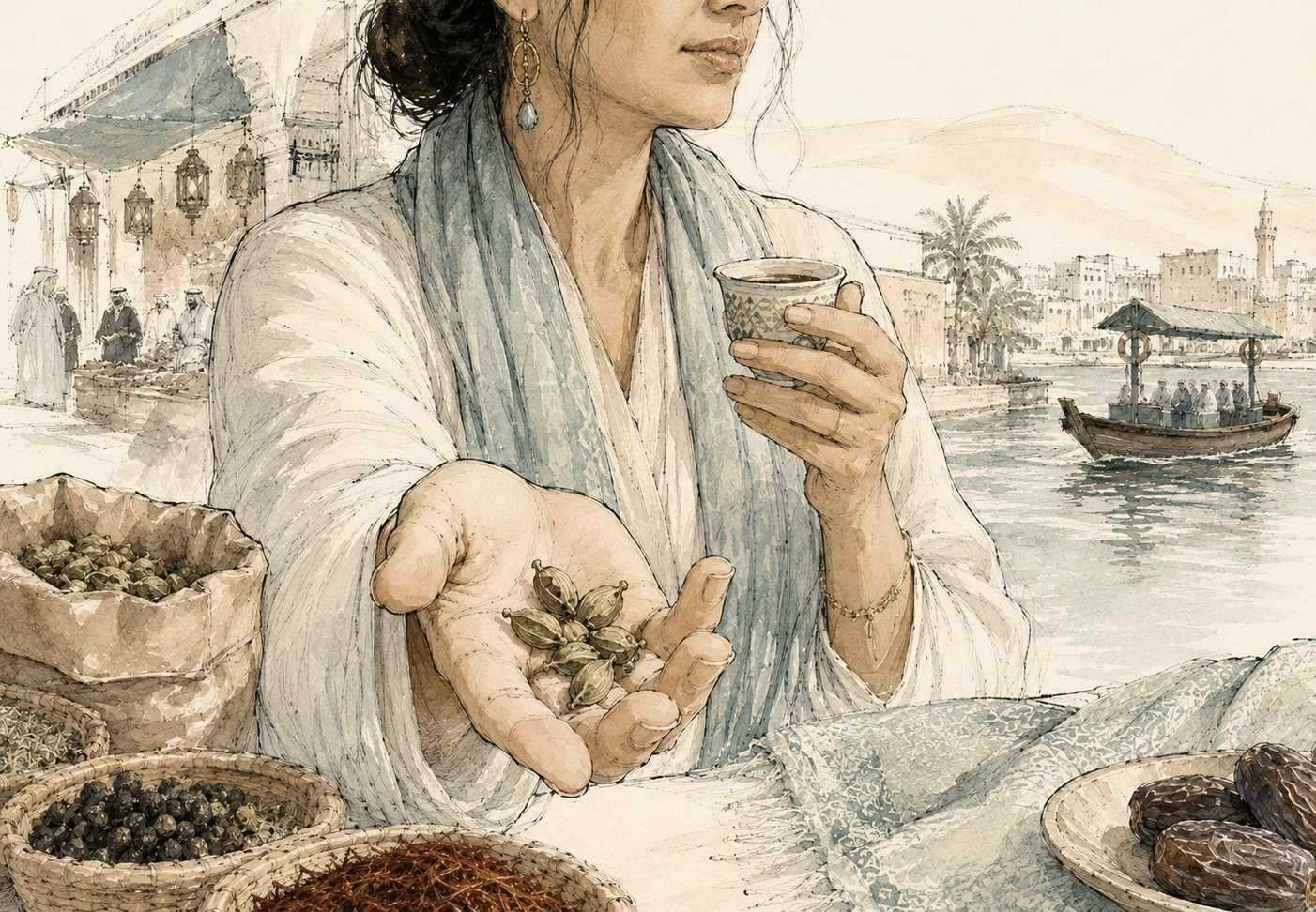
I notice it first in the Spice Souk in Deira. The vendor pours cardamom pods into my open palm – cool, papery, faintly oily – and for a moment the whole city narrows to that one sensation. My phone, with its four thousand daily gestures, has taught my fingers to expect nothing but glass. The cardamom feels almost shockingly alive.
That small shock, it turns out, has a name. Researchers who study human–technology relationships describe a growing phenomenon of touch hunger – a chronic undernourishment of our richest sensory system. The average person now checks a phone close to two hundred times a day and spends around seven hours in front of screens; the phone alone claims five of those hours – more than seventy-six full days a year of tapping and swiping. Every one of those gestures lands on the same surface: flat, smooth, room-temperature glass.
The science behind the claim is older than the smartphone. More than a century ago Maria Montessori built an entire pedagogy on the conviction that intelligence is formed through the hands, and modern neuroscience keeps proving her right: children who count on their fingers perform better at mathematics , and writing by hand activates the memory-encoding regions of the brain far more powerfully than typing. The reverse is now visible in kindergartens, where a majority of teachers report that children struggle to hold scissors and pencils – fine motor skills quietly remodelled by years of frictionless glass.
For adults the ledger reads differently, but it reads. Pressure on the skin’s receptors slows the nervous system: heart rate drops, blood pressure eases, cortisol recedes. A hug, a held hand, bare feet on grass – each triggers a measurable release of oxytocin. Knitting, cooking and gardening have all been linked in clinical studies to lower stress and improved mood. In other words, tactility behaves exactly like the interventions the longevity industry spends billions trying to engineer – except that it costs nothing and predates civilisation itself.
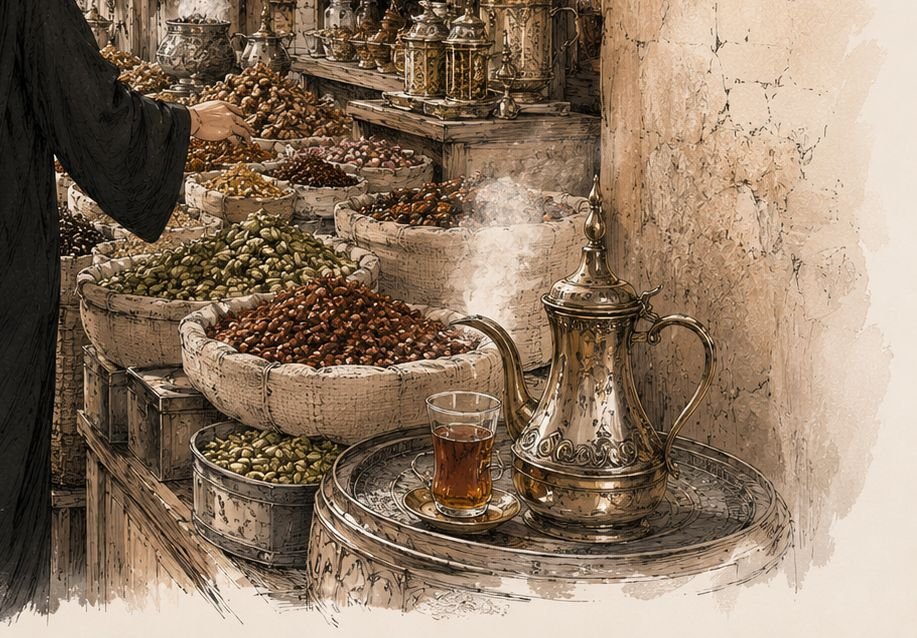
Gulf never fully surrendered its sense of touch. Consider the inventory of an ordinary Khaleeji day: the warmth of a finjan of gahwa passed from hand to hand, the ritual weight of dates pressed between the fingers, the grain of oud rubbed into the wrist, the astonishing communication between a falconer’s glove and the bird that lands on it. The hammam – arguably the world’s oldest wellness technology – is nothing more sophisticated than heat, water, black soap and the firm intelligence of human hands. Sand itself is a texture the desert teaches early: anyone who has walked the dunes at Mleiha barefoot at sunset knows that the surface shifts temperature every few centimetres, from scalding crest to cool shadow. This is grounding long before the word acquired quotation marks and a price tag.
The market, as ever, has caught the scent. Vinyl records passed a billion dollars in annual sales for the first time since 1983; mechanical watches, ceramics studios and even push-button dashboards are returning – several carmakers are now reversing a decade of touchscreen maximalism because drivers want controls they can find by feel. Schools across the United States have begun locking phones away during lessons – and teachers describe cafeterias filling once more with the ordinary noise of conversation. The pendulum that swung towards the frictionless is swinging back towards the felt.
For the wellness world this is more than a nostalgic curiosity – it is a design brief. The spas of the region already hold an unfair advantage: rasul chambers lined with mineral clay, salt caves, warm-stone rituals, the choreography of a proper Moroccan bath. The next generation of longevity clinics, for all their biomarker panels and cryotherapy suites, may find that their most sophisticated instrument is the massage therapist’s palm – a technology with several thousand years of clinical data behind it. The logic of high-touch hospitality, in the most literal sense of the phrase, suddenly reads like preventative medicine.
And there is a quieter, more philosophical dividend. In an era when artificial intelligence can fabricate any image and any voice, sight and hearing have become negotiable witnesses. Touch remains stubbornly analogue. A date is sweet, a stone is warm, a hand is a hand – the fingertips file no disputed reports. Perhaps that is why the future of luxury looks increasingly tactile: linen that creases, paper that resists the pen, clay that remembers the thumbprint. The rarest commodity of the coming decade may be neither time nor attention, but texture.
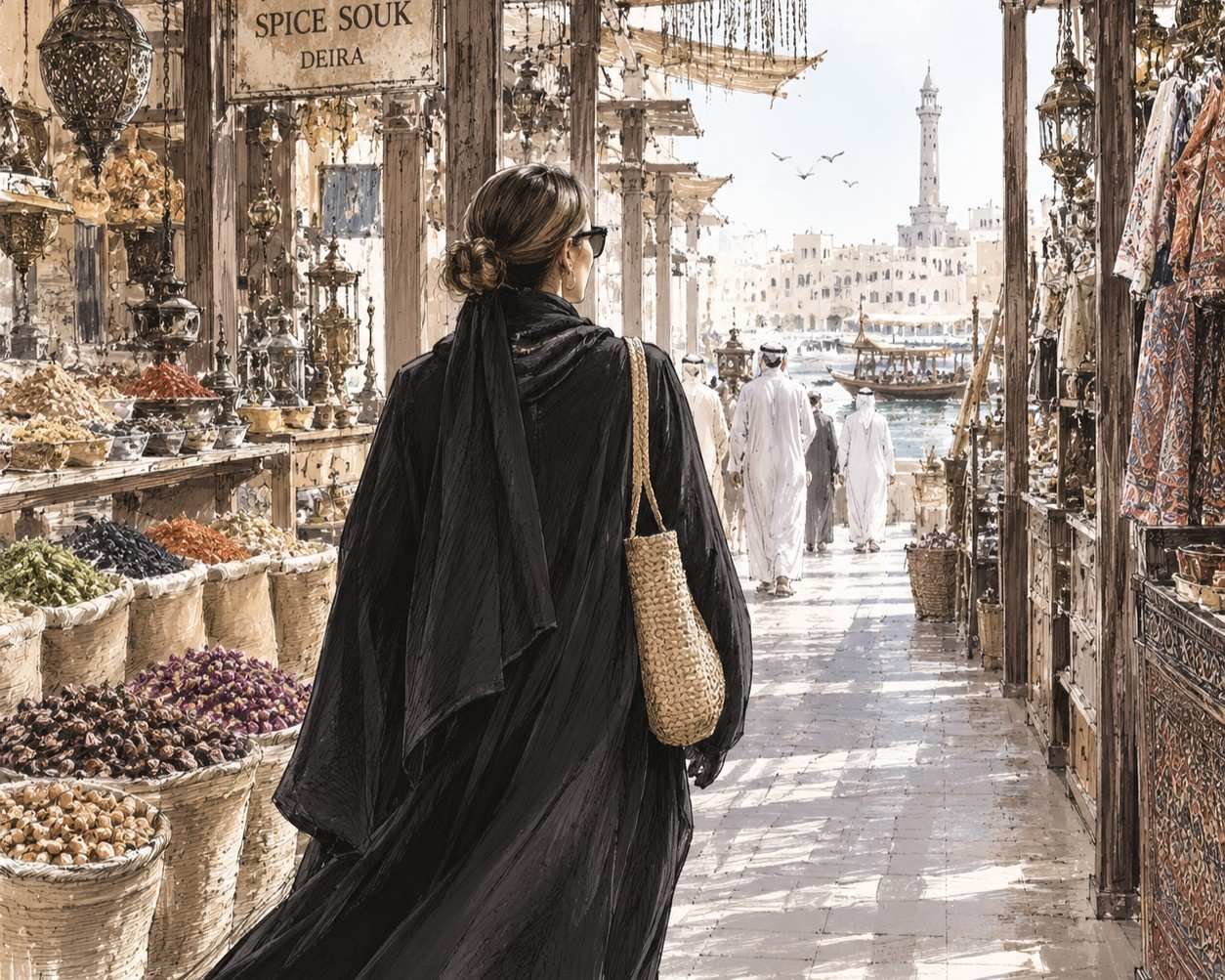
I think about this as I leave the souk, the cardamom pods rattling softly in their paper bag. The muezzin’s call carries across the creek, while an abra taps against its mooring, wood against wood.
In Sufi tradition, *basira* means inner sight – a form of perception beyond the familiar five senses. The idea is simple: intuition does not exist separately from the body. It grows through the way we taste, listen, touch and notice the world around us. The more alive our senses are, the more clearly we are able to understand what we feel and know. When we stop paying attention to the physical world, that inner clarity begins to fade as well.
This means that every distracted glance at a screen costs us twice: we lose both the texture of the moment and some of our ability to see clearly. The good news is that the process can be reversed. Wisdom may begin with something very ordinary: cardamom resting in an open palm, warm stone beneath the hand, or sand changing temperature underfoot. First we learn to notice. Understanding comes later.
After one July evening in Deira, it seems that our most basic way of knowing the world is still there, waiting to be rediscovered – one handful of spice at a time.
Share



WE RECOMMEND
Bathhouses Are Becoming New Places for Connection
Across cultures, water rituals created spaces where people gathered, talked and spent time together. Today, this ancient ritual is returning in a…
The healing power of sound. New approaches to feeling well
Today, more and more people are turning to sound as a practical way to downshift stress, because it can change how you…
What Art Actually Does to You
Art affects our state more deeply than it seems. Today, it is increasingly seen as a factor that can shape emotional tone…
