



A New Language of Wellness at the Imperial Hotel, Kyoto
Within the restored Yasaka Kaikan, stone, scent, sound and seasonal rituals shape a distinctly Japanese experience of wellbeing, rooted in stillness and a deep sense of place.
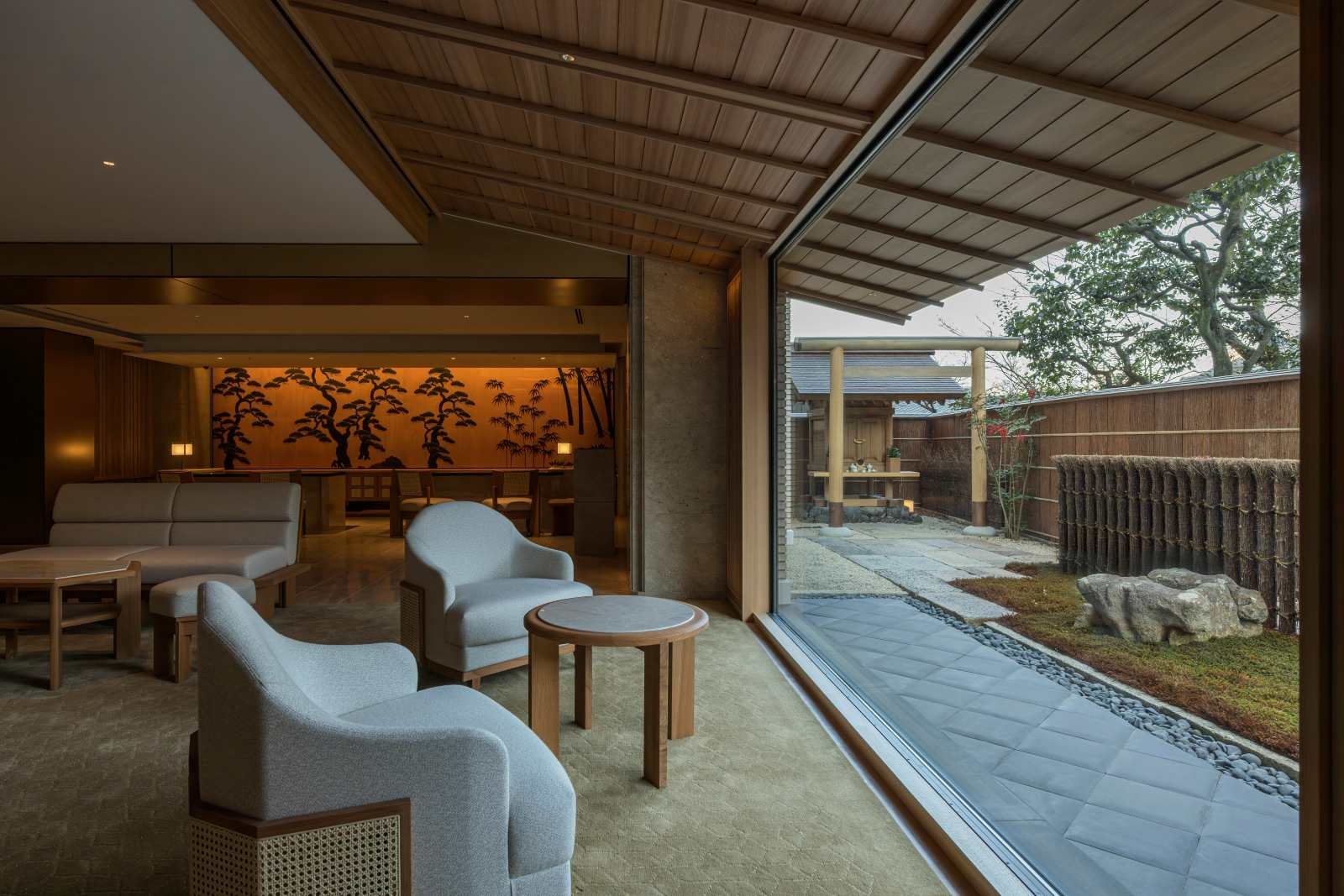
Kyoto has no shortage of places promising stillness. At the Imperial Hotel, Kyoto, member of The Leading Hotels of the World, the more compelling idea is that recovery can begin with the building itself.
Opened on 5 March 2026 in the historic Gion district, the 55-room hotel occupies parts of the former Yasaka Kaikan. Its new wellness floor sits below street level, where a spa, a 17.5-metre pool, thermal bathing facilities and a 24-hour fitness room form a quiet counterpoint to Hanamikoji Street above.
The offer remains compact: two spa treatment rooms and a guest-focused wellness floor – but its strength lies in the coherence between place, ritual and material. Incense, sound, seasonal treatments and Japanese stone create a form of urban recovery that feels closely connected to Kyoto.
A 1936 landmark enters a new chapter
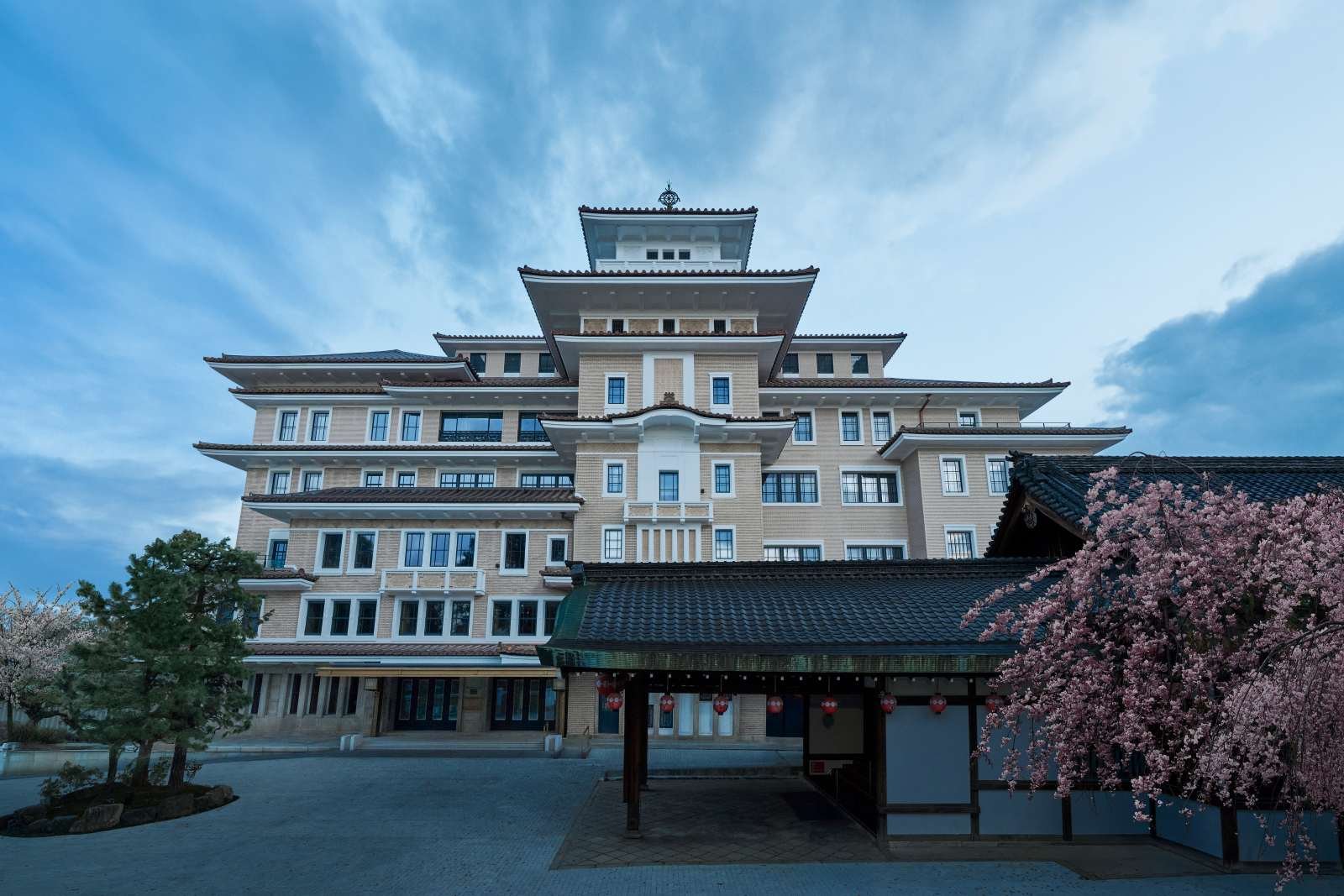
The opening marked the Imperial brand’s first hotel in Kyoto and its first new property in three decades. At its heart is Yasaka Kaikan, a 1936 Gion landmark that once served as a theatre, cinema, dance hall and community gathering place.
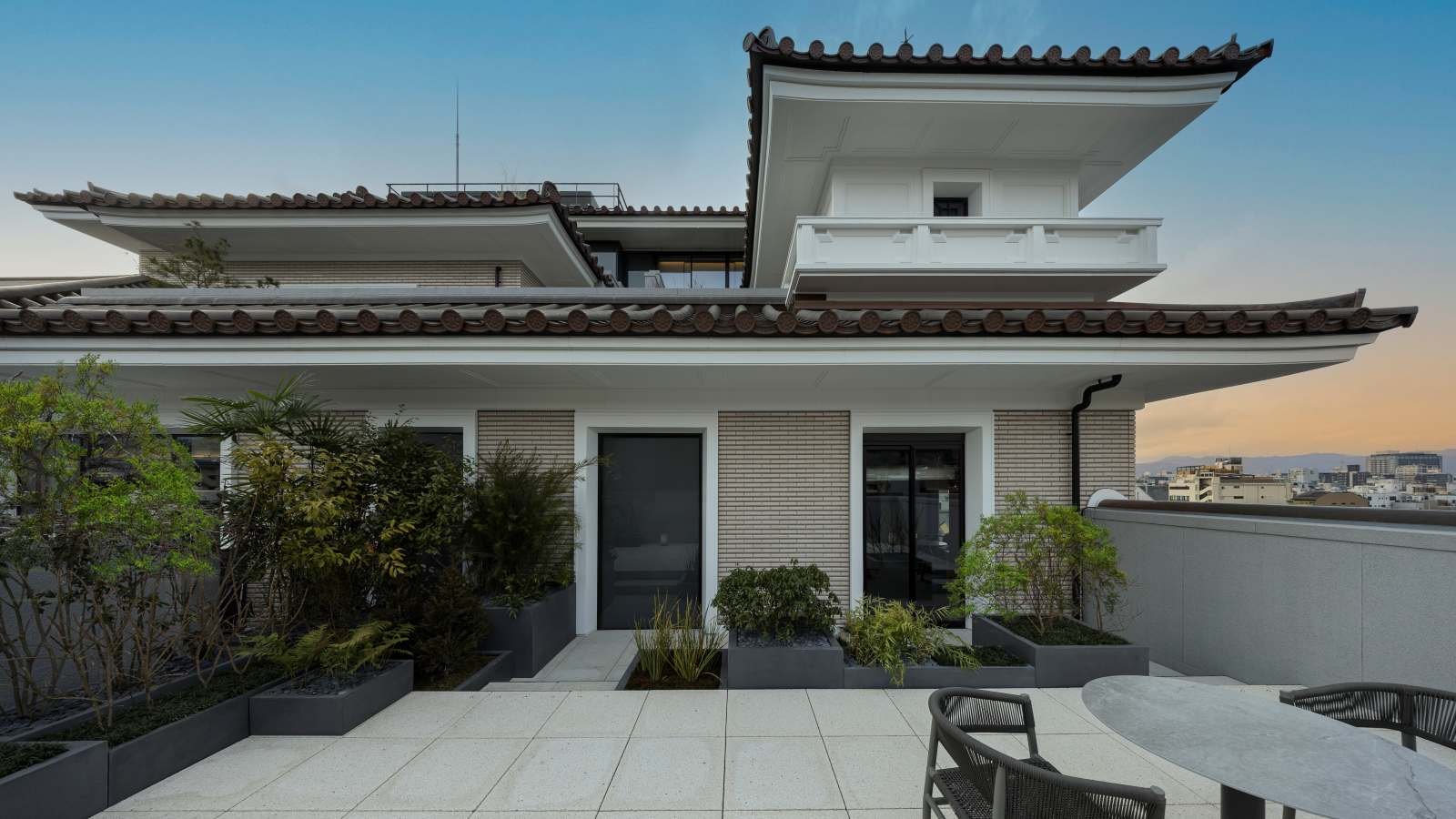
Faced with deterioration and seismic concerns, Imperial Hotel and Obayashi Corporation preserved the building’s south and west facades while adapting the interior to modern standards. Around 16,000 original tiles were recovered for reuse, alongside restored terra-cotta reliefs, copper roofing and etched glass.
In August 2026, the building retained its status as a Registered Tangible Cultural Property under the new designation Former Yasaka Kaikan, confirming the restoration as an important example of adaptive reuse in Kyoto.
Wellness through incense, sound and season
THE SPA takes its cues from Gion Kobu and from traditional ideas of balancing Ki, Blood and Water. The language is cultural and sensory: treatments are organised around touch, warmth, breath, scent and changes in season.
Signature journeys begin with Monkō, the Japanese art of incense appreciation. Aromatic wood establishes a pause before the treatment, while the sound of traditional bells marks the transition away from the pace of travel. Oils draw on scents associated with Kyoto’s natural landscape.
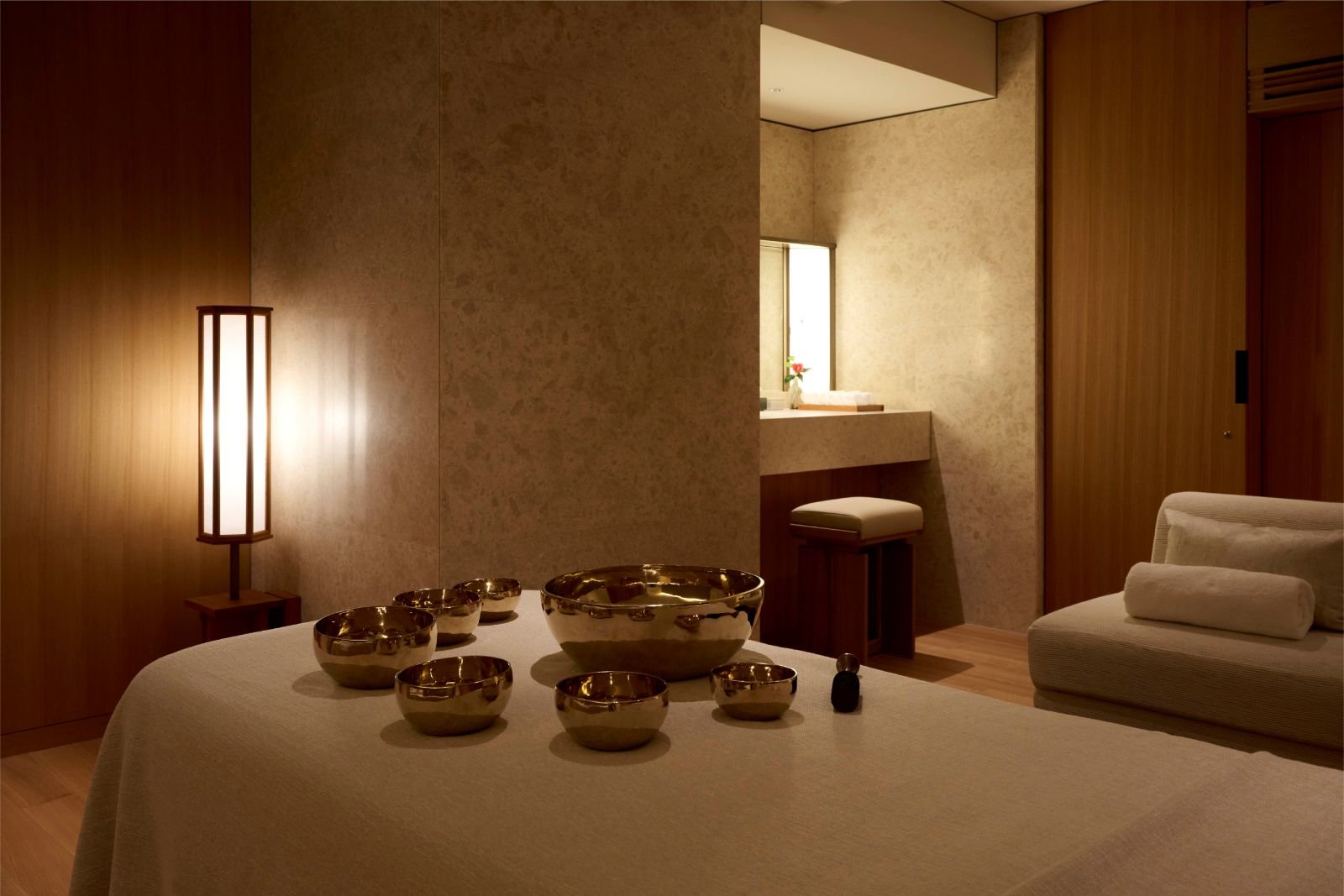
Silent Serenity combines sound meditation with flowing bodywork and mindful breathing; the longer version adds a head massage. Deep Stone Revive Therapy uses hot stones and sustained deep-tissue techniques to address muscular tension and travel fatigue, with the 120-minute treatment adding a warm-and-cool stone facial massage.
A second strand of the menu was developed with British skincare brand OSKIA. The Bio-Nutrition Ritual combines body massage with facials using lactic acid, enzymes and vitamin C, while the longer Imperial Experience adds a mineral-rich body exfoliation, antioxidant botanical oils and cryo-lifting techniques. These are sophisticated spa and skincare rituals, positioned around visible radiance and relaxation.
A pool shaped by the building’s material memory
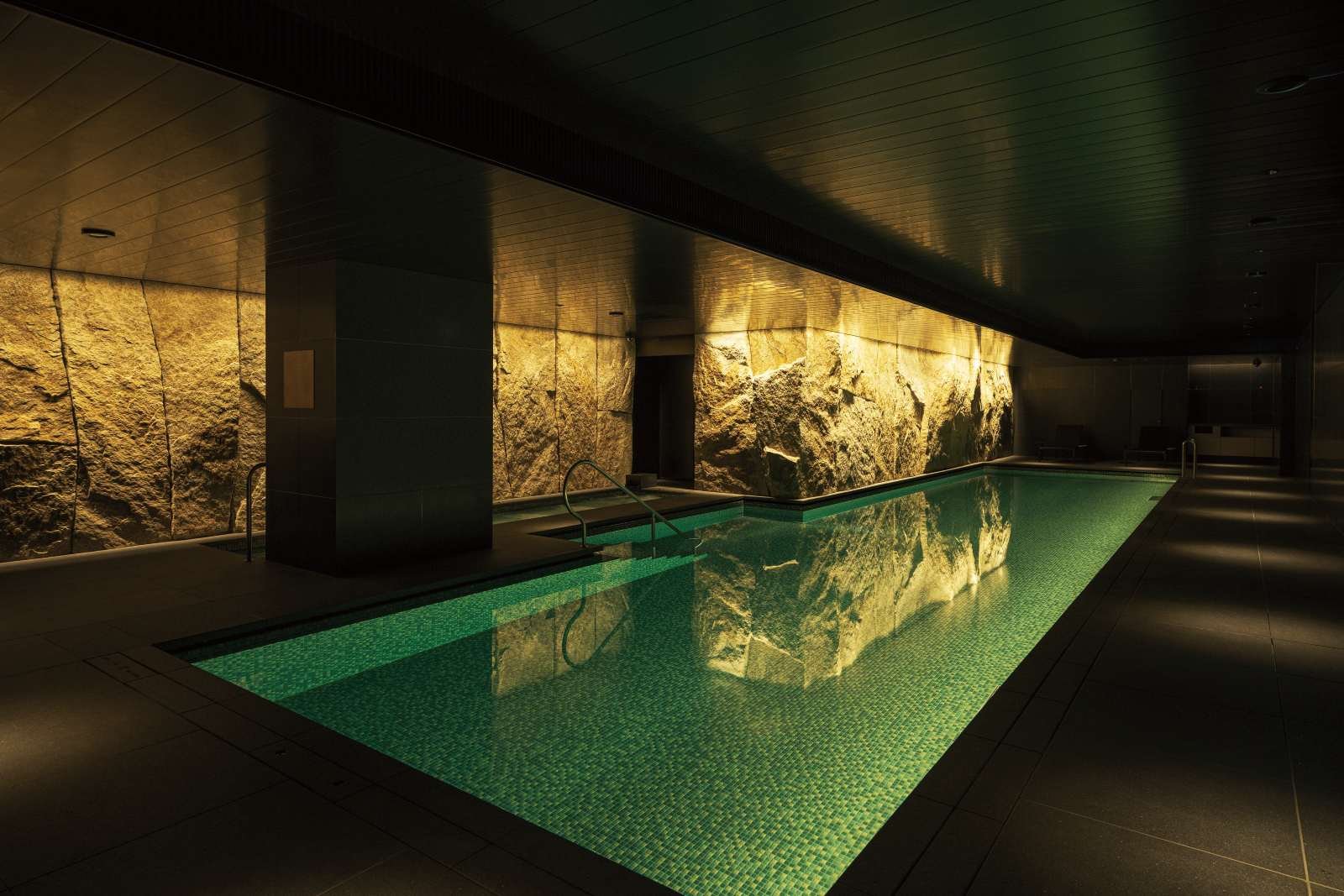
The strongest wellness feature may be architectural. On the lower level, the 17.5-metre indoor pool is enclosed by monumental slabs of Shiraishijima granite from Okayama. Soft indirect light catches the irregular surface of the stone, giving the room the density and stillness of a carved chamber.
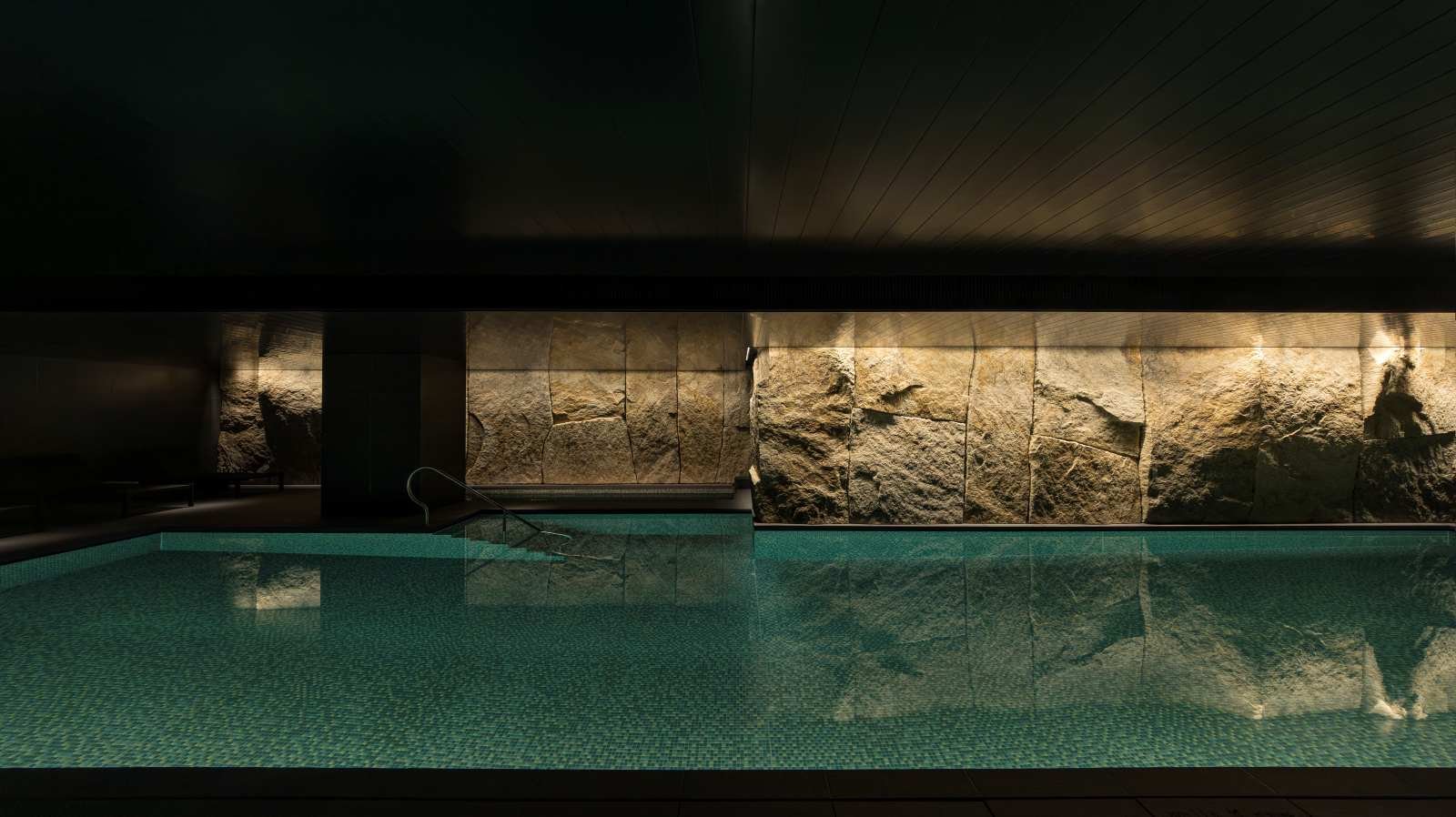
The interior was designed by Tomoyuki Sakakida of New Material Research Laboratory, the studio he founded with artist and architect Hiroshi Sugimoto. Its guiding idea, Old Is New, shaped the hotel around Japanese materials and a longer view of time. Stone is used as a connective element between the preserved landmark above and the new wellness spaces below.
Alongside the pool are thermal bathing facilities and a fitness room open around the clock to staying guests. Low light, tactile surfaces and a sense of separation from the streets above create a gradual transition into a slower, more restorative rhythm.
Heritage as part of the wellbeing experience
Luxury hotels increasingly use wellness as a catalogue of technologies and interventions. The Imperial Hotel, Kyoto offers a quieter proposition. Its rituals remain recognisable – massage, facials, heat, swimming and exercise – yet their context changes the experience.
Here, wellbeing is built around attention: to scent before touch, to sound before silence, to the weight of stone and to the visible traces of a building that has already lived several lives. That continuity gives the hotel an emotional depth that a newly built urban spa would struggle to reproduce.
The Imperial Hotel, Kyoto is best understood as a luxury city hotel with an unusually coherent wellness language. For travellers, it combines restoration with a rare opportunity to experience one of Gion’s historic landmarks from within.
Share


WE RECOMMEND
On the Shore of a Longer Life: Longevity at Halekulani Okinawa
On Okinawa, people simply live longer. Halekulani Okinawa Resort translates this quiet philosophy of long life into an exquisitely five-star ritual.
The Human Side of Longevity: What It Really Takes to Live to 120
Everyone wants the next longevity breakthrough. A new molecule. A better biomarker. But after years of reporting on longevity, we’ve started to…
20 Best Longevity and Wellness Destinations Around the World
A longevity trip begins with a simple choice: to go somewhere where the days are shaped around feeling better and returning with…
