



Guggenheim Abu Dhabi Is Ready to Redraw the Map of Global Art
After two decades of anticipation, Frank Gehry’s monumental museum will open on Saadiyat Island on 11 December 2026 – completing one of the world’s most ambitious cultural districts.
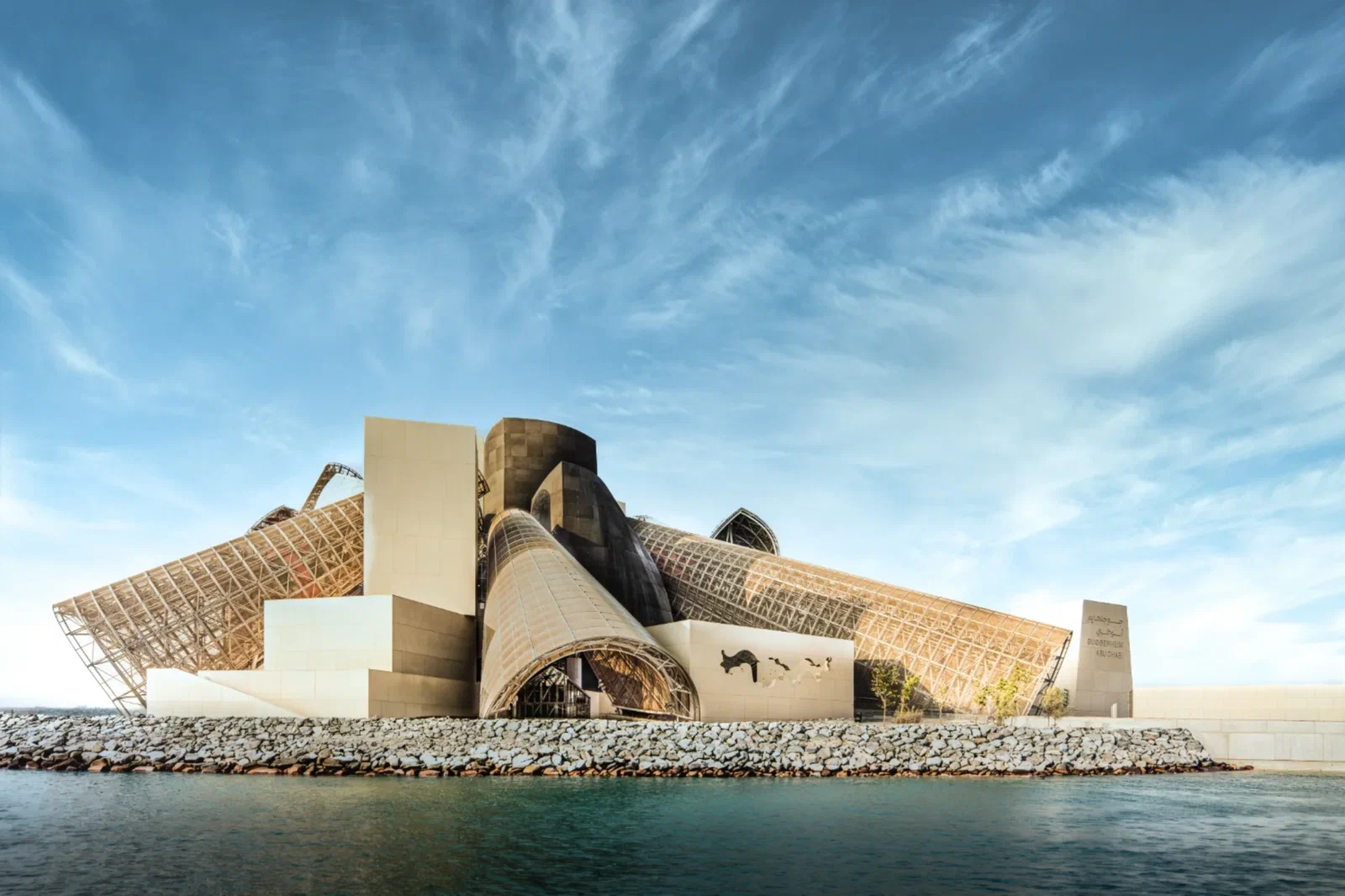
For years, the Guggenheim Abu Dhabi existed somewhere between architectural promise and urban legend. Its dramatic silhouette appeared in renderings of Saadiyat Island, while the real building slowly emerged behind cranes on the waterfront. Opening dates came and went. Abu Dhabi’s cultural landscape continued to grow around it. The Louvre Abu Dhabi welcomed its first visitors, teamLab Phenomena introduced a new kind of immersive museum, and the Zayed National Museum and Natural History Museum Abu Dhabi joined the island’s expanding constellation of institutions.
Now the waiting has an end date. The Department of Culture and Tourism – Abu Dhabi has confirmed that Guggenheim Abu Dhabi will open to the public on 11 December 2026, almost exactly 20 years after the project was first announced.
It will be the largest museum in the Guggenheim network and one of the most significant new museums dedicated to modern and contemporary art anywhere in the world. The museum is being built in a region that has traditionally appeared at the edges of the Western art-historical narrative. Guggenheim Abu Dhabi intends to redraw that map.
A museum designed for a different art history
The museum will focus on art from the 1960s to the present, presenting work from across the world while placing particular emphasis on West Asia, North Africa and South Asia. Its collection has been developed since 2009 and will include painting, sculpture, photography, installation, moving image and new media.
Guggenheim Abu Dhabi’s stated ambition is to examine modern and contemporary art through connections between places – trade routes, migration, political movements, language, popular culture and shared artistic ideas.
Rather than organising the collection as a straightforward chronology, the museum plans to build its galleries around themes and relationships. Visitors will encounter broad lines of enquiry including abstraction, popular culture, land, language and storytelling. The intention is to reveal how artists working in different regions and generations responded to similar questions – and how ideas travelled long before the art world began describing itself as global.
The 2015 exhibition Seeing Through Light brought together artists including Yayoi Kusama, Rachid Koraïchi, Robert Irwin, Monir Shahroudy Farmanfarmaian and Douglas Wheeler. The selection moved across countries, media and artistic traditions, using light as a shared language rather than grouping artists by nationality.
Frank Gehry’s final museum on the Gulf
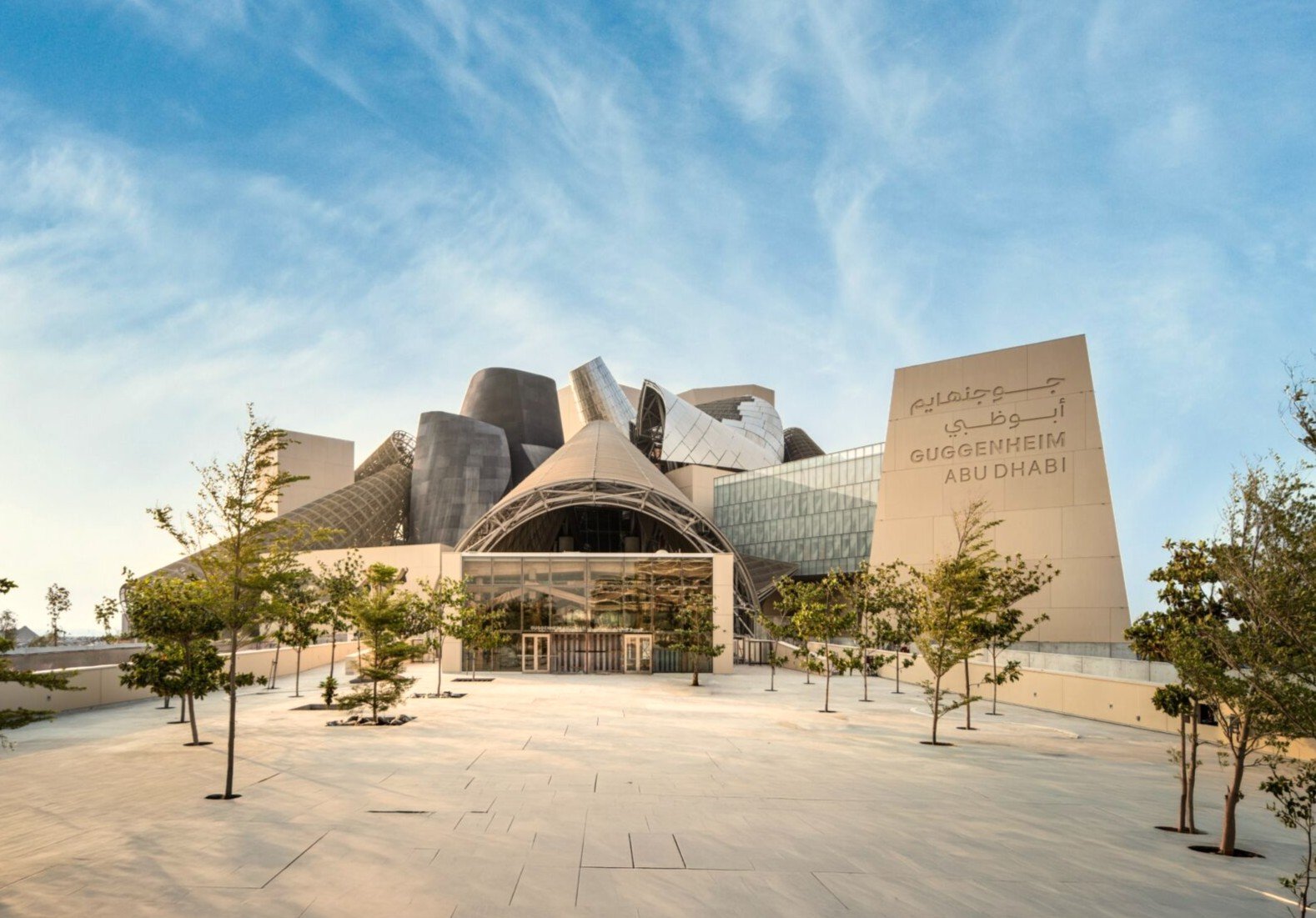
The architecture is unmistakably the work of Frank Gehry, the Pritzker Prize-winning architect behind the Guggenheim Museum Bilbao and the Walt Disney Concert Hall in Los Angeles. Gehry, who died in December 2025, designed the Abu Dhabi museum as a dense, seemingly improvised city of galleries, bridges, terraces and towering geometric forms.
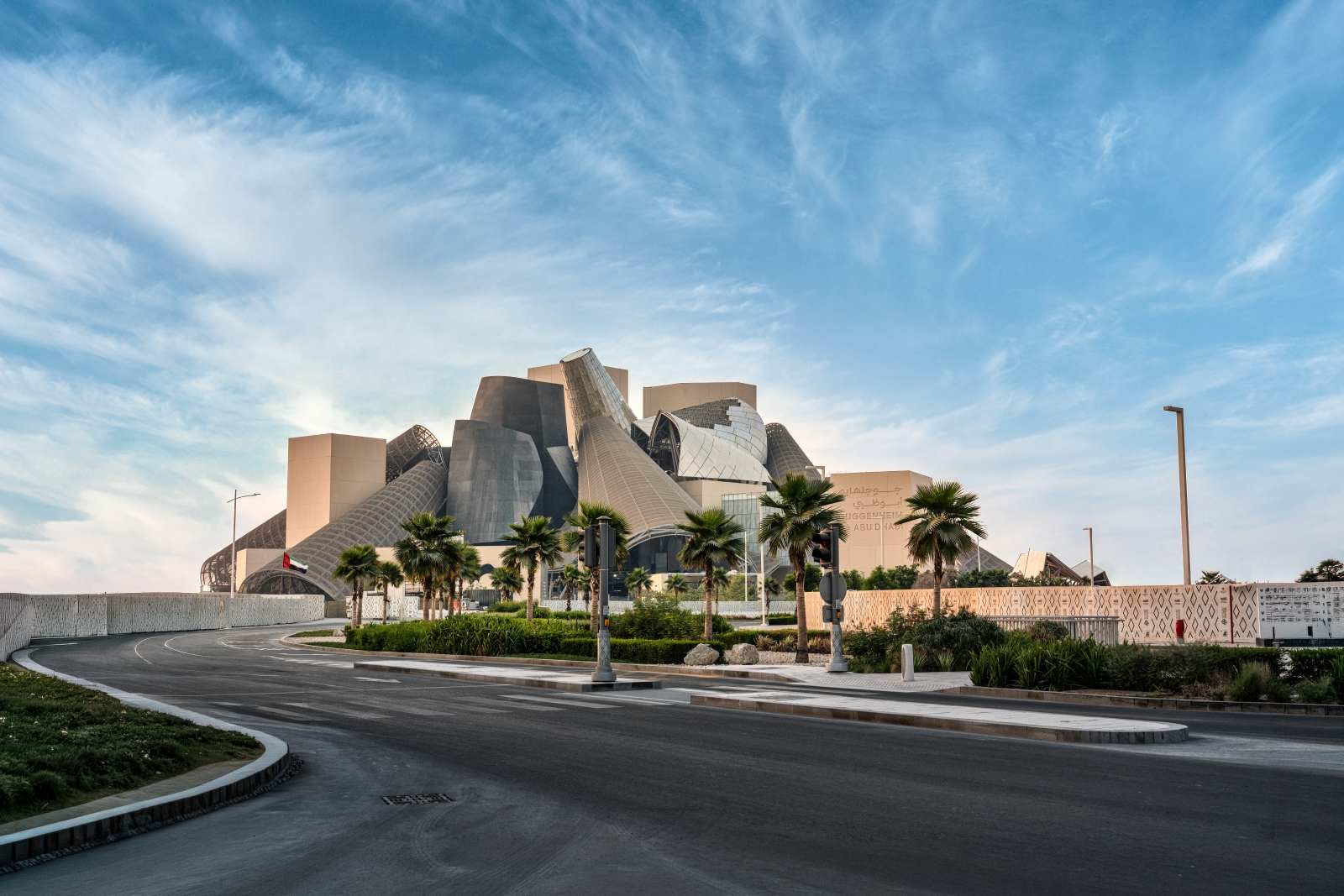
From a distance, the building resembles an industrial settlement, a cluster of desert fortifications or a group of vessels gathered at the water’s edge. Unlike the flowing titanium surfaces of Bilbao, its forms respond to the colours and conditions of Saadiyat Island.
Ten sculptural cones rise through the building, nine wrapped in stainless-steel mesh and one formed from onyx and glass. Reaching up to 88 metres, these structures create shade and support natural ventilation, adapting the architecture to Abu Dhabi’s climate while recalling regional wind towers and other forms of passive environmental design.
Inside, 30 galleries are arranged around a central atrium. The museum contains 11,600 square metres of indoor gallery space, while a further 23,000 square metres of outdoor exhibition areas will accommodate installations, performances and works built at an architectural scale. Its total built-up area reaches approximately 80,000 square metres.
Abu Dhabi’s cultural district takes its final shape
When the project was announced in 2006, the idea of creating a major global arts district in Abu Dhabi appeared audacious. Twenty years later, Saadiyat Cultural District is no longer a plan on paper.
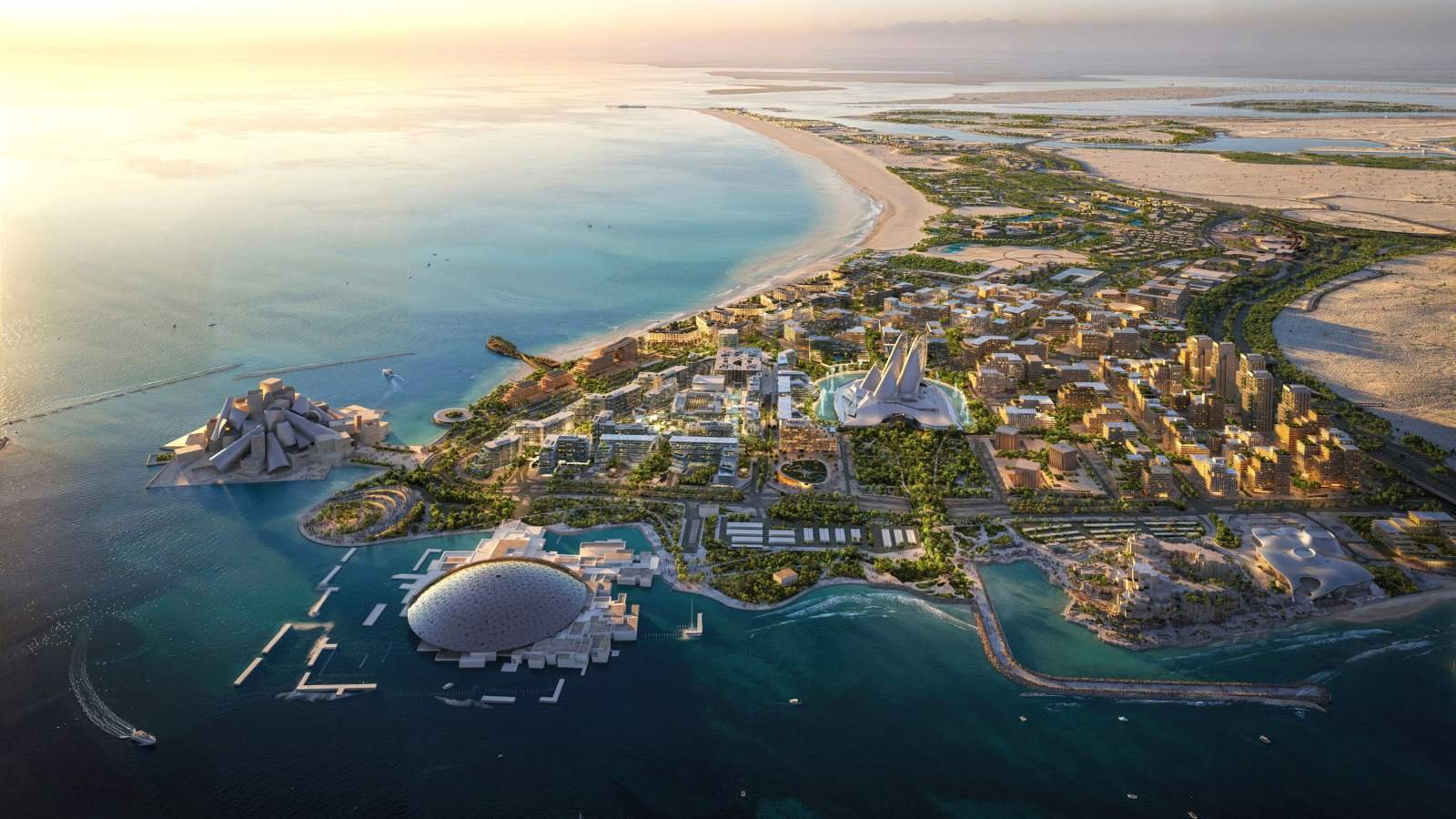
Within a relatively small area, visitors can move between Jean Nouvel’s Louvre Abu Dhabi, Foster + Partners’ Zayed National Museum, the Natural History Museum Abu Dhabi, teamLab Phenomena and, soon, the Guggenheim. The Abrahamic Family House adds a religious and philosophical dimension, while the planned Dar al Funoon performing arts centre – also designed by Gehry – will extend the district into music, theatre and performance.
Together, these institutions represent something larger than a collection of spectacular buildings. Abu Dhabi is creating cultural infrastructure on the scale that other cities devoted to financial districts, airports or technology hubs. Museums here are being treated as long-term civic institutions – places for education, research, tourism, public life and international exchange.
The Guggenheim opening will also shift the cultural geography of the wider region. For artists from the Middle East, North Africa and South Asia, it offers the possibility of being presented within a major international museum without first being filtered through London, Paris or New York. For audiences, it creates an opportunity to see global modernism from a different point of departure.
On 11 December 2026, the building will finally stop being a promise. The more consequential story will begin afterwards – when Abu Dhabi reveals not simply another Guggenheim, but its own version of what a global museum can be.
Share


WE RECOMMEND
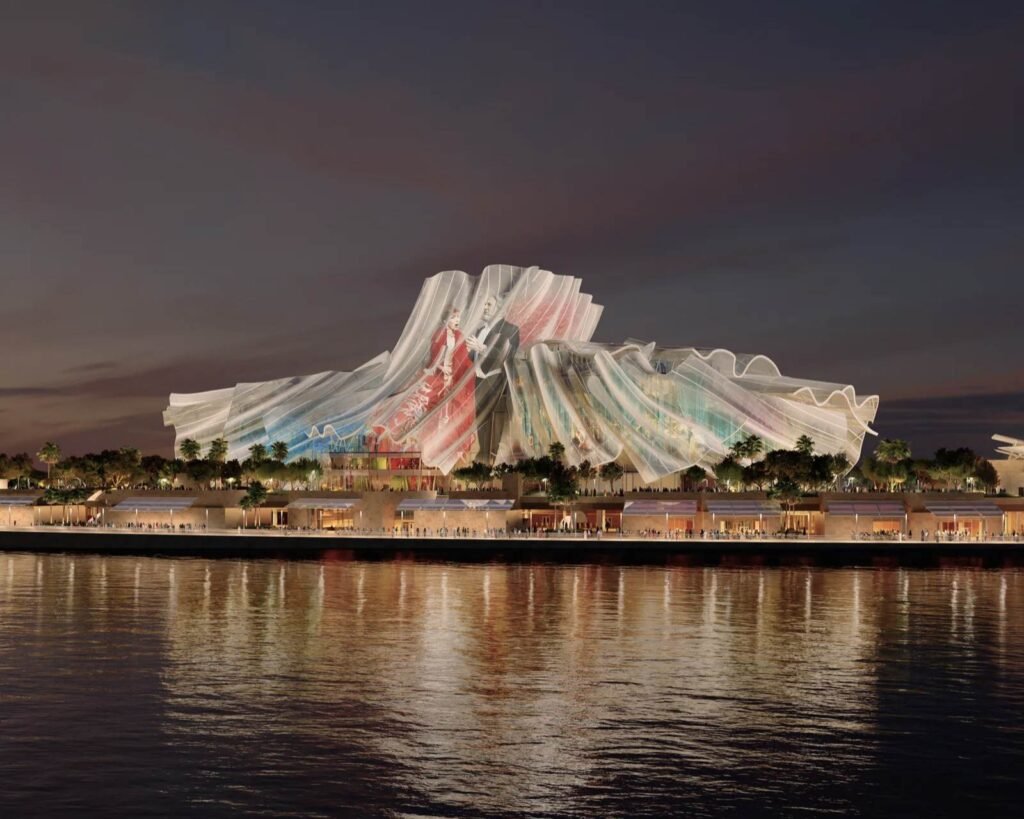
Abu Dhabi Gives Saadiyat a New House of the Arts
The emirate has commissioned Dar Al Funoon Abu Dhabi, a Frank Gehry-designed performing arts centre beside the Saadiyat Cultural District, to open…
Seven Museums Changing What Culture Can Do to the Body
Wellbeing is often discussed through hotels, clinics and longevity centres. But cultural spaces may be just as central to the future of…
AlUla Unveils Manara, A New Destination for Astrotourism
AlUla is set to become one of the world’s leading astrotourism destinations with Manara, a new hub for stargazing and astronomy.
