




The Longevity Industry Has Money. What It Lacks Is Evidence
Billionaires can buy scans, supplements and experimental protocols. What they cannot yet buy is proof that any of them will materially extend a healthy human life.
The Longevity Industry Has Money. What It Lacks Is Evidence
Billionaires can buy scans, supplements and experimental protocols. What they cannot yet buy is proof that any of them will materially extend a healthy human life.
A curious thing has happened to modern longevity: it has become a lifestyle market before it has become an evidence-based medical field. Around it has grown an industry of full-body scans, supplement stacks, off-label drugs, cold exposure, oxygen sessions and personalised protocols. Some of these tools may have value in specific medical contexts. Others remain plausible hypotheses. Very few have yet shown, in large and long-term human trials, that they can slow ageing itself.
That distinction is easy to lose when wealthy users turn their routines into content. Bryan Johnson publishes a continuous stream of biometric data. Sam Altman has spoken about fasting and taking metformin. Peter Thiel has expressed interest in parabiosis. Their ability to collect data is extraordinary, but a private protocol is not a clinical trial. It has no comparable control group, often changes dozens of variables at once and tends to report biomarkers rather than the outcomes that matter: less disease, preserved function and longer life.
The ultra-rich spend heavily on personal longevity experiments, yet the properly designed studies that could establish whether widely available interventions work remain surprisingly difficult to fund. The question is not whether billionaires can buy better healthcare. They can. It is whether private wealth is being used to answer questions that could improve healthy longevity for everyone.
What money can buy now
Rich people already live longer. A major JAMA study based on US income and mortality records found a 14.6-year life-expectancy gap between men in the highest and lowest income percentiles. For women, the difference was 10.1 years.
Wealth does buy health, but mostly through unglamorous advantages: safer housing, better food, more time for exercise, earlier diagnosis, consistent care and lower exposure to chronic stress. It can also buy access to experimental medicine. What it cannot yet buy is proof that cryotherapy, plasma infusions or elaborate supplement stacks add years of healthy life.
The problem with a protocol of everything
Longevity practice is moving faster than longevity evidence. If someone changes diet, sleep, exercise, medicines, supplements and recovery routines at the same time, any improvement becomes difficult to attribute to one intervention. A lower biological-age score or a better glucose curve may be encouraging, but it does not automatically mean that the person will avoid disease or live longer.
This does not mean geroscience has failed. It means that the field still sits between promising biology and usable medicine. The strongest evidence remains in cells, worms and mice, while the human trials needed to guide practice are slower, costlier and harder to run.
Elon Musk and the case against living too long
Elon Musk has long been the conspicuous exception to Silicon Valley’s fascination with radical life extension. In 2015, he told the Vanity Fair New Establishment Summit that he was not a major proponent of longevity. He supported addressing dementia and preserving quality of life in old age, but said that roughly 100 good years would be enough for him. His objection was never to remaining healthier for longer. It was to indefinite survival.
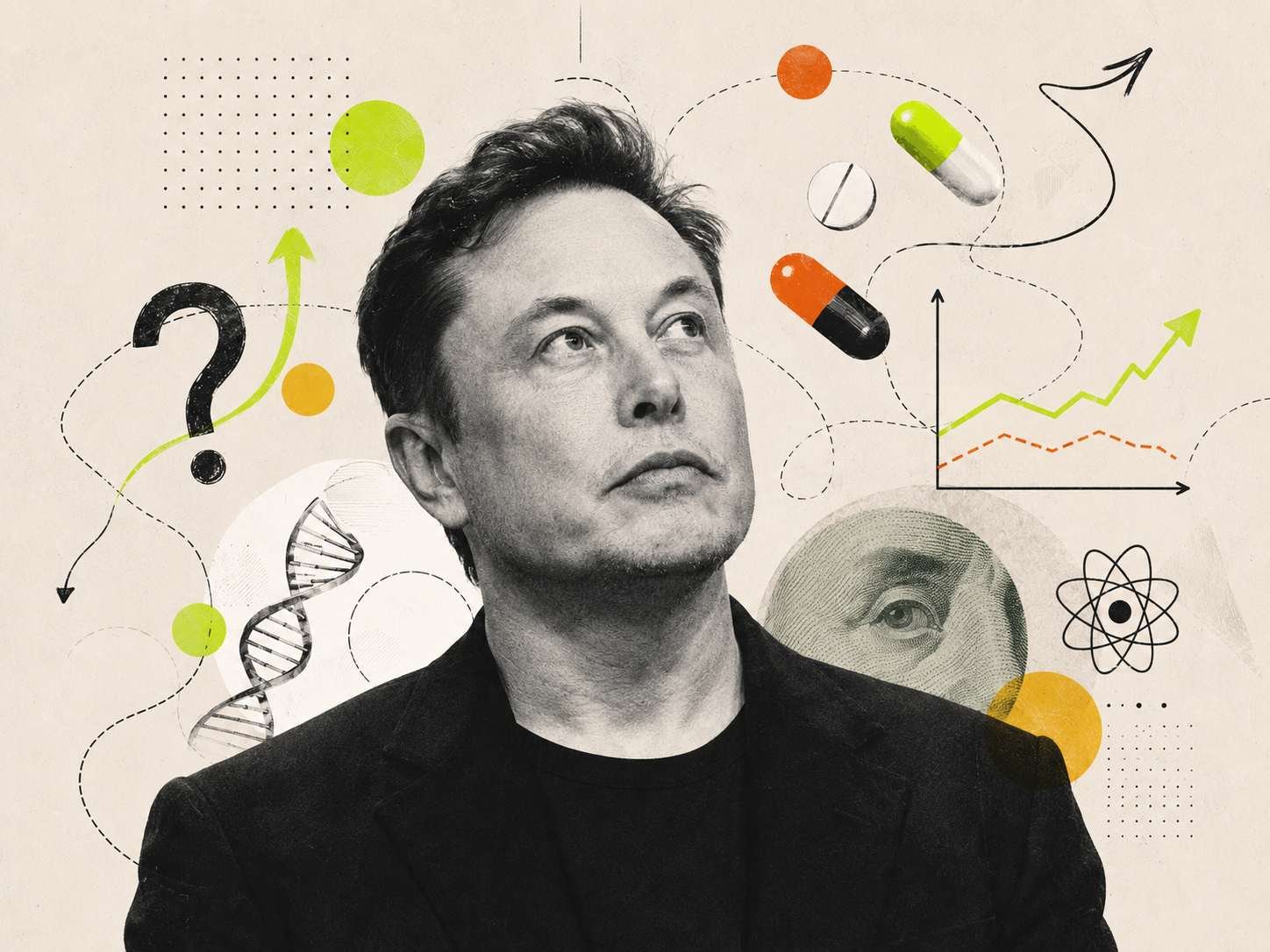
By 2021, his personal preference had become a theory of social renewal. At the Wall Street Journal CEO Council Summit, Musk argued that people rarely change their minds and that death allows new ideas to replace old ones. Without generational turnover, he said, society could become ossified. In 2022, he connected the argument to gerontocracy, criticising political leadership that was several generations older than the public it governed.
The position remained intact at Cannes Lions in 2024. Musk said he had no longevity investments and again warned that very long lives could freeze leadership and ideas in place. In that context, it was reasonable to describe him as a critic of radical life extension. But it is no longer accurate to say simply that Musk opposes longevity.
His public language shifted sharply in early 2026. During a conversation with Peter Diamandis, he described humans as biologically programmed to die and suggested that changing the programme could extend life. Later that month, at the World Economic Forum in Davos, he called ageing “a very solvable problem” and said it was highly likely that science would find ways to extend life and perhaps reverse ageing.
He had not abandoned his earlier concern. In the same Davos conversation, Musk said there might still be a social benefit to death because extremely long-lived populations could reduce cultural and political renewal. His current position is therefore more complicated than either side of the debate usually admits. He is technically optimistic about reversing ageing and politically anxious about what success would do to society.
There are two weaknesses in his argument. The first is biological. Musk’s idea of a single synchronising clock across the body’s cells is an appealing engineering intuition. Modern geroscience describes multiple interconnected hallmarks, including genomic instability, epigenetic changes, mitochondrial dysfunction, cellular senescence, chronic inflammation and dysbiosis. Shared upstream mechanisms may eventually emerge, but current evidence does not justify treating ageing as a single line of code waiting to be rewritten.
The second weakness is political. Lifespan and tenure are not the same thing. Term limits, elections and institutional rules can replace leaders without requiring biological decline to do the job. Extending healthy life to 100 or 120 is also not equivalent to allowing one political or corporate figure to control an institution for 300 years. Death is a remarkably crude system of governance.
Yet Musk’s concern should not be dismissed entirely. If effective rejuvenation therapies first become available only to people who already control extraordinary wealth and power, longevity could deepen inequality and make existing hierarchies harder to dislodge. The answer is not to stop the science. It is to build public evidence, access and governance alongside it.
Where the missing money matters
There is serious money in longevity research. Altos Labs launched in 2022 with $3 billion committed to study cellular rejuvenation, an exceptional sum for a young biotechnology company. Other firms are working on senescent cells, immune ageing, epigenetic reprogramming and organ regeneration. The gap is not simply a lack of ambitious science. It is the difficult transition from promising mechanism to useful human treatment.
Human trials are slow and expensive. The FDA does not currently recognise ageing itself as a treatment indication, which means trials generally need to be structured around recognised diseases or clinically meaningful outcomes such as disability, major health events or mortality. The most obvious candidates are often generic drugs, which weakens the commercial incentive to pay for large trials. If a cheap medicine works, the social value could be enormous, but no company necessarily receives an equally enormous return.
The people with the greatest means could change longevity by funding science that does not end with them
The long-proposed Targeting Aging with Metformin trial illustrates the problem. TAME was designed as a six-year, multicentre study involving more than 3,000 people aged 65 to 79. Its ambition is unusual: rather than testing metformin against a single disease, it would examine whether the drug can delay the onset or progression of several age-related conditions.
Metformin is inexpensive and has decades of clinical use behind it, but its value for healthy non-diabetic people remains uncertain. A negative result would be useful too: it could prevent millions of people from taking an unnecessary drug for decades. Science creates value not only by finding what works, but by closing attractive dead ends.
The same logic applies to rapamycin, acarbose, canagliflozin and senolytic compounds. The US National Institute on Aging’s Interventions Testing Program has tested potential lifespan-extending agents in genetically heterogeneous mice at three independent sites. Some compounds have produced encouraging results in animals. None of that is a recommendation for healthy people to take them. It is a case for carefully designed human studies.
From private optimisation to public evidence
The real billionaire longevity opportunity is not private optimisation, but public evidence infrastructure: multicentre trials, shared biomarker standards, open data and long-term follow-up. If private capital is serious about healthy longevity, it should help generate results that can be tested, reproduced and used beyond the individual who paid for them.
This would be less visually compelling than a plasma exchange or a cryotherapy chamber. It would also be far more consequential. The next meaningful advance in longevity may arrive not as a futuristic therapy for one billionaire, but as a carefully run study showing that an inexpensive intervention delays several diseases at once.
The industry should therefore ask a different set of questions. Not: What does this founder take? But: What was tested, against what control, using which endpoint and for how long? Not: Did a biological-age score fall? But: Did people remain functional and disease-free? Not: Can one person afford it? But: Could the result be reproduced and made widely available?
Longevity is rich in protocols and poor in evidence. The people with the greatest means could change that by funding science that does not end with them.
Share




WE RECOMMEND
Inside the Billionaire Race for Longevity
From Jeff Bezos and Sam Altman to Priscilla Chan and Brian Armstrong, tech’s richest figures are now building their own longevity projects,…

The Billionaire Longevity Paradox
If wealth gives access to the best doctors and diagnostics, should billionaires live longer? We asked Alexey Strygin – CEO of the…
The Age of Intention: Inside the New Logic of Longevity Medicine
Dr. Jaffer Khan, Founder and CEO of AEON Clinic at Atlantis The Royal, on what longevity medicine really means – and why…
