





Mohamed Badie: “Architecture Should Not Dominate Human Presence”
Mohamed Badie, one of the Middle East’s most distinctive visual architects, on fluidity, sculptural movement and a constant search for new forms.
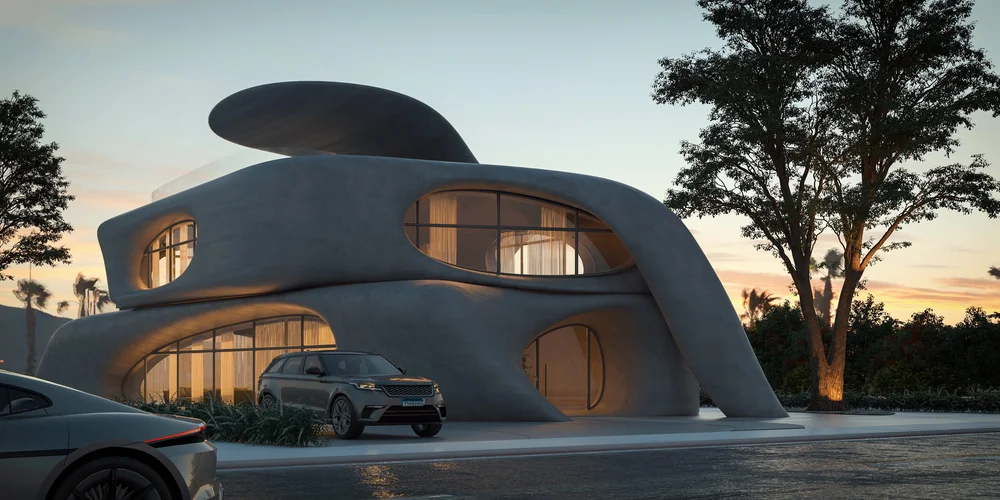
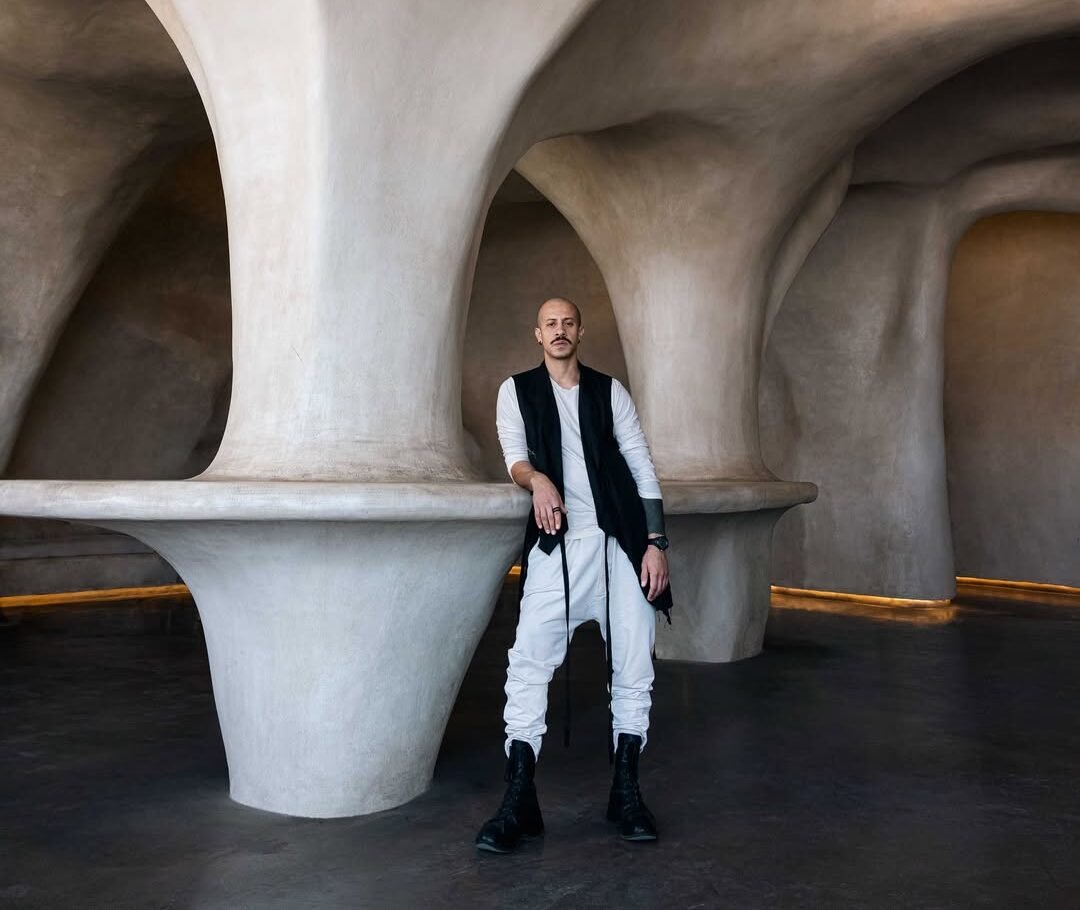
Founder and lead architect of Badie Architects, Mohamed Badie is known for a distinctive language of fluid, organic and highly sculptural spaces. A graduate of SCI-Arc and a member of the 2026 AD100 Middle East & North Africa, Badie works across residential, hospitality and experimental architecture.
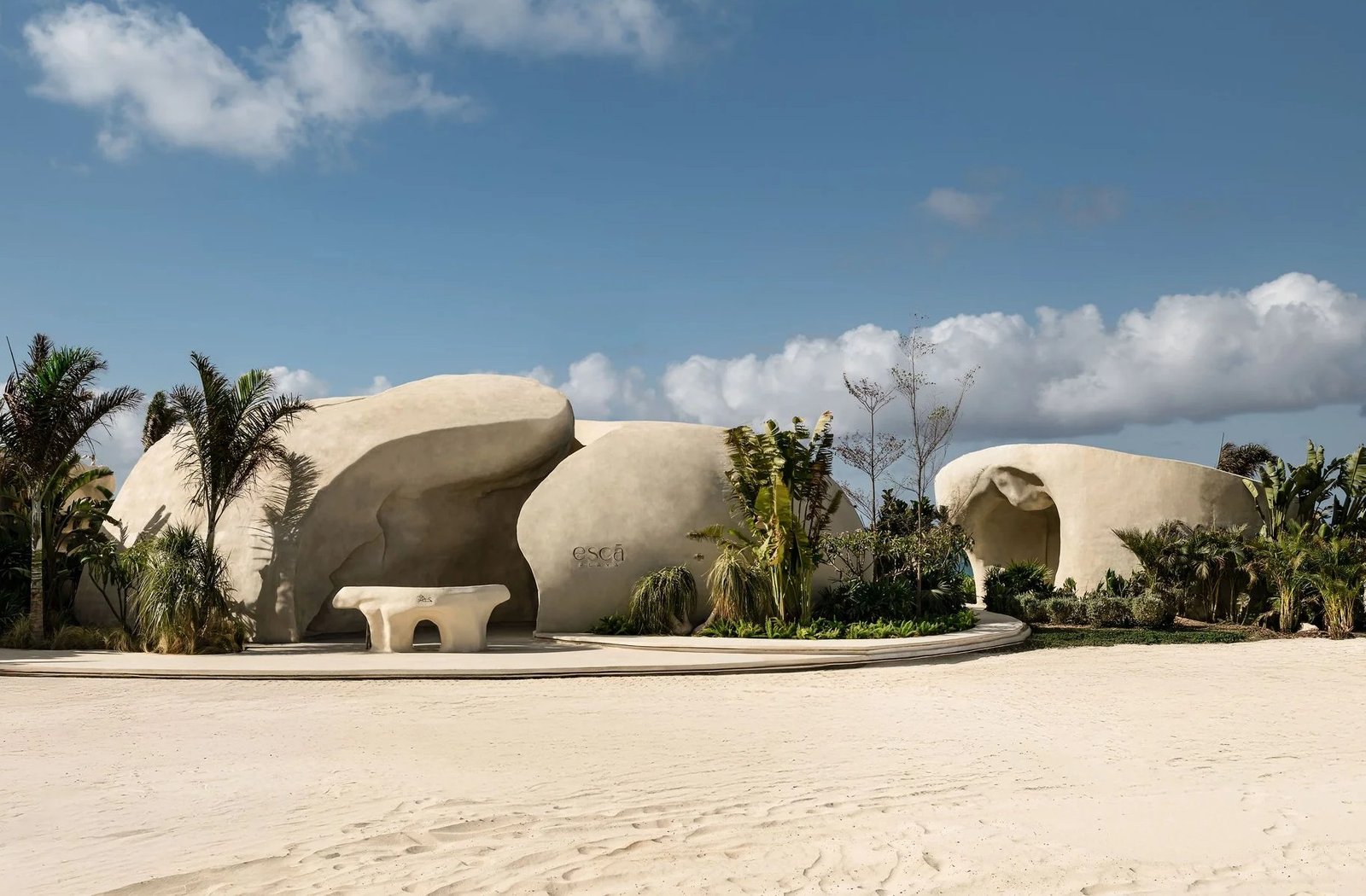
His work is expressive, but rarely decorative for decoration’s sake. Curved surfaces, raw materials, carved volumes and an almost cave-like sense of enclosure recur across his projects, from private homes to restaurants and coastal spaces. For Badie, however, form begins with something less visible: atmosphere and the way architecture makes people feel.
Lightberg Magazine spoke with Badie about honest design, the discipline of “unlearning” and why architecture should never dominate the human presence.
You often speak of spaces that feel emotional and truthful. How do you define “honest design” in your own practice?
Honest design is when form carries intention without disguise. I do not believe in decorative gestures that hide weak ideas. For me, honesty comes from clarity of concept and purity of structure. The material should feel like itself. The geometry should justify its presence. When nothing is added for approval, only for purpose, the space becomes truthful.
Was there a moment early in your life when you first understood that space can affect the way a person feels?
I was always sensitive to atmosphere, even before I understood architecture. As a child, I felt how certain spaces made me focused, while others made me uneasy. That awareness shaped my path. I realized architecture is not about walls. It is about emotion. From that point, I stopped seeing buildings as objects and began seeing them as experiences.
You often describe new technologies as “the contemporary artist’s drawing tools.”
Technology is not a production tool for me. It is a sculpting instrument. Advanced software allows me to manipulate form freely, to bend, stretch, compress, and test tension in space. I approach digital tools as a sculptor approaches clay. The computer is simply the medium. The vision remains artistic. I am not using technology to produce faster, but to think deeper.
What do you notice first when you enter a new place?
I notice the energy. Then proportion. Light reveals everything after that. Before analyzing details, I ask myself one question: does this space feel balanced? If it feels heavy, forced, or chaotic, I immediately sense it. Architecture communicates instantly.
When you begin a project, what comes first: the emotional state, the spatial logic or the visual language?
The emotional direction always comes first. I define the atmosphere before I define the shape. Spatial logic is developed to support that atmosphere. The visual language emerges naturally from the structure. The anchor is always human perception. If the user does not feel something, the form has failed.
You have spoken about “learning to unlearn.” How do you know when a project is asking you to change direction?
Learning to unlearn means rejecting comfort. It means not repeating myself. In practice, it requires discipline. If I recognize a move that feels familiar, I challenge it. A project asks for change when it becomes predictable. Growth in architecture happens when you step outside your own language and rebuild it.

Your architecture carries sculptural movement and fluidity. How do you maintain material depth in spaces that feel dynamic?
Movement must be grounded. Even the most fluid form needs weight and resistance. I focus on material density, texture, and shadow. Concrete, stone, and plaster are not finishes, they are mass. The dialogue between movement and gravity creates tension. That tension gives depth.
Do you see contemporary architecture as political, neutral or something else?
Architecture is never neutral. Every decision reflects a belief system. Scale, access, openness, material choice, all of it communicates values. Whether subtle or direct, architecture always takes a position. I believe in designing spaces that elevate awareness rather than impose ideology.
Many see your work as visually expressive yet emotionally subtle. What makes a space feel deeply human and alive?
Proportion. Light. Imperfection. A deeply human space respects the body and the senses. It allows silence. It does not overwhelm. When a space gives people room to project themselves into it, it becomes alive. Architecture should not dominate the human presence. It should frame it.
Share



WE RECOMMEND
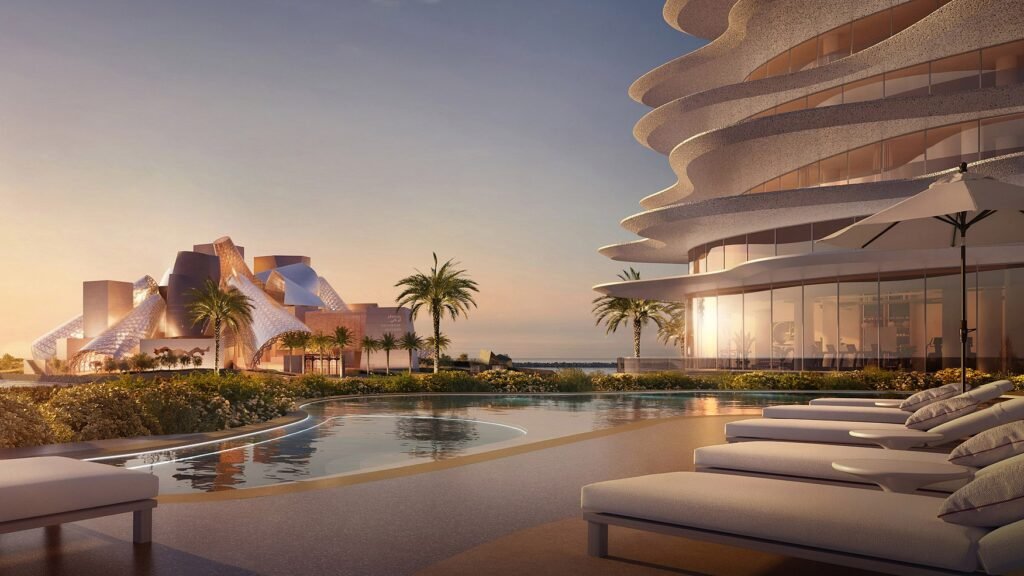
Architectural poetry on the shoreline: Sou Fujimoto’s Baccarat Residences in Abu Dhabi
Japanese architect Sou Fujimoto makes his first statement in UAE residential real estate with Baccarat Residences on Saadiyat Island, next to Frank…
Beyond the Green Wall: Interiors Shaping Wellbeing in the Gulf
Biophilic design has long promised to reconnect people with nature. Today, the sharper question is whether wellness-driven residential interiors can support the…
UAE Wellness Residences Boom: What’s Actually Inside Them?
From Dubai's forest communities to Abu Dhabi's dedicated wellness islands, the UAE is building one of the world's most ambitious map of…
