




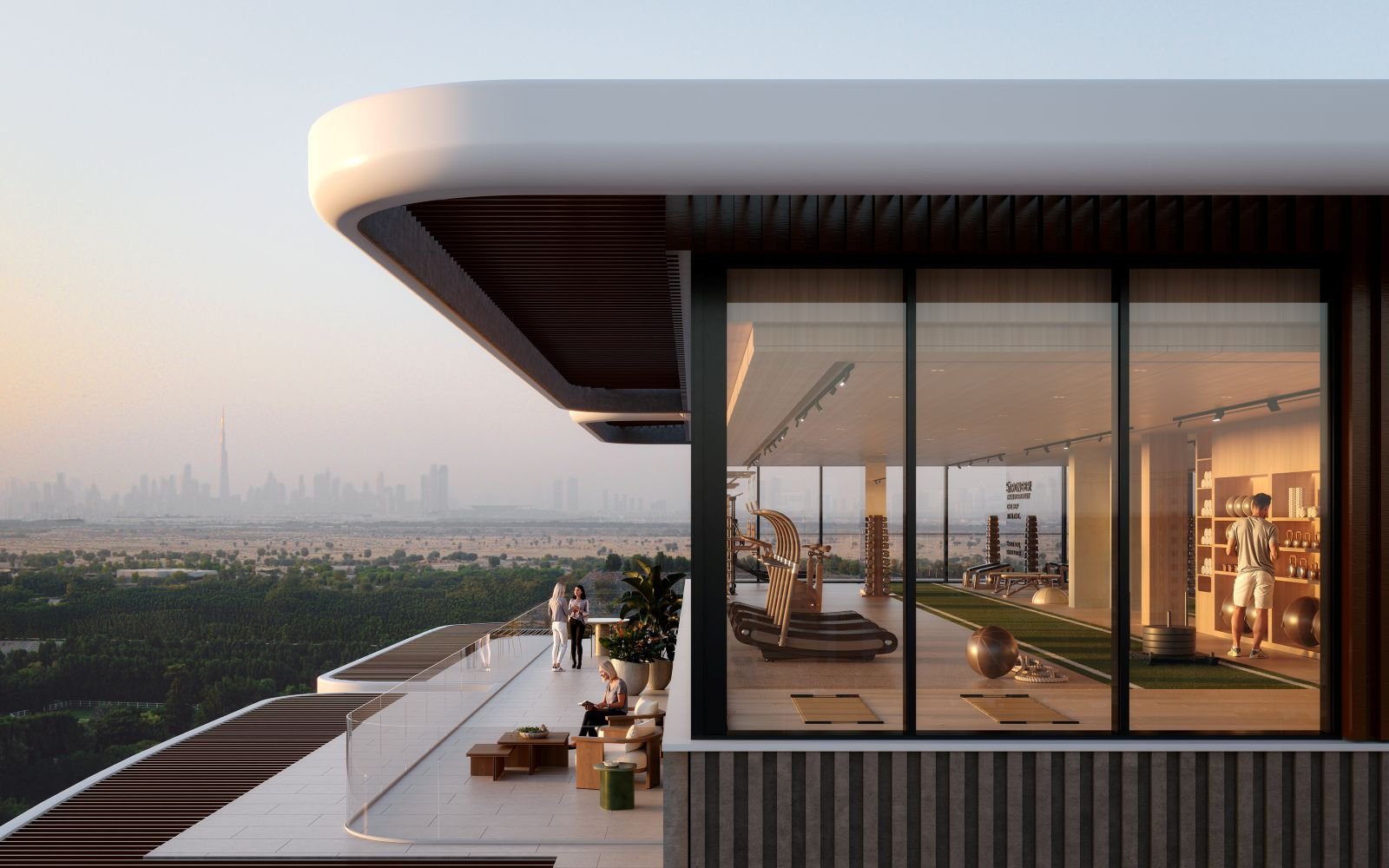
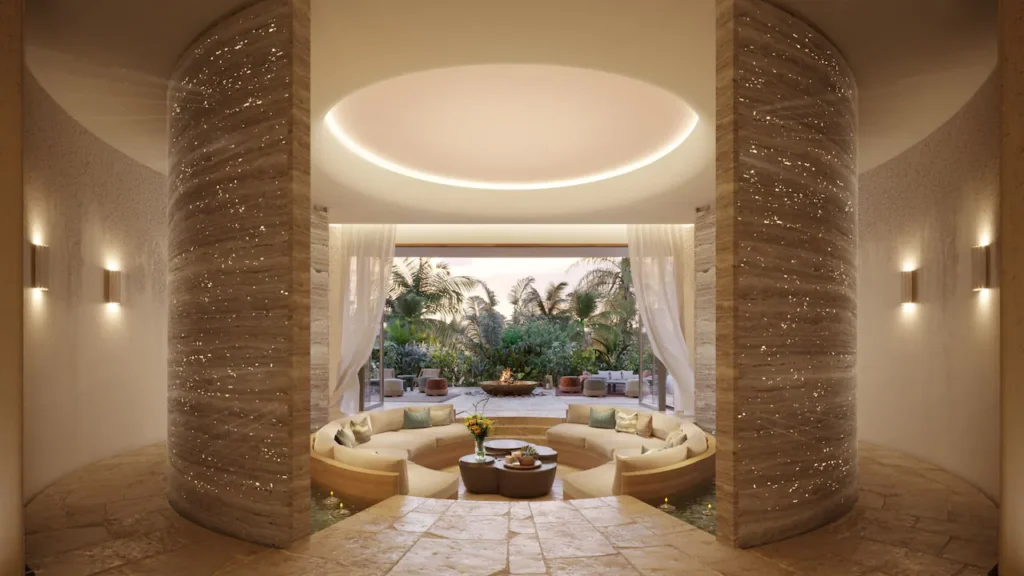
The Cape by Al Barari, Dubai
Beyond the Green Wall: Interiors Shaping Wellbeing in the Gulf
Biophilic design has long promised to reconnect people with nature. Today, the sharper question is whether wellness-driven residential interiors can support the body and the nervous system.
For a decade, biophilic design has been the most fashionable theme in interiors: living walls in hotel lobbies, indoor olive trees, rattan against travertine, the soft cult of natural light. But in the Gulf today that trend is shifting from the inside out – daylight calibrated to the circadian clock, acoustic zoning that protects sleep, air quality managed to measurable standards, materials chosen for touch and sensory comfort. Design, in other words, is moving from how a room looks to what a room does.
“Biophilic design is often misunderstood as a decorative layer – plants, green walls, natural textures, perhaps a few organic shapes,” says Matt Aspiotis Morley, Managing Director of Biofilico, a consultancy that builds wellness strategy into real estate and whose recent work includes a nature-informed biology lab for Carnegie Mellon University in Qatar. “In practice, it is about designing interiors that support human wellbeing by reconnecting people with the sensory, spatial and environmental qualities of nature. A successful biophilic interior does not need to look like an indoor forest. Those days are gone, and we all need to move on to more advanced interpretations of ‘nature-inspired’.”
The next generation of wellness interiors, as Morley says, will be more integrated, more evidence-informed and less dependent on superficial wellness imagery. “We are seeing a shift from standalone wellness amenities to whole-building wellbeing. Developers, hotel brands and workplace clients are beginning to understand that the gym or spa is only one part of the story. The lobby, guestroom, residence, office, public realm, food and beverage areas, circulation spaces and outdoor terraces all contribute to the wellness experience.
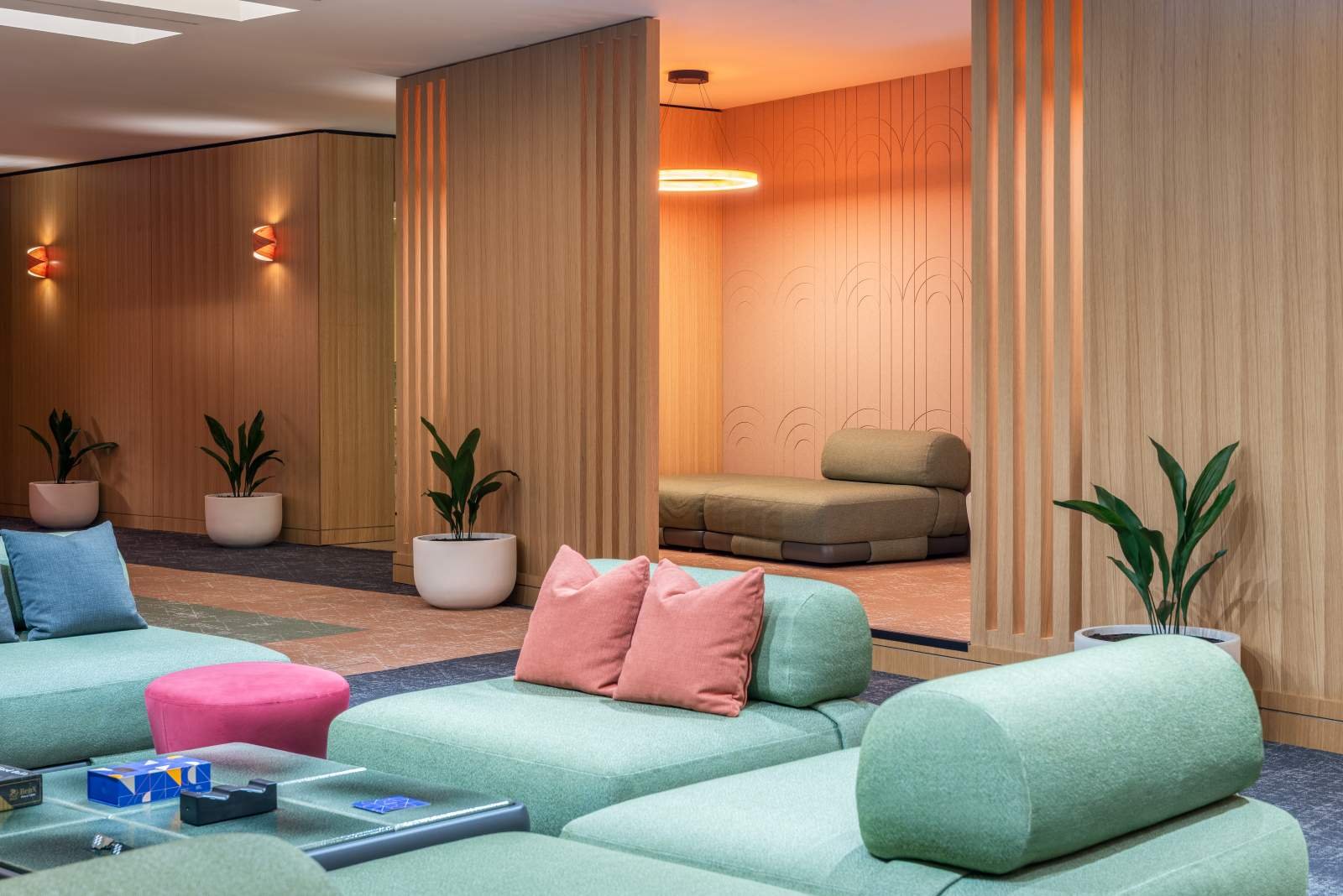
According to Morely, key trends include recovery-led fitness spaces, hot-cold therapy, social wellness clubs, circadian lighting, acoustic wellbeing, healthier materials, improved indoor air quality, restorative workplace design, and more sophisticated wellness amenities within residential and mixed-use developments.
The trillion-dollar argument
The market has already moved. According to the Global Wellness Institute, wellness real estate grew almost sixfold between 2017 and 2025, and is projected to more than double again to $1.8 trillion by 2030. The Gulf is part of that acceleration, with GWI identifying Saudi Arabia and the UAE as two of the world’s fastest-growing wellness real estate markets. That shift is now becoming visible in the residential market itself, not only in resorts and clinics.
But Gulf region has a reason to care. Summer pushes daily life almost entirely into air-conditioned interiors – home, car, office, mall. And when the indoor environment is where life actually happens, its biological quality becomes a key measure of health.
The body reads the building first
Before a person understands a space intellectually, the body has already voted. Light is the clearest case: a 2024 study in the journal SLEEP found that participants under circadian-informed lighting slept 52 minutes longer by day seven than those under standard lighting, with roughly half as many attention lapses. Air quality affects how clearly we think; noise can keep the body in a state of stress; and materials are felt by the skin as much as they are seen by the eye. The WELL Building Standard – the certification system that has done much to codify this thinking – assesses buildings through concepts including air, water, nourishment, light, movement, thermal comfort, sound, materials, mind and community.
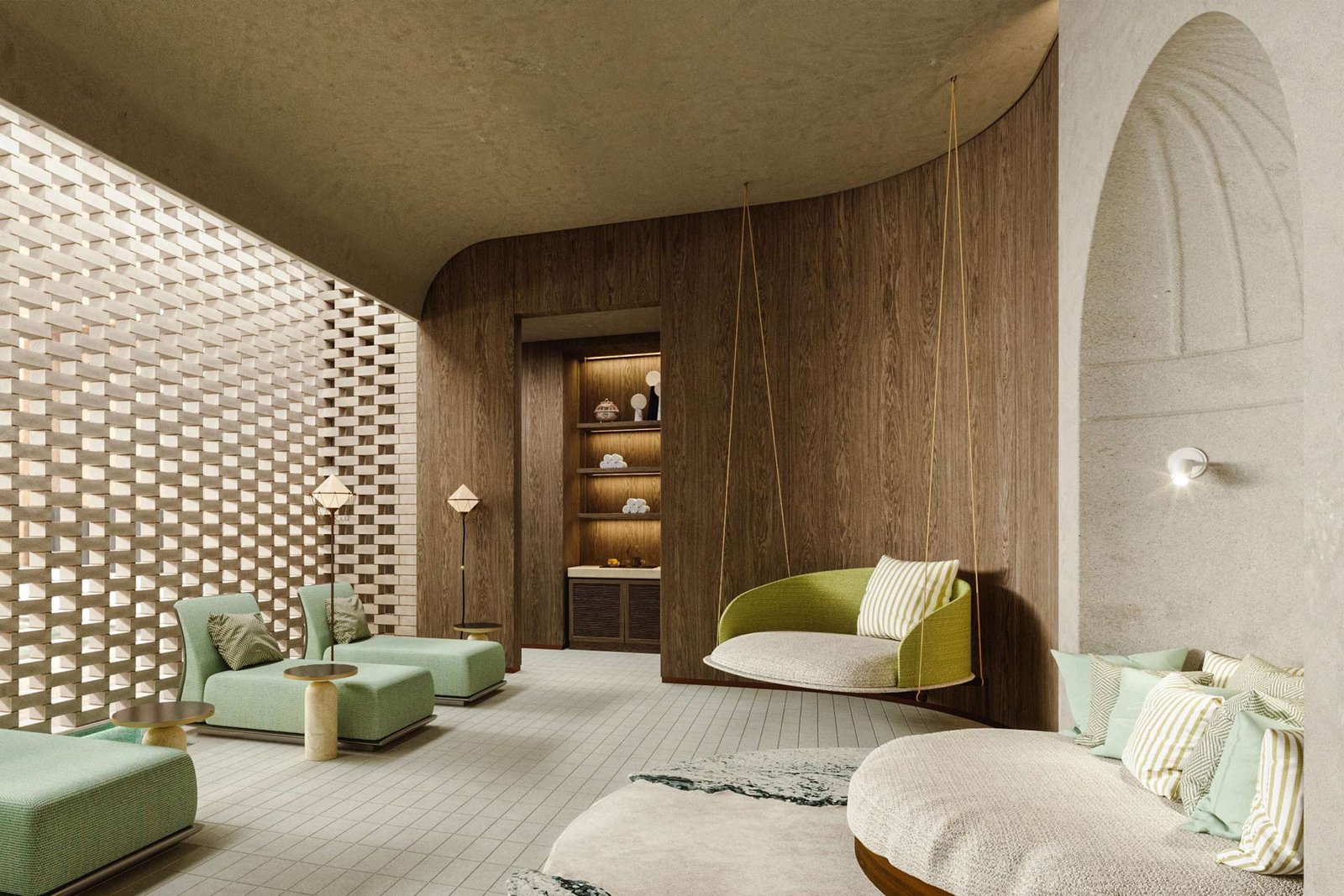
Morley puts it more plainly. “People read interiors physically before they interpret them intellectually,” he says. “Harsh lighting, poor air quality, echo, clutter, synthetic finishes or awkward circulation can all create low-level stress. Good wellness design removes that friction.” He is equally quick to police the limits of the claim: “Biophilic design is not a medical intervention, and it should not be marketed as a guaranteed solution for stress, sleep, focus or recovery.” The honest promise, he argues, is conditions – layered strategies that lower the noise floor of daily life so the body can do its own repair work.
For premium residences, this quietly rewrites the definition of quality. The most sophisticated residence is no longer the one with the most dramatic marble or the largest chandelier. It is the one that lowers your resting heart rate.
A tour of the new Gulf
The shift is now visible across the region. On Palm Jumeirah, Six Senses Residences are organised around a 60,000 sq ft wellness club with a longevity clinic, biohacking suite and the brand’s Sleep with Six Senses programme, which turns the bedroom into a more deliberately managed sleep environment.
In Al Barari, that logic has been present from the start. Conceived as Dubai’s nature-inspired residential enclave, the community is now pushing the language further – from villa living into new nature-led apartment concepts, making it one of the clearest examples of how biophilic design in Dubai is moving from a niche proposition into a scalable lifestyle model.
“A successful biophilic interior does not need to look like an indoor forest. Those days are gone, and we all need to move on to more advanced interpretations of nature-inspired”
In Zabeel Park, Therme Dubai, a $545 million collaboration between Dubai Holding and Austria’s Therme Group, will stack botanical islands of thermal pools into a 100-metre tower designed by Diller Scofidio + Renfro. Due in 2028, it expects 1.7 million visitors a year.
In Dubailand, Aldar’s Athlon – the city’s first ‘active living’ community – wraps 1,492 villas and townhouses around a central park and ten kilometres of running and cycling loops that connect directly to the Al Qudra track. It carries LEED Platinum pre-certification and a Fitwel rating.
Down the coast towards Abu Dhabi, IMKAN and Spain’s SHA Wellness Clinic are building SHA Emirates on the AlJurf shoreline – marketed as the world’s first healthy living island. Villas and apartments from AED 4.6 million come with resident access to SHA clinic when the project set to completed in 2027.
Saudi Arabia is playing for even higher stakes. AMAALA, Red Sea Global’s wellness destination on the kingdom’s northwest coast, opens its first phase with eight resorts, among them Clinique La Prairie’s first health resort outside Switzerland: 74 rooms, 13 branded residences and the Swiss institution’s Longevity Method transplanted to the Red Sea. The destination runs on 100 per cent renewable energy, and its buildings have been pulled back from the shoreline to protect turtle nesting grounds.
“In the Gulf, biophilic design needs to be climate-intelligent,” Morley says – filtered daylight rather than excessive solar gain, shaded terraces rather than exposed outdoor spaces, resilient planting rather than decorative greenery. “There is a strong opportunity to draw on regional architectural intelligence: courtyards, stone, clay tones, layered privacy, and transitions between interior and exterior space. Clearly this is nothing new – traditional cultures worked this out many years ago. The best approach is to create calm, shaded, restorative environments that feel rooted in place and tradition.”
The audit test
A cold plunge, a meditation room and a green wall do not make a healthy building, any more than a fruit bowl makes a healthy hotel. The difference between wellness language and wellness performance is measurement: CO₂ levels in the air, chemical emissions from materials, and the actual noise level in the bedroom at night.
And the clientele is increasingly equipped to check: buyers who already track their sleep, HRV and glucose will sooner or later audit their apartment the way they audit their bloodwork. Wellness as amenity is easy to market. Wellness as biology has to survive an audit.
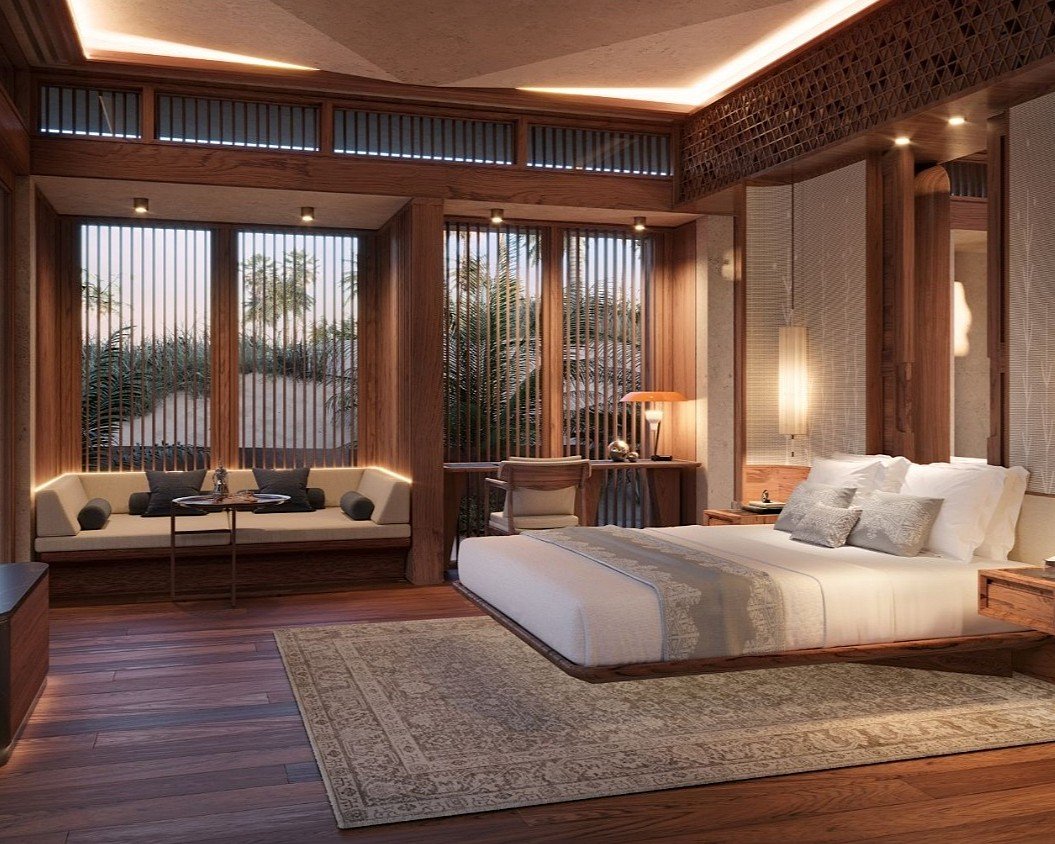
“The biggest mistake is treating wellness as an aesthetic style rather than a strategy,” Morley says. “A project can have plants, timber, stone and a wellness-themed brand story, but still fail to support wellbeing if the air quality is poor, the lighting is harsh, the acoustics are uncontrolled or the user journey is badly planned.” Even the genre’s signature gesture is not exempt: “A green wall or indoor landscape can look impressive at launch but quickly become a liability if it is not designed for local climate, operations, irrigation, access and long-term care.” The projects that succeed, he says, define the strategy before the design language – who the space is for, what behaviours it should support, what emotional state it should create, and how the building or interior will perform over time.
From aesthetics to regulation
“Wellness is moving from a marketing add-on to a real estate value driver,” says Morley. “Healthy interiors are becoming part of how projects differentiate themselves, improve user experience and create long-term relevance.”
This shift is cultural. Value is moving from display to biological regulation: sleep, breath, temperature, focus, recovery. A residence can be beautiful and physiologically stressful; a hotel can be expensive and exhausting. The next generation of Gulf buildings will be judged on a quieter standard – whether architecture can become a discreet form of care. In the region’s best new projects, your nervous system is becoming part of the brief.
Share


WE RECOMMEND
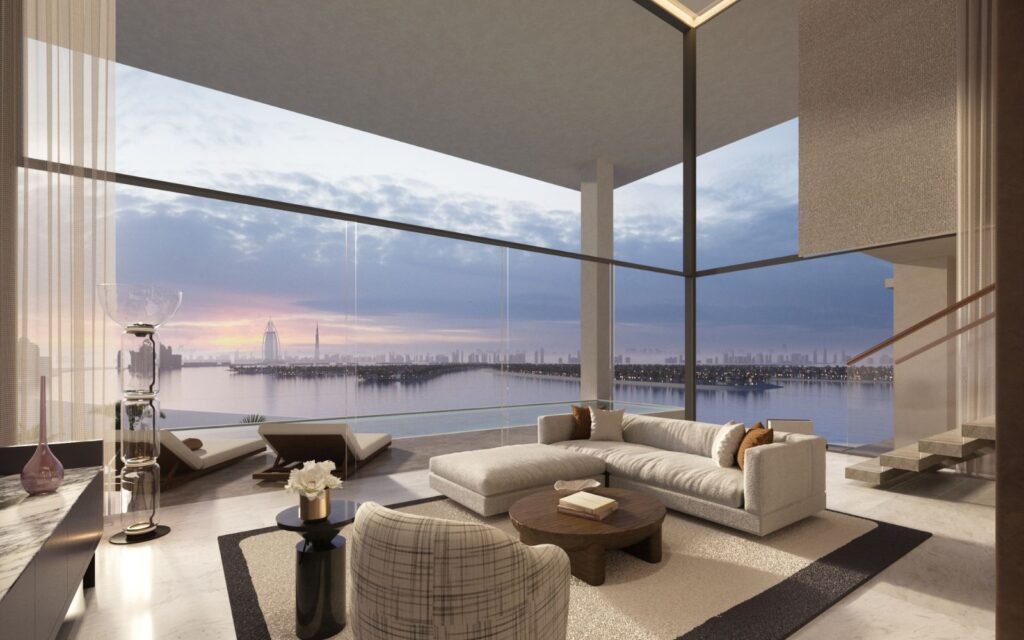
UAE Wellness Residences Boom: What’s Actually Inside Them?
From Dubai's forest communities to Abu Dhabi's dedicated wellness islands, the UAE is building one of the world's most ambitious map of…
New Hotels in Saudi Arabia that will Reshape Mindful Travel Expectations
With projects by Jayasom, Six Senses, Aman, and Miraval, Saudi Arabia is beginning to define its own language of regenerative living
Build Well to Live: What the Global Wellness Institute Discovered in the Gulf
A new report from the Global Wellness Institute reveals that while the rest of the world is still debating what a "healthy…
