




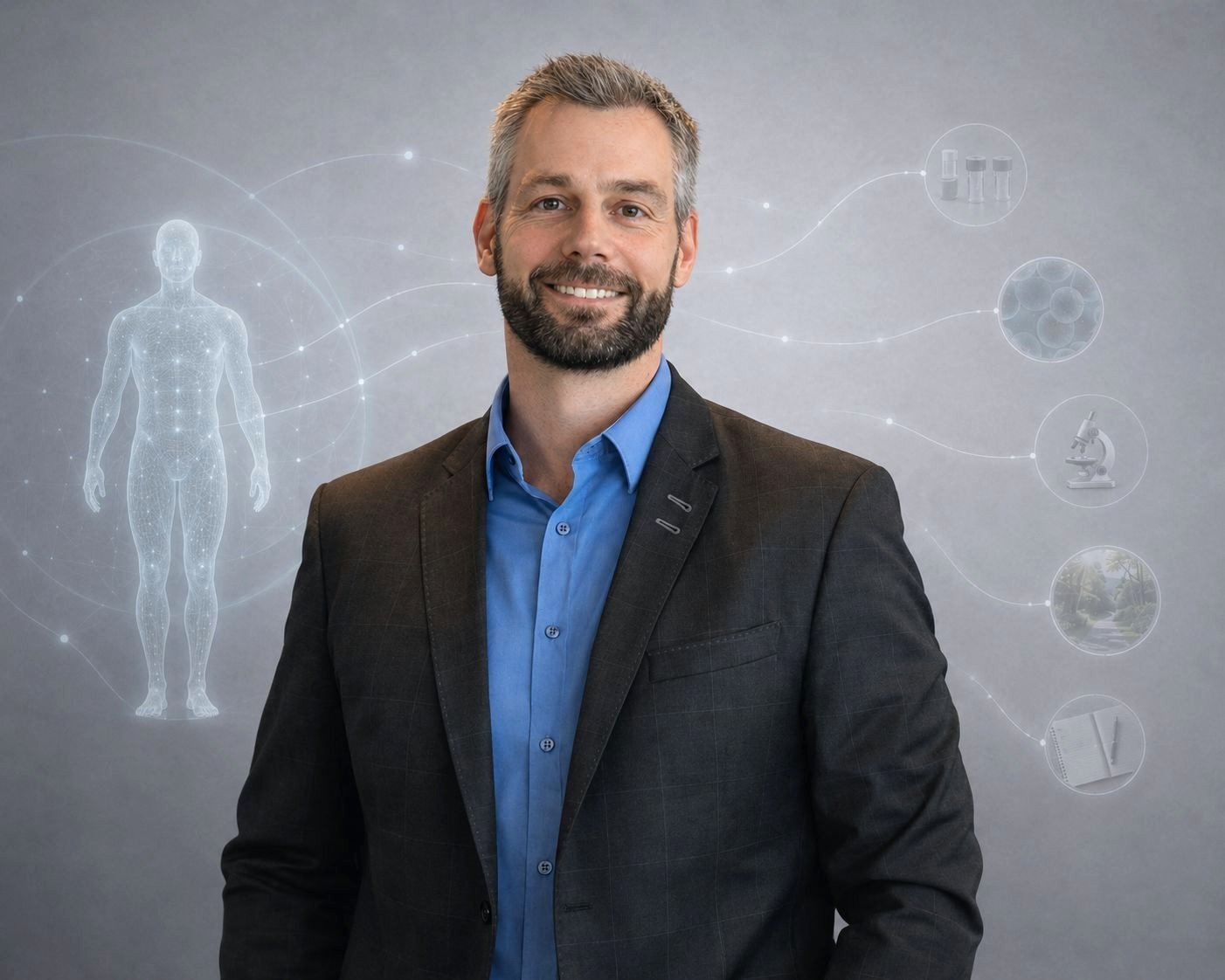
BioTwin Founder Louis-Philippe Noël on Bringing Digital Twins to the UAE
We talked to BioTwin founder about what it actually means to have a human digital twin – and why the Emirates are moving faster than anyone else.
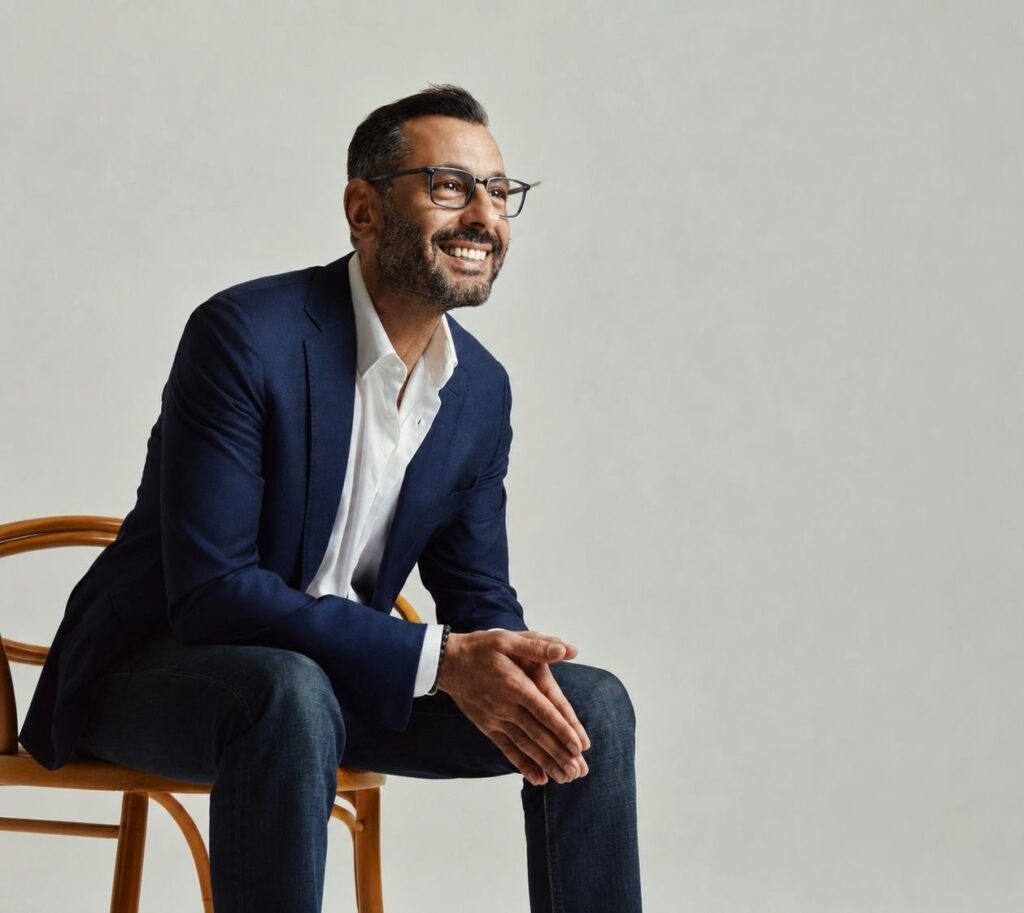
The founder and CEO of BioTwin, a Québec-founded company now established in the UAE that builds virtual twins of the human body – has spent the past few years moving between two worlds: the Canadian lab, where his team tracks around 30,000 biomarkers from a single drop of blood, and the UAE, where BioTwin has begun clinical validation of its cancer screening assistance technology.
For most of us, “digital twin” still sounds like a phrase from a sci-fi movie. For Noël, it is a small kit, a finger prick, and samples that can reveal your current biological state.
For our readers, how would you explain what a digital twin is?
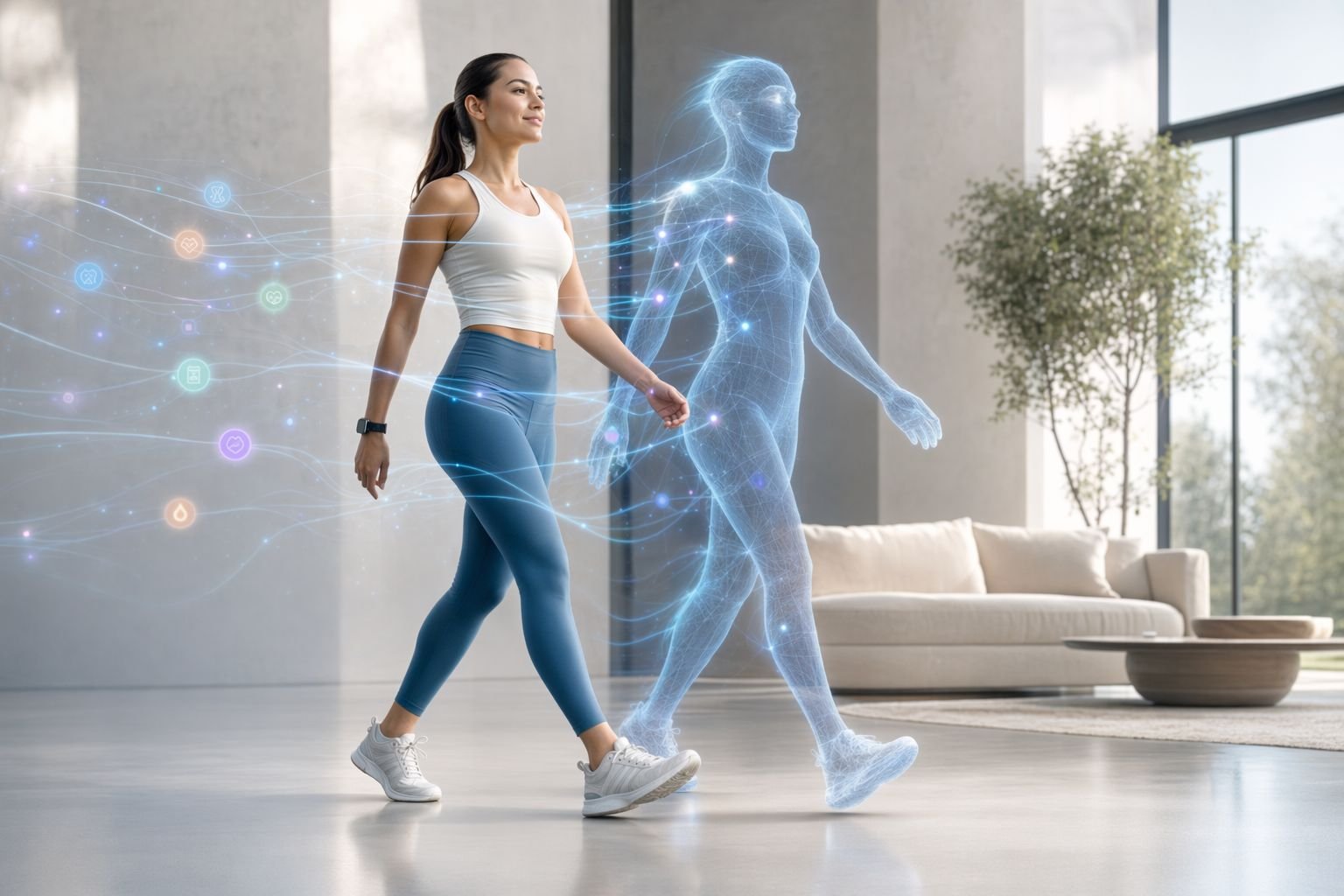
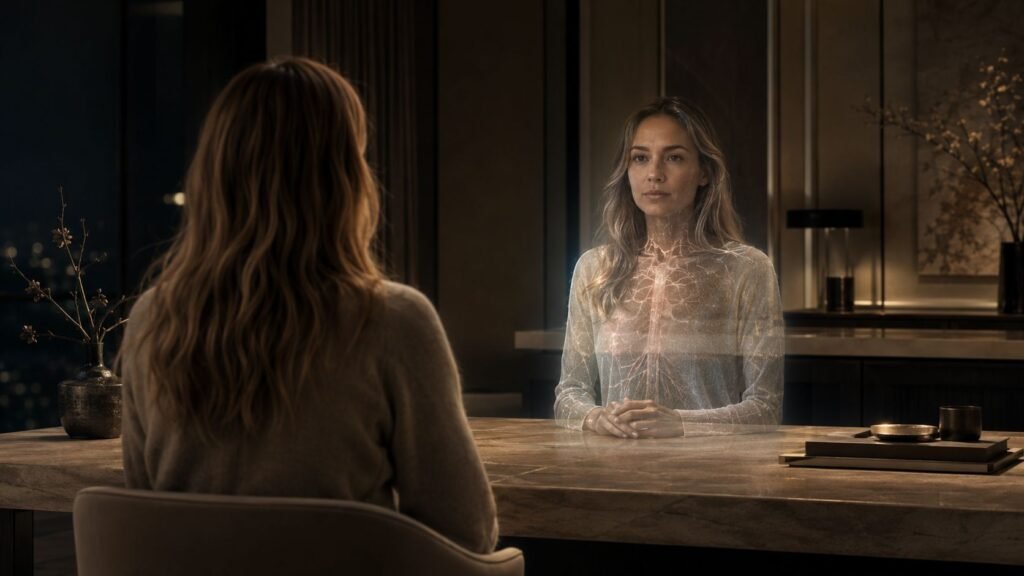
The concept comes from manufacturing. Every plane in the sky has a digital twin on the ground, where everything is tracked. We bring that technology to humans. We call it a virtual twin and we try to replicate your biology.
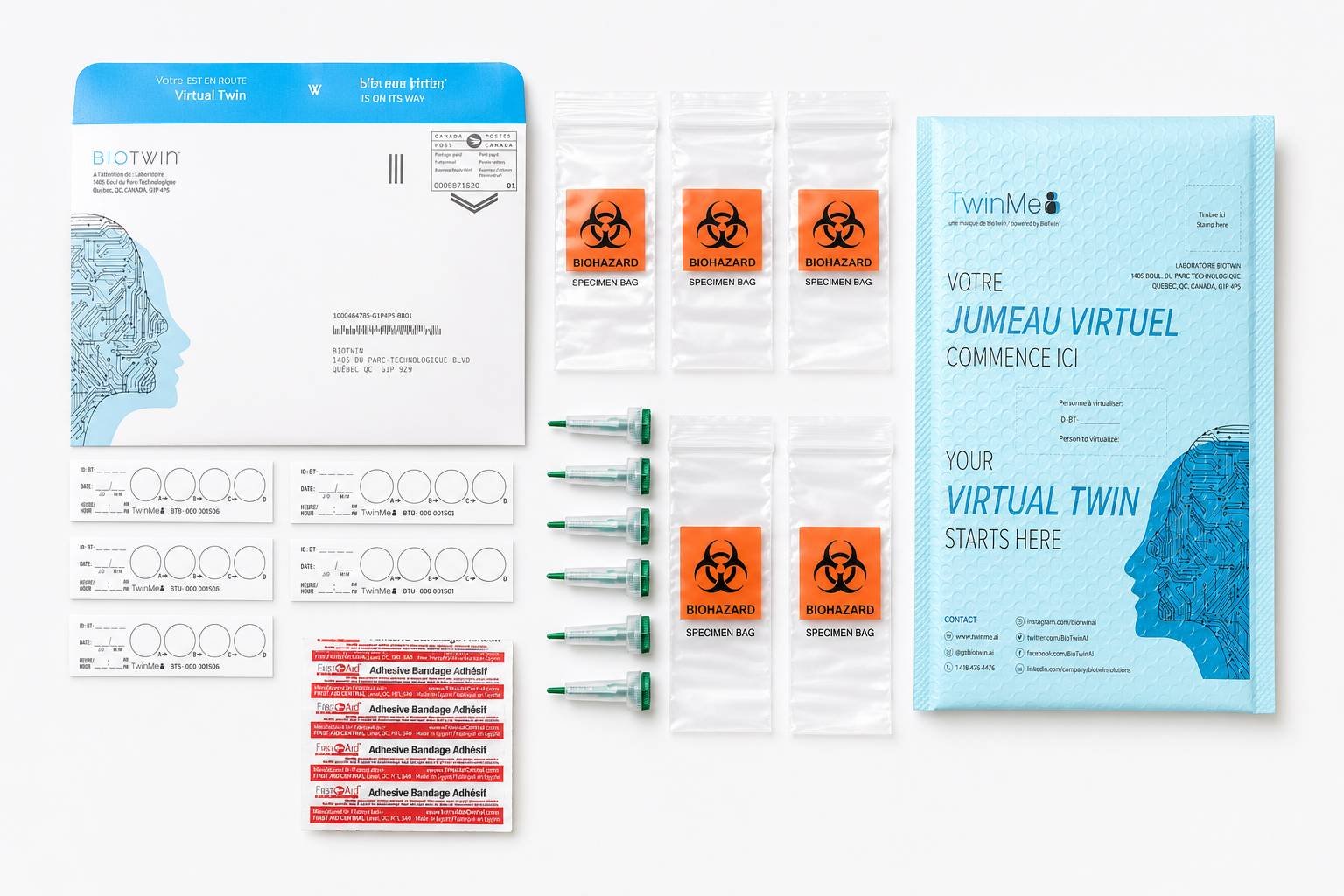
We have a small kit which you can use at home. You prick your finger, take a drop of blood, and send it to us. In our lab, using AI, we track 30,000 biomarkers from a single drop of blood. From those biomarkers we’ll combine the different wearables you may have, and create your virtual twin. The kit includes several samples, allowing BioTwin to triangulate a person’s biology as it changes over time.
When you have a visible symptom, sometimes it’s already too late. Your biology reacts before that and that’s what we’re tracking. As soon as we see a biological signature for, let’s say, some kind of cancer, we raise a flag, we tell your clinician – hey, we’re seeing something – and your doctor can work proactively on that.
So in the future, when you go to take a new drug, your pharmacist can simulate the drug with your virtual twin and adapt the right dosage. If you have a disease and there’s more than one treatment available, we can simulate which treatment would be best suited to your biology.
“When you have a visible symptom, sometimes it’s already too late. Your biology reacts before that and that’s what we’re tracking”
Is it only for serious diseases?
It can be applied to a lot of things. The first application is oncology. We have a signature for seven types of cancer. After that we move on to cardiology and neurology. We can detect that you’re at risk for a heart failure or a cardiac event. Same way for hypertension. If you’re moving towards hypertension, we’re raising a flag for your clinician to assist you.
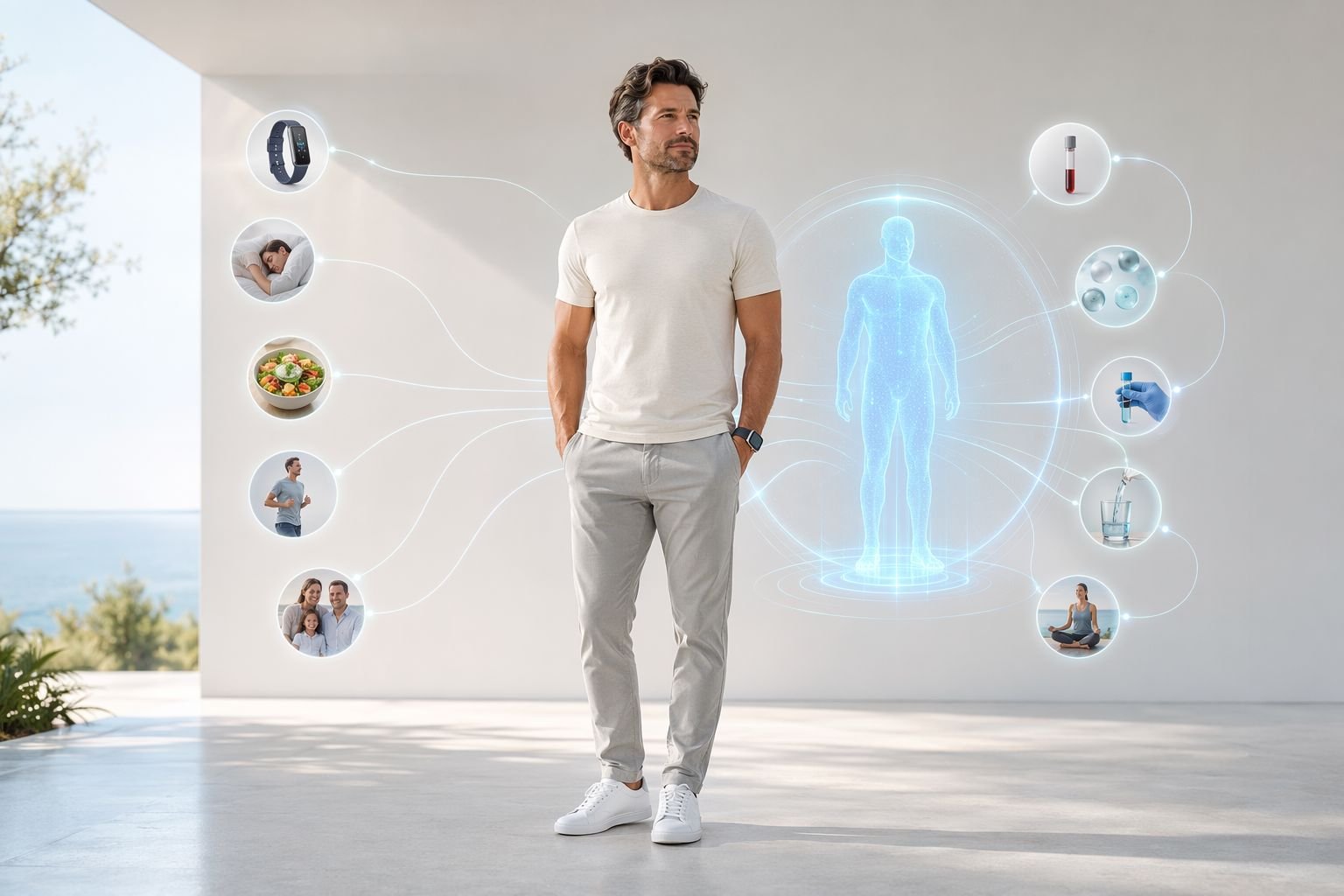
And then we have the non-medical applications. We look at six pillars of your health: sleep, stress, nutrition, sports, substance (alcohol, tobacco, caffeine), and psychosocial, like your happiness. We call it psychosocial well-being.
Oh, really? Even that?
We look at your mental energy, mood balance, background stress, cognitive protection, the gut-brain axis and protective lipids. Endorphin can be one biomarker, dopamine can be another, but we never look at one marker alone. The analogy I like is that we are not looking at one tree. We are looking at the forest.
BioTwin’s model is based on metabolites – small biochemical compounds that reflect the body’s current biological state. DNA carries the instructions your cells use to produce proteins. Those proteins will be metabolised into smaller molecules that we call metabolites. So hormones are metabolites, vitamins are metabolites. There are an estimated four million metabolites in the human body, and BioTwin can already track around thirty thousand from a single drop of blood using AI.
We tell you what’s good, what’s not, and what you can do. It can be physical activity, sleep, missing supplements. We give you personalised advice, because we have a virtual assistant that coaches you along the way. We also have a weight-management program adapted to your metabolism.
Why aren’t clinicians using this yet, if biomarkers can predict so many diseases?
Because it wasn’t available until recently. Such tests used to cost two to five hundred US dollars per test, and you need at least five to ten thousand of them. It really needs a specific laboratory.
And if you give a clinician thirty thousand biomarkers of information, it would be too much. You need AI to filter it and tell them: look for breast cancer here, look at this signal there. We’ve been doing it for five years, and now the big tech companies are coming in. Microsoft is our partner. We’ve been selected for the latest Google for Startups MENA cohort. Hopefully it will soon become available to a broader audience.
MRI remains highly precise, but it is not used as a broad screening tool. BioTwin is designed to flag biological signals earlier, after which clinicians can order imaging or other validation. BioTwin does not make a diagnosis. It helps the clinician make a decision according to your current biomarkers.
Tell us about your partnership with Cleveland Clinic Abu Dhabi, one of the region’s leading medical institutions?
We’ve got a project with them for breast and colon cancer screening, and we also have one with Al Jalila Hospital in Dubai, for Down syndrome children. In Abu Dhabi, the validation cohort includes fifty breast cancer patients, twenty colorectal cancer patients, and fifty healthy patients, including twenty patients with fibroadenoma, a non-cancerous breast tumour. And we need to identify, in a blinded validation, which samples belong to which group. We hope to finalise Phase One in 2026. Phase Two will cover more cancers.
We’re hoping to launch the public project at the Abu Dhabi Future Health Summit this October as we’ve had great support from the Department of Health in Abu Dhabi. By 2027, hopefully we will have our own lab in Masdar City in Abu Dhabi. That’s when we’re going to make the technology available to everyone in the UAE, and we hope to recruit a hundred thousand users.
At present, the digital twin is an app. How do you think this technology can evolve in the future? Will users see a hologram, or will it still be data in a computer?
I think it will be both. I think the biomarkers we’re looking at will go from thirty thousand to a million from a drop of blood. And eventually we’ll add different types of biomarkers. Right now we look at metabolites, but we’ll be adding proteins, DNA, scans, other information.
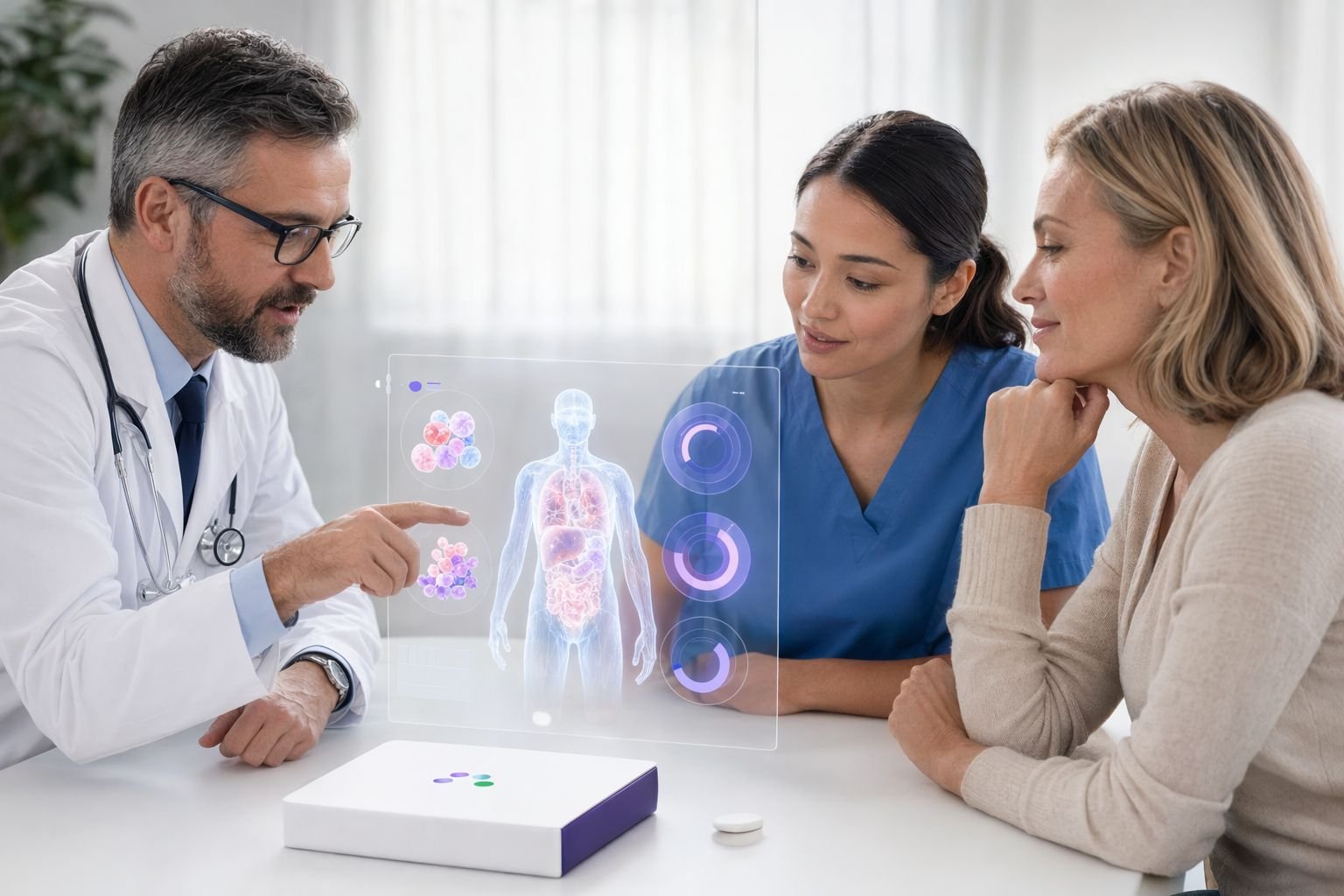
The representation is going to be more visual. We’re going to be able to replicate every part of your body in a hologram, so you’ll be able to zoom in, look at all of them – and all of this with a clinician, who will be able to go into details. That’s where I think the future is going. Merging all of that information together.
At present we’re already including facial recognition, and we can simulate healthy ageing and unhealthy ageing. We can tell you: this is what you’ll look like twenty years from now, if you maintain healthy habits and show you different scenarios. And also track vocal biomarkers for neurological conditions.
How did you personally come to the health-tech industry?
I’ve been in the tech industry all my life. When I sold my previous business, I wanted to make a difference. I wanted to develop a technology that had the potential to save lives.
And then my next-door neighbour died from pancreatic cancer. It was horrible. He was 55. He was so healthy – training at the gym, an amazing guy. I wish I’d be that healthy at 55. But it took a year and a half for doctors to diagnose him. When they found out, it was stage four. He died a few months later.
I was convinced there was a signal in the body. There was a way. Pancreatic cancer has biomarkers in your blood. But right now there’s no test available to screen for it. The only way for a doctor to detect it is a biopsy or an MRI, and they won’t prescribe either unless you have symptoms. With pancreatic cancer, you don’t have any symptoms until stage four.
So I started looking. I talked with a lot of scientists. When I learned about those biomarkers, I said, there must be a key. That was five or six years ago, and I knew AI was going to make the difference. And it does.
I have two co-founders with me. One AI expert, and one biochemist. We teamed up and built BioTwin.
It must be a fascinating industry to be in right now – a lot of people are obsessed with their health and longevity. Do you use your own technology yourself?
And in my case, I’ve been taking a BioTwin sample every day for the past five years. Plus I have two different wearables and a bioimpedance scale at home. So I try to collect as much data as possible.
If you go to our blog on our website, I talk about my journey. I’m a vegan, for many different reasons – but one of them is that it’s one of the best diets for your health. On the website, we tested our own AI. We asked it to find the exact date over the five years of samples, when I went from vegetarian to vegan. And it was able to find the exact day I switched from one to the other. Our biomarkers are extremely precise.
One of the things that’s really helped me was that BioTwin detects four different types of fatigue. Is it because you’re missing sleep? Muscular fatigue? Chronic fatigue? Or mental fatigue? Four signatures. It helped me understand my body. What my limit is. Honestly, I don’t want to say I was working too much – I wasn’t working well. I wasn’t listening to my body, because our body doesn’t really talk a lot. Now when I look at my biology, I can say: This is good for me, this is not.
I was also surprised to know which supplements my body was lacking. Not standard supplements or medication, but precisely the ones whose levels were low. And that’s the beauty of personalization.
What are people generally missing in their health routines today?
It’s sad to say, but there’s no magic pill. If you tell people, stop drinking alcohol, they say, yeah, but I like it. They believe one day there’ll be a magic pill. No. Older people with diseases would give anything to be healthy. But most delay adopting healthy habits.
One of the things we try to do with BioTwin is personalise prevention. We have a substance score for alcohol. We tell you: this is what your biology is saying right now. It might be ten years before you have a major side effect. But it’s affecting you today. You need small changes now – they’ll greatly affect you ten years later. And ten years from now, you’ll be willing to spend any kind of money to reverse it.
If you start changing – eat less meat, more vegetables, prioritise sleep, exercise – you’ll see a biological difference in a few months. Our goal is to put people’s biology in front of them and say: this is what is happening inside your body right now. Because prevention only becomes real when it becomes personal.
Share



WE RECOMMEND
The Rise of Neurowellness in Dubai: A conversation with MindTune Founder Ramzi Shehadeh
Inside the startup bringing brain training technology out of elite labs and into your daily routine.
Build Well to Live: What the Global Wellness Institute Discovered in the Gulf
A new report from the Global Wellness Institute reveals that while the rest of the world is still debating what a "healthy…
Your Digital Twin That Could Save Your Life
A digital twin, built from your scans, biology and real-time health data, can model disease, test treatments and help doctors choose a…
