




Why Gen Z Is Becoming a Major Consumer of Wellness and Longevity
Gen Z is changing what people are willing to spend on. Health and prevention are moving into the same space as fashion and luxury – turning wellness and longevity into powerful new markers of status.
Gen Z has barely begun to age, yet it is already becoming one of the most influential consumer groups in wellness and longevity. Health, prevention and self-optimisation are entering spending decisions decades earlier than they did for previous generations – and increasingly becoming part of how status itself is expressed.
Euromonitor describes Gen Z as price-sensitive while simultaneously willing to spend on products that contribute to health and emotional wellbeing. Its research describes a generation that approaches wellness holistically – across physical, mental, emotional, social and spiritual health – and identifies “luxury wellness propositions” as a growing opportunity.
While Gen Z’s relationship with consumption is often framed as a rejection of luxury, the reality is more complex: they still spend on fashion, beauty, dining and experiences, but their definition of value has widened.
For Gen Z in the UAE and Saudi Arabia, health & wellness is already one of the top three spending priorities — alongside fashion and beauty
They can question the value of a $3,000 handbag while paying hundreds of dollars a month for a premium gym, skincare or a wellness retreat. One says something about what you own; the other promises to change how you feel, perform, look or age. That gives wellness unusual economic power: spending becomes easier to justify when it can be framed as an investment in the self.
The same shift is becoming increasingly visible in the Gulf. According to Chalhoub Group’s GCC Luxury Sentiment Tracker, Gen Z’s top three spending priorities in the UAE and Saudi Arabia are fashion (49%), beauty (40%), and health and wellness (37%). In a region long associated with luxury consumption, wellness is now firmly part of the same spending landscape.
This carries particular weight in Dubai, where younger consumers form a dominant part of the market: six in ten residents are under 35. Their preferences are increasingly shaping the city’s consumer economy.
Wellness learns the language of luxury
Luxury and wellness are converging from both directions. Hotels are adding longevity programmes, sleep protocols, diagnostics and medical partnerships, while wellness companies increasingly adopt the service models, environments and pricing structures of luxury hospitality.
The UAE offers an unusually clear example of that convergence. Its wellness economy reached approximately $40.8 billion in 2024, after growing 14.3 percent annually since 2019 – the fastest rate in the Middle East. Wellness tourism alone is now worth around $11.3 billion, while wellness real estate has grown by nearly 23 percent a year.
The mechanics are increasingly similar. Luxury has long sold rarity, expertise, personal service, ritual and access; premium wellness now sells many of the same things.

BCG’s 2025 luxury research describes a “health-as-wealth” mindset among top-tier luxury consumers. Wellness and longevity, beauty and interior design were among the categories showing the fastest expected acceleration in spending, with BCG forecasting around a 10 percent increase over the following 18 months.
The movement is visible further down the luxury pyramid as well. Around 35 percent of aspirational luxury consumers surveyed by BCG had reduced or paused luxury spending during the previous year. Among the areas receiving some of the reallocated money were savings and investments, second-hand luxury, and wellness and self-care, which accounted for 13 percent of the reported reallocation destinations in BCG’s summary data.
Experiential luxury – including tourism, wellness and gastronomy – could represent more than 35 percent of the global luxury market by 2030
Experiences are taking a larger share of the same psychological territory. Deloitte cites research suggesting that experiential luxury – including tourism, wellness and gastronomy – could represent more than 35 percent of the global luxury market by 2030.
McKinsey sees the same competitive pressure. Its 2025 analysis of the luxury industry warned that personal luxury goods companies are now competing for discretionary spending with luxury travel and wellness experiences.
By 2026, that movement was even more explicit. McKinsey’s State of Luxury research, based on more than 2,000 luxury consumers in the US and China, found that travel ranked first when consumers were asked where they would put additional discretionary income – ahead of every luxury product category. In the US, consumers showed particular interest in lifestyle experiences including travel and wellbeing-related activities.
A luxury handbag today competes for the same discretionary income as a longevity retreat, private club or premium wellness membership. That is a meaningful change in the geography of aspiration.
The body as social capital
There is also a less obvious reason wellness fits so comfortably into contemporary status culture: the body has become a visible asset. Thorstein Veblen gave us the idea of conspicuous consumption in the nineteenth century – wealth communicated through goods and leisure. Digital culture has created new ways of displaying both.

Running a marathon can signal discipline. A morning Pilates class can signal time and consistency. An Oura sleep score can signal self-monitoring and control. A visibly strong body can imply years of training, knowledge and resources. The result is a form of consumption in which the final product is partly the consumer.
A watch can be purchased in an afternoon. Physical fitness usually cannot. Money may buy access to better trainers, treatments or technology, but the consumer still has to participate. That makes health a particularly powerful status code: it appears to reflect discipline as well as wealth.
That distinction helps explain the fascination with optimisation. Many wellness products sell a combination of access and agency: the idea that better data, better routines and better interventions will allow a person to exert greater control over his or her future.
McKinsey calls one of the most commercially important wellness groups “maximalist optimizers.” They represent roughly 25 percent of wellness consumers but account for more than 40 percent of spending, and Gen Z and millennials are disproportionately likely to belong to this group.
The wellness boom carries a striking paradox. In McKinsey’s US research, 40 percent of Gen Z described themselves as “almost always stressed,” compared with 23 percent of consumers overall. Wellness therefore operates as both aspiration and remedy: the generation investing heavily in optimisation is also reporting unusually high levels of stress.
Burnout, economic uncertainty, social media and constant comparison sit alongside an industry offering tools for calm, sleep, focus, energy and control. The same culture that creates pressure to optimise can sell the products intended to relieve that pressure.
That tension deserves more attention as wellness becomes part of mainstream consumption. A generation surrounded by health information has unprecedented access to useful knowledge. It also encounters an enormous commercial ecosystem with a financial interest in converting ordinary fluctuations in sleep, mood, appearance and energy into problems awaiting intervention. Optimisation has no obvious finish line. There is always another biomarker to improve, supplement to try, device to buy or protocol to adopt.
Health as the next luxury frontier
Luxury has always reflected the society around it. At different points it has represented craftsmanship, lineage, scarcity, travel, taste, access and cultural knowledge. Today it is absorbing another value system: the pursuit of physical and mental wellbeing.
Gen Z sits at the centre of that change, having reached adulthood at a particular moment: after a global pandemic, surrounded by wearable technology and exposed to the language of mental health, self-care and optimisation from an unusually young age.
40% of Gen Z say they feel “almost always stressed” — helping fuel demand for an industry built around sleep, recovery, mindfulness and control
McKinsey’s 2025 State of the Consumer found that Gen Z is less likely than older generations to define adulthood through conventional milestones such as marriage and children, and more likely to attach identity to career and financial success. Consumption follows identity. When the house comes later, the body is already there. Investing in the self offers a more immediate and visible form of progress.
Fashion houses, hotels, residential developers, beauty companies and private clubs are all moving into the same territory, building products and experiences around recovery, longevity and wellbeing.
McKinsey found that 88 percent of surveyed luxury travellers considered wellness important during leisure trips, with expectations extending beyond the traditional spa to nutrition, mindfulness, fitness programming and medical expertise.
Perhaps Gen Z is unconsciously preparing for a life that may last longer than any generation before it expected
For Gen Z, longevity itself begins with everyday wellness: sleep, recovery, wearables, preventive beauty, fitness and personalised health. They have not yet reached peak earning power, but its global spending power is projected to reach $12 trillion by 2030. By then, many of the habits being formed today may already be deeply embedded in how this generation thinks about health, status and self-investment.
And the tools themselves are likely to become far more sophisticated. Full-body immersive scanning, AI-designed health plans, real-time biomarkers, predictive diagnostics, digital twins of the body and personalised longevity protocols could move from niche technologies into everyday life.
Gen Z is preparing for a future it cannot fully see yet. It is adopting prevention, tracking, recovery and self-optimisation decades before ageing becomes an immediate concern. If longevity science continues to advance, this could be the first generation to reach middle age with both the mindset and the tools to meaningfully extend healthspan – and perhaps lifespan itself. Gen Z may not simply live differently. It may be preparing to live longer – without fully realising it yet.
Share


WE RECOMMEND
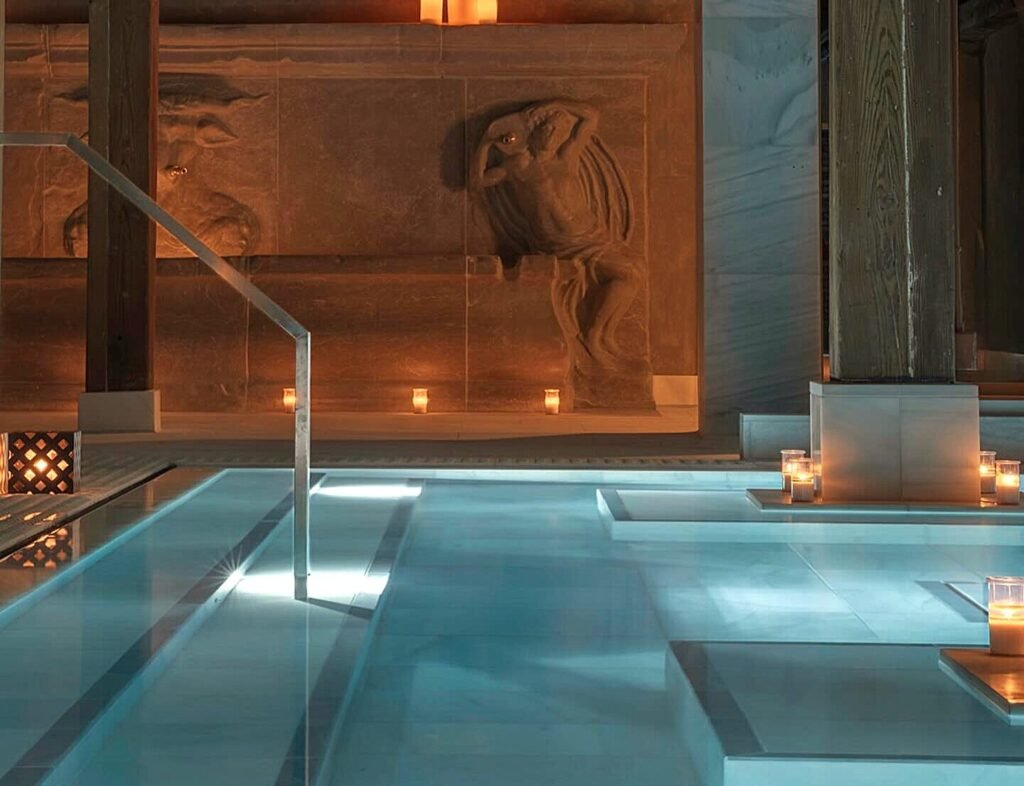
Bathhouses Are Becoming New Places for Connection
Across cultures, water rituals created spaces where people gathered, talked and spent time together. Today, this ancient ritual is returning in a…
Inside the Billionaire Race for Longevity
From Jeff Bezos and Sam Altman to Priscilla Chan and Brian Armstrong, tech’s richest figures are now building their own longevity projects,…
The Quiet Hack. How Vipassana Became a Tool of the Tech Elite
Tech CEOs spent years trying to hack productivity from the outside. Vipassana offered a harsher proposition: to turn inward and confront the…
