



Akala Hotels and Residences by Arada
Time, Privacy, Longevity: The New Rules of Hospitality from FHS World 2026
Three days in Dubai at Madinat Jumeirah, more than 170 speakers and one word that kept returning to the stage: longevity.
From 29 September to 1 October, FHS World – the Future Hospitality Summit – gathered 1,000 delegates from 50 countries in Dubai. More than 200 investors came, together representing over US$6 trillion in assets under management.
Hotel summits usually speak the language of rooms, rates and pipelines. This one spoke about something far more intimate. Sleep. Biomarkers. Healthy decades. And the question hanging over the stage was simple, and slightly startling for an investment forum: what if the hotel of the future is a place that adds years to your life?
2026 has tested the region. A demand dip earlier in the year lasted around two months, and beachfront Dubai occupancies were back above 80% by August. Full recovery to 2025 levels in the top Gulf markets may take until 2028, so speakers called for rate integrity over discounting.
The ambition, however, stayed intact. Travel and tourism is forecast to contribute US$12 trillion to the world economy this year and supports 176 million jobs. The hotel pipeline across the GCC and North Africa stands at around US$90 billion, with some 200,000 rooms under development. The UAE is working towards 40 million tourists and a AED 450 billion tourism economy by 2031.
Ali Shahid, CEO of the organiser The Bench, captured the theme in one sentence: hospitality investment is “reaching beyond traditional hotels into new destinations, experiences and ways of living”. Over three days and dozens of sessions, those new ways of living kept leading back to one subject – health.
The white spaces of the industry
H.E. Abdulla bin Touq Al Marri, UAE Minister of Economy and Tourism and this year’s recipient of the FHS Leadership Award, spoke as an investor would. Asked where the white space lies, he named three sectors: longevity, medical tourism and the silver economy. “Longevity and medical tourism is really picking up, and that’s something that I would probably bet on,” he said. “That’s where the UAE today offers new products.”
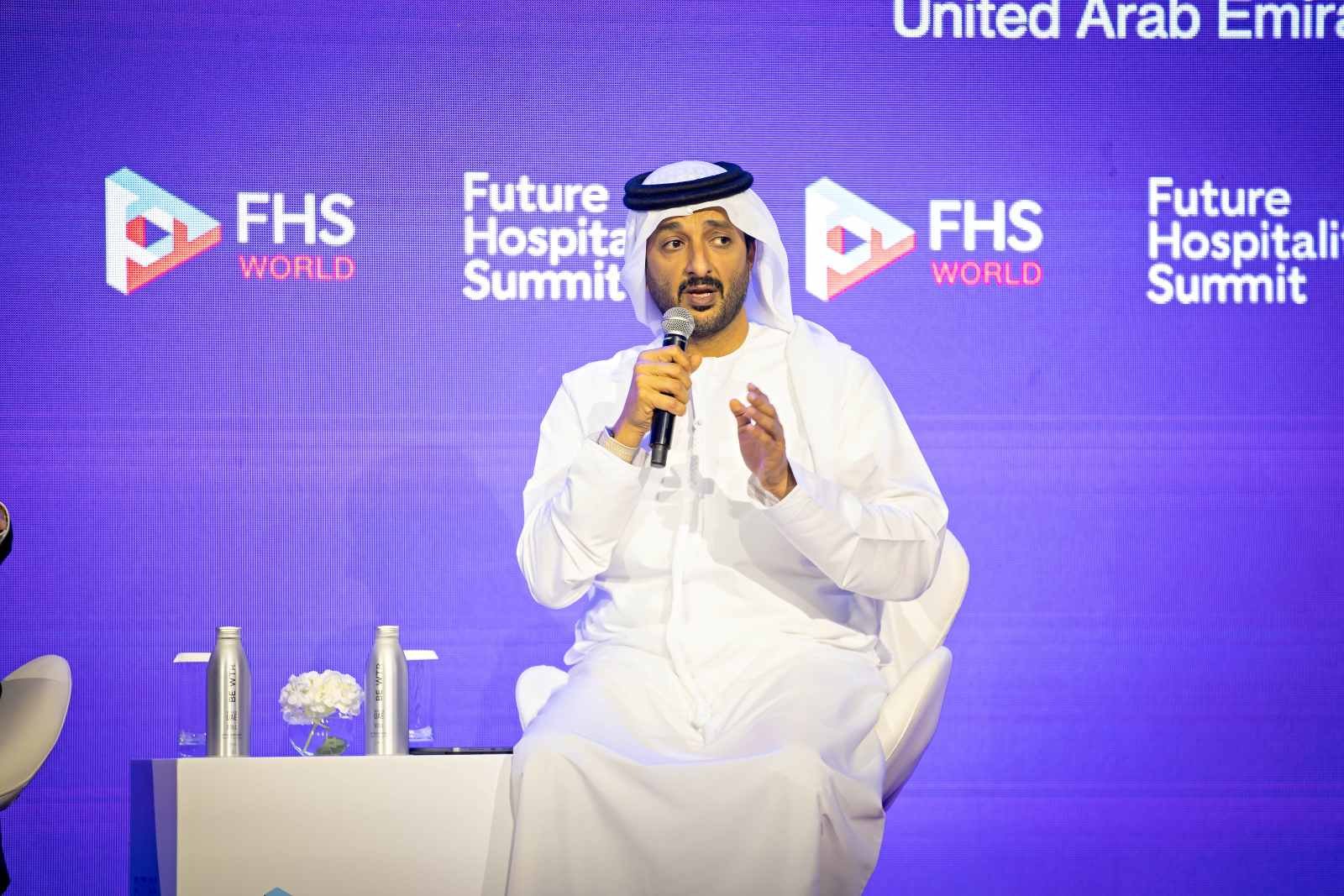
“Longevity and medical tourism is really picking up, and that’s something that I would probably bet on. That’s where the UAE today offers new products”
For the minister, longevity is something the country can build, package and offer the world – clinics, programmes, residences and stays designed for people who travel for their health. In Dubai the ground is well prepared. The newly created Dubai Longevity Authority, a dense network of diagnostic and longevity clinics and a silver economy of active, well-travelled guests in their sixties and beyond give hotels an ecosystem to plug into. The wider market already shows the upside: wellness-branded residences command a price premium of around 30%.
Philippe Zuber, CEO of Kerzner International – the group behind One&Only, Atlantis and Siro – carried the idea from policy into the guest’s own experience. “The definition of luxury has changed. Before, it was status. Now, it’s very different. Now it’s time, privacy, experience, innovation and longevity.”
Status was something you displayed. Time and longevity are something you feel – in your sleep, your energy, your blood results six months later. Zuber’s second formula linked feeling to finance: “Return on emotions gives a return on investment.” Kerzner’s own figures support him. Around 70% of its guests return, and the average stay is four days.
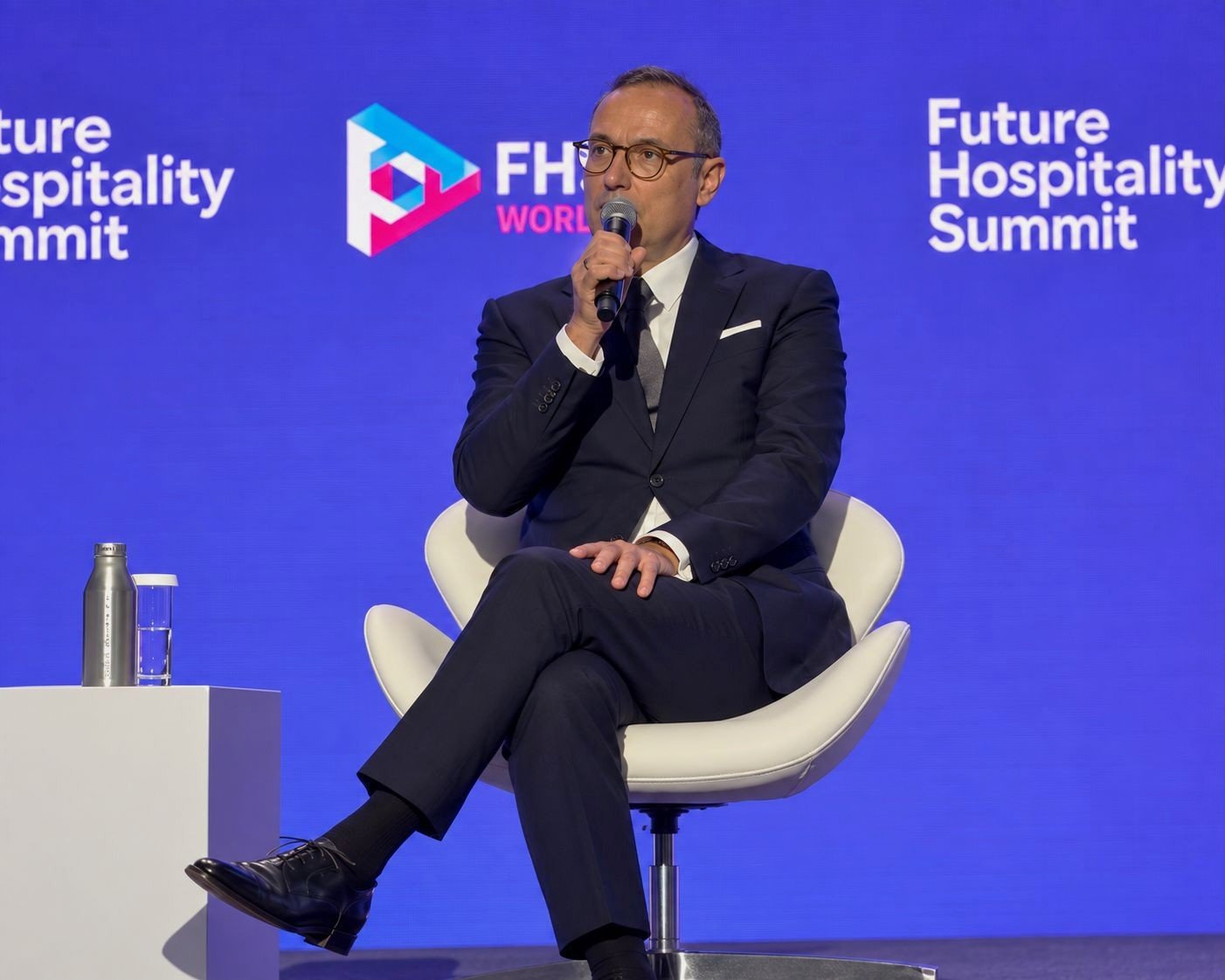
“The definition of luxury has changed. Before, it was status. Now, it’s very different. Now it’s time, privacy, experience, innovation and longevity”
The group is building accordingly. At One&Only One Za’abeel in Dubai, a three-storey Longevity Hub operates in partnership with Clinique La Prairie, with a second hub planned for the Hudson Valley in 2028. Atlantis hosts AEON Clinic for medical wellness, and Siro is a dedicated performance and recovery brand. Days after the summit, Kerzner promoted Robert Jeffers, director of wellness at Atlantis The Palm, to global director of wellness and longevity. Zuber’s comment on the appointment sums up the shift: “Wellness and longevity have moved from amenity to expectation for today’s luxury traveller.”
Six trends shaping the hotel of tomorrow
- Longevity moves to the centre
Across the three days, the summit’s wellness and longevity track turned that direction into detail.
Sharing the stage with Zuber, René Nijhof of Kempinski Hotels likewise named wellness and longevity among the forces driving the next phase of high-end travel, alongside technology and emotional engagement.
Christopher Sanderson, co-founder of The Future Laboratory, gave the idea its sharpest form in his talk “Living Longer, Living Better: Why Longevity is the Ultimate Luxury”. “Longevity is shifting luxury hospitality from a provider of escapes to be a partner in life,” he said. Ahead of the summit he put it even more briefly: “Diagnostics, not décor.” A beautiful room remains welcome. The real product is the measurable change in the guest’s body.
Is this an evolution or a fresh coat of paint? Speaking ahead of the summit’s wellness track, Wael Al Sharif, area general manager of The Torch Hospitality, was clear: “Longevity represents genuine evolution, not rebranding – and, in time, will become mainstream.” Classic wellness offers relaxation; longevity, in his words, delivers “measurable health optimisation through biometric tracking, personalised nutrition, sleep science and preventative healthcare”.
- Wellness becomes an asset class
The numbers explain why investors listened so closely. An RLA Global and HotStats analysis of more than 12,000 hotels found that properties with major wellness offerings generated more than double the total revenue per available room of the rest in 2024. Guests at wellness-led properties stay an average of five days longer. The Global Wellness Institute expects wellness tourism to grow 9.1% a year to 2029, while longevity travel is projected to rise from US$27 billion in 2024 to US$44 billion by 2030.
Sanderson’s formula is worth remembering: “Traditional luxury chases occupancy; wellness tends to compound it.” One detail surprised many owners. In 2025 the strongest RevPAR growth came from lean “minor wellness” hotels – offers, done well, on far smaller footprints than the classic spa resort.
Amit Arora, COO of hospitality and entertainment at Arada, proposes measuring success across the whole asset: total revenue per available room, wellness capture rates and customer lifetime value. “The future belongs to an integrated asset model where wellness is no longer treated as an amenity, but is structurally embedded into wellness real estate design, operational DNA and the long-term compounding value of the destination,” he said ahead of the summit. Jordi Sanchis of Meliá Hotels International added the owner’s view: in certain destinations wellness “is already evolving into a standalone asset class”.
The guest profile is wider than many assume. The Torch Hospitality reports 48% male participation in its wellness facilities, with business travellers using them for stress management and performance. “Wellness is becoming essential business infrastructure,” says Al Sharif. Even the FHS Advisory Board, meeting in February, began with fundamentals. Its first recommendation was strikingly practical: optimise the sleep environment.
- From hotels to healthy places to live
The longevity conversation moved quickly from the room to the neighbourhood. On day two, Arada’s Faik Al-Haddadin and Amit Arora spoke on “From Clinic to Community” – translating longevity science into real estate, hospitality and scalable living models. The subject sits close to home for a developer that has already moved into healthcare with a majority stake in Abu Dhabi’s Reem Hospital. The global wellness real estate market is estimated at US$860 billion, and Dubai alone counts 64 completed branded residence schemes, with 87 more in the pipeline.
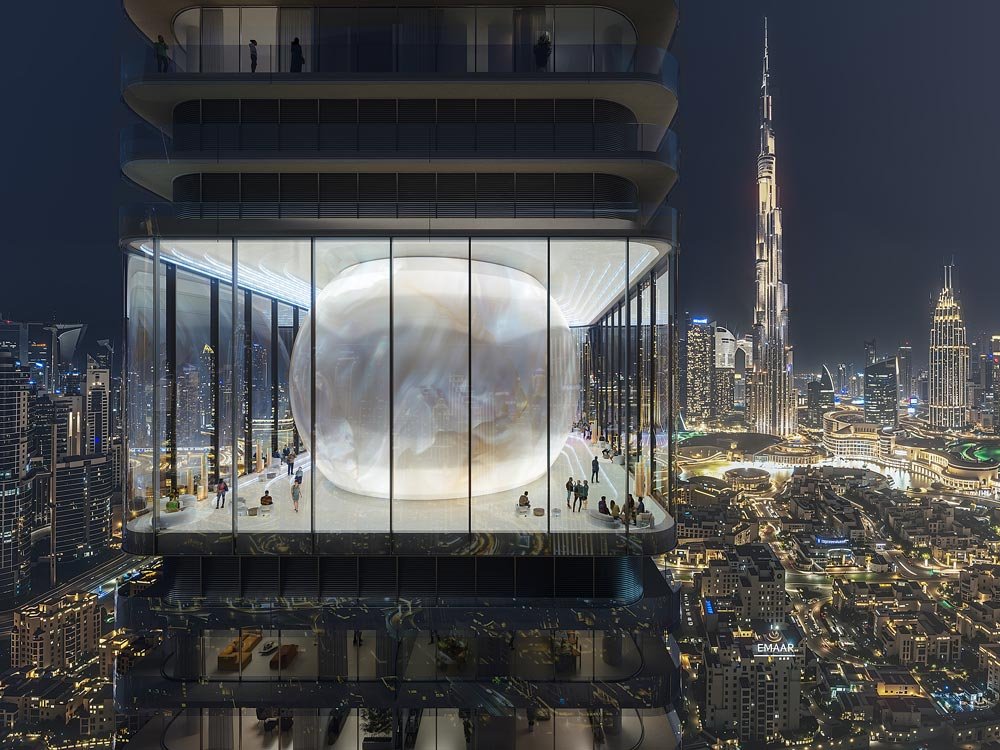
Sonu Shivdasani, founder of Soneva and now of the new brand Sosei, appeared under a title that could serve as the summit’s motto: “Building Health, Not Just Hotels”. Sosei is built around longevity, regenerative medicine and healing, rooted in Japanese values. Earlier this year he said: “Meaningful wellness impacts longevity. Living to 90 is meaningless if you can’t function well at 89.”
- AI finds the guest
Terry Kane, managing director of The Trade Desk, delivered perhaps the most unsettling line of the summit: “Search is no longer my start point. Search is no longer your start point.” Travellers now ask AI assistants where to go, so brands need to audit how visible they are in those answers – a discipline already known as generative engine optimisation. Two-thirds of guests have already used AI to book or plan travel, rising to three-quarters in the UAE and Saudi Arabia, and Accor reported a 50% booking uplift through its ChatGPT integration.
Inside the hotel, technology is being given a supporting role. Fasie Malherbe, CEO of Smart Operator, offered an equation: “Artificial intelligence plus human intelligence equals operational super intelligence.” His session title, “Technology for Humanity”, summed up the mood. Carlos Diez de la Lastra, CEO of Les Roches, went further: “Technology is a commodity. It will be in the people, the culture that you create around your asset.” In a region where hotels open by the hundred, a warm, well-trained team may become the rarest asset of all.
- Owners rewrite the rules
Behind the scenes, the economics of ownership are shifting. A panel on management agreements urged owners to look past the headline base fee and compare the total cost of an operator with the total return to the owner. Franchise and third-party operators hold only 10–20% of branded supply in the GCC, against roughly 80% in the United States, and sophisticated owners are accelerating the shift. Conversions are gathering pace too: at Accor, they now account for around 50–60% of signings in many regions.
The summit summed up the era in its own formula: invest with discipline, build with humanity, lead with purpose.
- Resilience grows locally
Food security has entered the hospitality agenda. Hassan Halawy, CEO of Elite Agro Holding, argued for local and regional supply chains: “There’s nothing that we cannot produce locally.” Speakers pointed to the UAE’s potential to grow Arabica coffee, vanilla, cocoa and tea. For the guest, this may soon mean a breakfast grown a short drive from the hotel.
The hotel as a partner in life
What does all this mean for the traveller? The next generation of hotels will ask different questions at check-in. How did you sleep? What do your biomarkers say? How would you like to feel in ten years? The spa becomes a clinic, the restaurant a nutrition programme, the room a sleep laboratory with a view of the sea.
The Gulf has spent two decades building places people dream of visiting. Now it is designing places people come to for something more precious – healthy, active, unhurried years.
Samer Alkharashi, director of the UN Tourism regional office, asked the question that lingers after the lights go down: “Will we invest only for the next project, or will we invest for the next generation?”
In Dubai, the answer seems to be both. And the most valuable things a hotel will ever offer its guest may turn out to be time and wellbeing.
Share


WE RECOMMEND
Dubai Approves New Longevity Strategy With AED 35 Billion Economic Target
Longevity is becoming part of Dubai’s next chapter, with a new strategy designed to turn longer, healthier lives into a major new…

Alejandro Bataller: Inside SHA Emirates, the World’s First Healthy-Living Island
We spoke with Alejandro Bataller, Managing Partner of SHA and AB Living Group, about the vision behind SHA Emirates as a new…
UAE Wellness Residences Boom: What’s Actually Inside Them?
From Dubai's forest communities to Abu Dhabi's dedicated wellness islands, the UAE is building one of the world's most ambitious map of…
