




Temple
Your Next Wearable Might Read Your Brain
We look at why the mind has become wellness’s next frontier – and what it means to wear a device that listens to the brain.
Look around in any café. A ring on one hand, a watch on the other wrist, a phone glowing with last night’s sleep score. Before the first flat white arrives, half the room already knows its resting heart rate, its recovery and how many steps it took along the promenade at sunrise. For a decade we have measured the body with an almost devotional. And yet the organ that decides how all of this feels has stayed off the dashboard.
Our brain regulates our moods, memories and decisions, and until very recently the hardest part of us to read outside a hospital. That is changing quickly. In the space of a few months, headphones with brain sensors woven into their ear cushions have gone on sale, a billionaire has pinned a tiny sensor to his temple, and a headset that treats depression at home has reached clinics from London to Dubai. What happens when your earbuds notice your focus slipping before you do?
Wellness Moves Upstairs
The numbers explain the shift better than any product launch. In September 2025 the World Health Organization reported that more than one billion people now live with a mental health condition, with anxiety and depression ranking as the second biggest cause of long-term disability worldwide. Care, meanwhile, remains thin on the ground: a global median of 13 mental health workers for every 100,000 people, and mental health still receiving around 2% of national health budgets. A vast need and a narrow door. Technology has always rushed into gaps of exactly this shape.
Brain wearables can show how focused you were, how stressed, how tired – and perhaps one day, how you felt about the person sitting opposite you
Consumers have felt it first, and mental wellness was one of its two fastest-growing sectors – expanding 12.4% a year between 2019 and 2024, with 10.1% annual growth forecast through 2029. GWI’s senior research fellow Katherine Johnston describes a “sea change in consumer mindsets”, with prevention and mental health becoming dramatically more important all over the world. McKinsey’s Future of Wellness 2025 found that 84% of US consumers call wellness a top priority, while cognitive health, mental health and longevity remain among their least-served needs.
According to the 2025 Cigna Healthcare International Health Study, 27% of UAE residents now rank mental wellbeing as their top personal priority – a fraction ahead of physical health at 26%. One in five residents aged 18 to 24 describe their stress as unmanageable. In a region of 24-hour cities, long-haul commutes across time zones and careers built at speed, a clear, rested, resilient mind has quietly become the ultimate asset. It is also the one we know least about.
That is why the next wave of wearables is climbing upwards. Until now, our devices have read the brain at a distance, inferring sleep from a pulse at the fingertip or a flicker of movement at the wrist. The new generation goes to the source. Some devices listen to the brain’s electrical rhythms through EEG sensors woven into headbands, earbuds and ear cushions. Others track the flow of oxygenated blood through the frontal cortex. A bolder group goes further still and speaks back to the brain – with timed sound, gentle current or focused ultrasound. The wrist was the rehearsal. The head is the main stage.
Here are seven devices shaping it:
Temple: Measuring Your Brain Blood Flow
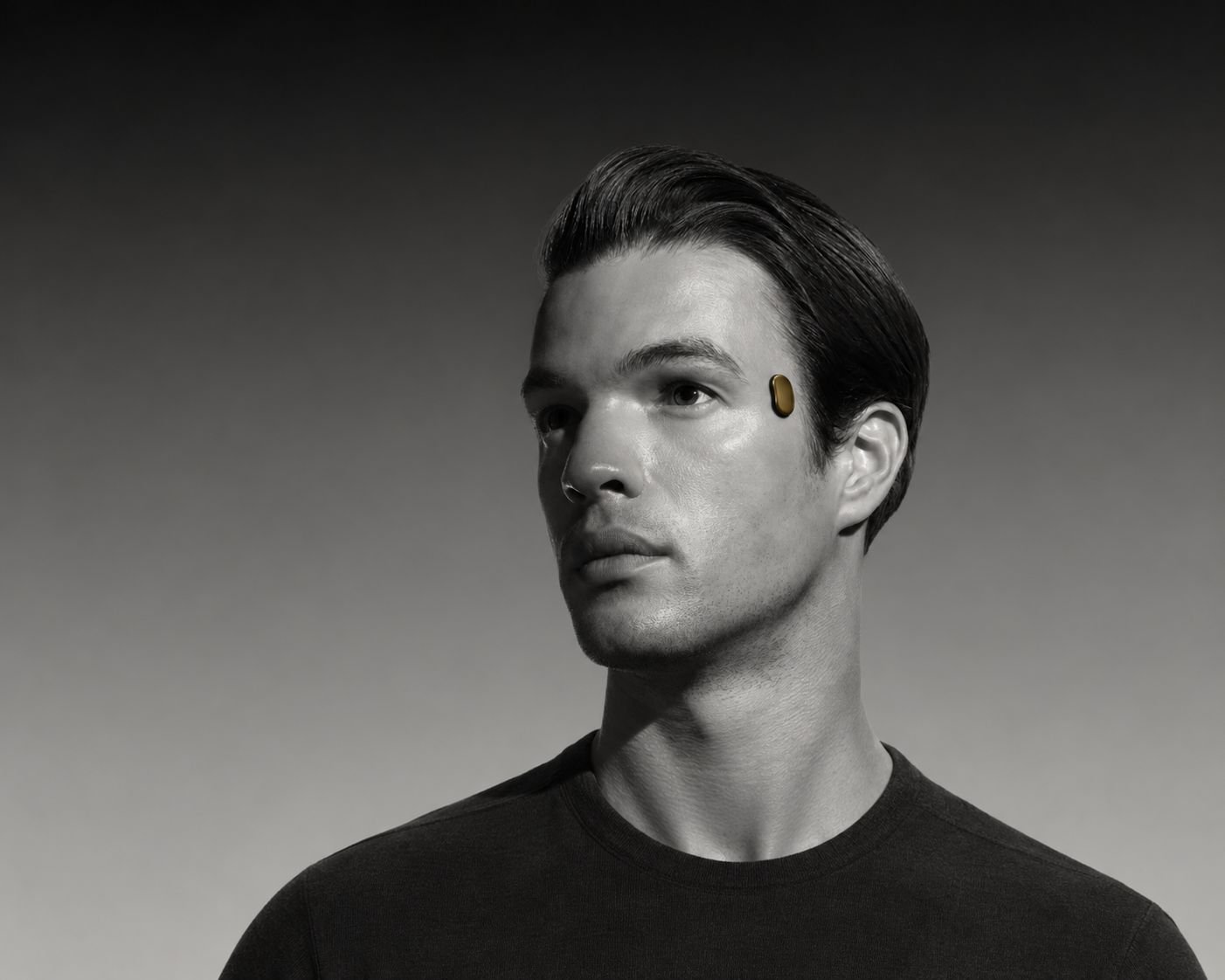
It looks like a polished pebble, or a jelly bean cast in champagne-coloured metal. Temple is the brainchild of Deepinder Goyal, founder of food-delivery giant Zomato, and it rests exactly where its name suggests – on the temple, tracking blood flow and oxygenation inside the brain. The idea grew out of Goyal’s “Gravity Ageing” hypothesis, which proposes that a lifetime of gravity gradually reduces blood flow to the brain, contributing to fatigue, fading concentration and cognitive decline. Goyal says he wore the prototype for about a year while testing the theory, and in early 2026 Temple raised $54 million at a valuation of around $190 million.
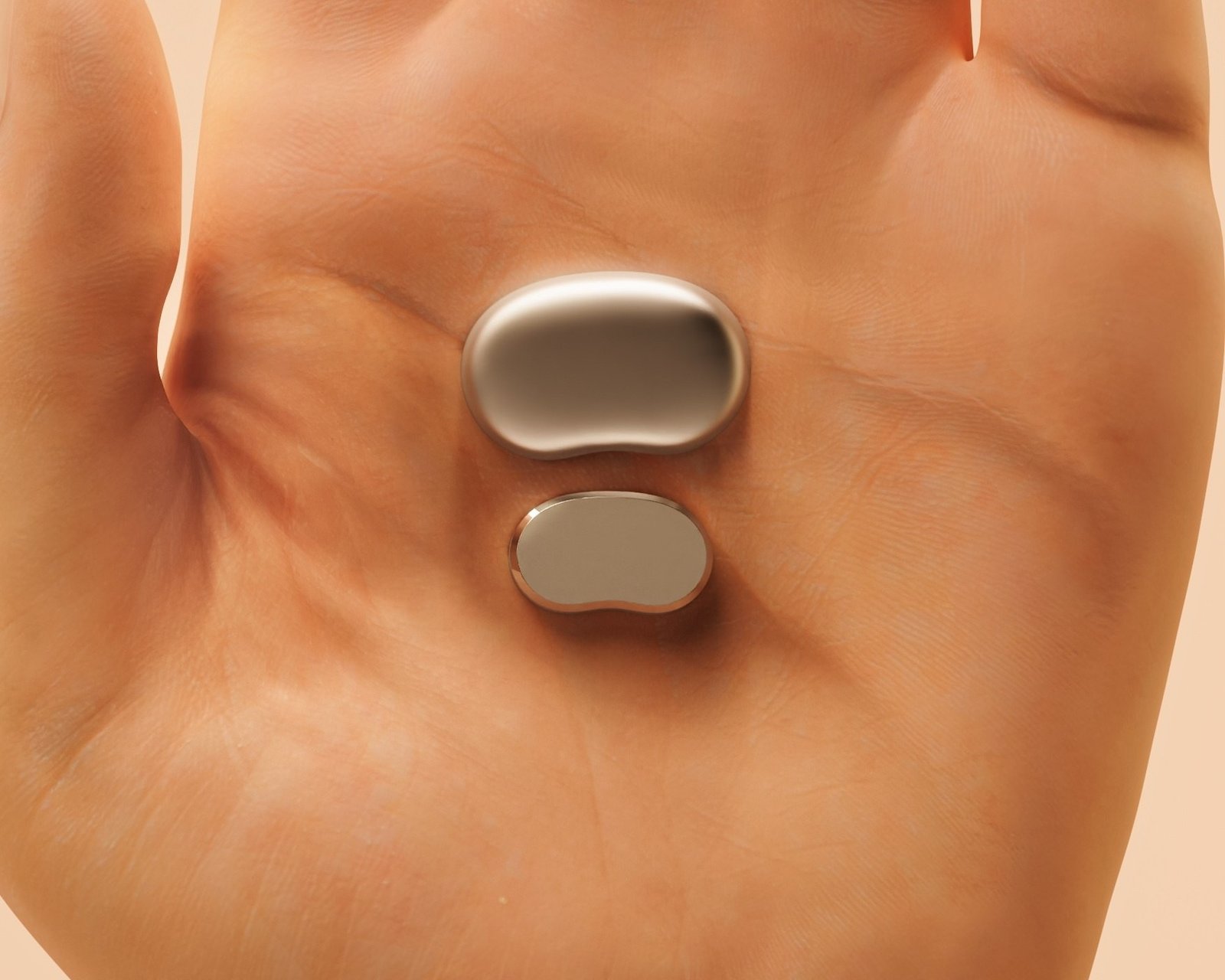
The first 100 units went to a hand-picked circle of athletes, scientists, doctors and founders in May, and in August Goyal unveiled a redesign at less than half the original size, with a limited launch edition promised before the end of 2026. Price remains under wraps. Temple is also the most debated device on this list: some experts question how much of the brain’s deep circulation a sensor resting on the skin can truly capture. For now it sits somewhere between a research instrument and a statement of intent – a tiny metal bet that blood flow may become the next heart rate.
Atlas 1.0: Brain Tracking for Real Life
Most EEG devices ask you to sit still, close your eyes and breathe. Atlas asks you to get on with your day. The San Francisco start-up’s first wearable is a small round puck that sticks behind the ear on an adhesive pad and records brain activity on the move – walking, training, driving, sitting through a long meeting. Alongside EEG, it reads skin conductance, head movement and the vibration of your voice, registering the rhythm of speech while leaving the words themselves unrecorded. Its algorithms, trained on more than 500,000 brain recordings, turn all of this into three scores: Presence, Stress and Energy Burn.
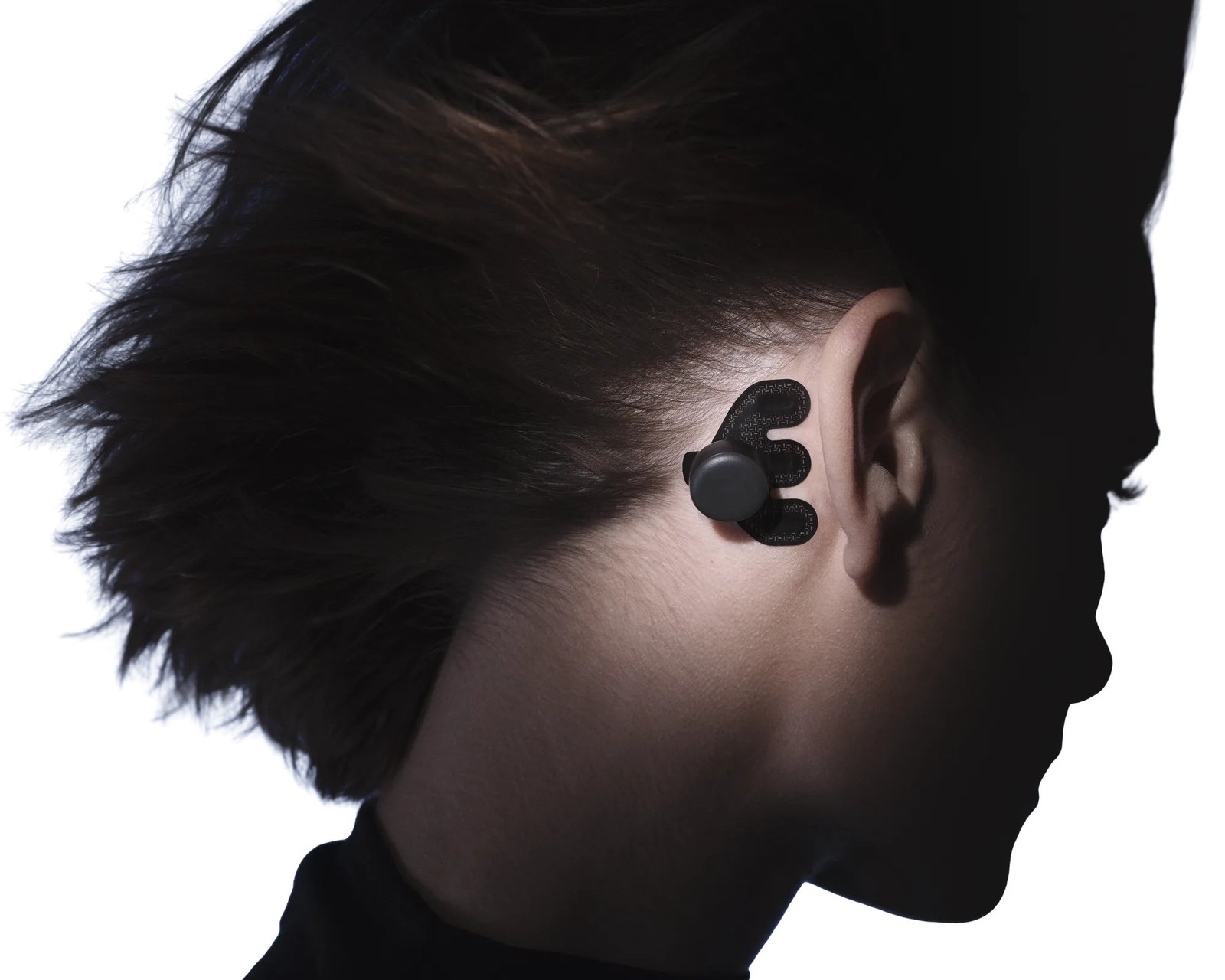
The questions Atlas wants to answer are disarmingly human. Was I really present at dinner with my family? Which people and habits leave me drained, and which leave me sharper? Link the app to your calendar and patterns begin to surface across meetings, workouts and evenings. The Pioneer Edition costs $499 plus a $29.99 monthly membership, which covers replacement pads and insights, and includes a year of API access for connecting your brain data to AI assistants. Independent validation is still to come – compact EEG trades some accuracy for comfort – yet as a portrait of a mind in motion, Atlas is among the most intriguing ideas of the year.
Muse S Athena: A Fitness Tracker for Your Brain
Muse has spent more than a decade teaching meditators to hear their own minds, and Athena is its most ambitious headband yet. Made by Toronto-based Interaxon, it is the first consumer wearable to combine two brain sensors in one soft fabric band: EEG, which follows the brain’s fast electrical rhythms, and fNIRS – functional near-infrared spectroscopy – which tracks oxygen levels in the frontal cortex. Together they paint a fuller picture of mental effort, much as a running watch pairs pace with heart rate. In the app, neurofeedback turns concentration into something you can almost see: in one exercise, an owl glides across the screen powered by your focus alone.
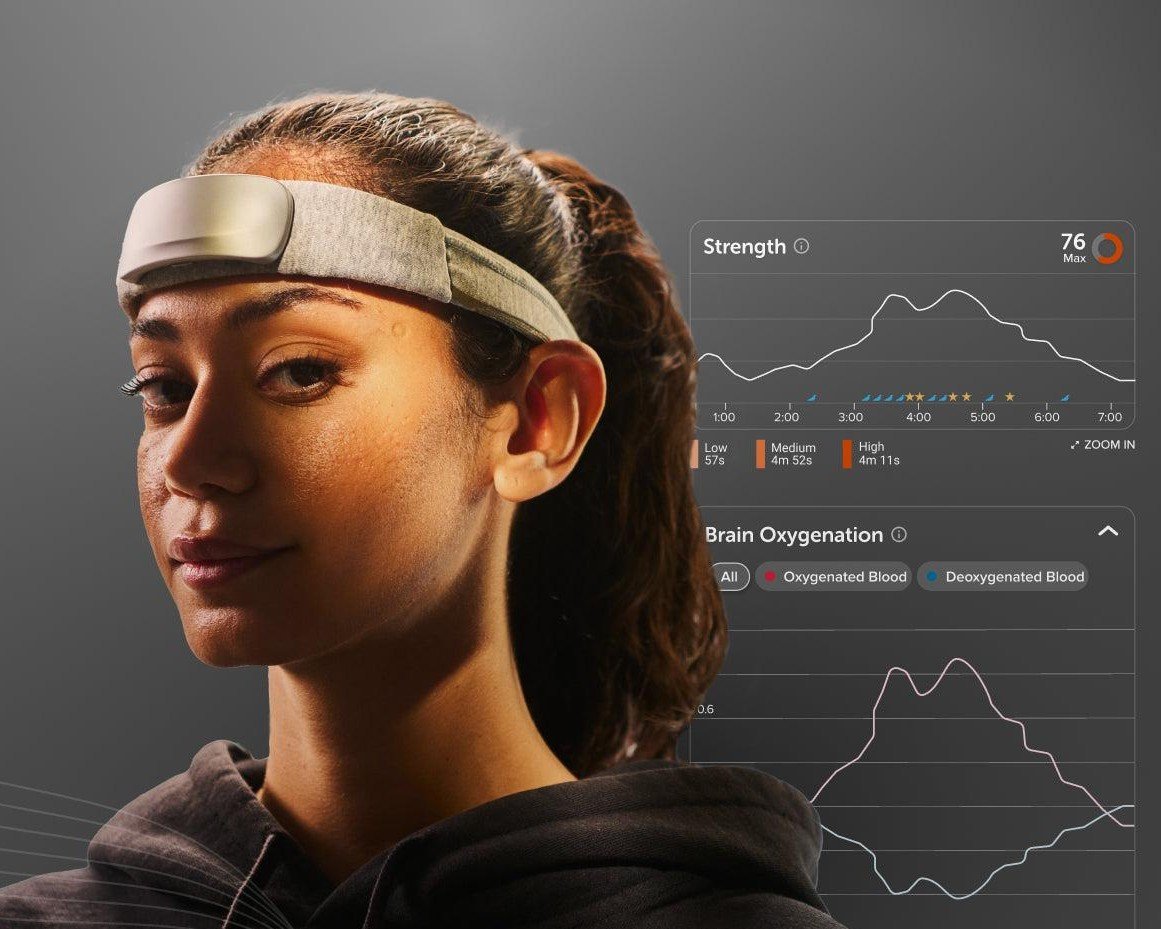
At night, Athena becomes a sleep companion, tracking light, deep and REM stages through delta-wave activity and using gentle audio cues to ease the brain towards rest. The company cites a 2021 study with Western University and Cambridge Brain Science in which Muse’s sleep technology improved sleep quality scores by 20% relative to controls. At $474.99, with up to 10 hours of battery life, Athena is the most established device in this collection – the one to choose for anyone who wants to start training the mind today.
Neurable One: Headphones That Track Your Focus
From across the room, they look like any pair of premium noise-cancelling headphones. The secret lies in the striped ear cushions, where Boston-based Neurable has woven 12 EEG sensors that quietly read brain activity the moment you put them on. Unveiled on 1 October 2026, Neurable One is the first headphone the company has designed and built entirely in-house, after an earlier collaboration with Master & Dynamic. Notice your attention drifting towards your phone? The headphones notice too – with a soft tone to call you back, or a suggestion to take a break when fatigue sets in.
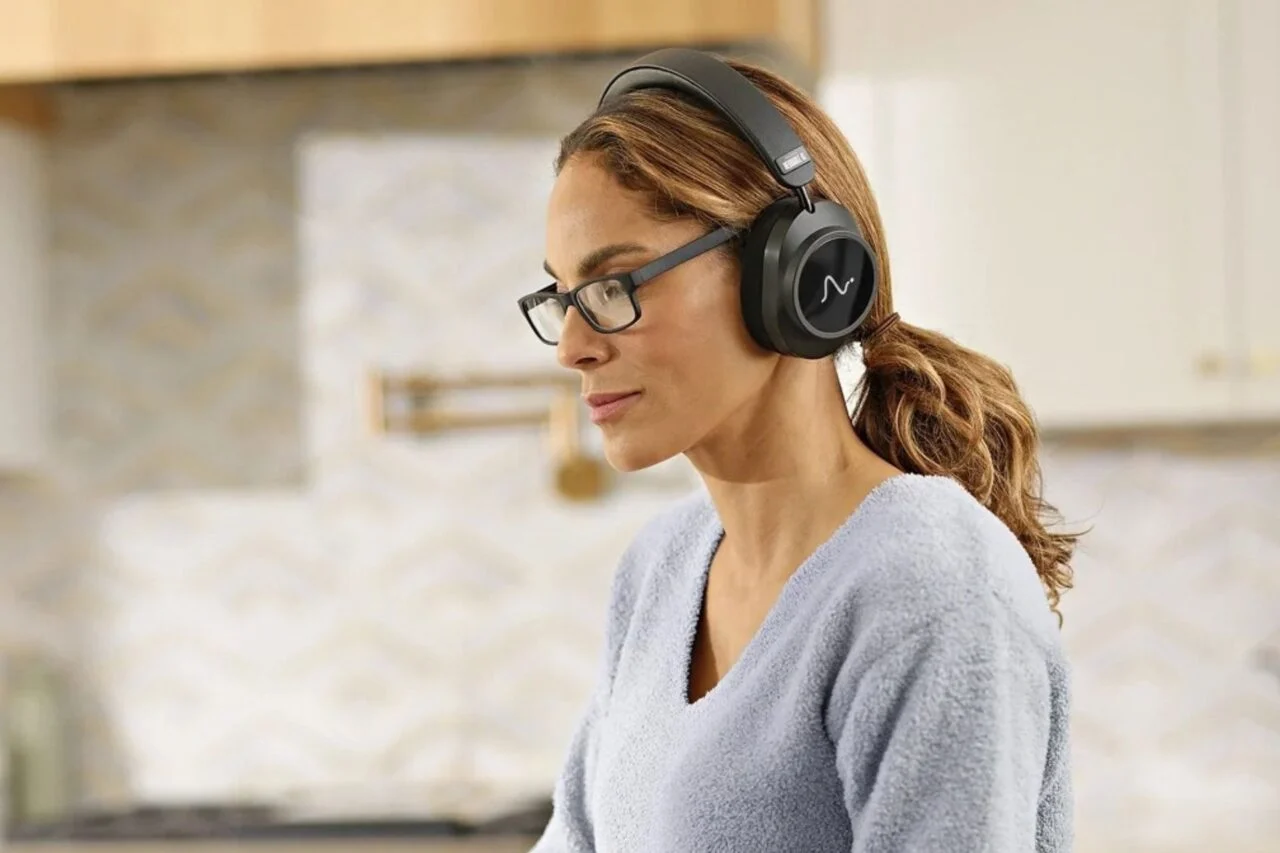
The companion app tracks eight brain metrics, from focus, workload and stress to brain age and alpha peak frequency – a resting rhythm the company compares to heart rate variability for the brain. Each morning begins with a one-minute reading, eyes closed. Sound comes from 40mm beryllium drivers with active noise cancellation, and battery life runs to 12 hours with EEG switched on. Priced at $499 and positioned as a wellness product, Neurable One is available to pre-order in the US for now. Data is processed in Neurable’s cloud and stored for up to 18 months, and the company pledges to keep it away from advertisers and third parties.
Flow Neuroscience: Home Therapy for the Brain
This is where the collection moves from measuring the brain to working with it – and from wellness into medicine. Founded in Sweden in 2016 by clinical psychologist Daniel Månsson and computational neuroscientist Erik Rehn, Flow Neuroscience makes a slim white headset that delivers transcranial direct current stimulation, or tDCS: a low-level electrical current aimed at the left dorsolateral prefrontal cortex, a region closely linked to mood. Sessions last around 30 minutes, guided by a companion app. In late 2025 the US Food and Drug Administration approved Flow’s FL-100 for adults with moderate to severe depression – the first at-home brain stimulation treatment of its kind – and the device launched across the US in September 2026 on prescription.
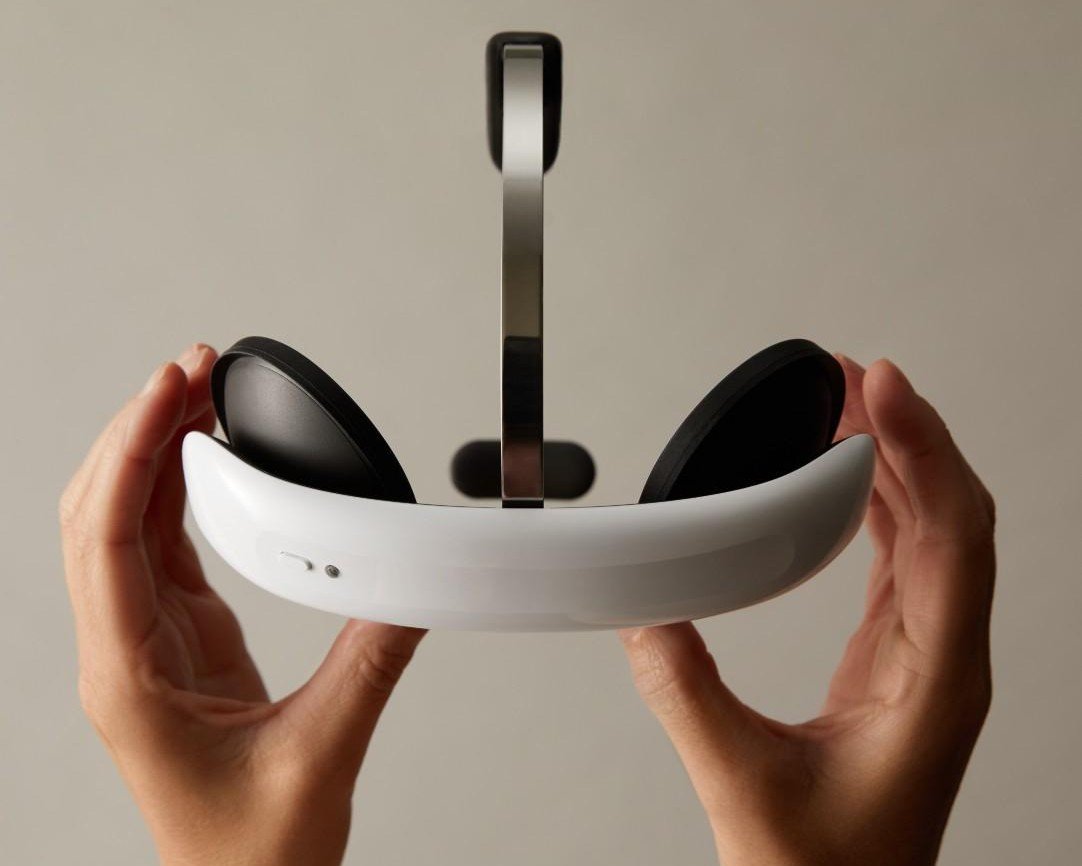
The approval rests on the EMPOWER trial, published in Nature Medicine, in which 57% of patients using active stimulation reached clinical remission after ten weeks. The wider science is still debated: a 2023 Lancet study found tDCS performed on a par with placebo, a reminder that results vary with method and patient. Flow’s real-world reach is already wide, with more than 55,000 users across the UK, Europe, Australia, Brazil – and the UAE, where the treatment is already available. For a region steadily dismantling the stigma around depression, a therapy that fits on a bedside table may prove a quiet revolution.
Nextsense Smartbuds: Earbuds for Deeper Sleep
Nextsense was born inside X, Alphabet’s “moonshot factory”, where founder Jonathan Berent began exploring a simple question: what if the ear could become a window onto the brain? The answer arrived in February 2026 as Smartbuds – soft, lavender-grey earbuds shaped for side sleepers, each fitted with EEG sensors, six in total. Through the night they follow the brain as it slips from light sleep into deep sleep or drifts towards waking, reading the signal within milliseconds.
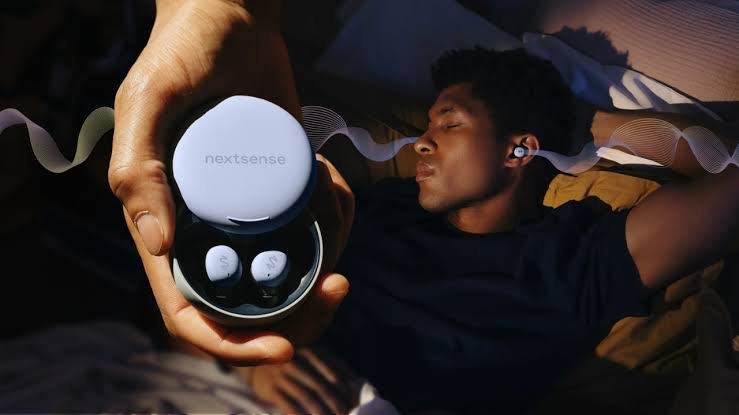
Then they respond. When the brain settles into its slow, rolling deep-sleep waves, Smartbuds play precisely timed pulses of soft pink noise designed to strengthen that rhythm – the stage most closely tied to physical recovery and memory. Across more than 1,000 nights of beta data, the company reports increased slow-wave activity, and around half of testers described their sleep as better or much better. Smartbuds retail at $399.99 with a $14.99 monthly subscription after three free months, work with iPhone only and are sold as consumer wellness technology. For a generation that already falls asleep in earbuds, it is a small and elegant leap.
Prophetic Dual: Headband for Lucid Dreams
Ancient Egyptians slept in dream temples hoping for visions; Tibetan monks have practised dream yoga for centuries. Prophetic wants to bring that old longing into the bedroom with engineering. Founded in San Francisco in 2023 by lucid-dreaming enthusiasts Eric Wollberg and Wesley Louis Berry III, the company builds headbands that combine EEG with low-intensity focused ultrasound. The EEG watches for REM sleep, the stage when most vivid dreams unfold; at the right moment, ultrasound gently stimulates the prefrontal cortex – the region of self-awareness – aiming to help the dreamer realise they are dreaming, and stay there.
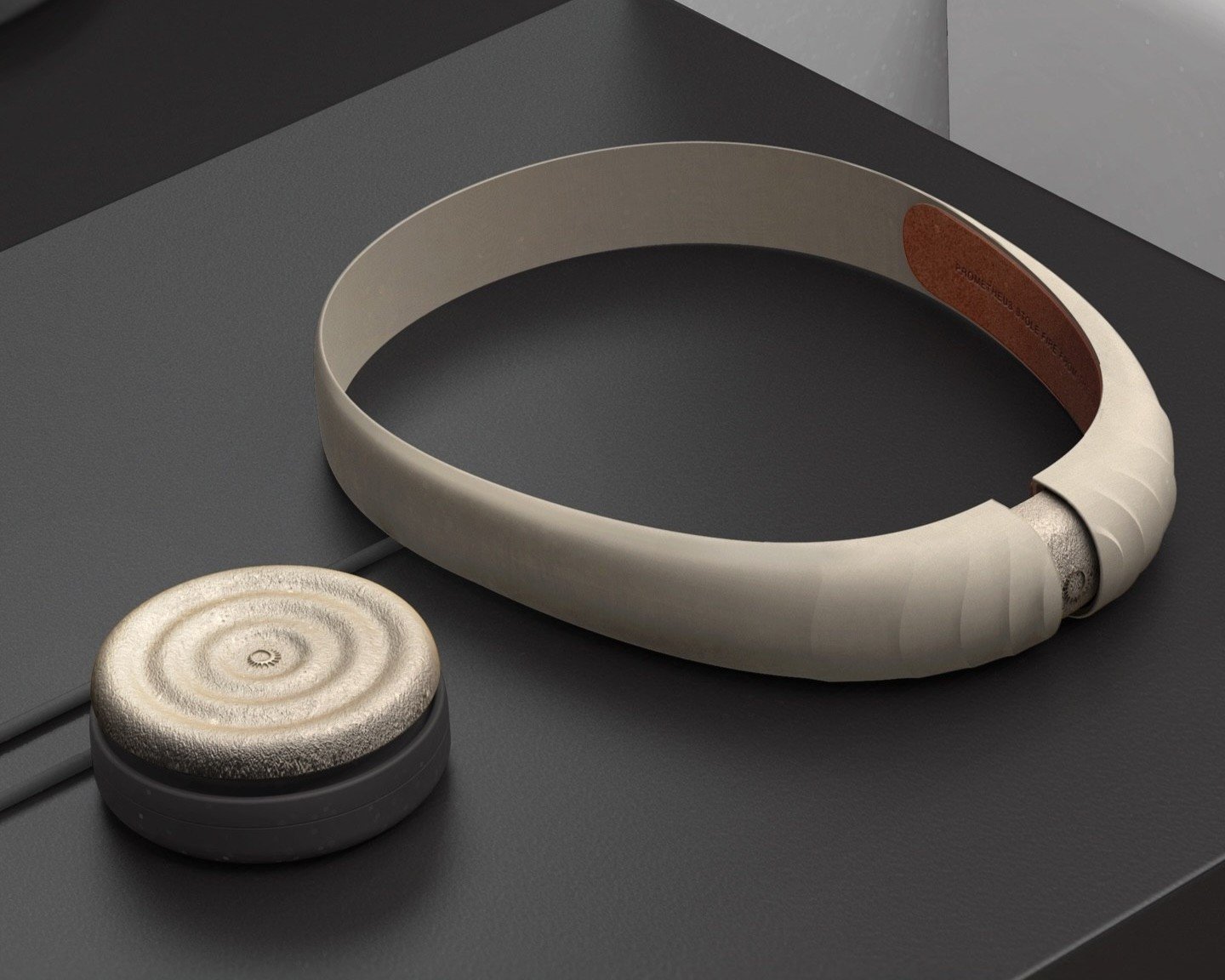
The research behind the concept traces back to work on transcranial ultrasound at the Donders Institute in the Netherlands. When the original Halo prototype appeared in 2024, its projected price hovered around $2,000. Today Prophetic has opened pre-orders for two headbands: the entry-level Dual at $449 and the more precise Phase at $1,299. Ultrasound-induced lucid dreaming has yet to be validated at scale, so Prophetic remains the most experimental device on this list. It is also the most poetic – a reminder that the final frontier of wellness may lie in the hours we spend asleep.
Who Owns Our Brain Data?
A heart rate reveals how hard you ran. Brain data can hint at how focused you were, how stressed, how tired – perhaps one day, how you felt about the person sitting opposite you. Lawmakers are beginning to take notice. In 2024 Colorado became the first US state to classify neural data as sensitive information requiring consent, and California, Montana and Connecticut have since followed. In November 2025 UNESCO member states adopted the first global framework on the ethics of neurotechnology, placing mental privacy and freedom of thought alongside human dignity. The framework is a recommendation, and the rules remain a patchwork. Meanwhile, the data itself is already travelling – into company clouds, into research datasets and, through open APIs, into the AI assistants we talk to every day.
So before choosing a device, it is worth asking a few questions that once belonged to science fiction. Where is my data stored, and for how long? Can I export it, or delete it? Who else will learn from it? The most thoughtful brands are starting to answer clearly, and their answers deserve as much attention as battery life or sensor count.
Late in the evening, the café in the Marina empties. The rings and watches go on counting – steps, beats, breaths. Somewhere above them, the mind keeps its own quiet record of the day: the conversation that lifted us, the deadline that drained us, the moment we finally let go. For centuries that record was ours alone, readable only through dreams, diaries and the patient art of paying attention. Now we are learning to translate it into numbers. Perhaps the greatest gift of these devices will be the oldest wellness practice of all – simply noticing how we feel, and choosing what to do next.
Share




WE RECOMMEND

Wearables Are Going Jewellery
Health trackers are moving beyond sportswear and beginning to borrow the materials, language and collaborations of fashion and jewellery.

Oura Ring 5 Review: The Smallest Smart Ring Is Moving Beyond Tracking
Oura has introduced its newest smallest smart ring in the world, which is now tracking GLP-1 and women health.
Meet the Gulf-Born Wellness Innovations Worth Knowing
From smart rings to three-minute mental resets and home hydroponic gardens, a new generation of Gulf-born products is turning everyday wellbeing into…
