




The New Utopias: Cities Designed for Longer Lives
From the foothills of the Himalayas to a floating platform off the coast of Korea, a new generation of cities is being drawn from scratch around one question: how do we live longer and closer to nature?
The New Utopias: Cities Designed for Longer Lives
From the foothills of the Himalayas to a floating platform off the coast of Korea, a new generation of cities is being drawn from scratch around one question: how do we live longer and closer to nature?
When you have lived in Dubai for many years, you develop a particular instinct for new cities. You watch them rise from the sand in real time. Here, building a city from zero feels almost ordinary. And yet lately we have noticed a shift in the way the rest of the world talks about its future cities. The vocabulary has changed. Where planners once spoke of skylines and GDP, they now speak of mindfulness, healthspan and rivers.
The Blue Zones – Okinawa, Sardinia, Ikaria, Nicoya – took centuries to form. Their longevity grew out of geography, family, food and a slow rhythm of life. Today a handful of kings, carmakers, architects and biotech founders are asking a bolder question. Can a city be designed to give its people more years? Here are the places worth watching.
Gelephu Mindfulness City, Bhutan – the kingdom of calm
Bhutan, the country that measures its success in Gross National Happiness and the world’s first carbon-negative nation, is building a city to match. Gelephu sits in the southern foothills on the border with the Indian state of Assam. King Jigme Khesar Namgyel Wangchuck unveiled his vision for it in his National Day address to an audience of 30,000. The project is a Special Administrative Region with its own executive, legislative and judicial powers; the King chairs its board, and former Prime Minister Dasho Dr Lotay Tshering serves as its governor.
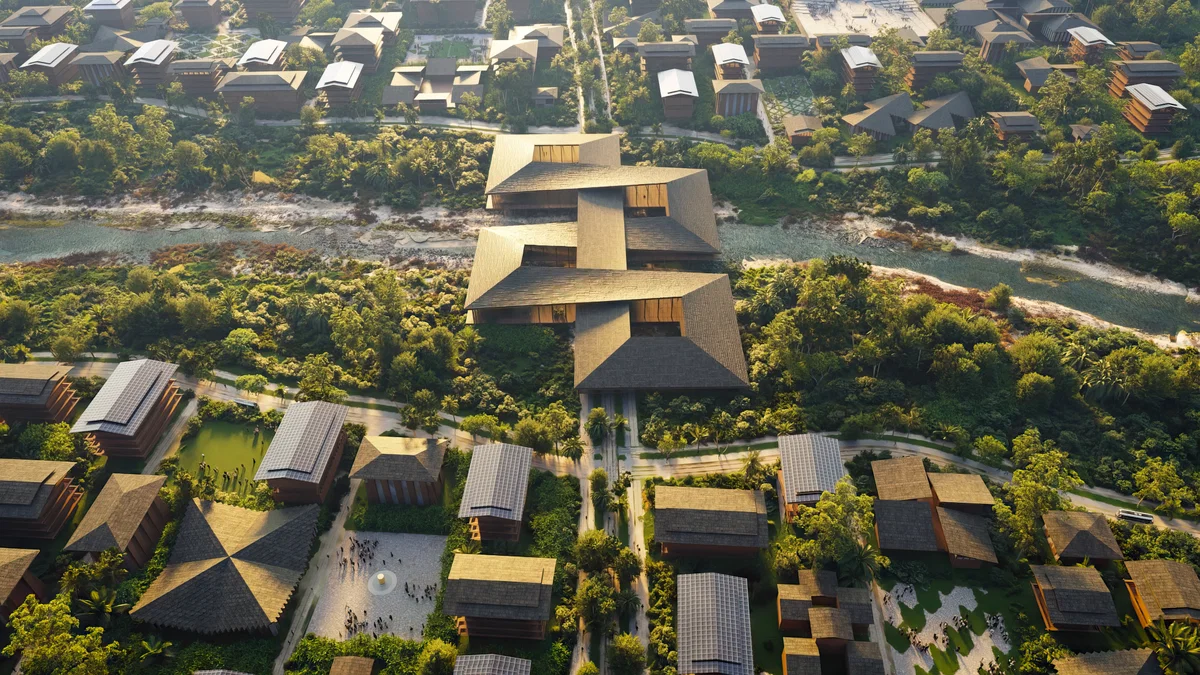
The masterplan, by Bjarke Ingels Group with Arup and Cistri, covers more than 1,000 square kilometres shaped by 35 rivers and streams. Its neighbourhoods are laid out like mandalas, radiating from a central public space, and the city is stitched together by inhabitable bridges – one holding a new airport, another a Vajrayana spiritual centre, another a healthcare centre where Eastern and Western medicine meet. Health and wellness form one of seven economic clusters, alongside spirituality. Even the hydroelectric dam at Sankosh is designed as a temple.
Recently Aman Group signed an agreement with investment firm Patience Capital Group and Bhutan’s GDL-Raven to explore opportunities in the new city and attract long-term investment. Aman brings more than twenty years of hospitality experience in Bhutan, where its lodges have introduced travellers to the country’s landscapes, culture and slower pace of life. “We share a philosophy rooted in serenity, respect for culture and a profound harmony with nature,” said Vladislav Doronin, Chairman and CEO of Aman Group.
The collaboration offers a glimpse of how Gelephu’s philosophy could translate into places to stay and live, with considered design, privacy and a close connection to nature shaping the experience. The partnership is still taking form: the proposed investment fund and final arrangements remain subject to further discussions and approvals. Its direction, however, fits the city’s wider ambition to bring economic opportunity, cultural continuity and collective wellbeing into the same urban vision.
Lake Nona, Florida – the town that measures its health
If Gelephu is a meditation, Lake Nona in Orlando is a laboratory notebook. Developed by Tavistock Group across some 7,000 acres, it grew around a single anchor: a new medical school, the UCF College of Medicine. Today its 650-acre Medical City brings together hospitals, university research centres and the Sanford Burnham Prebys Medical Discovery Institute, and around 11 per cent of residents work inside the community itself.
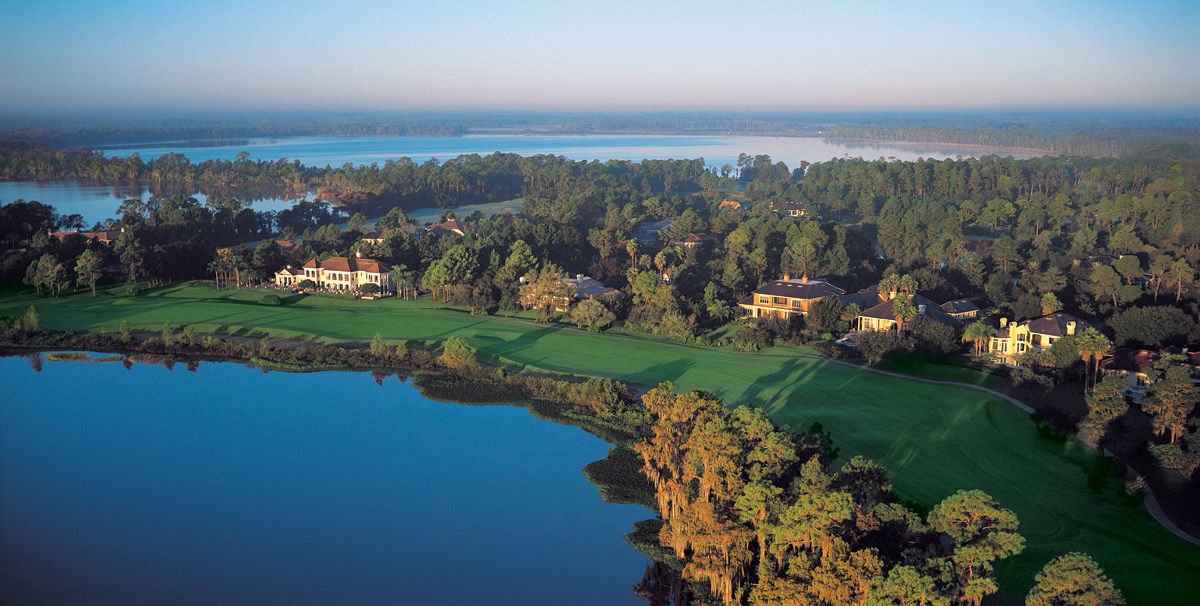
The Global Wellness Institute has called Lake Nona the world’s most sophisticated wellness community, and its distinction lies in data. Johnson & Johnson partnered with the Lake Nona Institute on the Lake Nona Life Study, a multi-year project tracking residents’ health and the link between wellness and longevity – in effect turning an entire town into a living laboratory. Deepak Chopra brings his annual health forum here, trails weave through the neighbourhoods and a medically integrated wellness centre of more than 110,000 square feet is planned across the road from the hospitals. Around 16,000 people already call it home.
Lake Nona offers a quietly American answer to the longevity question: put the clinic, the trail and the farmers’ market side by side, then measure what happens.
Toyota Woven City, Japan – a living laboratory at the foot of Mount Fuji
On the site of a former car factory in Susono, in the shadow of Mount Fuji, Toyota has built a city it calls a test course for the future. Woven City officially launched in September 2025, with a masterplan, public realm and landscape by BIG and buildings by Nikken Sekkei. Its name comes from the way three types of street are woven together, each designed for a different kind of user. Residents and visitors are called Weavers; the companies, start-ups and researchers who test their ideas here are Inventors.
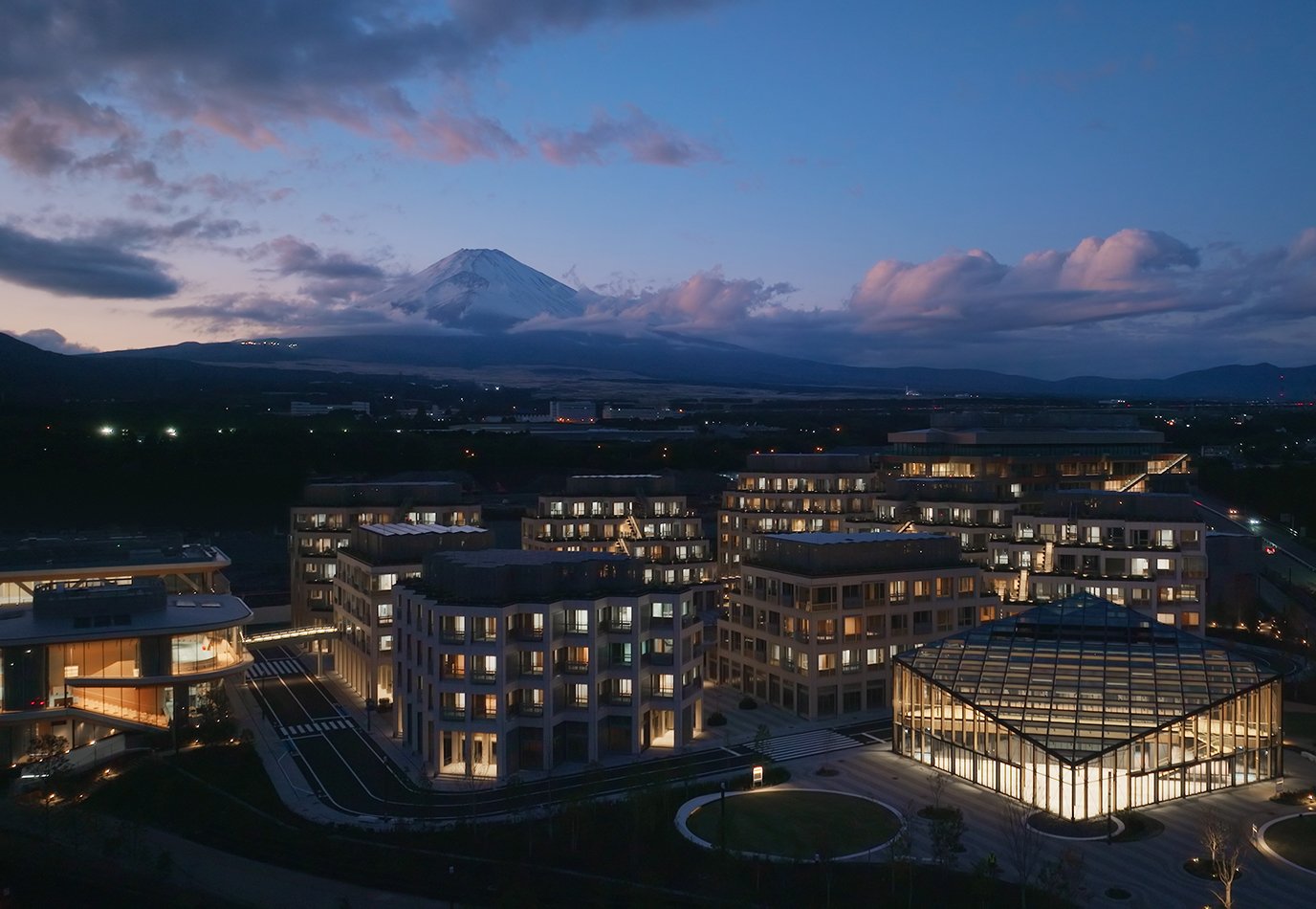
A year on, around 30 pilot projects run with residents, and construction of a second phase for about 600 people has begun. The city holds Japan’s first LEED for Communities Platinum certification, and its stated aim is to enhance wellbeing for all through the way people, goods, information and energy move. Akio Toyoda has openly acknowledged that profit may remain out of reach. Woven City is small, deliberate and deeply Japanese: a place where the future is tested quietly, one street at a time, before it reaches the rest of us.
Próspera and Infinita City, Honduras – the longevity frontier
On the Caribbean island of Roatán. Próspera, nicknamed “the Hong Kong of the Caribbean”, is built as a charter city created under Honduras’s ZEDE law, which gave it a legal and regulatory framework of its own. Its developer, the US-based Honduras Próspera Inc., is backed by venture capital and appoints four of the nine members of the governing council – enough, under the two-thirds voting rule, to give it an effective veto.
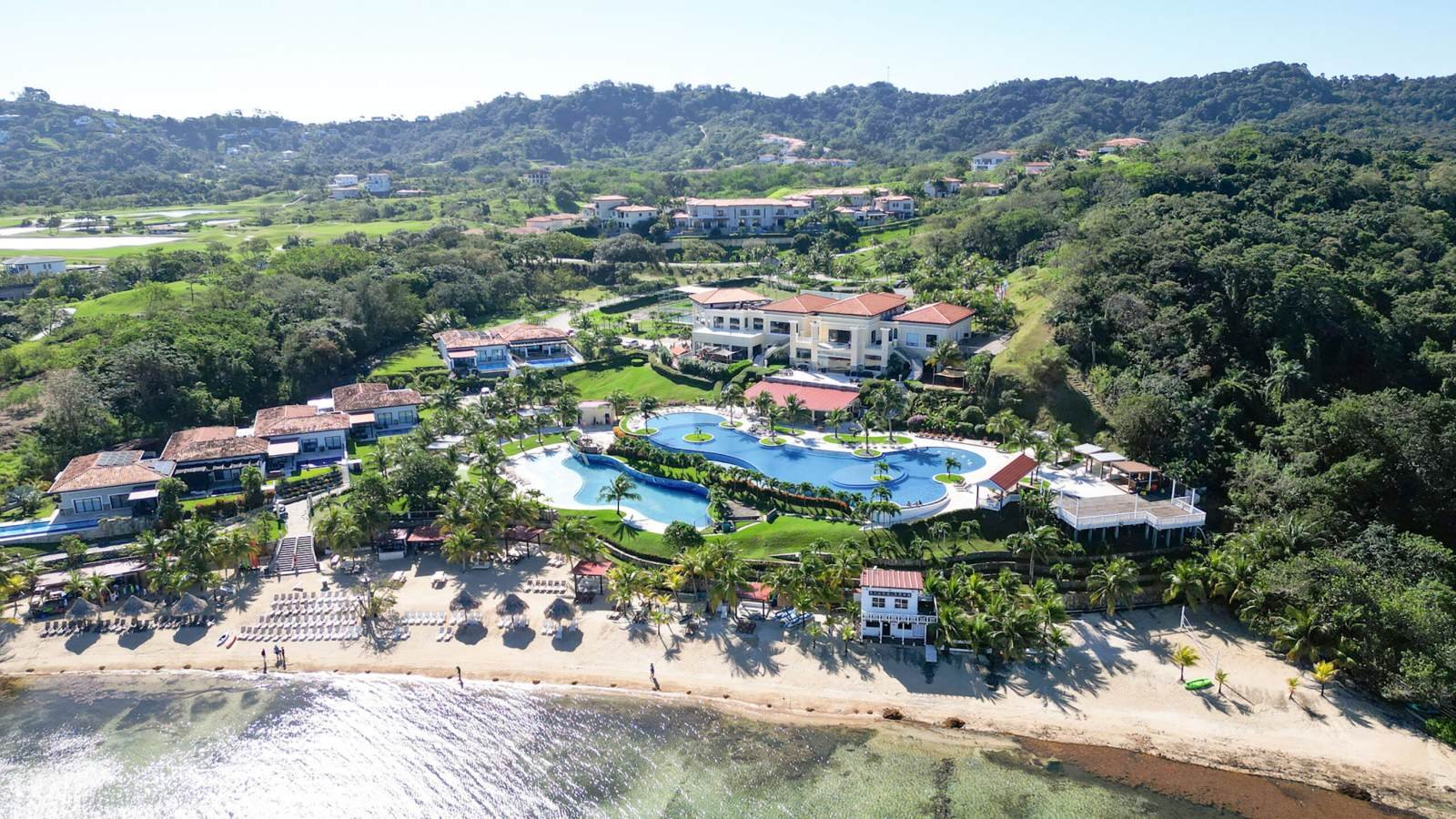
For longevity seekers, the real story sits inside it. In January 2024 a pop-up community called Vitalia gathered more than 200 founders, scientists and biohackers on Roatán for three months, with the declared mission of building a “Los Alamos for longevity”. When its co-founders went their separate ways, Niklas Anzinger launched Infinita City – a network city for founders working on longevity through biotech, computation and science, built on the idea of special regulatory zones as a path to faster medical progress. It has since opened a clinic and an academic programme and raised funding to turn the pop-up into a permanent biomedical district. The island has become a pilgrimage point for biohackers.The island has become a pilgrimage point for biohackers. In 2023 Bryan Johnson flew to Roatán for an experimental follistatin gene therapy from the start-up Minicircle – two injections designed to boost muscle, curb inflammation and, its makers hope, slow ageing, administered well outside the reach of US regulators.
The ground beneath it all remains unsettled. In September 2024 the Supreme Court of Honduras declared the ZEDE zones unconstitutional, and Próspera has taken the government to international arbitration at the World Bank’s ICSID. Critics see a regulatory escape hatch for unproven treatments; supporters see the fastest route from laboratory to patient. Both may be right. Either way, Roatán is the world’s boldest – and most contested – experiment in what a city built for longer life could look like.
Nuanu, Bali – the creative city
On Bali’s southwest coast, near Tanah Lot, rice fields and the Indian Ocean frame Nuanu Creative City. Founded in 2020 by Sergey Solonin, former CEO of the fintech company Qiwi, it covers 44 hectares in Tabanan and takes its name from a Balinese word meaning “in the process”. Its guiding philosophy is Tri Hita Karana, the Balinese principle of harmony between people, nature and the divine, and around 70 per cent of the land is given over to green space.
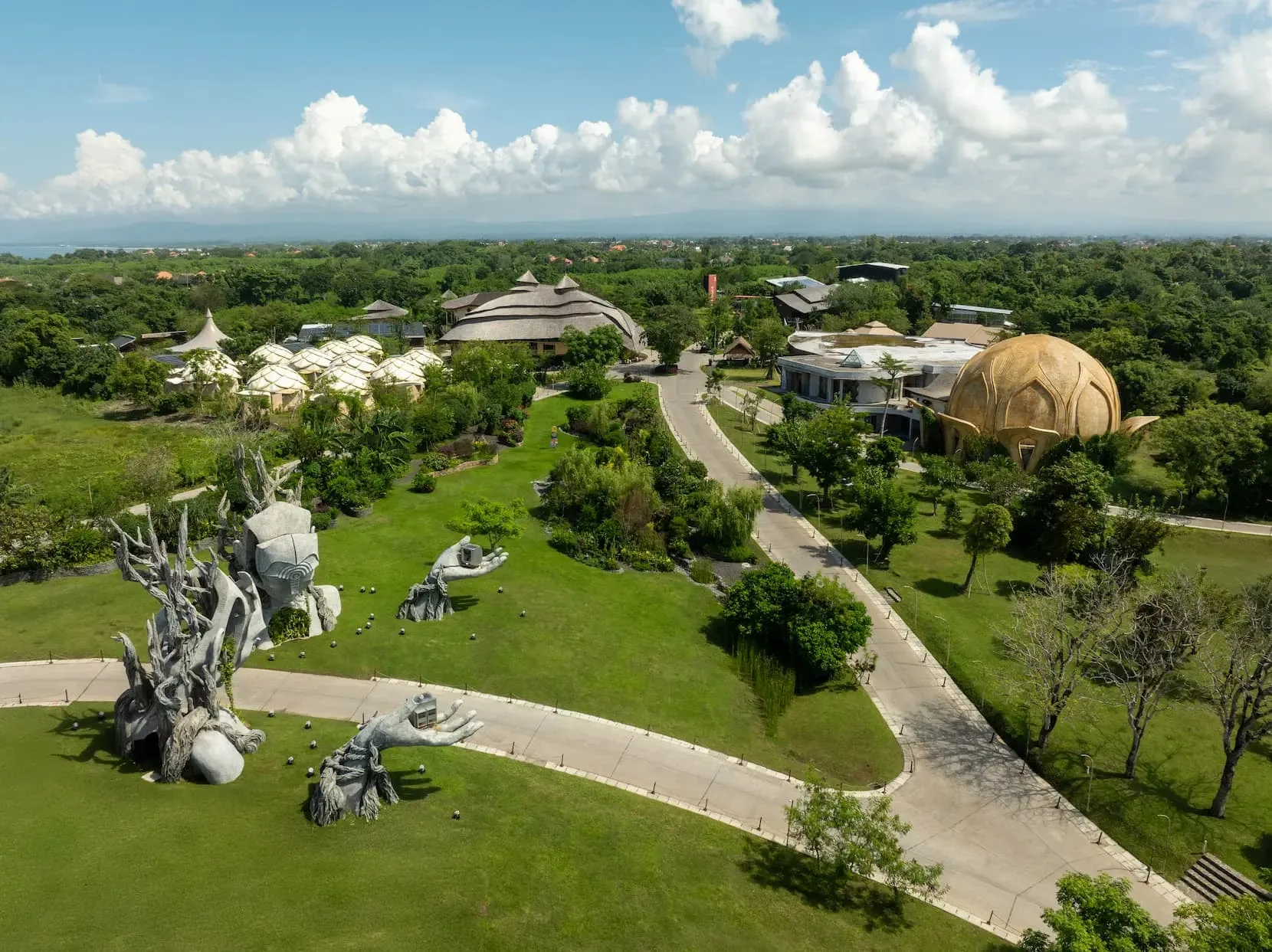
Nuanu feels like a creative campus that keeps on growing: galleries and an immersive art space, an international school, co-working, a beach club, the treehouse-inspired Oshom hotel and the Red Tent, a women-only space. In 2025 it hosted Art & Bali, the island’s first art fair, and in May 2026 Indonesia’s Deputy Minister of Creative Economy held it up as a model for the country’s future creative ecosystem. Its CEO, Lev Kroll, sums up the ambition with disarming candour: the team is “trying to do 25 things at once”.
Bali has long struggled with rapid overdevelopment, and Nuanu presents itself as an answer – a place where art, technology and village tradition grow together. The question journalists keep asking is whom it ultimately serves. It is a fair question, and Nuanu, true to its name, is still answering it.
Cities for a rising sea – Oceanix Busan and Smart Forest City Cancun
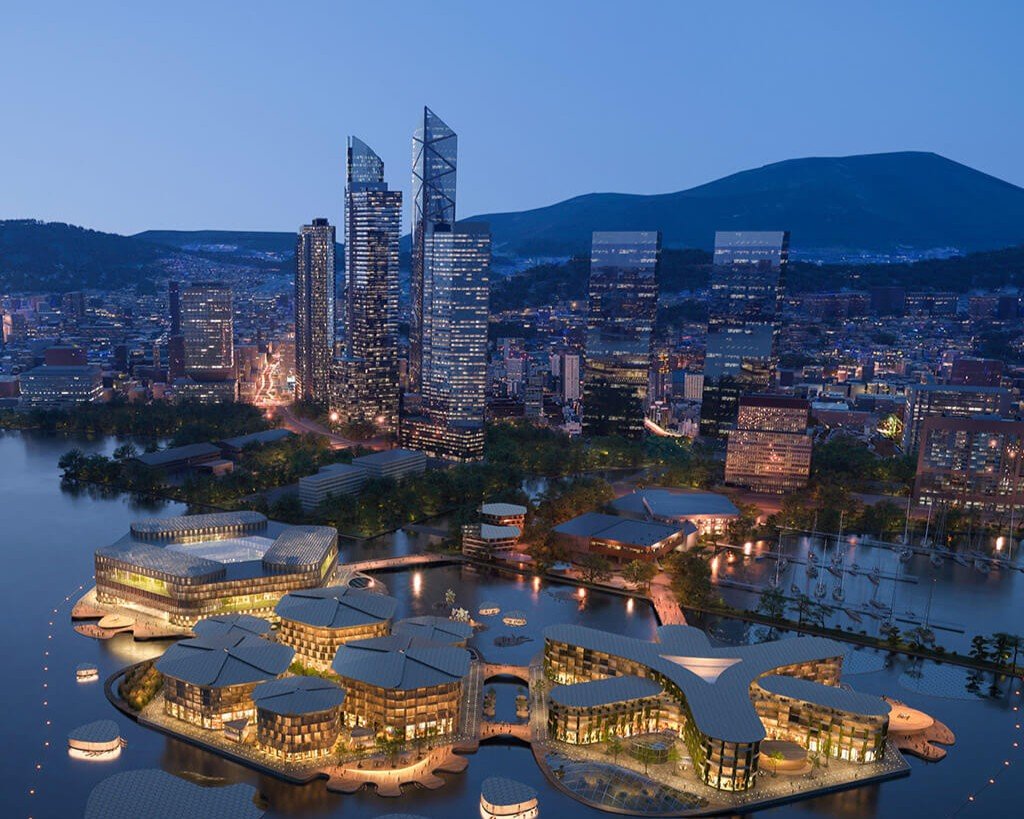
Some new cities are designed around the climate itself. Off the coast of Busan, South Korea’s great port, UN-Habitat, the city government and the company OCEANIX have presented what they call the world’s first prototype of a sustainable floating city. Designed by BIG with SAMOO, it consists of three floating platforms for around 12,000 people, with room to grow towards 100,000. Greenhouses, solar outposts and a hydroponic atrium would feed and power it, and the concept accepts rising seas as a reality to live with. Completion was originally expected in 2025; its current timeline remains unclear.
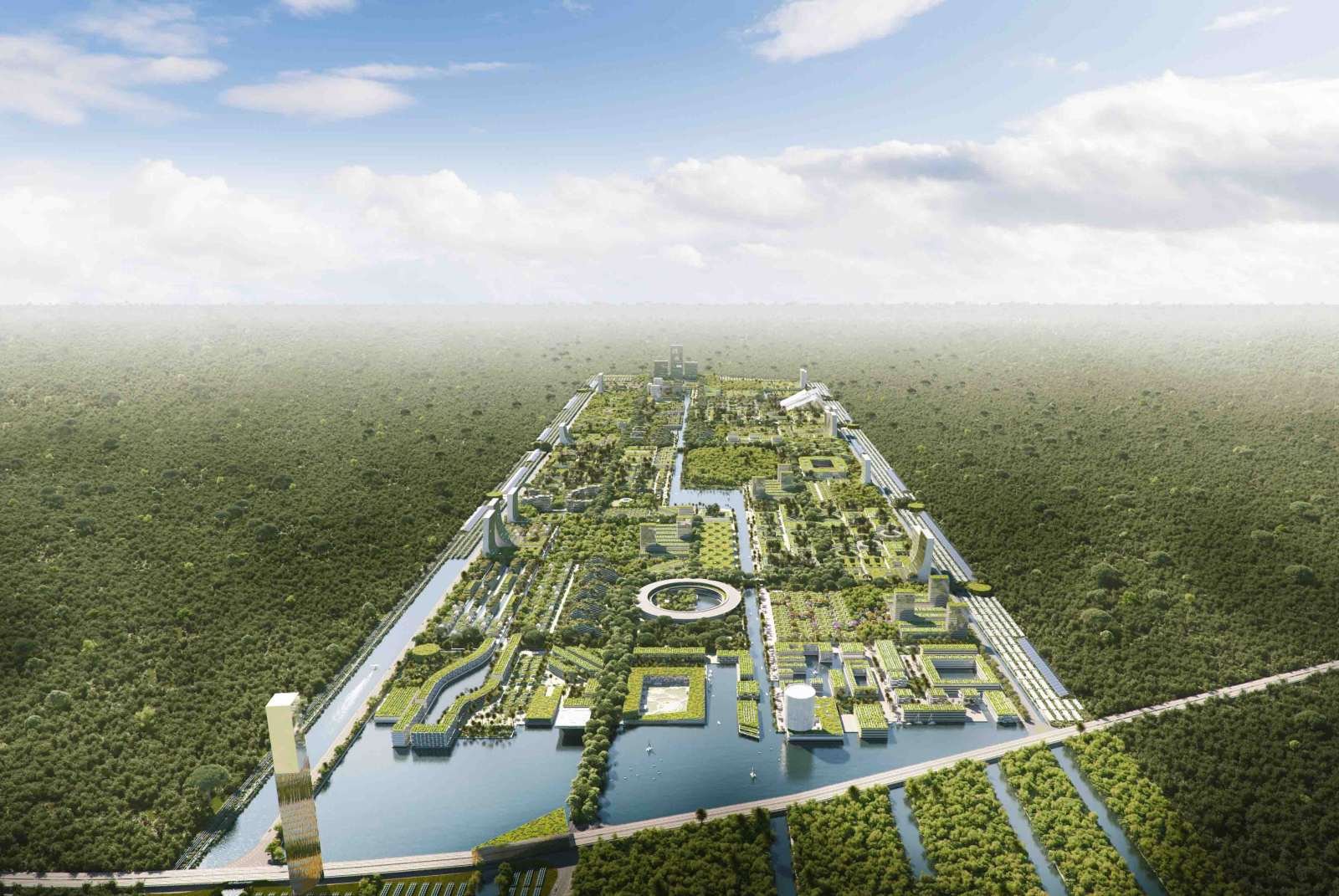
In Mexico, Stefano Boeri – the architect behind Milan’s Bosco Verticale – has designed Smart Forest City Cancun for a 557-hectare site that served as a sand quarry. The plan holds 130,000 residents and 7.5 million plants of 400 species, with a ring of solar panels for energy and combustion-engine cars left at the city’s edge. For now it remains a vision, as does BIG’s BiodiverCity, a cluster of three islands off Penang in Malaysia. Visions matter, though. They are the sketches from which the next generation of real cities will be drawn.
The view from the Gulf
For readers in the region, much of this feels familiar. The Gulf has been building tomorrow’s cities for two decades. Masdar City in Abu Dhabi, masterplanned by Foster + Partners, was one of the world’s first serious attempts at a low-carbon city in the desert, and it has grown into a working district of research centres, offices and homes. In Dubai, The Sustainable City has shown on a residential scale how solar roofs, car-free lanes, urban farms and shared gardens translate into everyday life.
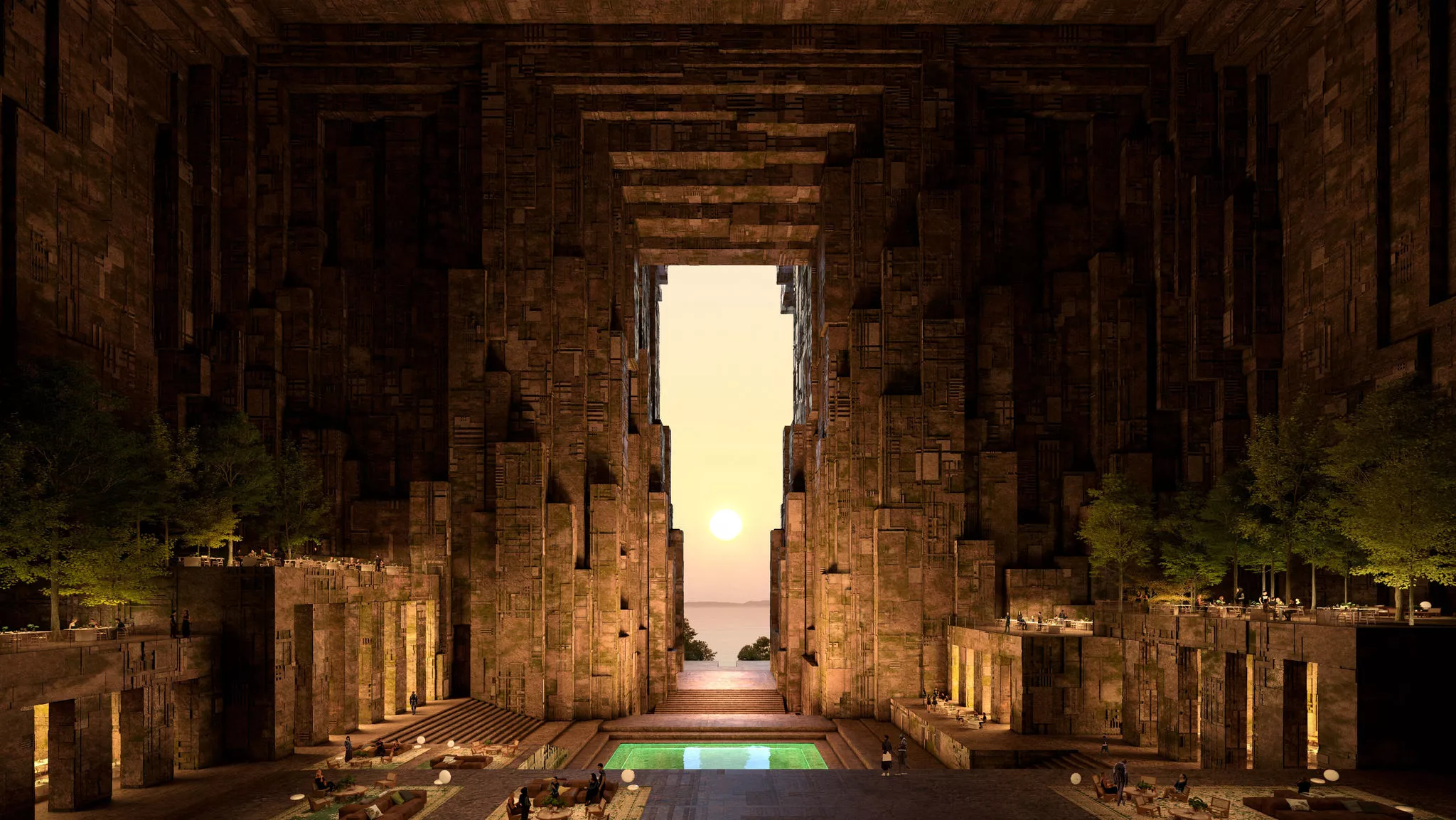
NEOM offers a different lesson. The Line was once imagined as a 170-kilometre mirrored city for millions. In 2026, amid rising costs and a softer oil price, work on The Line was reported to be paused until after 2030, with NEOM’s population target for that year reduced to up to 100,000 people. Indonesia’s new capital, Nusantara, tells a similar story: its core is home to around 10,000 residents, and state funding was halved for 2026.
The pattern is clear. The cities that thrive grow at human scale, around a purpose people can feel – health, calm, creativity, community. Gelephu’s mandalas, Lake Nona’s trails and Woven City’s woven streets all begin with how a person lives a single day.
A city for a longer life
For most of history, cities shortened lives – crowded, smoky, loud. Now, for the first time, we are drawing cities with the opposite intention: to give us back time.
Perhaps the Blue Zones of the future will appear on maps still being drawn. A Bhutanese valley where governance is measured in happiness. A Japanese street designed around the way people move. A Caribbean island where science races ahead of bureaucracy. Some of these experiments will fade; others will quietly reshape the way all of us live. And all of them, it seems, are built around one ancient wish – to live long, and to live well.
Share


WE RECOMMEND
Beyond the Green Wall: Interiors Shaping Wellbeing in the Gulf
Biophilic design has long promised to reconnect people with nature. Today, the sharper question is whether wellness-driven residential interiors can support the…

Saudi Arabia Is Building a 135-km Wellness Boulevard through Riyadh
Saudi Arabia’s Sports Boulevard is becoming one of the world’s most ambitious examples of wellness real estate.
UAE Wellness Residences Boom: What’s Actually Inside Them?
From Dubai's forest communities to Abu Dhabi's dedicated wellness islands, the UAE is building one of the world's most ambitious map of…
