





Can We Really Make Our Pets Live Longer?
As humans invest more time and money in living longer, attention is also turning to the animals we love – and, perhaps surprisingly, pet longevity is becoming a fast-growing field of its own.
Today, many of us track glucose, sequence our genomes, scrutinise sleep and look for ways to extend healthy life. Now the same logic is beginning to be applied to our pets.
In London, Dubai, California and beyond, some veterinary longevity centres are adopting approaches familiar from human longevity medicine: gene therapies, senolytics, stem cell infusions and AI-driven biomarker tracking. Dogs are being enrolled in clinical trials of rapamycin. Scientists are developing epigenetic clocks that estimate how fast they are ageing. And in the UAE, a new platform is preparing to give dogs and cats something increasingly familiar to their owners: a longevity score.
The emotional logic behind it is easy to understand. Animals simply do not live very long by human standards. Dogs typically live somewhere between about 9 and 14 years, although some reach 15 or beyond. Indoor cats commonly live 12 to 18 years and can sometimes reach their twenties. We bring these animals into our families knowing that, in most cases, we will outlive them. So the desire to give them more healthy years is entirely natural.
Why Dogs Are So Valuable to Ageing Research
Dogs occupy an unusual place in ageing research. Unlike laboratory mice, they live in the same homes as humans. They breathe much of the same air, are exposed to similar environmental factors and often share aspects of our lifestyles. They naturally develop osteoarthritis, cognitive decline, cancer, metabolic disorders and other conditions associated with ageing. Yet their lives unfold much faster.
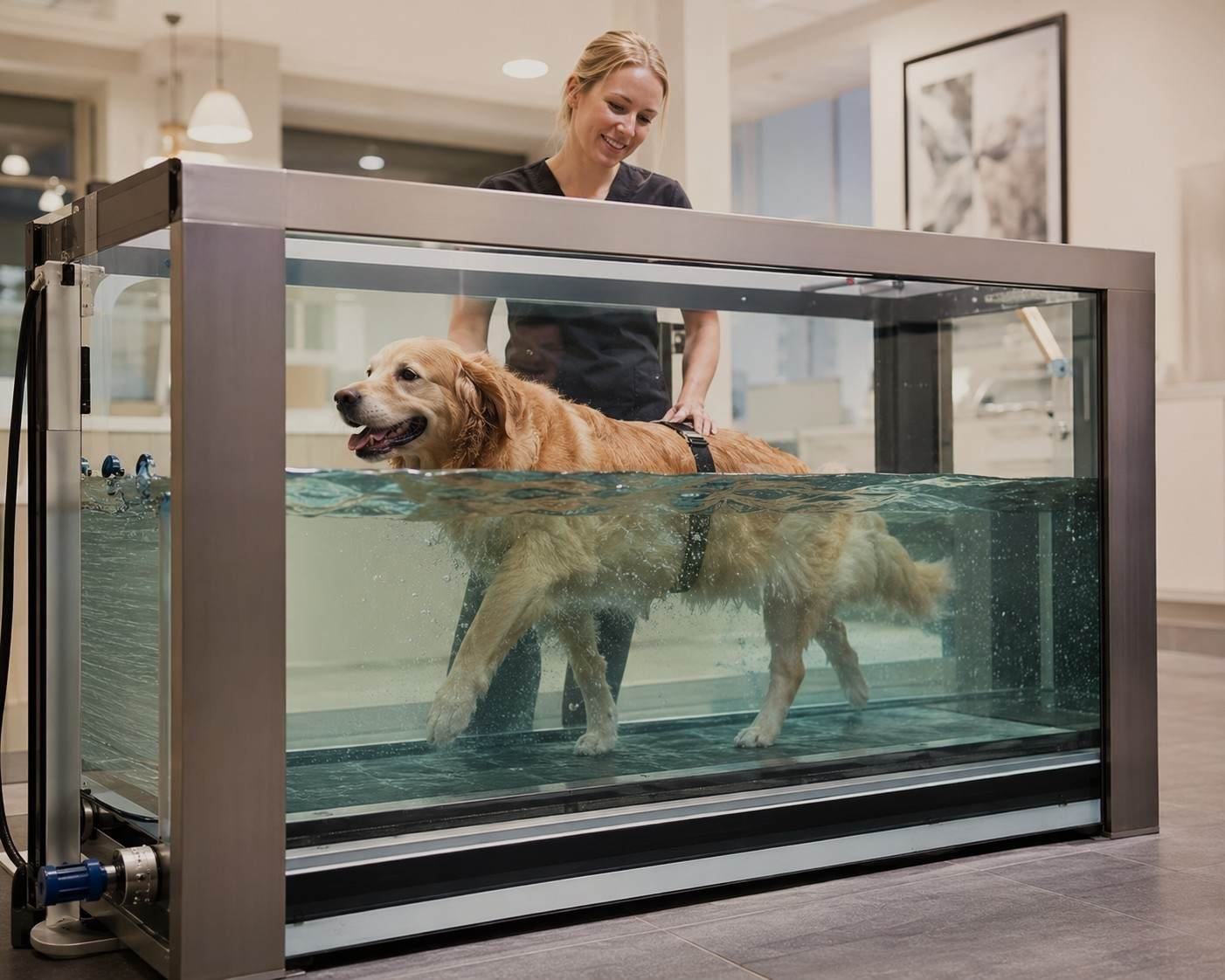
The US-based Dog Aging Project is following more than 53,000 companion dogs, collecting information on genetics, health, lifestyle, environment, cognition and activity. Researchers argue that this combination – genetically diverse animals living in complex human environments but ageing within a much shorter timeframe – makes dogs a powerful model for studying healthy lifespan.
There is another reason the field is moving quickly: ageing itself is becoming measurable. Scientists have already developed canine epigenetic clocks using DNA methylation, including clocks designed to work across dozens of dog breeds. More recent studies suggest that accelerated epigenetic ageing may correlate with mortality risk.
One intriguing clue comes from size: large dogs such as Labradors and Great Danes generally live about 20-40% shorter lives than smaller breeds such as Dachshunds or Chihuahuas. One possible explanation is the extraordinary speed at which a large dog has to grow from a tiny puppy into a 30- or 60-kilogram adult. This rapid growth is driven in part by insulin-like growth factor 1, or IGF-1 – a hormone that tells cells and tissues to grow.
Large dogs tend to have higher levels of this growth signal, and researchers are investigating whether the same pathway that drives rapid growth early in life may also contribute to faster ageing later on. This mechanism has already become a target for some of the first canine longevity drugs now in development.
Longevity Drug for Dogs
Among the most closely watched experiments in canine longevity is also one already familiar to the human longevity research: rapamycin. Originally an immunosuppressant, low-dose rapamycin inhibits the mTOR pathway, a key regulator of ageing. Earlier studies in companion dogs have produced encouraging signals, and the Dog Aging Project is now testing whether low-dose rapamycin can improve health and extend lifespan in a large placebo-controlled trial.
At the same time, US-based biotech company Loyal’s flagship programme, LOY-001, specifically targets the IGF-1 growth pathway in large and giant breeds to slow down their accelerated cellular ageing.
In parallel, Loyal is addressing the needs of the broader, ageing canine population. Its LOY-002 – a daily beef-flavoured pill designed to mitigate metabolic ageing and potentially add at least one healthy year to older dogs’ lives of most sizes – has already cleared two of the three technical requirements the FDA requires for conditional approval.
If the remaining manufacturing review proceeds without delay, conditional approval could arrive as early as late 2026 or 2027 – which would make LOY-002 the first drug in history approved specifically for dogs lifespan extension.
What Actually Works Today?
Drugs like LOY-002 remain a bet on the future – promising, but not yet available. What is already on offer looks far more experimental: senolytics, stem cells, gene therapy, hyperbaric oxygen and ozone therapy. Some private veterinary longevity providers now advertise protocols that resemble human longevity medicine, creating the possibility of a new category: concierge health optimisation for animals. There is also a fundamental emotional difference between spending on a handbag for a dog and spending on an intervention that might keep that dog alive.
In Saudi Arabia, the focus extends beyond dogs and cats. Belgian biotech Revatis has been developing an equine stem-cell production unit at Riyadh Equine Hospital, focused on regenerative medicine for racehorses and camels.
The strongest longevity tools available to pet owners today are less spectacular. Maintaining a healthy body mass remains one of them. In a landmark lifelong study of Labrador retrievers, dogs fed 25 per cent less than paired controls had a median lifespan approximately 1.8 years longer, while the onset of chronic disease was delayed.
In a landmark study, Labrador retrievers fed 25% less lived 1.8 years longer – a reminder that simple choices can meaningfully extend a pet’s life
Dental health, mobility, exercise, vaccination, appropriate nutrition, early detection and regular veterinary assessment also remain fundamental.
This creates a useful hierarchy in the emerging pet-longevity market. At one end is proven preventive medicine. Then comes a rapidly developing layer of biomarkers, biological-age measurements, molecular diagnostics and data-driven risk assessment.
Further out are pharmacological geroscience interventions such as rapamycin. And beyond them sits a much more experimental territory of gene therapies, senolytics and systemic cell interventions promoted specifically as anti-ageing treatments.
For owners willing to spend heavily on more years with an animal they love, those boundaries may not always be obvious. They should be.
A New Model for Pet Health in the UAE
In the UAE, longevity has already become a visible part of customer health culture. Preventive screening, genomics, metabolic testing and biological-age measurements are increasingly familiar parts of human healthcare. Stay Pet Health, which is launching first in the UAE in September 2026, is attempting to apply a similar logic to dogs and cats.

“Pet medicine is roughly a generation behind on that shift, but the biology is not exotic,” Emma-Line Sprunk-Jansen, founder and CEO of Stay Pet Health, told Lightberg Magazine. “The same drivers do the same work in a dog or a cat. What has been missing is the structure: a way to measure where an animal stands today, and a plan the owner can actually follow.”
Stay is an AI-powered pet-longevity platform for dogs and cats. It begins with a health assessment covering breed, life stage, diet, body condition, activity, behaviour, preventive-care history and existing conditions. Owners can upload photographs, which are analysed for features including posture, coat and skin, eyes and visible dental signs, as well as any bloodwork their vet has already run. The platform then generates a Longevity Score, an estimated biological age and a breakdown across several dimensions of health.
“The moment we have hard inputs, a blood panel from the vet or a saliva-based DNA test, those feed directly into the score and the biological age estimate,” Sprunk-Jansen said. “Kidney markers, liver enzymes, thyroid, cardiac markers and inflammation are not opinions, and they move the number.”
The UAE launch will start as a digital membership built around this assessment and score. From there, Stay can recommend and coordinate a more detailed work-up through partner clinics, including kidney, liver, thyroid and cardiac markers, blood pressure, dental health and body-condition scoring. It will also offer an at-home DNA saliva test. For rescue animals with no reliable birth history, this may provide a useful starting point.
One area Sprunk-Jansen singles out is kidney health. “The SDMA test is the one I would single out,” she said. “It can flag declining kidney function far earlier than the standard bloodwork most pets receive, but only if someone runs it.”
For ageing cats in particular, where chronic kidney disease is common, that kind of earlier detection illustrates the practical side of pet longevity far better than some of the field’s more experimental claims.
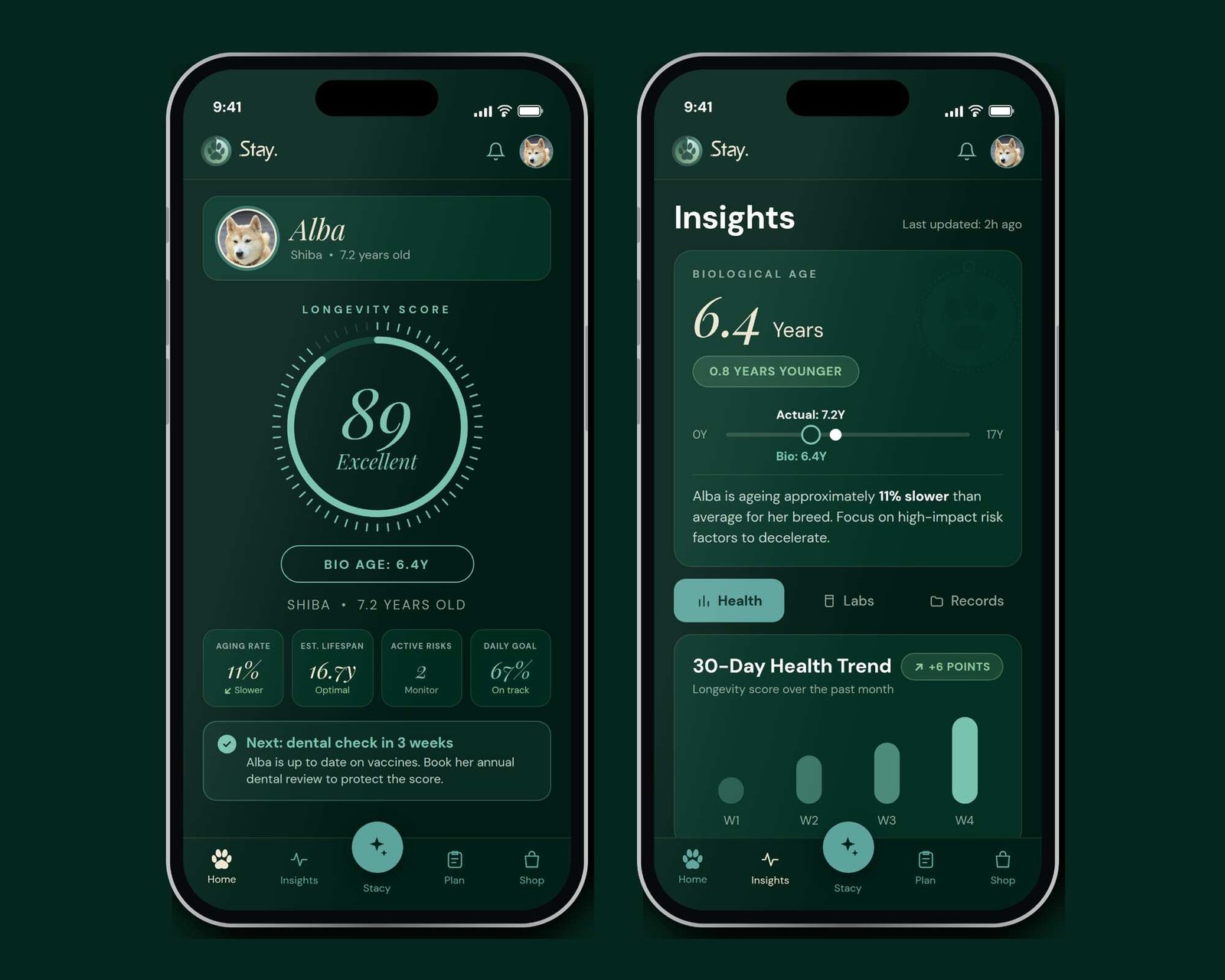
The choice of the UAE as the company’s first market is deliberate. According to Sprunk-Jansen, the region combines an established appetite for preventive human health with a growing premium pet-care market. The most obvious early adopter, she says, is “the person who already does this for themselves” – someone who tracks sleep, orders preventive blood panels and expects a similar level of scrutiny for an animal regarded as part of the family.
In the UAE, this group tends to be internationally mobile professionals in Dubai and Abu Dhabi, mostly in their thirties and forties, who see their pets as family and are already comfortable paying for preventive healthcare.
But another group appeared earlier than Stay expected. “Owners of a pet that has just crossed into senior years, or who have just had a scare,” Sprunk-Jansen said. “The animal is fine today, the owner has suddenly understood that this will not always be true, and they want to know what they can actually do about it.”
For Stay, that response suggests that demand for preventive pet health was already present in the region – it simply had not yet been clearly defined as a category.
How Much Medicine Is Too Much?
The objective of geroscience is usually framed as healthspan: preserving function and delaying disease, rather than adding years of frailty. With animals, that distinction becomes even more important.
A dog cannot understand that an experimental therapy may theoretically extend its life. It cannot weigh uncertainty, long-term risk or quality of life against additional months or years. The decision belongs to the owner and the veterinarian – while the consequences belong to the animal.

As increasingly sophisticated interventions become available, owners will face uncomfortable questions. When does prevention become over-medicalisation? How much risk is justified for an otherwise healthy animal? Does an expensive intervention improve the animal’s life – or primarily alleviate its owner’s fear of losing it?
And if a treatment can add two years of life but requires repeated procedures, drugs and clinical monitoring, how should those years be valued?
These are already difficult questions in human longevity medicine. Pet longevity makes them harder because the animal cannot participate in the decision.
At the same time, dogs are helping scientists understand human ageing. Their shorter lives, shared environments and remarkably similar age-related diseases allow researchers to study processes that would take decades to observe in people. The exchange therefore works in both directions, and some studies suggest pet ownership itself benefits our own longevity – closing the loop between the health of the animal and the health of its owner.
As pet longevity moves from labs into real-world adoption, the Gulf may offer an early glimpse of what that future could look like. Already investing heavily in the technologies, clinics and culture of human longevity, the region may soon discover that the newest longevity patient has been living in the house all along. The question will be how many healthy years we can responsibly give them.
Share




WE RECOMMEND

The Gulf Wellness Brief: A New Map of Health, Travel and Longevity
The Gulf is drawing global attention in wellness and longevity. But what is actually happening in the market and where the investable…

Meet the Gulf-Born Wellness Innovations Worth Knowing
From smart rings to three-minute mental resets and home hydroponic gardens, a new generation of Gulf-born products is turning everyday wellbeing into…

What Your Biological Age May Reveal About You – And What Today’s Tests Really Show
Everyone wants a younger biological age. Fewer people ask what the number actually means or why two tests can be so different.…
